.png) 3 months ago
97
3 months ago
97
It is starting to trickle out. Last week in Caracas was not an invasion, it was a putsch. It was the militarised kidnap of one ruler to aid his more amenable deputy into power. Since April last year, according to reports, vice-president and now interim president Delcy Rodríguez and her brother Jorge – the president of the Venezuelan national assembly – have been dealing secretly with Washington. This has reportedly been via that hotspot of informal diplomacy, Qatar.
We have yet to know the details. But the rumours are plausible that last week’s episode was staged to look outrageous, including Delcy Rodríguez’s initial condemnation of it as atrocious. President Nicolás Maduro was handed over to the Americans swiftly and peacefully. The only slip was Trump describing Delcy as “quite gracious” before she was hastily sworn into office soon after the raid. A more serious slip was his dismissal of the opposition leader, María Corina Machado, as lacking “the support within or the respect within the country”. She had championed Edmundo González Urrutia, probable winner of the rigged 2024 Venezuelan election, for which she won the Nobel peace prize Trump so coveted. Why no mention of him from Trump?
That the affair was an outrage against international law should of course be acknowledged. But the US has rarely paid that law much attention. The surprise is that there is so much surprise. One president after another has found the “manifest destiny” of the US, to proclaim and promote freedom wherever needed, more appealing. That the Caracas attack was also unconstitutional, in that Congress alone has the right to declare war, is supposedly covered by it being merely “law enforcement”.
Keir Starmer is clearly hedging his bets by not jumping to conclusions. He has said next to nothing. When in 1983, Ronald Reagan similarly toppled a leftist regime in Venezuela’s near neighbour Grenada, Margaret Thatcher phoned him to protest furiously against the unprovoked attack on a Commonwealth state. Reagan took the call with his aides and switched her rant to speaker mode. He said with a smile: “Gee, isn’t she marvellous?”
After last weekend’s operation, people quite reasonably seek clarity of events and motive, but the truth is that international interventions by powerful states are drenched in hypocrisy. Their true purpose may be commercial gain or domestic glory – or to aid an ally. Or it may be just to sound good. In his 1961 inaugural address, President John F Kennedy pledged that the US would “pay any price, bear any burden, meet any hardship, support any friend, oppose any foe, to assure the survival and the success of liberty”. He then escalated conflict in Vietnam.
All US presidents have started by obeying George Washington’s 1796 appeal to isolationism, by swearing to stand aloof from distant conflicts, “the causes of which are essentially foreign to our concerns”. Thus Woodrow Wilson pledged he would not fight in the Great War and Franklin Roosevelt did likewise in the second world war. In 1940, FDR declared to America’s mothers: “I shall say it again and again and again, your boys are not going to be sent into any foreign wars.” Just over one year later he did just that, as had Wilson.
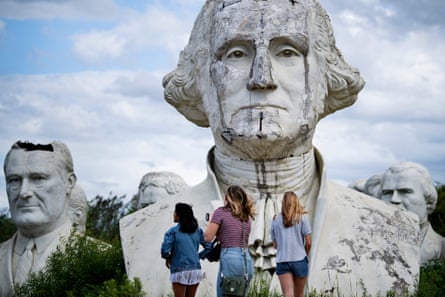
The reality is that the global potency of the White House and the Pentagon establishment appears, in time, to become irresistible. It begs to be used. When the Soviet menace evaporated in the late 1980s, Mikhail Gorbachev’s aide Georgi Arbatov, the Kremlin’s chief “Amerikanist”, commiserated with his US counterparts: “We are going to do a terrible thing to you,” he said. “We are going to deprive you of an enemy.”
The US merely sought a new one, almost obsessively, and rarely with much concern for international law. When in 1990 George HW Bush kidnapped Panama’s president Manuel Noriega as a drug lord, no one worried too much about the law. Nor did Britain, in 1999, in the clearly illegal bombing of Belgrade and the deployment of peacekeepers to Kosovo. When it joined in defeating Saddam Hussein in 2003, the justification was that he threatened British national security. This was clearly absurd, yet parliament swallowed it. As for Britain’s helping topple the leaders of Afghanistan and Libya, it argued merely that they were bad people. Rich nations feel an obligation to come to the aid of oppressed ones, which is pretty much Trump’s narrative today.
At least until now, Trump has adamantly held aloof from the world-policing rhetoric of his predecessors. He claimed to have learned the lessons of failed nation-building. Last year he announced that the US was fed up with Nato and with defending Europe. In a speech in Riyadh, Trump was cheered for calling an end to lecturing the world on how to behave. As far as he was concerned, “The so-called ‘nation-builders’ wrecked far more nations than they built.”
Last week’s coup reeked of a massive U-turn. Trump said he intended to run Venezuela “with a group” and “transition” it to stability. He appeared to assume that the putsch would work, as it initially did, and require no further US force projection. We can only wait to see.
However, Trump’s policy wizard, Stephen Miller, apparently envisages nothing less than a “Trump corollary” to the Munroe doctrine. The original doctrine declared the US responsible for guarding all the Americas from European colonisation. An earlier corollary under Theodore Roosevelt pledged Washington would commit, “however reluctantly, in flagrant cases of such wrongdoing or impotence, to the exercise of an international police power”.
Trump’s corollary would appear to be to use national security to justify the overwhelming of Greenland, possibly Cuba and even Canada. Miller’s wife has reportedly shared a map of Greenland dressed in the stars and stripes. This would in effect be a United States empire of the Americas, and clearly madness.
The nearest Trump could come to justifying his Venezuelan enterprise would be an early election and the return of democracy to what, for me, is a truly wonderful country. But, so far, Trump has not mentioned democracy. He is a very different president, but in some ways he is just the same as many predecessors who have revelled in the possibilities and deployment of US might. Another Iraq beckons – a quagmire or worse. He’ll probably find George Washington’s isolationist instincts were right.
-
Simon Jenkins is a Guardian columnist and the author of A Short History of America: From Tea Party to Trump