.png) 3 months ago
85
3 months ago
85
As Laura stood in the court witness box, preparing to tell magistrates about her ex-husband’s obsessive nature, she flicked through the prosecution’s evidence file and saw the photographs. One of her leaving the house, another of her driving her car on the motorway. They had been taken by a professional. Staring at the grainy images, she felt numb.
Laura’s ex-husband had hired a private investigator to put her under surveillance. On two occasions she had been trailed, with the PI taking photographs of her as he went. Her ex-husband was later sanctioned with a stalking protection order, but the man he hired to facilitate his harassment was never even questioned.
“You just feel really violated,” said Laura (her name has been changed). “It makes you feel really vulnerable, that it’s going on without you knowing.”
Laura’s is one of 30 cases in the last three years identified in a Guardian investigation, which found that stalkers have been able to hire private investigators as part of their campaigns of harassment. In at least three instances, private investigators have tracked women to domestic violence refuges.
There is no licensing system for private investigators in the UK, which means anyone can advertise their investigative skills without any qualifications or background checks. Many offer “matrimonial inquiry” services – ostensibly evidence-gathering on a partner suspected of cheating. But campaigners have said that these types of services can be misused to harass and track those fleeing oppressive relationships.
Laura, a healthcare professional from Kent, had broken up with her husband after 15 years together. During their relationship, she said there were elements of controlling behaviour and instances of physical violence. But it was after they split up that the stalking began. Her ex subscribed to numerous mobile phone location-tracking services and even bugged her house with an audio recording device.

It was only during their divorce proceedings, when her ex was made to disclose his bank statements, that she found out that he had also paid about £4,000 to PID Global Ltd, a private investigation agency. “I just Googled the name and was like: ‘Oh my God!’” Laura said. “It’s almost like an out-of-body experience … to pay someone to follow me, I find shocking.”
PID Global Ltd, the agency hired to track Laura, states on its website that its operatives come from a “military background” and offer covert surveillance packages, with the assurance that “we have never been detected while carrying out any of our investigations”. Matrimonial requests – about potential cheating partners – make up a large percentage of the work they take on. “It’s like the bread and butter,” said its chief investigator, Robert , who spoke to the Guardian on the condition that we did not use his full name.
A survey of private investigators found that 64% were former police and 20% were former military. The fact that people with years of professional training and experience can be hired to track unknowing and sometimes vulnerable women has angered some campaigners.
“[There are investigators who have] probably just spent 30 years in the police … refining their skill sets and ability to track and locate … They’ve built those skill sets to defend the public and now they’re using them to potentially cause harm,” said Emma Pickering, the head of tech abuse at Refuge.
Robert, who runs PID Global, told the Guardian that he could not speak about any specific clients, but said he had a vetting process to check the identities of clients and weed out those with bad intentions – though his system was not infallible. “It is difficult for us,” he said. “We obviously have a system in place where we do our best to make sure that there’s reasonable grounds behind the request [but] you can only go by what you’re being told.”
Robert said some of the requests he received started with an innocent request, but then the client could become too invested in the process. “They get addicted to the knowing what’s going on and watching and I think they become almost obsessed,” Robert said. At that point, he said, he would cut them off.
What he cannot do is check the full criminal history of potential clients. No private investigator can. This means that even those with court orders keeping them away from their victims can hire a private investigator to outsource their abuse. The Guardian found multiple examples of this happening.
How to contact our investigations team
Show
The best public interest journalism relies on first-hand accounts from people in the know.
If you have something to share on this subject you can contact our investigations team confidentially using the following methods.
Secure Messaging in the Guardian app
The Guardian app has a tool to send tips about stories. Messages are end to end encrypted and concealed within the routine activity that every Guardian mobile app performs. This prevents an observer from knowing that you are communicating with us at all, let alone what is being said.
If you don't already have the Guardian app, download it (iOS/Android) and go to the app menu. Pick ‘Secure Messaging’, follow the instructions to compose your message and select ‘UK Investigations Team’ as the recipient.
SecureDrop, instant messengers, email, telephone and post
If you can safely use the tor network without being observed or monitored you can send messages and documents to the Guardian via our SecureDrop platform.
Finally, our guide at theguardian.com/tips lists several ways to contact us securely, and discusses the pros and cons of each.
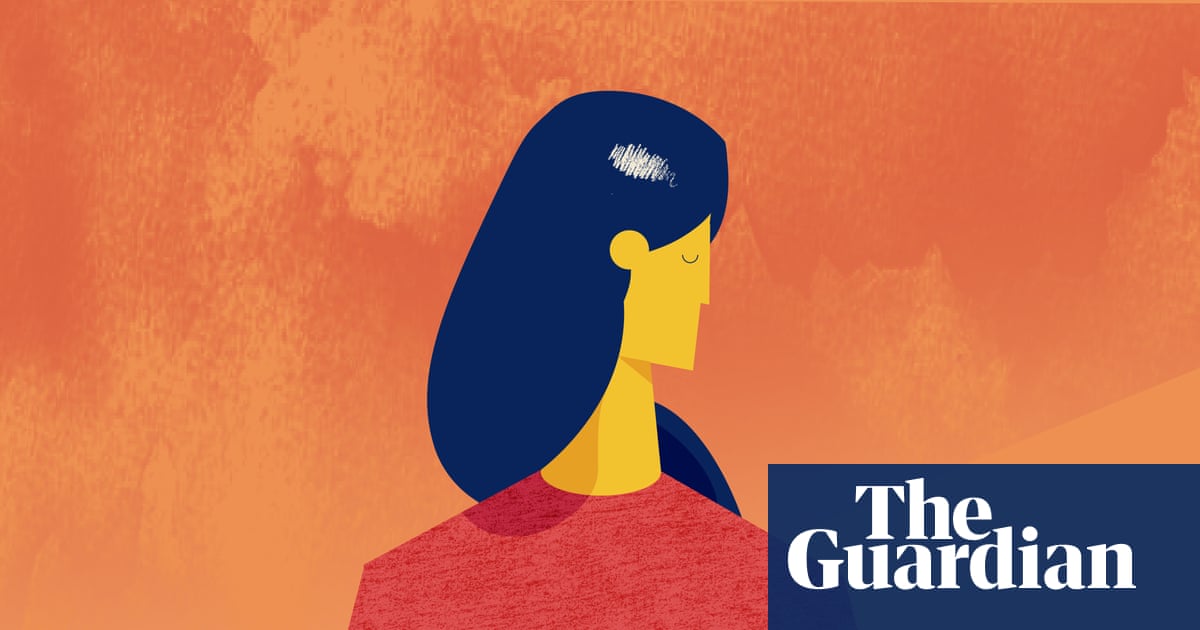
Illustration: Guardian Design / Rich Cousins
In one instance, a physically abusive man who was subject to a non-molestation order hired a private investigator to find out where his ex-wife was living and working. She told the Guardian it was intimidating to find out later that the investigator had produced a written report about her whereabouts and had suggested to her ex that the next step could be physical surveillance. “My fear was through the roof,” she said.
In another example, a physically abusive man who had been known to the police for a year, and was subject to a stalking protection order, was able to hire an investigator to take photographs of his ex-partner.
Tracked to a refuge
In early 2023, a flurry of worried emails went round the domestic violence services in the greater Newcastle area. A woman fleeing domestic violence had discovered that a private investigation company had tracked her down to the refuge she was living in.
“She was really upset, really distraught and obviously feeling very, very unsafe again,” said the service manager who oversaw the refuge the woman was living in. “When people come to a refuge it’s because they’re at significant risk of harm or death from their partner.”
“When there’s a service that is actively then looking for them ... it’s really a serious concern,” she said.
According to those working in the refuge services, the investigators that had found the woman worked for Nationwide Tracing, a company which claims it can “locate anyone” for just £30.
Nationwide Tracing said it was unable to respond to this specific case because the Guardian could not provide the name of the perpetrator. But it did say that it, like other tracing agents, used databases that might be unintentionally pulling in the addresses of refuges.
The police and Information Commissioner’s Office looked into the incident and found the company had acted within the law and that no wrongdoing had occurred.
The head of Nationwide Tracing, Michael Leonard, described the possibility of providing an address to an abuser as “our worst nightmare” and said that since the incident it had reworked its safeguarding policies and now never gave out the address of an individual traced by a family or friend without explicit permission from the target. “We decline trace requests quite regularly that don’t conform with our evidence requirements or safeguarding policies,” he said.
The Newcastle case was not unique. In another instance, a woman received a “blagging” letter which was delivered to the refuge she was staying in. The author of the letter was a private investigator who appeared to be trying to draw the woman out into a public place. Refuge looked into the case and found the investigator had tracked the woman’s location by gaining access to her universal credit account, though it is not clear how.
Greg Gillespie is a private investigator who has advised a domestic violence charity on safety measures it can take to avoid detection by other investigators in his industry. He said some unscrupulous investigators might pay corrupt officials for information or “blag” information from official sources by phoning agencies such as hospitals or councils and pretending to need a subject’s address.
Blagging is illegal in the UK. But an anonymous survey of private investigators, conducted by academics from the University of Portsmouth in 2022, found that a quarter of investigators admitted using “social engineering” – or blagging techniques – at least once a month, with some saying they used them on a daily basis.
There is no suggestion that the specific private investigators mentioned in this article ever used any blagging techniques.
But the tactics and unregulated nature of the sector has been a concern for years.
In 2013, in response to a scathing review of the industry by a government committee, Theresa May, then the home secretary, announced that a licensing system would be created. Licences would be granted only when applicants could prove they had completed extensive training and a thorough criminality check. Operating without an official licence would become a criminal offence, May announced.
More than a decade on, no such licensing system has been created.
The stalker’s agent
The true scale of the use of private investigators by stalkers or perpetrators of domestic violence is unknown. No official records are kept. The 30 instances identified by the Guardian were found by piecing together court records, attending court hearings, talking to domestic violence charities and gathering limited data from the handful of police forces that recorded it.

Three-quarters of the cases where the genders were known were men stalking women.
The consequences can be horrific. In 2023, David Boulter, 60, hired an investigator to track his wife, Deborah, incorrectly believing she might be having an affair. Boulter then killed her and himself. Research has shown a clear link between stalking behaviours and homicide.
Four years earlier a man hired a team of private investigators to track the movements of his ex-wife. The investigators decided to attach a GPS tracker to her car and produced location reports for the man. The man’s friends then found the woman and threw acid into her young son’s face, disfiguring him. While the private investigator was questioned during the trial, no sanction was meted out for his role.
Indeed, the Guardian did not find any examples where a private investigator was prosecuted for their role in a stalking case, even though, as one judge noted, the investigator was “a proxy … acting as the agent of [the stalker]”.
Robert, a private investigator, said those working in his industry could not be held accountable for the motives of their clients. He compared his job to that of a pub landlord. “How does a pub [landlord] know that if a person is going to drink four or five pints they’re going to go and start a fight with someone? ... I wish there was a way where we could almost guarantee that everyone we take on and help is just going to do things for the right reasons ... But, unfortunately, you can’t control people’s minds and what they might … go and do.”
But Pickering said she wanted private investigators to be held to account in the same way as private individuals who track and harass vulnerable women.
“Fundamentally, if you are placing hidden devices on somebody, if you’re tracking them without consent, if you’re following them, monitoring them, hacking into databases to see where they are or messages they’ve sent, all of that is criminal activity,” she said.
Laura too has been left wondering how it was possible that her abusive ex was effectively allowed to outsource his harassment to a hired professional.
“If the man did [the surveillance] himself, it’s not acceptable – but if you’re using someone else, apparently it is,” Laura said. “It’s damaging for women and it is another form of abuse indirectly … As a profession, it’s inhumane.”