.png) 2 months ago
62
2 months ago
62
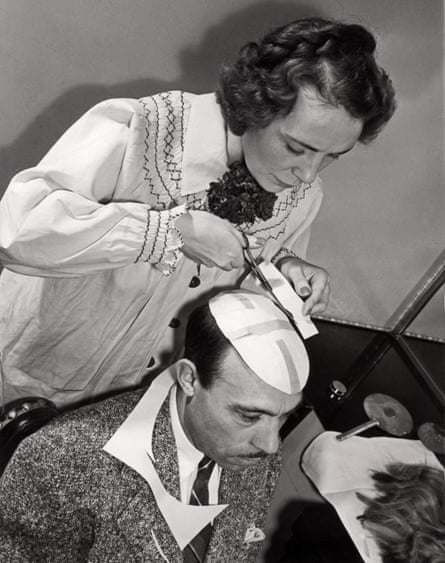
When you hear the word toupee, certain images spring to mind. Older men with suspiciously thick hair, say; or a poorly colour-matched partial wig covering a bald patch, perhaps flying off in the wind. These are the toupees of old.
Toupees are distinct from wigs in that they cover only part of the scalp, but both have a long history. While humans were wearing hairpieces as far back as ancient Egypt, toupees originated in the 18th century, the name developing from the French toupet, meaning “tuft of hair”. They became particularly prominent in the mid-20th century, with Time magazine estimating that more than 2.5 million men across the US were wearing toupees by 1970. But concerns about how obvious the pieces were, hammered home by ridicule in popular culture (see Monty Python’s Toupee Department sketch) combined with the gradual acceptance of shaved heads in fashion, led to their decline.
But not everyone wants to just buzz it all off, explains Fabian Martinez, a trichologist and manager of the London Hair Clinic. “I’ve had lawyers, judges, celebrities,” he says. “They have sat here and cried, in this private room, that they don’t want to be bald. There is a big misconception that, if they’re going bald, men should just shave their hair off and be OK with it. Most people don’t want to do that.”
Male pattern baldness is extremely common, affecting 30%-50% of men by the age of 50 and up to 80% of men over the course of their lives. Solutions to the problem of hair loss include special shampoos, creams and mousses, and even medication and surgery. But wigs and hairpieces offer an instant fix, and so a new generation of toupees is on the rise. Now rebranded as “hair systems”, these are designed to look much more natural than their predecessors, and in some cases are completely undetectable.
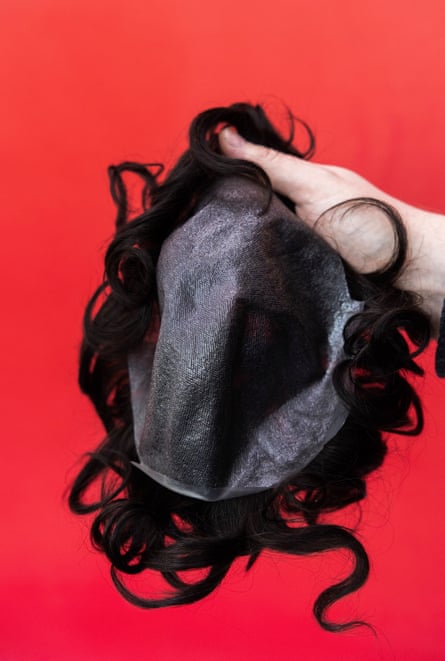
Made of either human or synthetic hair attached to lace or a skin-like membrane, toupees are then glued to the skin. If the hairpieces are cared for correctly, wearers can exercise, shower and swim without the system failing. Toupees can be made to measure, with variations in colour to give a natural look rather than a single uniform hue; exactly matched to the original hair; or bought “off the peg”, then customised for the wearer.
Google searches for “hair systems” have risen sharply since 2025. Aderans – whose subsidiary Trendco began manufacturing hairpieces in 1965 – reported a 43% increase in men buying hair systems in 2025 compared with the previous year. It attributes this to the growing popularity of male hair transformation videos on social media.
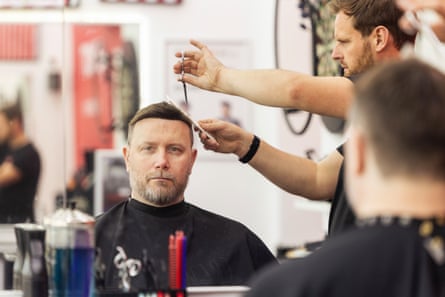
A search for #toupee on Instagram will produce more than 350,000 results, with some of the most-watched videos the work of the Toupee Queen, the California-based hairstylist Emily Alexis Ann Cheney. Some of her clips have more than 5m views. In them, men are shown having consultations about their ideal hair, before a section of their scalp is shaved (reminiscent of a monk’s tonsure) and a toupee is glued on. The hundreds of comments on these videos are overwhelmingly positive: “handsome”, “natural”, “amazing”.
It was online videos that inspired Jon McSherry, 46, from Lincoln, to try a toupee. “It was the ‘befores’ and ‘afters’,” he says. “It’s quite stark how much of a difference it made to people … guys coming in with very little to no hair and leaving with a full head. That’s what sold me on it.”
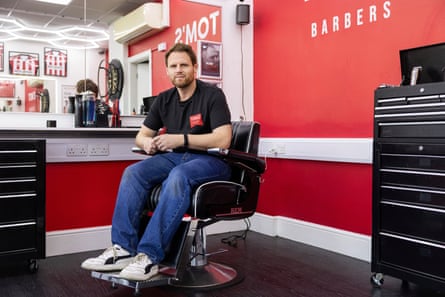
“I’ve always had thinning hair – for as long as I’ve been an adult,” he adds. “By my 40s, it was getting quite severe. It didn’t quite match how I was feeling – I wasn’t feeling as old and tired as I was looking.”
McSherry’s barber, Thomas Robinson, owner of Tom’s Barbers in Lincoln, has been offering hair systems for two years and has 40 customers on his books, each paying upwards of £600. A barber for 18 years, he says he began investigating toupees after seeing how many clients were struggling with losing their hair. It quickly became apparent that the pieces on offer were less synthetic-looking than the toupees of the past, with hair that sat more naturally and had a less wiry texture – as well as being more affordable. “It’s pain-free, guaranteed results,” he says. “You’re going into the barber shop with no hair and you’re walking out with the best hair you’ve ever had.”
Unlike hair systems, hair transplants have had a lot of airtime in recent years, with well-known figures such as comedian Jimmy Carr, actor Joel McHale and footballer Wayne Rooney openly discussing their decisions to undergo surgery. According to the NHS, the cost of a procedure in the UK can vary hugely – between £1,000 and £30,000 – while the private Wimpole Clinic cites the average cost as £4,820, based on data from 58 providers. Many Britons choose to travel to find cheaper alternatives. Turkey is a popular destination, with hair transplant procedures normally costing around $2,000 (£1,500), according to the state news agency Anadolu.
Transplants, where the patient’s hair follicles are moved to a part of the head that is thinning or bald, are surgical procedures carried out under local anaesthetic. The NHS says this is “generally a safe procedure” when carried out by a qualified and registered surgeon at a clinic or hospital registered with the Care Quality Commission. It also highlights that there is a “small risk” of bleeding, infection and allergic reaction to anaesthetic, as well as the fact that it is only suitable for pattern baldness (predominantly caused by genetics), rather than conditions such as alopecia areata.
Greg Williams, a surgeon and spokesperson on hair restoration for the British Association of Aesthetic Plastic Surgeons, says that there is inevitably some level of scarring: “You can get the occasional infection. You can sometimes get prolonged numbness or sensitivity. But it’s unusual to get any sort of significant health-related complication.”
But, he continues, it is “very common” for men to need more than one procedure. “Hair loss is a dynamic process,” he says. “So, if you have a wonky nose, you fix it surgically and that’s it for life. But with hair loss, unless you are at the end stage of your hair loss, so you’re completely bald, it’s going to evolve. I strongly recommend that patients take hair loss prevention medication for the rest of their lives to try to maintain hair that would otherwise be preprogrammed to disappear.”
Williams will discuss nonsurgical options with his patients as part of the informed consent process, and toupees are part of that conversation, he says: “A hair transplant is generally not going to give you hair as thick or as dense as a hair system will. I do say to guys, especially men with advanced hair loss, that the only thing that’s going to give you really thick, youthful hair is a hair system.”
Paul McCafferty, from Edinburgh, opted for a toupee about a decade ago because he was concerned about the cost of a transplant, as well as how long the results would last. Hair systems were initially a “quick fix” for the 51-year-old. “At that point I didn’t have much hair left,” he says. “I thought I didn’t have much to lose. The next stage for me was just to shave it all off because there’s nothing worse than seeing a guy with tufty bits of hair on his head. So it was big leap – but I’ve never looked back.”
The fact that hair systems are not permanent can also be a selling point. If a wearer doesn’t like their new look, they can still shave their head and embrace baldness, or just buy a different system.
McCafferty says his first experience “wasn’t great”, as he felt his initial provider prioritised “profit-making rather than support”, leaving him with pieces that only lasted for a few months. He then moved to a new provider, who helped him to understand more about the different types of systems available, and he found that he actually preferred one that used synthetic hair. Now he gets almost a year’s wear out of each piece. “They’re the best I’ve ever had, and nobody knows you’re wearing one,” he says. “Obviously, getting near the end of the lifespan of the hair, it thins down a bit and it does tire. You know when you’re ready for a new one, but people still don’t notice.”
He has told some close friends that he wears a hair system, but many have not realised – “which is bizarre because there has obviously been a big change. A lot of my family still don’t know I wear one. Even at work, people don’t know.”
For him, the impact of using a hair system has been “massive … You feel so much more confident in yourself. It’s hard to explain the difference you feel when you’ve got hair again. It takes years off you.”
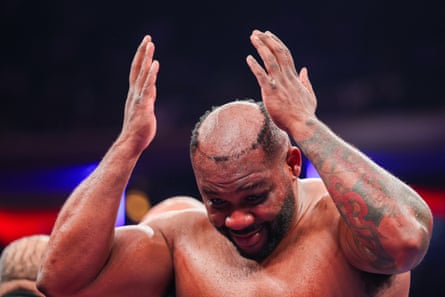
Hair systems are not foolproof. In a boxing match between Jarrell Miller and Kingsley Ibeh in January, Miller’s hairpiece came loose and he eventually tore it off and threw it into the crowd. Miller, who went on to win the fight, kept a sense of humour about the incident, saying: “It’s funny, man. I’m a comedian and you’ve got to make fun of yourself.”

Robinson and Martinez suggest that there may have been some kind of issue with how Miller’s piece was applied, or that there hadn’t been a long enough gap between application and the boxing match. Toupees should be able to withstand plenty of knocks with proper maintenance, such as gentle washing no more than one or two times a week with mild products, and either visiting a professional for removal and rebonding, or following the appropriate guidelines for at-home removal and reapplication. “I’ve got one customer who regularly jetskis, one who goes scuba diving, one who’s constantly in the gym,” Robinson says.
“The biggest misconception I had was that it would feel as though it could come off,” says McSherry. “But it absolutely can’t. It feels like real hair. It gets to the stage where I stop worrying about it.”
He visits Robinson once a month, though some might need to go more or less frequently, depending on their lifestyle and type of system. “Having had it done this week, it feels like the best-case scenario,” McSherry says. “It’s perfectly cut and it feels completely secure on my head. There’s nothing that could get this thing off my head right now.”