.png) 3 months ago
86
3 months ago
86
“I’m asked quite a lot why everything I make ends up being about sex,” says Scottish writer and director Robert Softley Gale, artistic director of the company Birds of Paradise. His new production, (We indulge in) a bit of roll play, is designed to provoke frank discussions around sex and disability. “People say the right things and that they support equality, but what if you push that into areas that are less comfortable? Like would you ever date a disabled person? Would you marry a disabled person? Would you have sex with a disabled person? Some would go, ‘Yeah, of course I would.’ But would they? There’s still discomfort in recognising that disabled people have sex lives.”
Softley Gale and his co-writers, Hana Pascal Keegan and Gabriella Sloss, aim to challenge audiences in the show which he is also directing. They hope to counter narratives around disabled people needing charity or pity, and instead show lives that are complex and nuanced. “We don’t see a lot of disabled characters full stop. Seeing them having respectful, enjoyable sex is almost unheard of. By doing that in the ways that we do, we’re being quite provocative,” he says.
The playfully named production follows Ben, a young disabled man, portrayed by Ed Larkin (star of the West End musical The Little Big Things). Ben juggles living at home with his parents alongside being at university and having an occasional girlfriend, and the play explores the limitations and expectations that come with this. “He is dependent upon his parents for his care needs, and to get out and about,” says Softley Gale. “His mum and dad make presumptions about him and what he can do. Those presumptions can actually be quite wrong and misguided.” A big presumption is around sex. It’s a theme that the Glasgow-based Birds of Paradise has explored before, including in Wendy Hoose, a comedy about two young people – including a physically disabled woman – seeking a one-night stand.
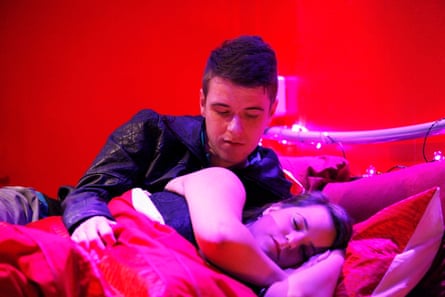
An intimacy coordinator, Vanessa Coffey, has been involved in the whole process of the new play, starting with a workshop to explore the idea and address the production’s topics sensitively. As the play developed, part of Coffey’s job was ascertaining “what we need to tell prospective performers the piece is going to be, what sorts of things they might be asked to explore. It’s essentially about consent, that everybody knows the piece of work that we’re making, and allowing people to feel that the safety scaffolding is there.” She highlights that it’s also important to ensure audiences feel safe with what they’re watching.
The production addresses the subject of sex sensitively, using humour and allowing the audience to see themselves in the work. “But we also then take them to places that challenge them a little bit, and we ask questions that are difficult to grapple with,” Softley Gale explains. “That’s all that theatre can do. It’s not very good at giving solutions or answers. We actually haven’t got the answers, but I think it’s good at asking questions.”
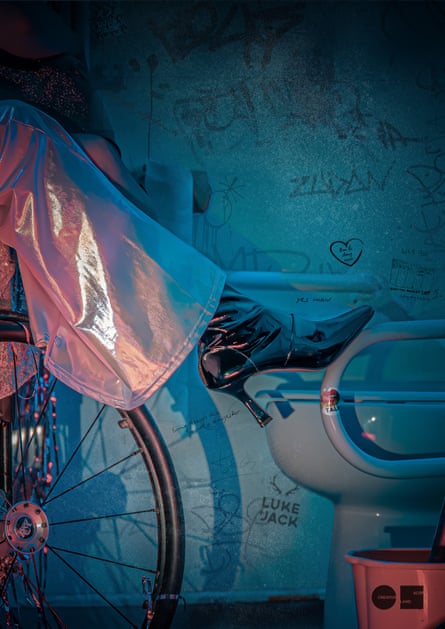
The play shows Ben’s parents having “a lot of sexual agency, a lot of access to sex,” says Softley Gale. “And then we see this young guy, Ben, who maybe doesn’t have the same access.” The play, he explains, features frank sexual content. “The opening scene depicts the parents having sex on their kitchen table, complete with chocolate sauce. The script includes an OnlyFans livestream sequence where Ben performs solo sex work. There’s extensive sexual dialogue throughout, escalating from flirtation to explicit descriptions of penetration, body fluids and various sexual acts. The play also depicts conversations about sex work, kink culture, and includes references to sex clubs, baby oil wrestling, and various sexual scenarios.” He stresses that the sexual content serves the play’s central themes about disabled people’s right to sexual expression, agency and visibility. “It’s graphic with purpose rather than gratuitous. The production will use theatrical techniques – lighting, staging, suggestion – to present these moments with both honesty and artistry appropriate for adult theatre audiences.”
Softley Gale hopes the production will help make those audiences consider their preconceptions, including asking how physically disabled people have sex. “We’re not trying to ignore that question or say that’s a bad question,” he says. “How do we get that conversation moving forward? If we try to pretend it’s not a thing, that doesn’t help anyone. If we shy away from questions, we give the audience permission to shy away as well. It’s about making people uncomfortable in a comfortably uncomfortable way.”
“There’s a lot of curiosity that sits around what people might perceive as taboos,” says Coffey. “If people leave this space wanting to have conversations about what they saw, that will be the big outcome.” Addressing these themes in theatre isn’t just about challenging perceptions, but about making disabled lives more visible, explains Softley Gale. “A lot of the feedback we get from disabled audience members is, ‘I’ve never seen my story told before’ – and that’s a really powerful thing.”
-
(We indulge in) a bit of roll play is at Tramway, Glasgow, 19-21 February