.png) 3 months ago
72
3 months ago
72
Does having children make you happier? Apparently not, according to a new study published in Evolutionary Psychology which, despite involving more than 5,000 participants in 10 countries, including Britain, could find no strong evidence that parenthood led to a measurable increase in positive emotions. The researchers, led by Menelaos Apostolou of the University of Nicosia, looked at both hedonic wellbeing (day-to-day emotional states such as joy, sadness and loneliness) and eudaimonic wellbeing (a feeling of purpose and meaning). With the exception of mothers in Greece, who felt a greater sense of the latter, there was no statistically significant difference between parents and non-parents, suggesting that becoming a parent leaves your emotional wellbeing largely unchanged.
This was seen as surprising, but is it, truly? I love my son and being his mother has given my life great joy and meaning, but that is not to say that my life has more joy and meaning than that of someone without children. To an extent, comparing my life as a mother with the life of a stranger without children is meaningless: children are not appendages whose presence or absence reveal a static emotional state. The only way you could truly get the data would be by having access to the two timelines. In one, you had children, in the other, you didn’t. The parallel selves would each complete a cognitive behavioural therapy (CBT) questionnaire which could then be compared.
Even then, though, it doesn’t quite get to the crux of it. You might as well ask: does loving people make you happy? The answer to which would be: sometimes, yes, but at other times, it causes great pain. That is the human condition. In choosing to have children, you are essentially widening the cluster of people whom you love fiercely, whose sorrows are your sorrows, and whose death or absence would destroy you. When this is your child, those feelings are more potent than you ever could have imagined. To quote my mother: “Once you have a child, you are forever vulnerable.” To quote Shadia, who looked after my son when he was a baby: “There he is, your heart outside of your body.”
The intensity of that feeling is ephemeral, though. Just as happiness isn’t a continuous state, nor is the new vulnerability of parenthood. These are complex emotions. A discussion on Woman’s Hour raised many pertinent points – about the pressure on women to engage in intensive mothering, about the burden being responsible for a parent’s happiness places on children, and about how fun being around children can be, which is something we often forget to talk about. That precarious feeling of vulnerability, though? The teetering feeling of almost-grief, that can hit you when you least expect it, like a kind of horrible vertigo? It didn’t touch on that.
No doubt there will be people along to say that I have it all wrong. You know, the “love-being-a-mums”. So I’ll give the obligatory disclaimer, which is that I, too, love being a mum. At the same time, I don’t think society is honest about the reality of care work. The old lie is that care work is wholly fulfilling (for women), when of course it isn’t, even when you love the recipient of that care more fiercely than all others. We have such trouble detaching care from love, or admitting that care work is hard work, and that in becoming a parent you are signing up to many, many years, possibly a lifetime, of care work, and that sometimes you would rather read a book or go for a walk or swim in the sea. That it’s OK to miss these things, regret your loss of freedom, even.
In the other timeline, I have more money and fewer worries. I am free from the work of caring for a child, and I don’t have to live with the vertigo, as I’m calling it, or at least not to the same extent. My life still has meaning, of course it does. Crucially, I have no awareness of my present timeline, the one in which I know the joy that can be found in discovering the perfect stick, the one in which my child is running home laughing along blossom-strewn pavements, the look on his face as he stops, and turns, smiling expectantly until I raise my arms above my head and cheer his name. “You’re so fast!” I yell. It’s an absurd euphoria: so simple, so easy.
Am I happier? Who is to say? I feel differently to a friend, who, when having problems conceiving, said that she didn’t believe her mental health would ever recover if she was unable to have a child. I think I could have found a way to be happy, possibly, after intense grief. My son was very much wanted. I didn’t have him to “complete” me or to make me happy, but having him certainly prevented me from becoming terribly unhappy, at least for a time.
Parenthood is not a sustained emotional state but a series of intense highs and lows. The spikes in joy are certainly higher than they used to be (the study also suggested this), and the lows are lower. What makes the difficult feelings more manageable, though, is fun. And, crucially, having a support system. I can’t help but feel the study’s results would be very different if the participants were all given back the village that humans are historically supposed to have. Perhaps that is why Greek mothers are happier and feel a greater sense of purpose. Because when the vertigo and the exhaustion hits, there are people there to hold the baby.
-
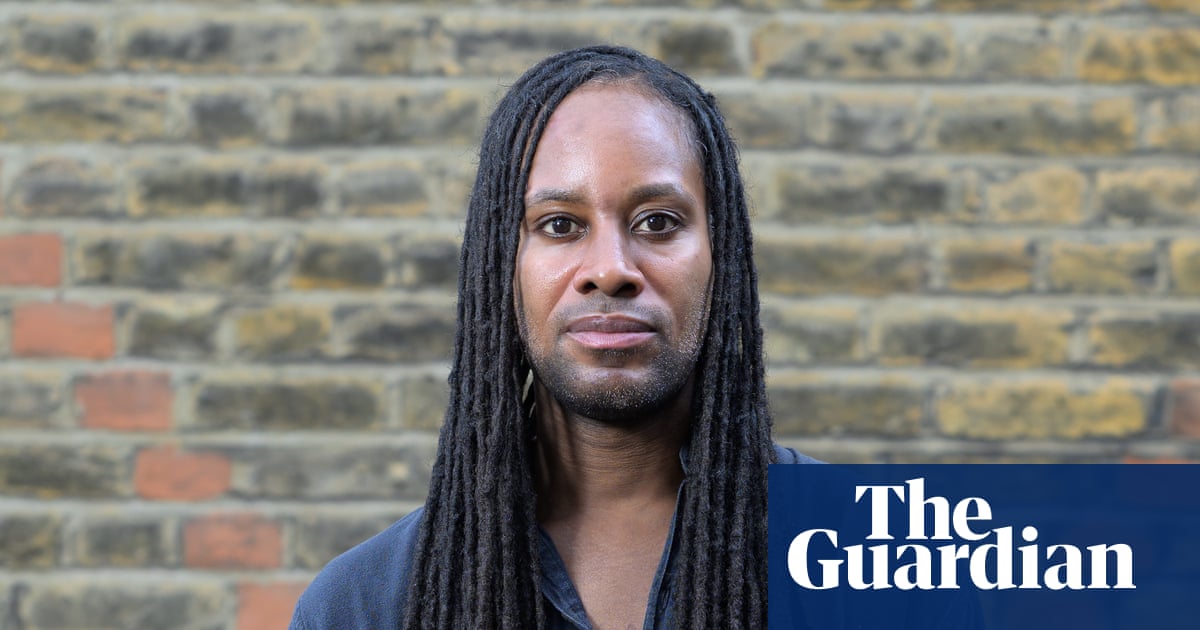
Rhiannon Lucy Cosslett is a Guardian columnist