.png) 3 months ago
85
3 months ago
85
No, the world isn’t going to hell in a handcart. But yes, a good many items are being stolen – in plain view, with apparent impunity – from the shelves at Tesco, M&S and all the major high-street stores.
It’s a huge loss for the shops, and as political types discuss whether Britain is broken, a hot potato: a coming-to-a-store-near-you symbol of a nation in which so many feel that law and order is just a US cop show on Channel 5.
As a former police officer, having been a chief superintendent during 30 years in the Met and having sat on the London policing board, I often reflect with former colleagues on how we are where we are in terms of policing and public confidence – and how we dealt with shoplifting during our time in the force.
When I was a probationer PC in Tottenham, north London, I regularly attended calls to shops to arrest shoplifters. It was called GIC: given into custody. New PCs cut their teeth on policing based on shoplifting offences: arresting, reciting the caution, recording property, escorting a prisoner to the police station, booking them into custody, interviewing them, charging them and then going to court. It was valuable experience for new officers, good for the shops and good for society.
Where we stand today shows how deterioration and decline has set in, and were you to ask when and how it started and who is responsible, my reply would be unequivocal: j’accuse Theresa May, now Baroness May, the longest-serving home secretary of modern times. May, who was in the post from 2010 to 2016, and her governmental band of ill-advised advisers, made five key decisions that have had a profound and deleterious impact on policing today.
First, the reduction of police numbers by almost 22,000 officers and more than 20,000 police staff – which included police community support officers (PCSOs) – was plain wrong. These huge reductions meant that police leaders had to make some difficult decisions on where the cuts were going to be implemented. In the end, most forces decided to gut their neighbourhood police teams in order to maintain capacity to answer 999 calls. This meant that safer neighbourhood teams – such as those I introduced in Tower Hamlets, east London, consisting of one sergeant, two police constables and three PCSOs – were reduced to a model of shared supervisors and teams required to simultaneously fulfil other roles. The opportunities for officers to work with local people and identify problems that would be jointly solved were reduced – and communities’ confidence in policing suffered.
May’s second offence was the hyper-politicisation of policing, with the introduction of police and crime commissioners (PCCs) in 2012. PCCs – whose positions are soon to be abolished – are elected officials whose role is to oversee local policing, set budgets and select chief constables. The first election of PCCs attracted just 15% of voters, and once in position, the incumbents largely sided with their respective home secretary or shadow home secretary, regardless of local issues.
The chair of the Association of Police and Crime Commissioners, Donna Jones from Hampshire and the Isle of Wight, said about the far-right rioters in the summer of 2024: “The commonality among the protest groups appears to be focused on three key areas: the desire to protect Britain’s sovereignty, the need to uphold British values and, in order to do this, stop illegal immigration. The government must acknowledge what is causing this civil unrest in order to prevent it. Arresting people, or creating violent disorder units, is treating the symptom and not the cause.” Neither this nor the clarification she later released amounted to the necessary endorsement of the hardworking officers in Hampshire and the Isle of Wight who were being attacked.
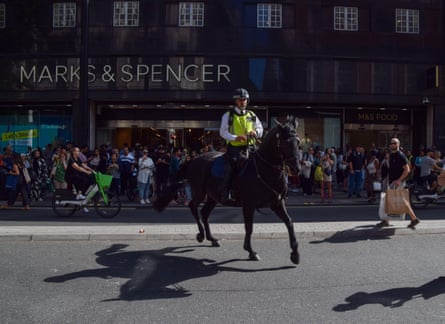
Third on the charge sheet: the introduction of the Anti-social Behaviour, Crime and Policing Act 2014. This legislation decreed that the shoplifting of goods valued at £200 or less would become a “summary-only offence”. Now, in practice, offenders are charged via a letter in the post and have the option of a fine instead of custody. With that, police have lost the opportunity to arrest and search suspects, as well as vehicles and properties they are associated with. Hardened criminals play the system by stealing items under £200 and ignoring letters and fines. May and her team fundamentally misunderstood that this feeble attempt to change how police dealt with shoplifting – by looking at it through a “best value” lens as opposed to a policing one – would only embolden thieves to steal with impunity.
Fourth, May failed to listen to the experts who said that reductions in policing would result in an increase in crime. At the Police Federation of England and Wales’s annual conference in 2015, she said: “So please – for your sake and for the thousands of police officers who work so hard every day – this crying wolf has to stop.” No surprise, the wolf is here.
Finally, the shake-up of police leadership meant that, for a period, the most senior officers chosen by crime commissioners lacked experience of working in different forces. So PCCs with little experience were choosing leaders who themselves had limited experience. The politicians’ yen to introduce an officer class meant that people with no background in policing were able to join as direct entrants. People who in my humble opinion were totally unsuitable were contacting me about becoming direct-entry superintendents. My daughter suggested that I might just as well contact my local hospital and ask for direct entry into heart surgery.
So what now? We’ve fallen a long way, but some simple things should help. Introduce stability in police numbers. Do not reduce the rank and file and assume there will be no adverse impact on crime figures. Invest again in neighbourhood policing, and ensure that a ringfenced allocation of local officers and PCSOs can work in partnership to problem-solve and start rebuilding confidence among local communities and businesses.
We must have confidence in police officers. Politicians and their advisers need to work in tandem to restore public faith in policing, starting with a drive against shoplifting. As for the May era: never again.
-
Dal Babu is a former chief superintendent in the Metropolitan police