.png) 3 months ago
78
3 months ago
78
A group of religious leaders and an MP in the Gambia have launched efforts to overturn a ban on female genital mutilation at the country’s supreme court.
The court case, due to resume this month, comes after two babies bled to death after undergoing FGM in the Gambia last year. Almameh Gibba, an MP and one of the plaintiffs, tabled a bill to decriminalise FGM that was rejected by the country’s parliament in 2024.
Activists and lawyers see this as the latest move in a backlash against women’s rights that is eroding gender protections across the world.
Fatou Baldeh, founder of the Gambian rights organisation Women in Liberation & Leadership, said: “FGM is a strong manifestation of violence against women that harms their physical and psychological health.
“If this issue is still being [debated at a national level], it shows us that women’s rights are really regressing. This is not an isolated issue – it’s part of a global regression on women’s rights.”
The Gambia has one of the highest rates of FGM in the world. Almost three-quarters of women between 15 and 49 have undergone the practice and nearly two-thirds of them were cut before the age of five.
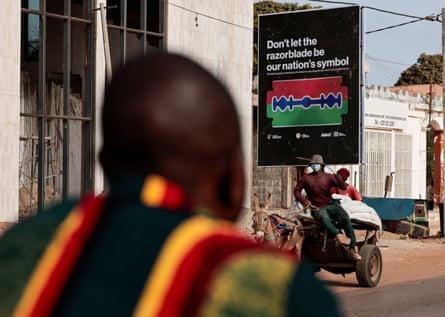
FGM involves the partial or total removal of the external female genitalia, which can have serious long-term health consequences, including infertility. It is generally carried out without anaesthesia by untrained “cutters” using non-sterile instruments such as knives, razor blades or pieces of glass, and girls are usually forcibly restrained.
The practice is considered to be a grave violation of human rights and in 2012 the UN passed a resolution to ban it. Although is still practised in about 30 countries in Africa and Asia, FGM has no medical basis and is performed solely for cultural or religious reasons.
Under the current law in the Gambia, a cutter faces up to three years in prison, a fine of 50,000 dalasi (£500), or both. Where FGM leads to death, the perpetrator could face life imprisonment.
Although criminalised in 2015, the law went unenforced until the first convictions took place in 2023. Three women were ordered to pay a fine or spend a year in prison for carrying out FGM on eight children. The convictions sparked a backlash against the ban, which led the country to the brink of repealing it.
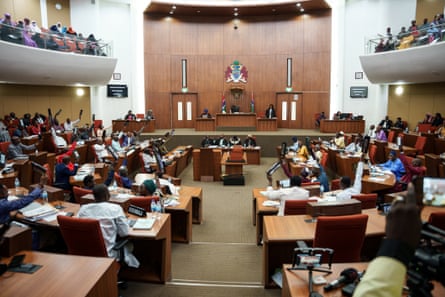
After the bill to overturn the law criminalising FGM was rejected, a coalition led by Gibba launched a case with the supreme court claiming that the law violated Gambians’ constitutional rights to cultural and religious freedoms.
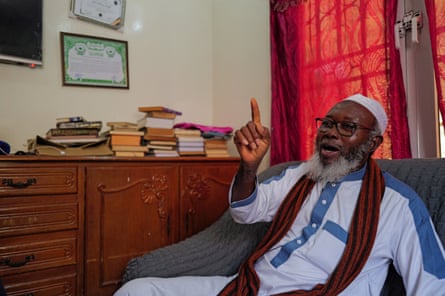
The court has heard from two witnesses so far, Abdoulie Fatty, a prominent Muslim leader, claimed in December that female circumcision, though not mutilation, was part of Islam and was not harmful.
When asked what he said to the families of two people who died from the practice, he replied: “We are Muslims and if someone dies, it’s God’s will.”
He said that the benefit of the practice was to reduce women’s sexual desire, which could be a problem for men.
Also due to give evidence is Fuambai Sia Nyoko Ahmadu, a dual US-Sierra Leonean citizen and founder of a pro-FGM organisation, Gambian Women are Free to Choose.
In December, she co-wrote an article, Harms of the current global anti-FGM campaign, for the BMJ Journal of Medical Ethics. The piece argued that “a ubiquitous ‘standard tale’ obscures the diversity of practices, meanings and experiences among those affected” by cutting.
Representing the plaintiffs is Lamin J Darboe, a UK-trained lawyer with dual British-Gambian citizenship; he has announced a bid to run for the presidency in the country’s elections in December.
It comes after a ruling against Sierra Leone in July by the Economic Community of West African States (Ecowas) court of justice, which described FGM as “one of the worst forms of violence against women” which “meets the threshold for torture”.
The president of Sierra Leone, Julius Maada Bio, is the current chair of Ecowas. Weeks after the ruling, he signed into law the Child Rights Act 2025, which did not ban FGM.
“It speaks volumes that he refused to act on the ruling,” said Baldeh. “Within the region we have all these beautiful protocols and treaties protecting women and girls, which are all against FGM, yet nothing is being done.”
Also in Sierra Leone, there has been significant opposition to a bill on safe motherhood, which led to proposed amendments that restrict access to safe abortion.
It is widely seen as part of a new wave of attacks on women’s rights worldwide. In Afghanistan, the Taliban is eroding any rights women had before the militant Islamists seized power; in the US, restrictions on access to abortion and contraception services are increasing, and in Iran, women are key targets of the regime.
According to a report by Equality Now, new legislative proposals in Bolivia and Uruguay threaten to weaken protections against sexual violence.
“Civil society organisations face increasing pressure under repressive laws, such as in India and Kyrgyzstan, while government bodies responsible for advancing women’s rights are being dismantled in South Korea and Argentina,” said the report.