.png) 3 months ago
68
3 months ago
68
Katherine first caught the bug when she visited Australia a couple of years ago. The flights were expensive, and it was a once in a lifetime opportunity, so she asked her manager if she could extend the trip by two weeks, and work remotely from her friend’s house.
That was her first taste of a “workation” – combining working with a holiday – and she loved it. She now regularly arranges petsitting in different places so she can visit family, friends and new cities for long weekends without spending extra.
“I just think it’s brilliant for work-life balance. It’s a great way to have a change of scene – your evenings and weekends, you feel like you’re on a mini-holiday,” she said. “It’s just getting out in nature, a different perspective, different environment.”
At 48, Katherine doesn’t fit the stereotype of a young digital nomad living a freewheeling life. But she’s one of a growing number of people of all ages who are taking advantage of digital technologies and increasing flexibility from employers to explore new ways of making the most of their free time.
As a conference manager at a university, she needs to be in her hometown when she’s organising an event, but otherwise she can work anywhere where she can take a laptop. Her employer doesn’t have a formal policy, but managers will consider all requests.
“It all comes down to individual relationships and trust, and having that autonomy – I know my deadlines, my role and what I need to get done; that doesn’t change if I’m at home or elsewhere,” she said.
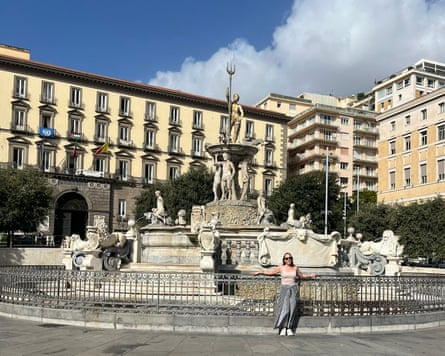
Research from the Chartered Management Institute found that one in eight employers have a formal policy on workations, while one in five managers said they had taken one themselves. Most perceived them positively, citing benefits such as mental health and work-life balance, though some feared data security implications.
Petra Wilton, director of policy and external affairs at the CMI, recommended that employers should “put clear, transparent rules in place and actively manage them” to give managers the confidence to be supportive.
A recent Grant Thornton survey suggests the use of formal arrangements is growing, with the number of businesses with a workations policy increasing from 59% in 2023 to 77% in 2025. A YouGov poll found that 37% of people able to work remotely were interested in taking a workation in the next 12 months.
Travel companies are also targeting these holidaymakers – for example Tui has a workation page advertising “handpicked hotels that are perfect for a working holiday”.
This reflects a shift in people’s priorities from work-life balance towards “work-life blending”, where the boundaries between life and work are more blurred, said Daniel Wheatley, a researcher in the University of Birmingham’s management department.
He added that “workation” was a comparatively new term in academic circles that arose out of the cultural changes brought about by the Covid pandemic, advances in digital technologies since the 1990s, and travel, holidays and leisure pursuits going mainstream in the late 1970s.
The term reflects a growing culture of “life first, work second”, especially among younger employees, who are “exploring different ways of engaging in work, different forms and structures of careers rather than a linear pathway”, he said.
But rather than being a new way of working, the growth of knowledge and service work could actually herald a full circle return to the medieval era of artisans and craftspeople living in the same place as their workshops, he added.
“It gives a sense of freedom and allows people to take more control over lives,” he said, noting that it could also help people juggle caring responsibilities.
However, he underscored the importance of proper breaks from work, so that workations are about “leisure time, social connectedness and wider wellbeing”, rather than “increased monitoring meaning [employees] never feel offline or disconnected”.
Equally, access to perks such as workations risked entrenching division in society between people who have benefited from digital technologies and those who have not, in particular those who experience digital or labour market exclusion and precarity.
Ian Brown, 58, a managing director for an industrial engineering company, has taken several workations to extend his holiday allowance after working from a beach hut in Jamaica, and now extends the perk to his employees.
“It does feel ultimately that you’ve got more time away from the office space than normal – it takes you out of that environment, you’re away and doing something you enjoy. It refreshes you and gives you an added perk,” he said.
He feels that flexibility helps him accept the more onerous aspects of his job, such as 60-hour weeks and out-of-hours work, and fosters a culture of trust and reciprocity with employees. “They remember that when you’re up against it and ask them for help.”
He added: “The drawback I feared was that they would take the workation and not respond to requests to do something – that’s never happened – and the positivity is extraordinary.”