.png) 1 month ago
42
1 month ago
42
For many British voters, politicians and journalists, public spending has had a bad name since the late 1970s, when Margaret Thatcher’s government began its long campaign to tame the supposedly bloated state. From this perspective, the public sector wastes money, commissions unnecessary or out-of-date projects and generates endless jargon and reasons for its own existence, while delivering strikingly fewer social or economic benefits.
Constant public and private lobbying for more funds from every minister, this argument continues, has helped make the job of prime minister impossible, and raised taxes and government debt to intolerable levels. Therefore the state requires a fundamental rethink – which means its sense of entitlement needs to shrink.
Yet over the past dozen years, as the call for more austerity has become the default mode of much Commons rhetoric and media commentary from rightwing ideologues to self-styled realists of the centre left, one expensive part of the public sector has been exempted. The UK’s defence budget, despite still being one of the 10 biggest in the world, is frequently said to have been “cut to the bone” and to be in urgent need of a big increase.
This argument is made not only by defence ministers, defence thinktanks, defence correspondents, defence lobbyists, trade unions with members in the industry and MPs with and without military experience, but by the head of the British armed forces, the chief of the general staff, in what has become a regular public ritual. Last month, the current incumbent, Air Chief Marshal Richard Knighton, told a House of Lords committee that “without changes to the settlement” – code for a spending increase – the armed forces would have to “dial back” their “operational activity” and “exercises and training”.
As usual with such warnings from senior serving or retired military figures, his words received widespread and largely unquestioning coverage. If someone in a high-ranking military uniform says they need more money because the world has become a more dangerous place, many Britons – including the outgoing prime minister, Keir Starmer, who has recently unveiled a new, more generous defence investment plan – tend to believe them.
But should they? One obvious yet little considered difficulty for civilians in assessing such warnings is that they don’t have access to a lot of military information about the state of the armed forces or threats to this country, because it is classified. The warnings have to be taken on trust, to a greater extent than claims about, say, the need to increase spending on the NHS. Most Britons have experience of the NHS, while the military remains an often necessarily closed world, even to the families of those involved. My father was a soldier his whole working life, yet could not talk to me about much of what he did.
In a democracy, where there is supposed to be a degree of transparency about what happens to taxpayers’ money, the unaccountability of the military is a problem that can only be managed and never completely solved. The same goes for the armed forces’ unique potency and distance from everyday politics, as the most heavily armed state institutions whose loyalty to the monarch rather than the elected government is either made explicit by oath or constitutionally assumed. During the rare periods when British politicians have questioned the military’s privileges, such as Tony Benn’s most iconoclastic phase in the early 1980s and Jeremy Corbyn’s Labour leadership, signals have been sent by military figures – sometimes anonymous, sometimes not – that they should back off.
Nowadays, it is easy to find reasons why our politicians should defer again to the generals, from Russia’s invasions of Crimea and Ukraine to the weakening of US support for Europe and the growing military assertiveness of China. While none of these necessarily suggest that Britain will soon be involved in a war of self-defence – as opposed to the offensive ones in which we regularly get involved – they have helped create an ominous atmosphere that suits the professionally doomy military lobby and the pessimism of many politicians and journalists in this troubled country.
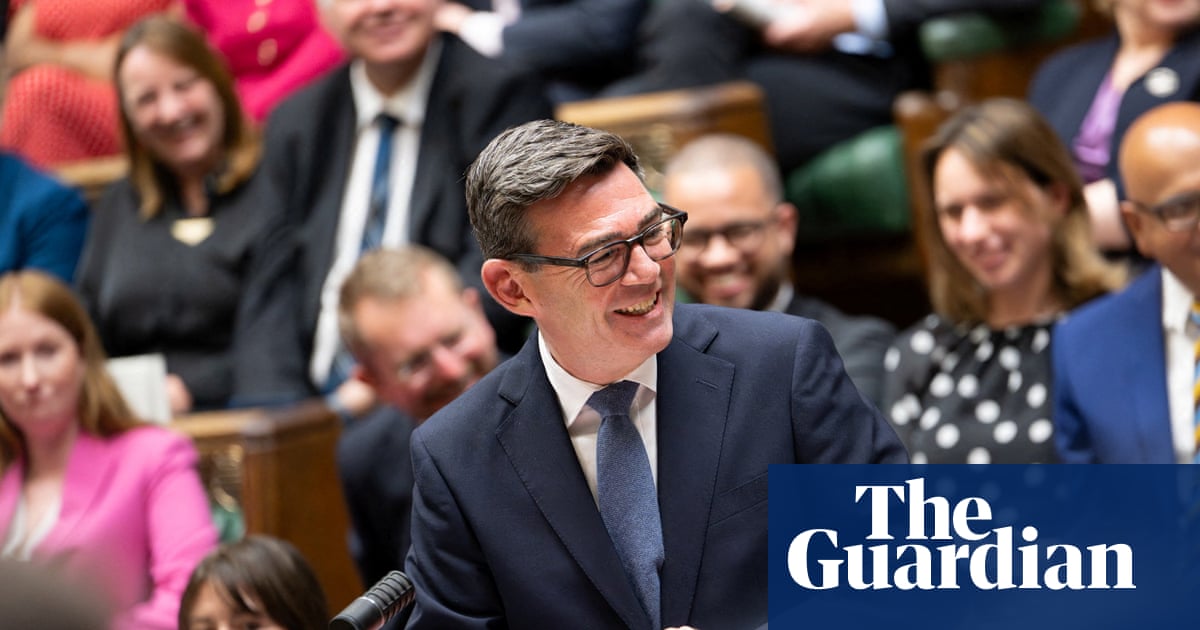
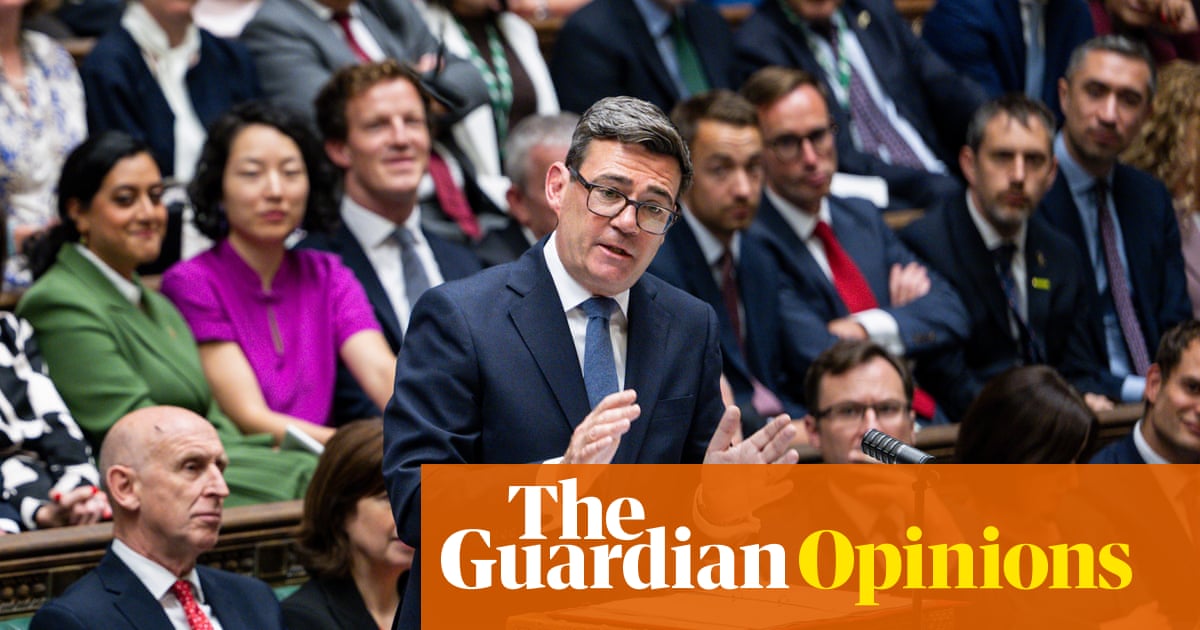
Andy Burnham does not seem a natural pessimist. But his premiership seems unlikely to diverge far from the current militaristic narrative. “Increasing our national security, in every sense, will be my first priority,” he wrote in the Times last week.
Yet he continued: “For our biggest defence projects, I want to see … more transparency and accountability to tackle cost overruns or delays before they spiral out of control.” In 2022, Labour published a “dossier of waste in the Ministry of Defence 2010-2021”. It concluded: “The MoD is a uniquely failing department. None of its 36 major projects … is on time and in budget.”
Long-term military planning is hard. The technologies, tactics and likelihood of war can change very slowly or very fast, as the sudden, largely unanticipated battlefield dominance of cheap drones demonstrates. Defence budgets are always going to have to allow for some abortive or adjusted programmes.
after newsletter promotion
But similarly large uncertainties about future trends in health and medical developments also affect the NHS budget, which has a much more immediate effect on public safety. Yet the discourse around health spending is very different. “We are pretty much maxed out on what’s affordable,” said the head of NHS England, Jim Mackey, last year, reflecting a common view. “It is really now about delivering better value for money.” It’s almost impossible to imagine the head of the armed forces, or their many media and political supporters, ever saying that.
Redressing this military-civilian imbalance isn’t a luxury project for lefties, pacifists and other critics of Britain’s special relationship with its armed forces. With the Starmer government and its imminent successor “reprioritising public spending” – cutting other public services – to boost defence, our profligate military could exact a high social and political cost, damaging Burnham’s premiership from the start.
The references in his Times article to inefficient defence spending suggest he is aware of the danger to some extent. But he also wrote that military manufacturing could play a central role in “regenerating and reindustrialising the country”. The history of Britain since the second world war, with its small islands of heavily subsidised defence jobs amid swathes of dead factories, suggests otherwise. War, and preparing for war, is often a game of bluff. You shouldn’t believe everything its players say.
-
Andy Beckett is a Guardian columnist