.png) 1 month ago
56
1 month ago
56
In 1986, 131 years after the Daily Telegraph was founded, its editor, Max Hastings, wrote a memo to senior colleagues about the newspaper’s nature and purpose. “The Daily Telegraph is … ‘nice’,” he said, “in the business of reassurance, of providing confirmation each morning for our readers that their world is looking pretty safe and stable.” He went on: “We are not a strident campaigning newspaper – our business each day is to seek to give our readers the fullest possible information about what is happening in the world, and to suggest what it might mean.”
In practice, under Hastings and many other Telegraph editors, this ethos produced a journalism of pervasive but usually understated conservatism: often focused on the English countryside, the value of hierarchy and tradition, the pleasures of seasonal pursuits such as foxhunting and gardening, the interests of farmers and retired military men – and cautionary tales about more reckless lives gone wrong, often presented through enjoyably detailed reports from the divorce courts. The Torygraph, as many non-readers called it, could be inward-looking and “numbingly dull”, says Geoffrey Wheatcroft, the historian of British conservatism, but it was “thoroughly respectable”. Many of its most renowned figures, such as Hastings’s predecessor as editor, Bill Deedes, were “mildness itself”.
Few people say such things about the Telegraph now. Against strong competition, it has become one of the angriest rightwing papers in the world. “Starmer’s Britain is descending into anarcho-tyranny,” claimed a typical columnist, Allister Heath, also editor of the Sunday Telegraph, last September. The same month, another columnist, Allison Pearson, praised the far-right agitator and convicted criminal Tommy Robinson for his “rough-diamond charisma”. Last December, the headline of a column by another regular contributor, Sean Thomas, read: “I prefer foreign autocracies to Labour’s Britain”.
The paper’s news coverage, once revered for its quirky stories and rich picture of Britain, has become increasingly partisan, polemical and hyperbolic. “Labour to unleash up to 12,000 shoplifters,” claimed a front-page headline in April, above a story about new laws on sentencing. Another April front page warned that “[Angela] Rayner’s workers’ rights police get power to force their way into offices”. In 2025, another front page was headlined: “One in 12 in London is illegal migrant.” After a complaint that the figure was based on an underestimate of the capital’s population and an artificially wide definition of “illegal migrant”, the paper was required by the press regulator Ipso to publish a correction.
A reporter who worked at the Telegraph from the 2010s until recently told me: “When I started, you would get handwritten letters from pensioners, telling you about their garden, about how they dealt with slugs. But as the paper changed, we got complaints from readers instead: ‘The Telegraph used to be so nice. Now it’s so angry.’” A former editor of the paper says: “My private view, like that of most sensible people, is that the paper is contemptible.” Like the many other conservative journalists interviewed for this article, he asked to remain anonymous.
The Telegraph’s hardening of tone and content since the mid-2010s has, to varying degrees, been echoed across the rightwing press. “Middle class will lose out as benefits claimants get energy help”, warned the front page of the Times on 25 March. “Up to 15 relatives enter UK for every care worker despite curbs,” said a recent story about migrants. On 8 January, another headline read: “Crime spree by Met police officers waved through in diversity push”. The story continued: “A diversity panel at Britain’s biggest police force overturned vetting refusals, which led to rogue officers and staff committing rapes, assaults and drug offences.”
That such ideologically framed stories often now appear in the Times, traditionally regarded as a calm and relatively objective paper of the centre-right, shows how much the conservative press has changed. The shift is also sometimes evident at the Sunday Times. Last November, its columnist Rod Liddle described London as “a rancid, alien, chaotic dystopia which preys upon a sullen, underpaid, third world workforce”. He is a controversialist, but his prominent pieces give a harder edge to a paper usually known for being relatively liberal and upbeat.
In fact, much of the rightwing press sounds more and more like its traditionally fiercest member, the Daily Mail, and often covers the same stories. Although the papers compete strongly with each other, in a political sense they can be mutually supportive. Last January, like the Telegraph, the Mail claimed that one in 12 Londoners were illegal migrants. When the Mail’s story was criticised by Ipso, too, the paper tried unsuccessfully to avoid printing a correction by arguing that its article was based on the Telegraph’s, and that “given the prominence of the original article, it was reasonable for it to assume the central premise was accurate”.
Why have Britain’s rightwing newspapers become more alike? Why have they become angrier and often more extreme in their stances? The rightwing press often warns about environmental campaigners, pro-Palestine activists or British Muslims becoming radicalised. But increasingly it seems that the rightwing press itself has been radicalised. This change has helped power the rise of Reform UK, push the Conservatives further to the right, and destroy Keir Starmer’s “pathetic” government, to use a favourite Telegraph adjective for it. All this has happened at a time when newspapers are supposed to be in terminal decline. How exactly has this radicalisation happened – and where is it leading the media and the country?
One of the main causes of this change may have been hiding in plain sight. The editor of the Daily Telegraph, the editor of the Times and the editor of the Sunday Times all spent formative years working at the Daily Mail. So did the Mail’s current editor, who has been at the paper since 1990.
All four are men, now in late middle age: Chris Evans, Tony Gallagher, Ben Taylor and Ted Verity. They worked at the Mail when the paper was enjoying a golden period, with print sales reaching a recent peak in 2003 of 2.5m. That measure of success is almost obsolete now, with digital media ascendant, but another key fact about the Mail in those days retains more contemporary relevance. The paper’s editor from 1992 to 2018, the four men’s dictatorial boss and inspiring mentor, was in many ways the inventor of modern culture-war journalism, and of the workplace practices that make its ceaseless production of outrage possible. He was one of the most revered and loathed editors in the history of British newspapers, the real victor last week in the phone-hacking case brought unsuccessfully against the Mail’s publisher by Prince Harry and six other prominent figures: Paul Dacre. (I contacted him and his four proteges for this article, as well as the papers they edit, which did not respond to my request for comment.)
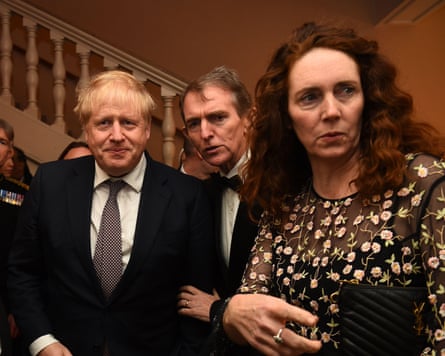
“From virtually the moment I was born, I wanted to be an editor,” said Dacre, who is now 77, in a rare interview in 2008. “Not just wanted, if I’m honest. Hungered.” His father was a showbiz journalist for the Sunday Express for decades after the second world war. He would come home from work to their house in Arnos Grove, a neat and aspiring north London suburb, with scrawled notes from the Sunday Express’s editor, John Junor, on drafts of his articles. Junor was “the last of the great autocratic editors”, as Dacre self-effacingly put it later, when he was interviewed for Desert Island Discs, and there was a “rather gloomy atmosphere in the household” whenever Junor had written that one of his father’s articles was “rubbish”. Dacre learned young about the intoxicating directness of an editor’s power.
Gangly, shy and physically clumsy, he also realised that journalism could give him a public persona to hide behind, and a sense of control. In the 1960s, while a pupil at the private University College School in Hampstead – an intriguingly liberal part of London for a future scourge of the liberal elite – he edited the school magazine, and then did the same at the Leeds University student newspaper. He made both publications livelier and more controversial, though not by his later reactionary methods: he was on the left as a young man. He supported campus sit-ins and opposed the Vietnam war.
His politics did not change significantly during his first half dozen years as a professional journalist, despite working for the rightwing Daily Express, sister to his father’s paper. Then, in 1976, the Express posted Dacre to New York. Although the city’s public realm was deteriorating, encountering its immense private wealth and seemingly more fluid class system shifted him sharply rightwards. In 1979, a few months after Margaret Thatcher won power – partly by winning suburbs such as Arnos Grove – he joined the Daily Mail.
Under a smooth but ruthless editor, David English, the paper was overtaking the Express as the leading shaper and articulator of English middle-class conservatism. But Dacre, despite his political conversion and precociously extensive experience, was not an immediate success. He was better at composing features and columns than news reporting, and in the era’s macho tabloid culture those skills were less valued. Still shy, he did not believe he had the ability to be a really successful newspaper writer. So, in 1980, he stepped on to the Mail’s notoriously treacherous editorial ladder, where ambitious young editors and bitter, disappointed older ones fought daily, from nine in the morning until 10 at night, for the best stories and the favour of the paper’s editor. “Bollockings” – merciless critiques of inadequacies in performance – were handed out by senior editors to junior ones, and by editors to reporters.
At first, Dacre delivered his bollockings by memo, even to subordinates whose desks were only a few yards from his office. Then his behaviour started to change. He did not have a naturally loud voice: it was more of a mutter or a growl at normal volume. But he discovered that in the open but densely populated spaces of the Mail’s London newsroom he could raise it suddenly to great effect. At 6ft 3in, with a stern, thin-lipped mouth, a ruddy complexion that darkened further when agitated, and eyes that could flash with a theatrical fury, he gradually turned himself into one of the paper’s most renowned deliverers of bollockings.
“Shouting creates energy,” he told Desert Island Discs. He elaborated on this in another interview in 2002: “Newspapers are all about energy … I work as hard as anybody, if not harder. There’s not a job on the paper I can’t do and I work with them [my subordinates] very closely. I think if you were to ask them, honestly, they’d say he’s a big-mouthed, loud-mouthed tyrant, but … he gets the paper off [to the printers] at night and we all go home pretty proud of it. Yes, there’s a lot of shouting and a lot of swear words, but it’s never personal. I suppose I have a fault in that I don’t dwell on the great things we have in the paper that everybody else [on other papers] didn’t do – I always highlight the three probably footling things we didn’t do. But the day you stop doing that is the day you start going backwards.”
“He was terrifying,” says a former Mail columnist. “He wouldn’t always shout. Sometimes, his voice would get very low. He would say, ‘You’ve missed a story.’” Dacre wanted the Mail to report them faster and better than all its competitors – by which he meant not just other rightwing papers, but also the Financial Times and the Guardian.
First as deputy news editor, then news editor, and then finally as editor from 1992, Dacre honed a culture at the Mail that combined perfectionism with lavish journalistic resources and manipulative office politics. Trainee reporters were tested to destruction before being given staff jobs. Competing reporters were sometimes assigned to the same story. The editors wanted journalists who were “winners”, as they saw it, who would enable the Mail to be “victorious” over all other papers. More material would be gathered than each edition of the Mail needed, so that Dacre could micromanage what was included: the precise mix of resonant tales from everyday life, their heroes and villains, and the stories’ political messages, which were almost always socially conservative.
The Mail could afford to follow this model because it was profitable. In an era of generally declining newspaper circulations, the Mail’s consistently rose. Admiration for the paper’s commercial success, Dacre’s commanding office persona and the Mail’s political influence – on both the era’s Tory governments and conservative sections of the public – spread among proprietors of other papers. In 1991, he was tempted away from the Mail for a year to edit the London Evening Standard, and substantially increased its sales. In 1992, Rupert Murdoch offered him the editorship of the Times. In 1995, he was offered the editorship of the Telegraph. But apart from his time at the Standard, Dacre stayed at the Mail.
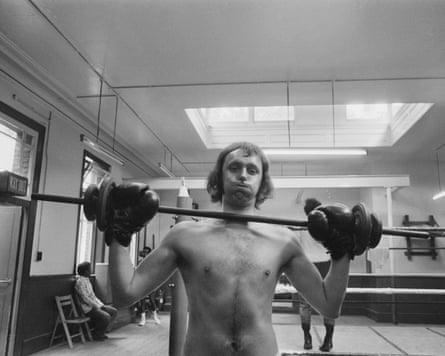
Two phases of the paper’s long working day became particularly crucial. In the morning, his most valued lieutenants would gather in his large office to be interrogated about the articles they had commissioned or might commission. Dacre would lean back, faux-casually, in his black leather chair, and sometimes rest his long legs on the desk. He liked the meeting to involve debate and welcomed being challenged, up to a point, but once he had made up his mind, even his smallest instruction was to be obeyed. “You very much know that you’ve got to do a story in a specific way,” a reporter who had recently left the Mail told me when I wrote about the paper in 2001. Another said: “Dacre will express some random opinion [and] it will dominate the paper for days.”
Early each evening, Dacre would emerge from his office to inspect what had been produced for the next day’s edition. Grabbing the printed page proofs laid out before him, he would cross out sentences and headlines, demand more attention-getting photographs and layouts, and throw irredeemable pages away. The process could go on for four hours, until 10 at night. It was believed at the Mail that “creative tension” produced a better paper, and also a collective sense of purpose. While subordinates nicknamed Dacre “the Grim Tweaker”, he thought he was conducting an orchestra. “Imagine the joy of putting together 96 pages [a typical edition] from nothing,” he told Desert island Discs. “Believe me, it’s one of the headiest, most exciting experiences known to man.”
Dacre’s intensity and effectiveness soon produced disciples. One of the keenest was Tony Gallagher, a socially conservative Roman Catholic who became the Mail’s news editor in the late 1990s, after arriving there as a reporter at the start of the decade. “I remember Tony talked about Dacre with awe,” says a former Mail journalist. Like Dacre, Gallagher had worked for the Mail in New York and had a relentless, American-style work ethic, arriving in the London offices earlier and leaving later than almost anyone else, a routine which gave his lean, pale face a perpetually exhausted look. He spoke in a small, precise voice, and expected his instructions to reporters to be followed absolutely, not least because they were often translations of Dacre’s wishes, and Gallagher would be held responsible for any failures to carry them out. While Dacre was the grim tweaker, Gallagher was simply known by Mail staff as “the grim reaper”.
According to Adrian Addison’s revealing history of the paper, Mail Men, journalists who did complete assignments to the satisfaction of Gallagher and his lieutenants on the news desk rarely received praise. “Are you a one-hit wonder?” one reporter was asked by a news editor after getting a scoop. “Oh, and tuck your shirt in.” Success was almost never celebrated, merely registered as an absence of failure, and then the paper moved on to the next story.
One of Gallagher’s equally merciless deputies was a slightly younger man, also a former Mail reporter, Chris Evans, who had been at the paper since 1996. Always crisply dressed, he liked to communicate as tersely as possible. “If you’d made a mistake, he would send you a one-word email,” says a former Mail reporter. “You’d have to go back over all your notes and work out what the mistake was, then send him back an abject apology. He would then say nothing in reply.”
As Dacre’s editorship went on and on – outlasting the premierships of John Major, Tony Blair, Gordon Brown and David Cameron – his worldview solidified ever further. Homeowners, hard workers, entrepreneurs and the traditional family were fundamentally good; benefits claimants, government bureaucrats, leftists and foreign influences (from the European Union to immigrants) were not. Rather than being sent out on a story and trusted to work out what was most interesting and important, Mail reporters were often effectively told to confirm what Dacre already thought, which he believed perfectly reflected the thoughts of his readers. A former Mail journalist says a typical instruction from the news desk to a reporter would be: “This is the top line of the story. Now find three people who will say it.”
More than on other papers, the Mail’s reporting culture combined rigid editorial assumptions, almost random instructions and great thoroughness. “Often you’d be sent 200 miles on a whim,” remembered Ben Taylor, who reported on crime and other subjects for the Mail during the 1990s and 2000s, in an interview for the Irish business website the Currency. “One day you were in Birmingham, the next you were on the Lincolnshire coast, or south Wales …” In 2007, following the usual path for the most ambitious Mail journalists, Taylor became news editor. His approach was less confrontational than that of many of his predecessors. A journalist who has worked for him says: “He doesn’t call people ‘cunts’” – a favourite Dacre term. Yet Taylor was a huge admirer of Dacre and, underneath, almost as driven. Colleagues describe Taylor as a machine, fuelled by anger at the world, expressed through extended newsroom rants against “the enemy of the day”, such as politicians, civil servants, BBC executives and patronising elites in general.
Ted Verity rose up the Mail hierarchy over the same period, having started at the paper in 1990. He was another relatively polite but steely young editor. “He was not one of the shouters,” remembers a former colleague. “He had a bit of charm. He could have a conversation with you. He was able to work comfortably with women” – not always the case with the Mail’s overwhelmingly male editors. Praise and encouragement of reporters were even permitted. Yet Verity still believed in producing an aggressive paper. “The high court yesterday caved in to Europe over the ban on homosexuals serving in the armed forces,” he wrote in 1995, during a period as a Mail reporter, faithfully following the paper’s practice of getting as many of its enemies as possible into the same sentence.
Increasingly, says the former Mail columnist, the “cult of Dacre” made the paper almost self-parodic. “When he was away, you’d get Dacre lines without the brio.” By the third decade of his editorship, he had acquired almost as much self-assurance and power as a senior politician. Chauffeured daily to the basement car park of the paper’s offices in wealthy Kensington, he would emerge from the lift carrying a red briefcase, as though he was a cabinet minister.
During the early and mid-2010s, much of British politics seemed to be going as Dacre wished: the slashing of the state by the Cameron government; Labour’s defeat at the 2015 election under Ed Miliband, who had attacked the power of the rightwing press; the vote for Brexit; and Cameron’s replacement by the more socially conservative Theresa May.
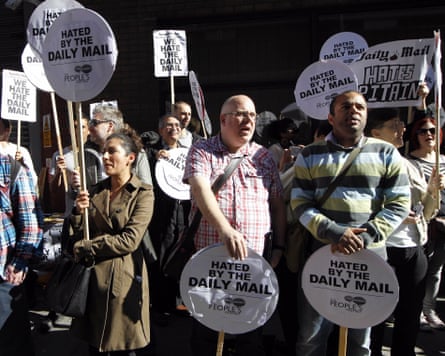
The relationship between conservative journalism and conservative politics is two-way: each feeds, encourages and sharpens the other. Brexit was a cause created and sustained by both the rightwing press and rightwing politicians, pushing each other to demand a bigger rupture. The referendum result seemed to vindicate Dacre’s political and social instincts, while also encouraging his paper and its rightwing rivals to see the world in ever more binary terms. In 2016, the Mail famously described three judges who had ruled that parliament should have more say over the Brexit process as “enemies of the people”. Despite the arrival of more anarchic digital media, the scolding tone and stern, old-fashioned look of Dacre’s Mail seemed more potent than ever, particularly as pensioners became a bigger proportion of the electorate.
Yet Dacre himself was now past retirement age. In 2016, a new, increasingly high-profile campaign group, Stop Funding Hate, began lobbying brands to stop placing adverts in rightwing papers. Two years later, the Mail’s owners decided that the paper would benefit from a refreshing and softening of tone. Shortly before his 70th birthday, to his intense regret, Dacre was replaced as editor by Geordie Greig: a dozen years younger, more socially liberal and a remainer, previously editor of the less hardline Mail on Sunday. It seemed that Dacre’s four Mail proteges would have to seek editorships elsewhere.
Through their scattering, however, Dacre’s influence spread. Gallagher and Evans had already left the Mail for the Telegraph: Gallagher to become its head of news in 2006, Evans its news editor in 2007. Two years later, Gallagher was promoted to editor of the paper.
At the Telegraph and across the press, including at non-rightwing titles such as the Guardian, it was assumed that anyone who had spent significant time at the Mail had acquired skills and a mentality that could not be learned elsewhere. “They were a bit more like the SAS than the regular army,” as one industry veteran puts it. As the internet made journalism more competitive and relentless, editors who had shown they could cope with the Mail’s pressures were attractive to proprietors of other papers.
The conservative commentator Stephen Glover wrote in the Independent about Gallagher’s appointment as Telegraph editor: “He is a rougher beast than any of the previous 13 editors … He knows things about story-getting which [his Telegraph predecessor] the urbane Will Lewis can only dream about … Unlike his predecessors, he appears to have no great respect for institutions … In short, Mr Gallagher is not a ‘Telegraph man’ as the term might be understood by anyone who cherishes the paper.” Glover concluded that the paper’s old culture had “finally been swept away”.
That culture could be over-romanticised. Alongside the old Telegraph’s gentle conservative journalists there had always been a few more politically aggressive characters, such as Peregrine Worsthorne, who wrote extensively in support of the racist white government of Rhodesia and the brutal anti-communist Chilean dictatorship of Augusto Pinochet. Conservatism always has the potential to turn nasty when its practitioners consider the status quo to be under a serious enough threat.
Yet Gallagher’s appointment as editor in 2009 began a more thorough toughening-up. The perceived need for an overhaul was fed by uncertainty about the paper’s ownership and identity. After years of rumours, the Barclay brothers, reclusive rightwing tycoons who had owned the Telegraph since 2004, finally put the paper up for sale in 2019, but no buyer was found. In 2023, the Telegraph was taken from the Barclays by Lloyds’ Banking Group in a dispute over the brothers’ debts, then taken back by the Barclays. A further, three-year saga of abortive bids to buy the paper followed, including one from the autocratic government of the United Arab Emirates – which was vociferously opposed on the paper’s own pages by a former editor, Charles Moore. Far from being an island of old-fashioned English stability, the Telegraph was drifting among the unpredictable currents of global capital, politics and media.
As editor, Gallagher hunkered down, demanding hard graft and assertive, eye-catching reporting – not the usual stories about traditional England that other papers often didn’t think worth covering. During a period as the Telegraph’s deputy editor, he had pushed its reporters to pursue the scandal over MPs’ expenses. “Tony Gallagher knows how to run a newspaper, but he was a miserable sod,” says a former Telegraph reporter. “Dry and humourless. It was hard to get him to crack a smile … Him and [Chris] Evans understood issues through campaigns, which we had to hammer day after day.” In a 2013 talk on editing, Gallagher described himself as one of the “veterans of the Thatcher era, and obsessed by it”. Like her, he did not suffer fools gladly. He confronted and often sacked journalists he considered inadequate. “Papers need to change to survive,” Gallagher said coolly in his 2013 talk.
But under his editorship the Telegraph also shed too many readers. In 2014, he was replaced by Evans. The paper’s culture became more unforgiving still. “It was impossible to please the news desk,” says a former reporter. “They’d say no to a story idea you brought them. Two days later, they’d slam down the latest Daily Mail on your desk, with that story in it, and say: ‘Why the fuck didn’t you get that story?’”
The Mail’s long-hours, minimal-praise culture was also imported. “The best thing was to be ignored,” says the former reporter. Some journalists considered Evans and his lieutenants “worse than Dacre”. The desks of out-of-favour reporters were moved into humiliating locations in corridors, behind filing cabinets, or next to busy coffee machines. Even some senior journalists would wait until their editors were out of sight before they went to the toilet.
Boris Johnson’s premiership from 2019 to 2022 further changed the Telegraph. His previous career as a writer for the paper, hardline approach to Brexit, enthusiasm for culture wars, and personal disdain for the pandemic lockdown rules made him a perfect politician for many rightwing journalists. Yet, as his premiership began to buckle under the weight of his scandals, lies and evasions, it presented the Telegraph with a choice: should it begin to distance itself, or support him regardless? The paper chose the latter, which meant that its political coverage became ever more shrill and detached. After Johnson was finally forced from office, the paper’s dogmatic quality remained.
Since its creation in the late 19th century, the British rightwing press had usually been a top-down culture. Dacre had refined it into a kind of science. Yet, while during the first two decades of his editorship, the 1990s and 2000s, he and his proteges had applied their methods and perspectives to a relatively stable society, during the 2010s and 2020s they were encountering – and helping to create – a more volatile and angry country.
This work still provided editors with a good living. While Evans was completing the Telegraph’s transformation, his old boss Gallagher, despite the unhappy end of his editorship there, remained in demand across the conservative press. In early 2015, he went back to the Mail as deputy editor. A few months later, Gallagher was poached to be editor of the Sun. After five years at that job, in 2020, he became deputy editor of the Times. In 2022, he was promoted to editor. His easy switches between what used to be seen as upmarket, mid-market and downmarket journalism showed how the old barriers within the rightwing media had effectively dissolved.
In 2020, this cultural revolution reached the Sunday Times, when it hired Ben Taylor from the Mail as deputy editor. Like the old Telegraph, the paper had been quite a comfortable place to work, with editors sometimes absent for boozy lunches and a focus on interviews and magazine features, rather than urgent news gathering. Taylor was brought in to introduce more of the latter. The reverberations of his first day as deputy editor were felt even by distant foreign correspondents. He called the paper’s existing news operation “ridiculous”, and hired four Daily Mail reporters. In 2023, he was promoted to editor, and applied his methods across the paper, which began to produce more scoops, particularly in its political reporting. His editing was sometimes consciously performative. He would leave his office door open, shout out journalists’ names, and expect them to run in when summoned. Every 20 minutes or so, he would come out of his office, stomp around the newsroom, and look at what reporters had on their computer screens. If he saw something they were writing that displeased him, he would say, “What the fuck’s that? Get rid!”
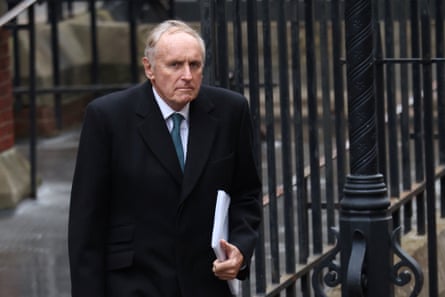
A year after Taylor’s arrival at the Sunday Times, a change of editor at the Mail completed the rise of Dacre’s proteges. Greig’s experiment in producing a less angry paper, while admired by some liberal journalists, was not judged a success by the Mail’s owners, not least because sales fell. In 2021, he was replaced by Verity. For the previous three years, he had edited the Mail on Sunday. Following the Dacre model, Verity had made it more journalistically aggressive and more hostile to liberal institutions, particularly the EU.
Over this period, Dacre had gradually become a less frequent presence at the Mail offices, confined to largely honorary roles. Eventually, he lost his company chauffeur. Yet on the day that Greig was fired, and Verity promoted, Dacre was reportedly seen back in the Mail building, and then at a book launch for the Conservative peer Michael Ashcroft, “grinning from ear to ear”, according to a source quoted by the magazine Prospect. Shortly afterwards, Dacre was made editor-in-chief of Daily Mail and General Trust’s newspaper division. The chair of the Mail’s owners, Jonathan Harmsworth, great-grandson of the paper’s co-founder, Viscount Rothermere, said that Dacre “will be taking an active role advising me and the editors”.
Could his influence over the press go on for many years more? Dacre has long thought about journalism in terms of legacies and lineages. In 2002, he told the British Journalism Review that at the Mail, “We have layers of talent and skill I have quite carefully nurtured and brought on.” At Rupert Murdoch’s 95th birthday in New York in March, Dacre teasingly reminded him that most of the editors present from Murdoch papers had first worked under him at the Mail. Besides the four proteges in this article, Victoria Newton, the Sun’s editor, worked briefly at Dacre’s Mail, as for a longer period did the Sun’s deputy editor, James Slack; as did Maggie O’Riordan, deputy editor of the Times; and Keith Poole, editor of the New York Post.
Dacre considers all of them his “alumni”, and proudly treats them as such when he sees them socially. Dacre, Gallagher, Evans, Verity and Taylor occasionally go out to dinner together. Gallagher, Evans and Dacre have also been known to picnic together in the car park at Twickenham during Six Nations rugby matches.
Yet the ascendancy of Dacre’s version of rightwing journalism is more fragile than it seems. Editorial budgets are tighter than in his heyday. There is less shouting at reporters by editors, because shouting in workplaces is more likely to lead to HR interventions. His proteges are less overpowering characters, and their editorships are more shaped by proliferating digital data about reader preferences and behaviour. Meanwhile, the diffusion of newspaper journalism into multiple forms – websites, podcasts, video, social media content, newsletters – has made the interplay of headlines, text and photographs that Dacre mastered less central. The Mail’s website is highly successful, but its chattier, less politicised tone and greater emphasis on showbiz stories has diluted the Mail’s brand. Dacre has a history of scepticism about online journalism. At the Mail’s summer party in 1999, he reportedly told staff: “A lot of people say that the internet is the future for newspapers. Well, I say to that: bullshit.com.”
The speed with which stories can be copied online means that “beating” other papers has lost much of its meaning. More aggressive and addictive alternatives to the rightwing press are proliferating: ultra-conservative content creators, influencers and social-media zealots, including the world’s first trillionaire, Elon Musk, rail against the same enemies as the rightwing papers – yet in an even more relentless, instantly reactive, uninhibited way. The rapid rise of the new hard-right party Restore Britain, endorsed by Musk, has been driven largely by social media. Meanwhile, the Mail has warned that Restore could become a vehicle for neo-Nazis, and may also seriously damage Reform – which the Mail sometimes strongly supports – by splitting the rightwing populist vote. At the same time, Donald Trump’s presidency has opened the eyes of rightwing British media consumers to the almost infinite supply of conservative material from the US.
The globalisation of reactionary journalism, it is true, does also create an opportunity for the British rightwing press to find a more international readership. This helps explain why papers such as the Telegraph seem happy to shed some of their traditional British customers. About 40% of its disproportionately male, affluent and elderly readers now live abroad.
Similarly, the growing competitive pressures on the Mail, which have prompted waves of redundancies there since 2020, have, counterintuitively, extended its influence. More and more former Mail reporters have found jobs at other papers, often bringing their Mail methods and assumptions with them – an ever larger Dacre diaspora.
A more overt attempt to extend the paper’s influence has failed, however. In March, an offer from the Mail’s owners to buy the Telegraph, which appeared to be slowly but steadily progressing, was suddenly gazumped by a more generous bid from the Berlin-based media conglomerate Axel Springer. The latter already owns conservative papers in Germany, some of which have promoted the views of Musk and other hard-right populists, so may allow the Telegraph to continue along its current path. But for such a nationalistic, anti-EU British paper to end up with a German owner is an outcome that the Telegraph’s remainer critics can enjoy.
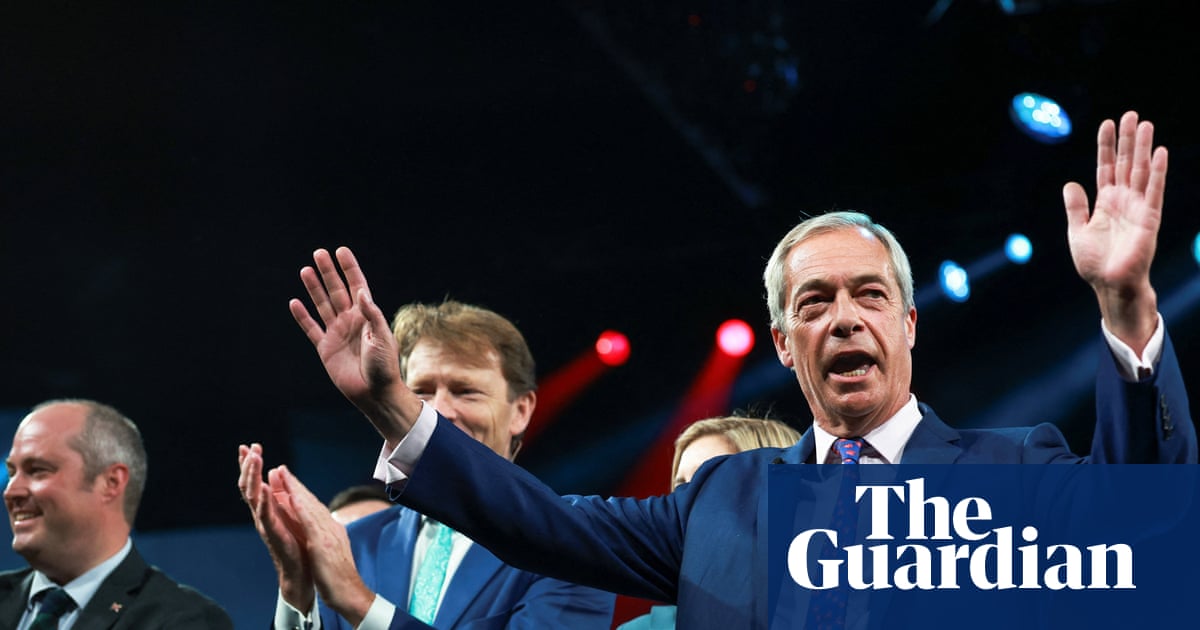
There are other paradoxes about what you could call the Dacre supremacy. The preoccupations of the papers edited by him and his proteges – crime, immigration, Islam, benefits fraud, the supposed threat of trans rights, the supposed decay of public and private morality, the supposed rottenness of liberalism, leftism and “wokeness”, the supposed promise of hard-right Toryism and Reform – have been prominent in our political discourse for years, sometimes decades. Yet apart from Theresa May, briefly, no Conservative prime minister since Margaret Thatcher has satisfied Dacre. Despite having a decent chance of being our next rightwing premier, Nigel Farage has yet to fill that vacuum. Dacre’s domineering journalism has been partly powered by disappointment.
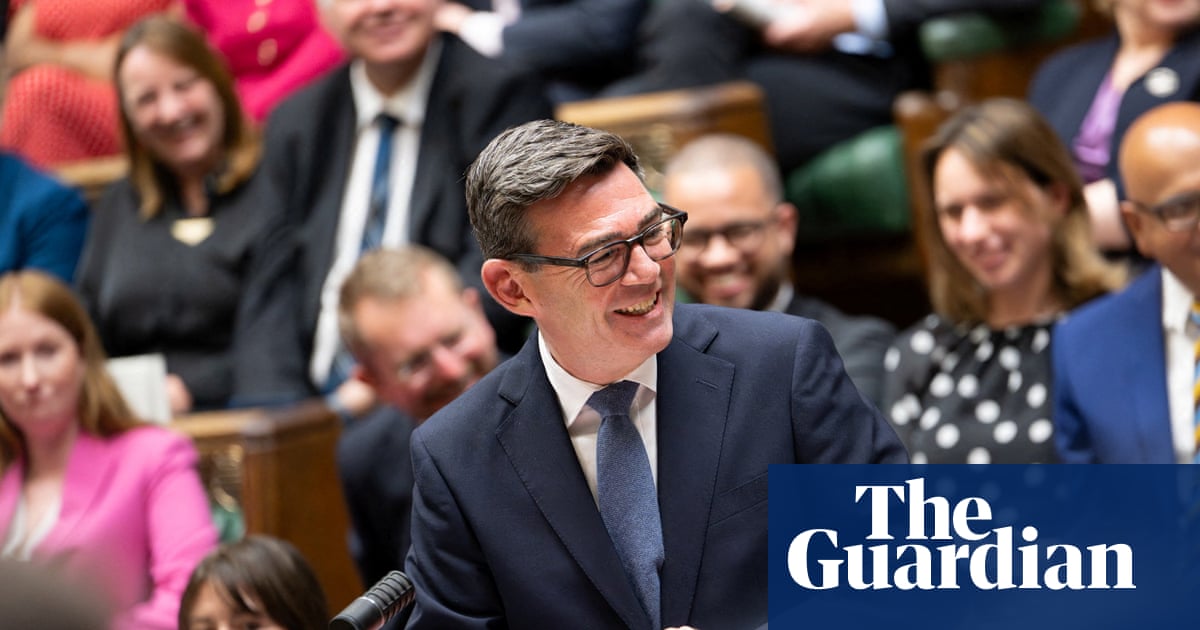
Meanwhile, on a party-political level, his proteges’ papers have become divided and sometimes indecisive: the Telegraph often, but not always, pro-Reform; the Mail sometimes suggesting that a Tory-Reform coalition is needed to “unite the right”; the Times not endorsing any party at the last general election; and the Sunday Times even backing Labour then. With the media fragmenting and the attention spans of many readers shortening, campaigns by individual papers against specific enemies of the right are harder to sustain. Andy Burnham will face the conservative press after its power has probably peaked.
According to the authoritative British Social Attitudes survey, over recent years the country has already changed, erratically but significantly, in many ways that the rightwing press dislikes: becoming more multicultural, more liberal about personal morality, more positive about the EU and workers’ rights, and more disenchanted with big business, the rich and the free market. Meanwhile, the state has grown and taxes have risen. Angry conservative journalism requires a constant supply of fresh targets. But in the neverending battle over social, cultural and political values, if your enemies multiply, that’s also a kind of defeat.
In Arnos Grove, where Dacre grew up, and which he lovingly described to the New Yorker in 2012 as “frugal, reticent, utterly self-reliant, and immensely aspirational”, the gently undulating streets of plain but comfortable-looking houses, often with kitchen extensions and deep, carefully tended back gardens, can seem little changed from the respectable, essentially private English spaces of his remembered childhood. But at the local cafe where I had lunch after a couple of hours of walking around, the food, background music and customer conversations were all Turkish. Unless Dacre’s proteges and their papers can come to terms with the country as it is, rather than as it used to be, their days of dominance will be numbered.
The Long Read magazine summer edition
AI in the classroom, vending machines in the canteen, homeless people in the library, no one in the pub. Surprising stories from our strange new world in the new edition of the Long Read magazine. Buy your copy here. For readers in London, we will be holding a launch event with writers Tom Lamont, Kieran Morris and Linda Rodriguez McRobbie at MagCulture, 270 St John Street, EC1V 4PE, on Thursday 16 July at 6.30pm