.png) 1 month ago
46
1 month ago
46
One of my favourite pieces of scientific equipment is something called a retrospectroscope. I admit that it only exists in my imagination, but it has turned out to be a very useful bit of kit. It allows me to look back through the years of my life and analyse the journey so far. And what a journey it has been.
When I started looking back in earnest as I wrote my memoir, there were many discoveries. Some made me laugh. Some made me wince. Some made me want to give my younger self a hug and a cup of hot, sweet tea. But one of the biggest standouts has been the path my dyslexia has taken me on.
I was only formally assessed last year, although I had suspected it for a long time. Looking back, I can see that dyslexia was there all along, shaping the way I thought, solved problems, communicated, imagined and coped. It was there in the child who could not always get the words right on the page, but who could tell great stories and see the bigger picture. It was there in the teenager who was too often made to feel “nice but dim”. It was there in the young woman who was determined to build her own telescope rather than accept the world as it was handed to her.
That matters, because dyslexia is still so often described only in terms of what it makes difficult. And yes, some things are difficult. Reading and writing are still a slog, processing information can take more brain power than I would like – and my spelling remains gloriously unreliable. But difficulty is not the whole story. Not even close.
If anything, writing my memoir has reminded me just how much I was underestimated. I went to 13 schools in 12 years during a childhood full of upheaval, custody battles and reinvention. At one point I ran away from home, clutching my little sister’s hand while proudly wearing my Wombles slippers and pyjamas (I was only six years old at the time). At another point I was the girl at the back of the class with safety scissors and glue, not progressing from the simple red reading books to the coloured array my classmates were consuming. The message I was absorbing was that I was somehow lacking.
That is the danger of how we talk about dyslexia. Children do not just hear the diagnosis; they hear what the world thinks it means. They notice the flicker of lowered expectations. They sense when adults are being polite but have quietly made up their minds. It is a terrible thing to do to a child – to make them feel written off before they have had the chance to discover their own brilliance.
Now, as a space scientist and engineer, I meet many children in my science communication work and I try to instil what I call the “desire to aspire” in every one. I want them to feel that the world is wide open to their potential. I want them to know that struggle in one area does not cancel out strength in another. But many children still live in a world that quickly notices what they cannot do and misses what they may be able to do extraordinarily well. My own life is proof of that.
The same child who found school hard was also the child who escaped into space. While other people saw a girl with patchy spelling who was often behind, inside my head I was reaching for the stars. The Clangers opened my imagination. Neil Armstrong made me think: “Why not me?” Walking home at night across Hampstead Heath, from school to our London council flat, I would look up, not down.
That is one reason my later diagnosis mattered so much. It did not suddenly make me dyslexic; it just explained more about the way my brain works. But the most powerful shift was emotional. For years I had spoken, rather gloomily, about “suffering” from suspected dyslexia. But when I encountered a charity called Made By Dyslexia, I realised I had the story all wrong. The organisation has identified something it calls dyslexic thinking – and all the ways that adds value in many areas of work and life. Reading this research I realised I was not suffering from dyslexia; in many ways I was gifted with it.
Suddenly all the Maggieisms I had thought of as my own random oddities started making sense. The empathy. The storytelling. The curiosity. The lateral thinking. The resilience. The love of communicating big ideas. The tendency to look beyond the obvious route and ask if there might be another. There is something profoundly freeing about realising that the very traits you tried to hide are a fundamental part of your strength. In my case, dyslexia did not stop me from becoming a scientist. It just helped shape the sort of scientist I became. A scientist who can delve into the detail if necessary, but prefers the broad brush. One who likes to look at the system as a whole. One who loves sharing a love and passion for science and what it can do, with as many people as possible.
And it is not just me. Dyslexic pioneers have been helping to change this story for years. One of the most visible examples of this is the charismatic, irrepressible and endlessly curious Richard Branson, who speaks openly about how dyslexia shaped his way of thinking. Isaac Newton, Galileo, Leonardo da Vinci, Albert Einstein and Stephen Hawking are all associated in different ways with neurodiverse or dyslexic thinking. The point is not to hand out gold stars after the fact. It is to remind ourselves that humanity has always been moved forward by people who think differently. As dyslexics, we don’t just think outside the box – we often think off the planet and beyond.
Reframing dyslexic thinking in this way could be gamechanging – and not just for dyslexic people. Just imagine how the world could change if we could harness all the imagination, connection and reasoning that come with dyslexic thinking.
So how do we change the narrative around dyslexia? Well, it’s about using what we do best: telling better stories. It’s about celebrating creativity, communication, empathy, problem-solving and resilience as forms of intelligence, because that is what they are. Most of all, we need to make sure that the next generation does not grow up feeling written off.
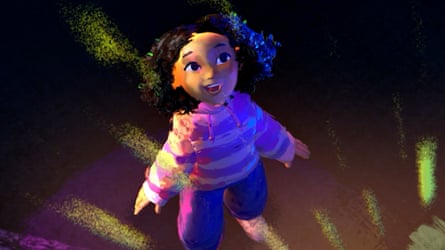
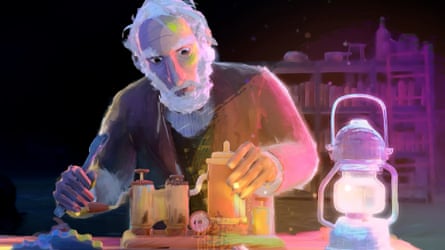
Today, Made By Dyslexia has launched a beautiful short film about one girl’s personal journey with diagnosis. The film is for newly diagnosed children or adults, like me, who have spent years misunderstanding themselves. Or others who don’t yet fully understand what dyslexia is. The film is set to be truly transformative, so do please take a look.
And if I can help people see that my journey has not been a neat, polished success story but a messy, funny, difficult, curious, very human one, then I will be glad of that too. Because if my retrospectroscope has shown me anything, it’s that dyslexia did not close doors in my life. Very often it was the thing that gave me the resilience to keep going – and the skills to look for the next door I needed.
-
Dame Dr Maggie Aderin is a space scientist and CEO of Science Innovation Ltd. Her Memoir is Starchild: My Life Under the Night Sky
-
Visit www.whatisdyslexia.org to watch the film