.png) 2 months ago
27
2 months ago
27
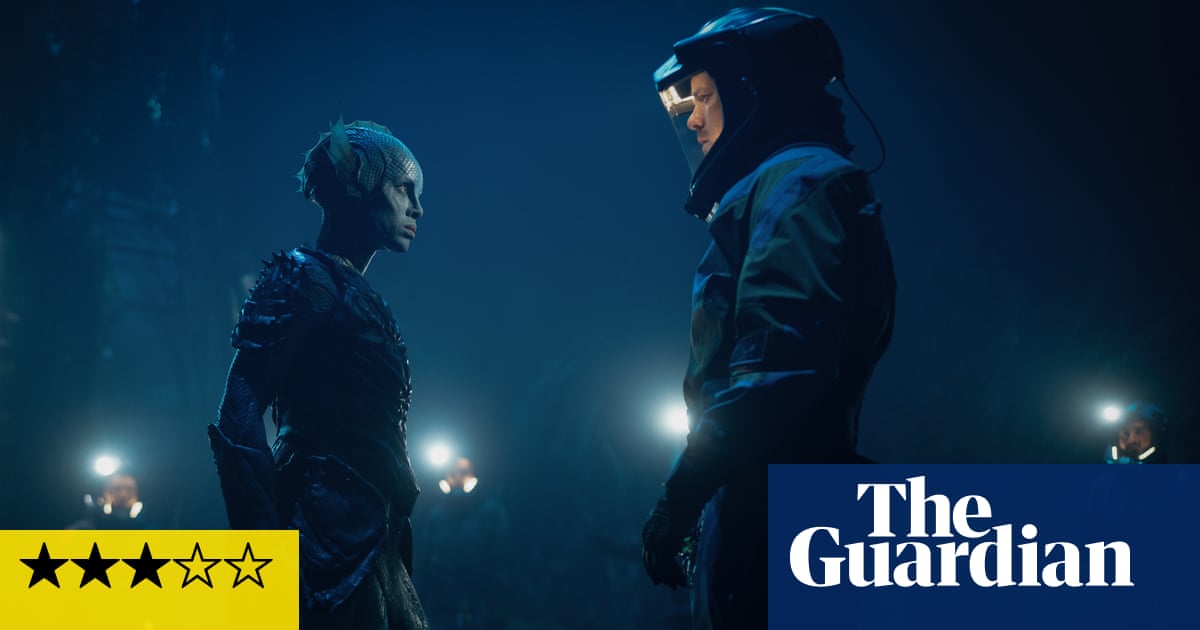
The west doesn’t get much wilder than in Fallout. The show takes place 200 years into a post-nuclear apocalypse where most humans are scratching out an existence in a stricken wasteland California of sand dunes, outlaw gangs and mutated monsters. Resources are scarce. Life is cruel. Death is a constant. It should be terrifying. Instead, it’s often hilarious.
A wicked sense of humour elevated the first season of Prime Video’s well-received, no-expense-spared adaptation of the long-running video game franchise. An early episode opened with one faction dumping newborn pups into an incinerator – in case you were wondering who the bad guys were – and those flashes of satirical glee gave Fallout an edge over gloomier post-apocalyptic shows such as The Walking Dead or The Last of Us.
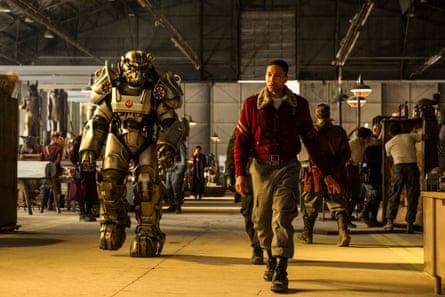
If the setting was outlandish and the violence often OTT, the core characters played things admirably straight. Lucy (Ella Purnell) was a wide-eyed ingénue who had experienced a literally sheltered upbringing in an underground vault. Witnessing her golly-gosh, can-do attitude collide with the lawless chaos of the surface as she searched for her kidnapped father Hank (Kyle MacLachlan) was a hoot. The similarly naive Maximus (Aaron Moten) was an orphan brought up in a militaristic religious cult who inherited a clanking mechanical battle suit after his unpleasant superior had a run-in with an irradiated bear.
The world-weary contrast to these young innocents was the Ghoul, played by Walton Goggins with a startling CGI makeover that convincingly lopped off his nose. This durable mutant with a cowboy hat, ragged duster coat and saddlebag was every inch the drawling, sardonic gunslinger. But pre-cataclysm flashbacks shaded in the Ghoul’s previous existence as movie star and devoted family man Cooper Howard, navigating a red scare in Fallout’s heightened version of the 1950s.
Season two continues the odd couple team-up between Lucy and the Ghoul as they pursue the discredited Hank, last seen yomping toward Vegas in chunky power armour to enact some awful, unspecified scheme. Lucy still says “fudge” rather than swearing but is quicker on the draw than she used to be. Her travelling companion remains impassive as she attempts to break though the crustiness and rekindle his sense of humanity. (“Empathy’s like mud: you lose your boots in that stuff,” grumbles the Ghoul when she rushes to help a stranger.)
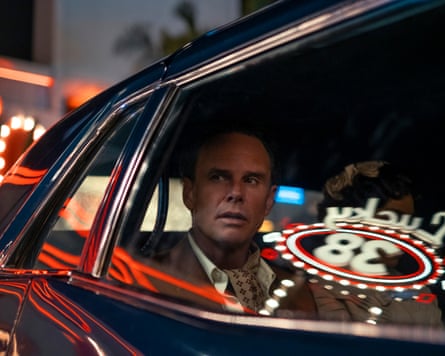
There is also much more of Goggins in dapper matinee idol mode as the 1950s thread tunnels deeper into who might have been responsible for the original atomic disaster. Cooper’s strained relationship with his wife Barb (Frances Turner), an exec at the blandly sinister Vault-Tec corporation, gives him some meaty material to get his teeth into, even if the retro-futurist production design of the flashbacks – all covetable curvy cars and Jetsons-style robotic mod-cons – is distractingly handsome.
She may have left her vault life far behind but season two often cuts back to see how Lucy’s old and only slightly inbred underground crew are faring, notably her brother Norm (Moisés Arias) who is locked in a battle of wills with a brain in a jar. And we eventually catch up again with Maximus, who has returned to the bosom of his old brotherhood and is alternately sleepwalking through his duties and daydreaming about his time on the road with Lucy.
Those are a lot of plates to keep spinning but Fallout has always had a hopscotching narrative structure, confident that audiences could keep up with its constant parade of weirdos and tangle of plotlines. Season two draws more directly from its gaming source material – notably 2010’s admired Fallout: New Vegas – but remains pleasingly dense with jokes, splatter and slapstick.
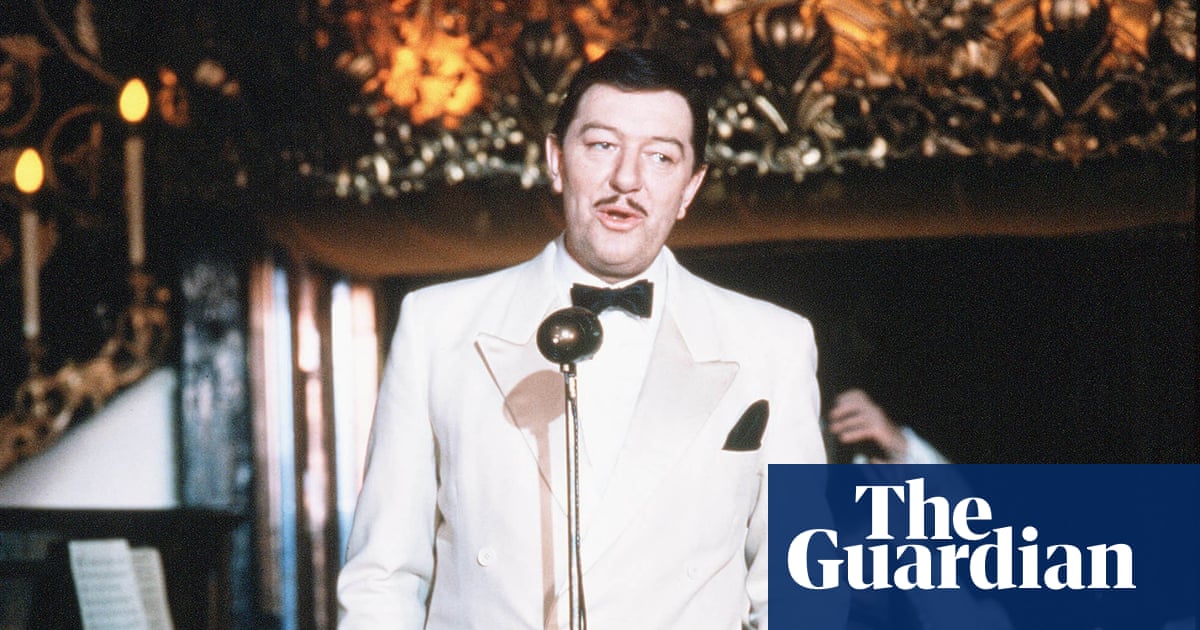
Future episodes see attention-grabbing guest roles for Kumail Nanjiani and Macaulay Culkin; Nanjiani, in particular, seems to relish the chance to play a cocky heavy. But the most notable addition to the cast is Justin Theroux as the immaculately moustachioed Robert House, a reclusive Howard Hughes-esque founder of a robotics empire and would-be shaper of the future. Theroux’s barely restrained fervour and distinctive accent work – turning every “w” into a breathy caress – makes him stand out in a cast not exactly short on larger-than-life characters, even if his appearances are rather stingily rationed out.
Season one launched last April as a bingeable box set but this time new episodes are releasing weekly. That might be intended to create space for obsessive fans to swap theories about Fallout’s various unfolding conspiracies. But that is perhaps to misunderstand its more visceral appeal. Thankfully for every shadowy corporate mystery in season two there are at least three exploding heads and a chance to hear Purnell skilfully finding another inflection on her adorable “okey-dokey!” catchphrase.