.png) 2 hours ago
4
2 hours ago
4
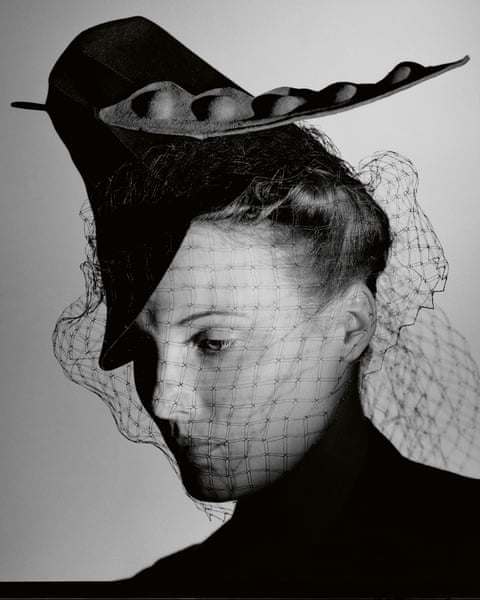
Photographer Max Dupain’s diverse and creative output helped shape Australia’s visual identity in the mid- to late 20th century. A major retrospective, Definitive Dupain, runs at the State Library of NSW until July 2027
Fashion shot for David Jones, c 1938.Sat 5 Sep 2026 22.00 CEST
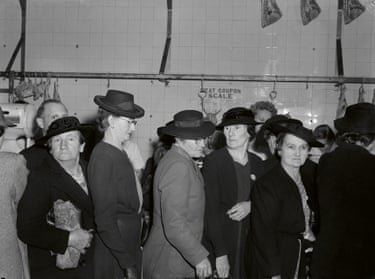
Meat Queue, 1946
Dupain’s favourite photograph of the hundreds of thousands he took was Meat Queue, which captures life in Sydney in the 1940s.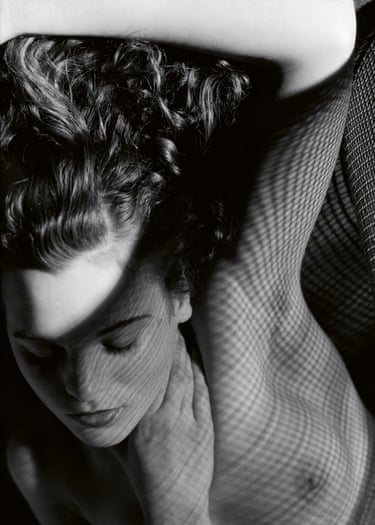
Jean with mesh shadow, 1936
Jean Lorraine was a good friend and frequent model of both Dupain and Olive Cotton. In 2003, she said of Dupain: ‘Compared to other photographers I posed for, his ideas were always more original. And he was great fun.’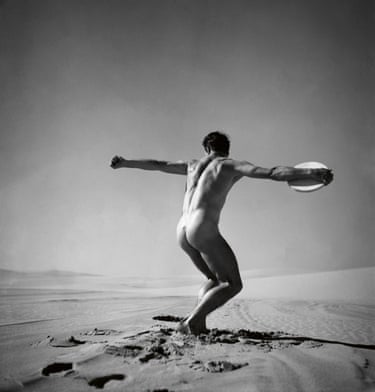
Discus thrower, Cronulla Beach, c 1937
In 1936 Dupain bought his first car, a bright yellow soft-top Chevrolet Roadster that became known as ‘the Yellow Terror’. Having a car allowed him to move away from the city centre for shoots. Some of his well-known shots, including this one, were taken in the Cronulla sandhills, in southern Sydney.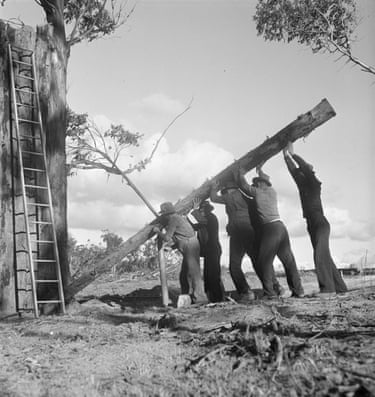
Civil Constructional Corps (CCC) erecting pole to support camouflage net to cover aircraft, c 1943
Although Dupain was a pacifist, he joined the Sydney Camouflage Group, a group of artists, photographers and scientists studying the techniques of camouflage. Dupain become an accredited camouflage officer with the RAAF in 1941.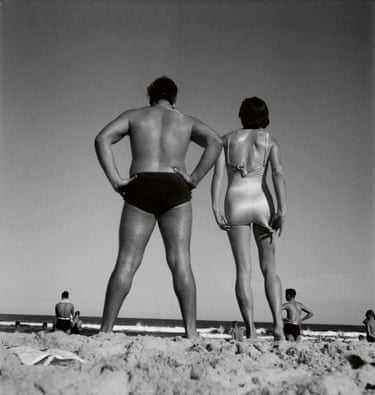
Forms at Bondi, 1939
Dupain took several shots of this couple standing on Bondi beach looking out to sea. Photographed from a low angle with a Rolleiflex camera, the almost sculptural pose is humanised by the woman pulling at her swimming costume.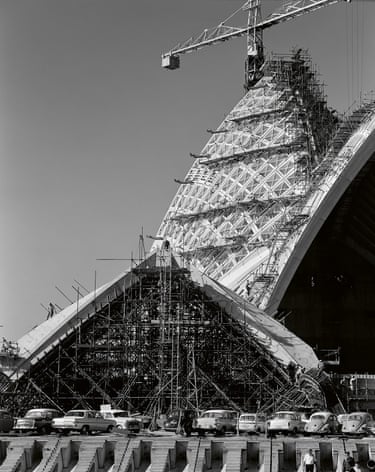
Sydney Opera House during construction, November 1965
The Sydney Opera House project began as a non-commissioned labour of love. Dupain began capturing the early construction in 1958, and continued to photograph it until completion in the early 70s.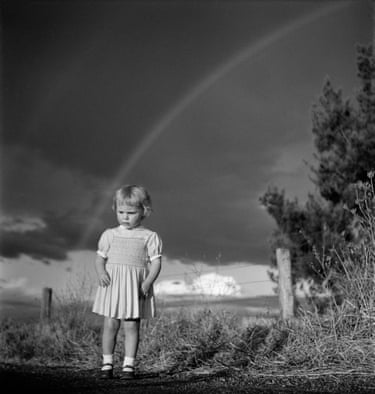
Little girl and approaching storm, Penrith, 1949
This photograph was included in the ‘6 photographers’ exhibition held in Sydney’s David Jones Gallery in 1955, alongside the work of Gordon Andrews, Kerry Dundas, Hal Missingham, Axel Poignant and David Potts.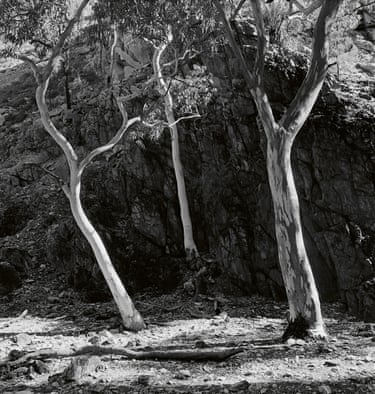
MacDonnell Ranges, Northern Territory, c 1942
Dupain managed to take personal shots while doing his war work. His photographic subjects cover training at Bankstown and Richmond airfields but also day trips around Alice Springs in Central Australia and the long drive up the new Stuart Highway to Darwin, where he arrived in 1943, a year after the city was bombed.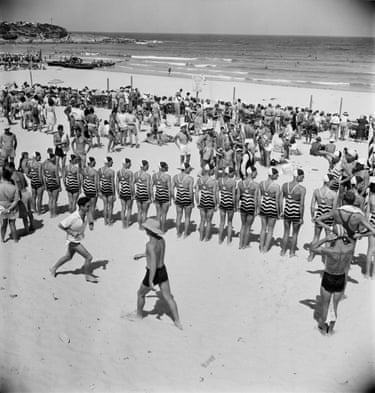
Parade of masculinity, Freshwater Beach, c 1950
Dupain’s photography and beach culture will always be linked in Australian cultural memory. He felt compelled to take photographs away from work and they were often taken at the beach. His interest in physical culture was fostered from a young age by his gymnasium-owning father.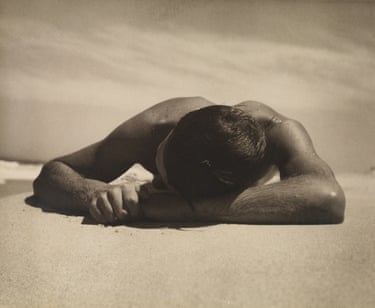
Sunbaker, c 1938
Sunbaker depicts Dupain’s friend Harold ‘Hal’ Salvage, who had just come out of the surf and flopped down on to the sand during a camping trip to Culburra beach, near Nowra. Dupain took several photographs of Salvage but this one – with the fingers of his right hand wrapped over his left – was his preferred shot. Prints from a second negative, with the hand relaxed, became his most famous photograph. The negative for this print is lost, and the exhibition includes the only known print.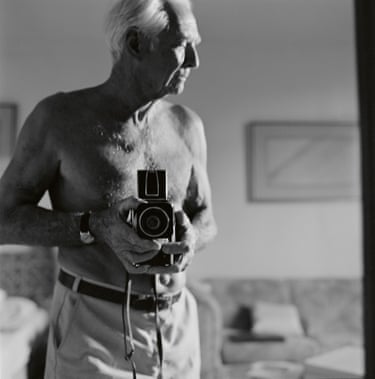
Self-portrait with Hasselblad, Vanuatu, 1988
One of Dupain’s last self-portraits is this soulful mirror ‘selfie’ taken during a holiday in Vanuatu. He used a Hasselblad camera – his preferred camera for quick work and portraiture from the 1950s.Explore more on these topics