.png) 2 hours ago
4
2 hours ago
4
One June day in 2015, I stood outside Yarl’s Wood immigration removal centre near Bedford and heard the women inside singing. “Set her free,” said the graffiti on the walls. “Shut it down.” I had often visited the centre and heard the desperate stories of women who were held inside it. But that day felt hopeful rather than despairing, as hundreds of women – refugees, campaigners, lawyers, members of parliament, actors, writers – gathered around the centre to demand freedom for the women locked up.
When I set up the organisation Women for Refugee Women, I was driven by my faith in solidarity among women. The organisation works with women seeking asylum in Britain to tell their stories and campaign for justice and safety. For years I felt that faith being proved in practice. Women turned up for other women at events and demonstrations; they were volunteering and campaigning, marching and supporting.
One of my colleagues at Women for Refugee Women, Marchu Belete, is now the director of Migration Exchange. “Back then, women were so open, enthusiastic and creative about campaigning with migrant women,” she says. “We didn’t realise how incredible that time was. It was amazing.”
The confidence of feminists in the UK in those years to demand a better world for all women was part of a worldwide phenomenon in the 2010s, a time when women were building new connections with one another all over the globe. Women protested over abortion rights in Ireland, for the right to drive in Saudi Arabia, against digital sex crimes in South Korea, and against sexual violence and femicide in India, Argentina, Brazil, Italy, Turkey, everywhere.
I’m not going to idealise those years, but there was a brightness about where our feminist work was going then, an optimism about the connections we could forge and the changes we could make. Now, everywhere you look in women’s movements, you find division.
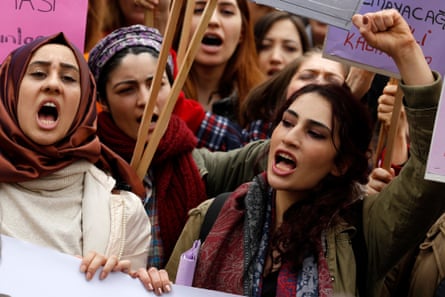
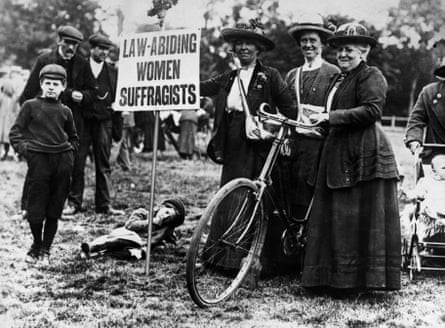
There have always been divisions between women who are apparently working towards shared liberation. Divisions between suffragists and suffragettes, between colonisers and the colonised, between working-class and middle-class women, between those against and those in favour of pornography. But recently divisions among women have become bitterly depleting and many have confided in me how exhausting they find this. One Black woman in her 60s who co-founded an organisation for migrant female survivors of violence said to me recently about the women’s movement in Britain: “We’ve lost our way. There used to be a vision that brought women together. It wasn’t just about personal advancement or separate communities. I don’t know if that still exists.”
And over and over again, I am now shocked by the way that women who call themselves feminists will casually dismiss the struggles and experiences of women who are not like themselves. That dismissal can come from all sides of our polarised debates. If you are on the left, why empathise with Ann Widdecombe facing her attacker in her kitchen? If you are on the right, why care about women fleeing oppression across the world? Can you open your heart to Palestinian women and Israeli women who are targeted by armed men? Can you take seriously the experience of girls abused by grooming gangs and women beaten by the men who protest outside asylum hotels?
Social media takes so much of the blame for these widening divisions. It’s true that feminists, just like everyone else, find that anger is rewarded online. Intransigence results in more attention, more clicks, more followers. Debates around the place of transgender women in feminism became particularly wounding and destructive due to the outrage spiral of social media. And once women have sparred in that polarised online world, it becomes harder and harder to come together to campaign, even for the most important goals.
But while divisions online are obvious, offline, women are still building alliances, brick by brick. These alliances may not be as immediately visible to outside observers, but I believe that they are quietly growing.
Jessie Brinton, who used to be a journalist, is the founder of a project called Mothership, which has been bringing women together across Britain for in-person “kitchen table conversations” about what matters to them.
She is struck by the hunger she witnesses among women just to meet one another and talk. “We’ve lost the ‘village’. Women are lonely. That’s what we’ve heard over and over again. We need to rebuild the spaces in which women find each other.” This year, Brinton has been spending a lot of time in Wigan, where she has been deeply inspired by the strength of unsung community work that women are doing together, filling gaps left by lack of public services. “Women who are on the frontline of crises have so much knowledge to share,” she says.
Gill Wright at Northern Heart and Soul in Wigan agrees that the frontline work that women do to support one another and their communities is the most important work for feminists now. Wright co-founded Northern Heart and Soul after steering a mutual aid group through the pandemic. The organisation is not just for women, but it is women-led and seeks to empower women facing the greatest challenges of poverty, homelessness and poor health. With projects including special educational needs play days, arts projects, gardening and mental health peer support, Wright sees people becoming connected again. “We aren’t putting our energy into changing the system,” she says. “We are focusing our energy on building alternatives.”
That focus on locally based organising often blossoms into more direct political interventions where women are trying to revitalise democracy. Cullagh Warnock has been involved with women’s organising in the north-east of England for decades. With the establishment of the North East Mayoral Combined Authority – which gave greater powers to local councils and the mayor of the north-east – in 2024, she and other women in her network saw an opportunity to ensure that women’s voices and concerns were heard. One Million Women and Girls is the result, a network that connects women to local politicians across north-east England through face-to-face hustings and events.
When I ask her what are the key concerns that women raise, Warnock tells me that unlike discussions on social media, they are solidly practical. “Women’s safety comes up all the time – women’s safety on public transport, on the streets. And jobs – politicians talk about green jobs, but they are so often male-dominated. Women are asking about how this transition is going to work for women.” It’s true that predictions suggest that future green jobs, from wind energy to waste management, may skew as much as three to one in favour of men. Warnock believes that by focusing on such practical issues women can move beyond the inflammatory rhetoric of online debate, and get back to what they actually need to build more dignified and safer lives. “What works for women works for everyone.”
This work to improve ordinary women’s lives has taken on new urgency due to the rise of the far right, which is capitalising on women’s sense of insecurity to drive forward ever more divisive politics. In Belfast, Elaine Crory at the Women’s Resource and Development Agency has been working for many years to support women in the face of male violence. She now sees the rise of the far right as the “single biggest issue making things worse for women. It is distracting people from fighting the patriarchy and making the situation less safe for women.”
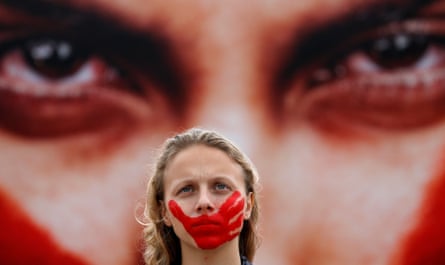
She also points to the need for in-person conversations, where facilitators can counter online radicalisation, although she sees how slow and hard this work is given the deluge of corrosive social media misinformation. But she is heartened above all by how women are at the forefront of organising against the far right. During the recent “racist pogroms”, as she calls them, in Belfast, “communities came together quickly, led by women – migrant women and white women – everyone doing what they could. Women were organising, cooking meals, giving lifts, taking a child to school, literally turning up to houses on fire and getting families to safety. And even now that the immediate need for food and shelter has died down, we are ready. If and when it sparks again, women will organise.”
So despite the attempts by the far right to twist women’s fears about their safety into anger and racism, women are building alternatives from Belfast to London to Newcastle, just as they are across the world. Belete thinks that these grassroots connections are now the most important work, and they hold the key to a better future. “Feminists need to be in communities, we need to be on the ground pushing back. The way to defeat the far right is through the women’s movement.”
It’s vital not to fall into false optimism when looking at these examples of resilient and inspiring work that women are doing. This is a time of undeniable crisis for women. Our rights are under threat from authoritarians and misogynists everywhere. As resources become scarcer due to the climate emergency, rising inequality and conflict, those threats are multiplying. We can see that one response is to lean into division, to focus only on the individual or the nation, to build walls, to hunker down. But the other response is still to insist that care and connection can be stronger than the hate and the heat, to work day by day to weave those connections – and women are doing that everywhere.
Feminism for a World on Fire by Natasha Walter is published by Little, Brown Book Group (£25). To support the Guardian and the Observer, order your copy at guardianbookshop.com