.png) 4 hours ago
7
4 hours ago
7
“Which footballer has played for the most clubs?” asks Paul Gage.
Surprisingly, throughout the more than two decades of the Knowledge, this question has not been answered before. But, fear not, it will be now.
Before we consult the Guinness World Records book, we should doff our cap to somebody who, though well short of the world record, has just moved to their 19th club. “At the age of 45,” writes Mike Kilner, “Derek Asamoah – best known for scoring at Anfield for Carlisle in the Carabao Cup – will be looking to bang them this weekend for his 19th different club, Whitstable Town.”
There is an official answer and an unofficial one. Let’s start with the official. According to Guinness WR HQ, the Uruguayan striker Sebastián Abreu played for the most professional clubs as he competed for 31 different sides across his 26-year career. Abreu, who is the manager of Tijuana, started his playing career in 1995 and retired in 2021. However, unofficially, there is a player who has competed for 20 (!) more clubs than Abreu – Jefferson Louis recorded 51 clubs in a 28-year career.
The Naming XI
“The Wrexham defender Max Cleworth has the letters of ‘Wrexham’ within his name,” notes Mark Lumby. “Have any other players had their club within their own name?”
We had dozens of answers to this, so thank you to one and all. We’ve whittled them down into a star-studded XI as follows. But first, some reasonably arbitrary rules:
1. Prefixes and suffixes like United, City, FC, AC aren’t included.
2. Letters in a player’s name can’t be used twice – in other words, Dani Alves (Sevilla) doesn’t qualify because his name only has one of the two Ls in Sevilla.
Manuela Zinsberger (Arsenal)
Lauren Bisan (Arsenal)
Lucas Radebe (Leeds)
Paolo Maldini (Milan)
Ashley Cole (Chelsea)
Trevor Steven (Everton)
Michael Essien (Chelsea)
Neymar da Silva Santos Júnior (Santos)
Alan Sunderland (Arsenal)
Frank Stapleton (Arsenal)
Victor Anichebe (Everton)
Now this one is a bit more obscure in terms of football knowledge, but the anagram element is easier to spot. David Ekstrand emails: “With regard to Mark Lumby’s question, Ian Sirelius played 152 games for Swedish club Sirius, starting in the third tier and ending in the top flight.”
Dave Mellinger says answers are easier to find in America: “This challenge is probably easier in the States, where teams aren’t necessarily named after their cities, than in Britain. My local NWSL team is the [Portland] Thorns, for which defender Cheyenne Shorts qualifies. An even shorter team name is Bay (FC), for which Dorian Bailey, Brooklyn Courtnall, and Abby Dahlkemper qualify. In fact, Dorian Bailey’s last name works by itself, as does Dahlkemper’s first name.”

“By no means exhaustive and I had to take a bit of leeway with some middle names,” Russell Yong emails. “But here are a few examples …”
-
Arsenal: Alan Sunderland, Tony Alexander Adams
-
Chelsea: Michael Essien; Ruben Ira Loftus-Cheek
-
Celtic: Carlton Michael Cole
-
Leeds: Eddie Lewis
-
Leicester: Kasper Peter Schmeichel
-
West Ham: Matthew Upson
Stuart Basson has taken the next step with his answer. He writes: “Not only did the following players have their club’s letters in their name, their surname was their club’s name!”
-
Ben Barnett (Barnet) 1993-94
-
Lewis Bradford (Bradford City) 1940s
-
Arthur Blackburn (Blackburn Rovers) 1899
-
Ronnie Bolton (Bolton Wanderers) 1898
-
Frank Burton (Burton Swifts) 1898
-
Jimmy Shields (South Shields) 1961
The biggest leap in levels between games, pt II
In last week’s Knowledge, we looked at players who jumped several levels from one professional game to the next. “Kevin Keegan deserves a mention,” writes John Neal. “He played for Scunthorpe v Brentford in the old Fourth Division (they finished 17th) before making his debut for Liverpool against Nottingham Forest in the First Division (and scoring 12 minutes into the game). Liverpool finished third that season, one point behind Derby and level on points with Manchester City and Leeds.”
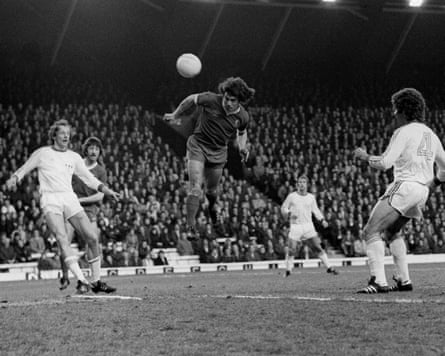
Alan Burgess suggests Chris Smalling and Maximilian Kilman, who both took a shortcut from non-league to Premier League: Maidstone to Fulham in Smalling’s case, Maidenhead to Wolves in Kilman’s. Alan Shoulder jumped from Blyth Spartans (Northern League) to Newcastle (the old Division Two) in 1978; thanks to Richard Slassor for that one. And, finally, Liverpool legend Roger Hunt joined them straight from Stockton Heath (which later became Warrington Town) in 1958.
“Mikel Arteta (one title) is the only manager with title-winning experience (in England) heading into the new season. Is this the only time since 1889-90 that there is only a single title among the managers at the start of the season?” asks Jeremy Finch.
This question has quickly been debunked by Paul Waite. He says: “Everton manager David Moyes took the Division Two (third tier) title with Preston in 1999-2000 and Manchester City head honcho Enzo Maresca won the Championship with Leicester in 2023-24.”
But if Jeremy means the Premier League title specifically, then this season Arteta is the only manager to have won it from the dugout. There has been another occasion where this has happened, in the 1891-92 season with the then Everton manager, Dick Molyneux, having the only top-flight title-winning experience. But if anyone can find another season that you think we may have missed, email the usual place.
Knowledge archive
“After listening to Arsenal fans moaning following their 3-0 defeat by Chelsea, I wondered: has a manager ever been sacked because of poor pre-season results?” asked Paul Cartwright in 2017.
We have previously looked at managers who were sacked during the summer break, though not specifically at those who lost their job because of pre-season results. So here’s Oliver Robinson, waiting to tell us a story. “I’ll take you down to Hampshire,” says Oliver, “where, in 2015, Bashley sacked their manager – the ex-Chelsea, Millwall and Dallas Sidekicks defender David Stride – after five and a half weeks. The Bash said that it was because of ‘a run of poor pre-season results and lack of player signings’ although the run wasn’t that bad: four games, no goals, eight conceded.”
There was a variation on this theme during the USSR’s preparation for the 1986 World Cup. “The manager, Eduard Malofeyev, was sacked a month before the start of the competition, specifically due to ‘poor results in friendlies’,” says Marat Airapetian. “The replacement was the great Valeriy Lobanovskyi, which was only natural, considering that out of 22 players in the squad, 12 represented his club, Dynamo Kyiv.”
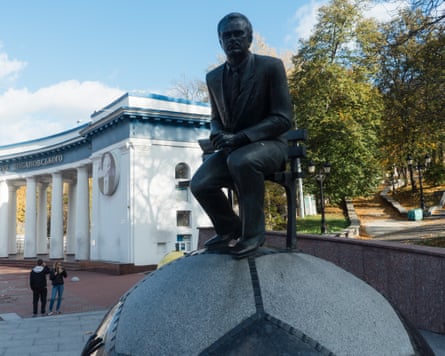
In that case, the end justified the means. The USSR were one of the teams of the tournament, even though they went out in the last 16. They thrashed Hungary 6-0 and scored umpteen long-range screamers before losing 4-3 to Belgium in a thriller.
Finally, it’s our old friend Jørn Andersen, who was included in the previous link about managers who were sacked during the summer. It seems there were a few reasons he got the boot, one of them being that old devil called results.
“If we define pre-season as including pre-league season, then he definitely qualifies,” says Julian Unkel. “He took over Mainz from Jürgen Klopp before the 2008-09 season and achieved promotion to the Bundesliga. However, during the 2009-10 pre-season, differences arose between Andersen and the club about his methods (for example, he would not allow his players to hang family pictures in the dressing room). After several underwhelming pre-season results, Mainz were also eliminated in the first round of the German Cup by fourth-tier team Lübeck. Andersen was sacked on 3 August 2009, four days before the first league game, and replaced by Thomas Tuchel.”
And in 2017 there was this.
Can you help?
“Gianluca Vialli was the first non-British manager to win the League Cup in 1998, while he was also player-manager. As far as I can tell, this would also make him the first player-manager to win the competition. Did someone else beat him to it?” asks Tom Stevenson.
“Birmingham’s August Priske scored the only goal at Swansea in the League Cup on 8 August. Can you think of any other examples of matching name of scorers and months? Solly March in March?” wonders Paul Tiffen.
“Celtic and Rangers have played each other a whopping 452 times. Is there a rivalry in world football that can top that? Alec Smith played in 87 Old Firm games for Rangers between 1894 and 1913. Has any player faced a rival on more occasions?” questions Brian Arthur.
“Why are some football transfer fees undisclosed? Doesn’t seem to be particular clubs, just random. Who benefits from keeping the fee private?” asks Rob.
-
Mail us with your questions and answers