.png) 1 month ago
53
1 month ago
53
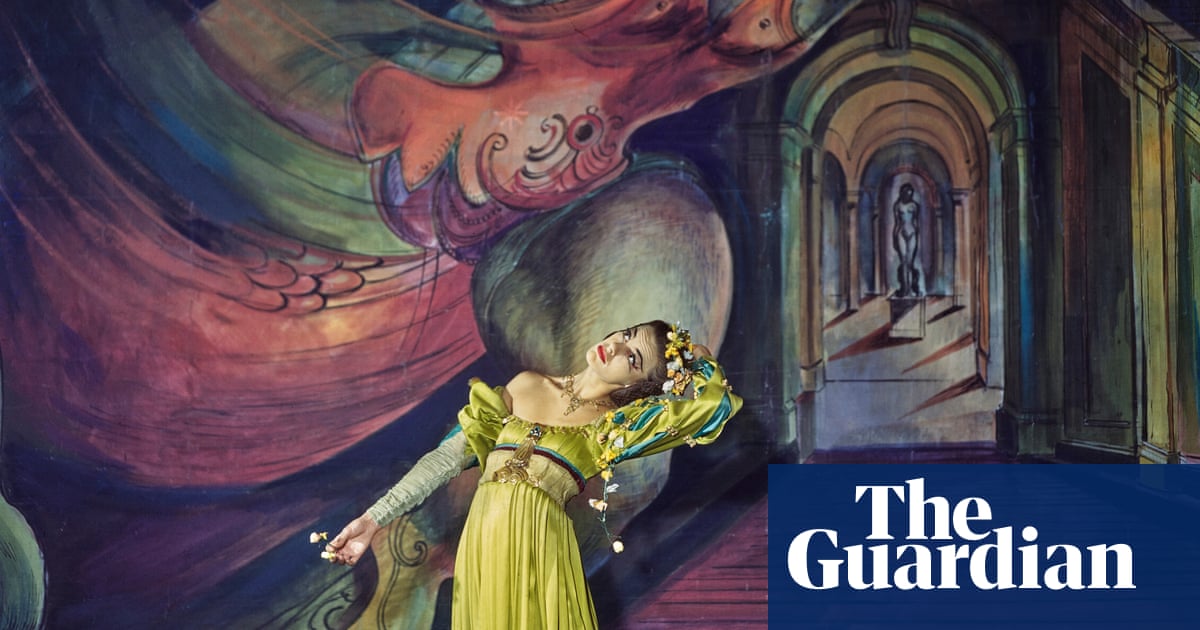
Ten years ago, Phoebe Waller-Bridge locked eyes with the camera and asked her audience: “Do I have a massive arsehole?” An unexpected punchline to a monologue about a booty call that went surprisingly – and literally – south, it announced Waller-Bridge as a new star of British telly. The half-hour comedy series Fleabag broke the fourth wall, and the internet. Its second season was even bigger, spawning countless thinkpieces discussing Andrew Scott as the “hot priest” and the sold-out Topshop jumpsuit worn by Waller-Bridge, which had a keyhole cutout revealing an aspirational slice of boob.
Both Fleabag and Waller-Bridge were praised for blazing a path that female showrunners and their feminist creations could later stomp down. It secured Waller-Bridge an exclusive deal with Amazon worth a reported $20m (£16m) a year. The show’s success certainly changed Waller-Bridge’s life. But, a decade on, as the British television industry has been reshaped by the rise of streamers, budget cuts and dwindling opportunities for new talent, how did it change TV?
It seems almost quaint to recall an era in which Ed Miliband, then the leader of the opposition, felt compelled to wear a T-shirt emblazoned with the words, “This is what a feminist looks like”, but in the mid 2010s, pop feminism was everywhere. Everywhere, that is, apart from on British TV. A report by the Writers’ Guild of Great Britain revealed that from 2001 to 2016, just 14% of primetime TV was written by women, with an even more pitiful 11% in sitcoms. “We knew, even before we were making Fleabag, that the gender balance was horrific, and there was always a desire to change that,” says Chris Sussman, a former BBC comedy commissioner who helped greenlight the show.
Things had already started changing. In the US, Lena Dunham’s Girls premiered in 2012 and was a kind of feel-bad Sex and the City for millennials. It created an appetite for female-authored comedy that was bawdy, awkward, vulnerable and grotesque. There was also the fact that its writer was its star, and the deliberately blurred line between creator and protagonist encouraged audiences to see those characters as ripped from life and therefore more credible (which was often not the case in comedies created by men). The period that followed saw an explosion of frequently semi-autobiographical half-hour comedies from talented writer-performers, including Catastrophe (the co-creator of which, Sharon Horgan, had previous form with Pulling), Daisy Haggard’s Back to Life and Aisling Bea’s This Way Up.
Fleabag was part of that wave, but cut through in a way that many of its contemporaries didn’t, possibly due to reasons that were no fault of its own. “Fleabag was very smoothly incorporated into that massive post-Girls cycle of unruly middle-class white women comedy and ‘personal’ stories,” says Faye Woods, an associate professor in film and television at the University of Reading. “Alma’s Not Normal doesn’t really travel in the same way,” she says of Sophie Willan’s BBC sitcom about a working-class actor and sex worker from Bolton. Similarly, Michaela Coel’s Chewing Gum, about a sheltered working-class girl from a religious family, and her quest for sexual experience – which, like Fleabag, also broke the fourth wall – she says, was “more of a word-of-mouth grower”.
Television commissioning is famously risk-averse and trades on proven success stories. Although Fleabag’s rise was outsized compared with its peers, it also opened the door for more shows by women from different walks of life. “Fleabag did probably give a lot of confidence to female comedy writers to go: ‘Yes, I can go and own my show,’” as well as inspire “commissioners to commission those shows”, says Sussman.
Another global success story was Coel’s second series, I May Destroy You, which dramatised the complex dynamics around sex, gender and power. Premiering in 2020, it felt fresh and timely, and formally innovative too, with the final episode presenting a subversive, choose-your-own-adventure ending for its heroine. Writer Arabella (Coel) confronts her rapist in three imagined scenarios, but none of them deliver closure. Like Fleabag, it was a highly original show that balanced emotional gut punches with comic moments. Serious themes such as grief, sexual assault and mental illness made their way into its half-hour, yet not at the expense of jokes.
Co-produced by HBO, I May Destroy You was also visually ambitious, with the kind of lush and sometimes surreal cinematography more often found in feature films. The standard British half-hour comedy was finding a new form: a hybrid, semi-serious work of comedy and drama, increasingly bolstered by American money. “We tried to make Fleabag look more like a drama and not a comedy, and to put as much money into giving it an aesthetic you weren’t as familiar with,” says Harry Williams, who developed and executive produced the show.
Unlike the relatively stripped-back, gonzo look of 00s comedies (think Peep Show or Green Wing), the comparatively high production values of Fleabag and I May Destroy You suggested a more globally minded ambition. This was possible thanks to co-production funding. Indeed, it has now become the norm for international streamers to partner with British broadcasters, as in-house budgets stagnate or shrink. Netflix, HBO, Hulu, Peacock, Disney+ and A24 have stepped in to plug the gaps, funding new women-led comedies, including Channel 4’s We Are Lady Parts (Peacock) and BBC’s Such Brave Girls (A24).

If Waller-Bridge became an undeniable reference point for British comedy dramas created by women, she became something of a spectre, too. Rose Matafeo, the creator of Starstruck, says she remembers comparisons of her show to Fleabag as “a compliment and a little lazy”. A romcom about a cinema worker and an actor, Starstruck’s tone couldn’t be more different. “They’d be like: ‘It’s incredible to see such a millennial mess-up, just a complete car crash of a person who’s just floating through life. It’s amazing to see such flawed female characters!’” she says drily, remarking that the character she had written was close to her own personality. “‘Oh God, am I much more flawed than I feel?’” she remembers thinking. “That was my issue, where it became a way of describing a female character written with the amount of depth [that] television had not been used to at that time.”
That has changed in the last decade. With audiences exposed to a broader range of female characters who are funny, sexual, self-destructive and still worthy of love, women’s stories have evolved beyond the “messy millennial” trope that Fleabag made famous. There are characters such as Linda in Bridget Christie’s The Change – a 50-year-old going through menopause – and Daisy May Cooper and Selin Hizli’s spiky, beleaguered mothers in Am I Being Unreasonable?. Kat Sadler’s Such Brave Girls, hailed as a gen Z masterpiece, follows two young sisters and tackles debt, abortion and suicidal ideation with nuance and a glint in its eye.
after newsletter promotion
The circumstances that gave rise to Fleabag were specific. It began its life as a one-woman play and was developed as part of a pilot scheme by the BBC. “The money was tiny, but the pressure was tiny,” says Lydia Hampson, one of Fleabag’s producers. Its unexpected success is hard to reverse-engineer, especially when the stakes are now so much higher. With public service broadcasters spending less money on nurturing up-and-coming talent, there’s more pressure on writers to shape themselves to an existing mould. “There are now so many streamers, and they’re offering so many premium pieces of television. But if you’re eating 10 Michelin-starred meals a week, you just want to eat a burger,” says Hampson, who maintains that a return to scrappiness is needed.
“I think there’s some risk-averseness around original ideas,” she says. “I’ve felt that as a producer in the last five years. Those big streamers are like: ‘If we can point to IP, then we can point to subscriber numbers, then we can point to eyeballs,’” she says. “But if something can come up under the radar again, like Fleabag did, that can release those risk-averse purse strings …” This is the strange irony of Fleabag’s success: the money it attracted into British comedy raised expectations – and the financial stakes – unrealistically for the shows looking to follow in its wake.
It is no coincidence that the two biggest British TV exports of the decade both started at the Edinburgh festival fringe. For Francesca Moody, who produced the theatre productions of Fleabag and Baby Reindeer, their later success is a direct result of their beginnings in experimental fringe theatre. “It’s where artists have historically been given the space to try out ideas, take risks and express themselves in messy ways,” she says.
Since Fleabag, Waller-Bridge’s projects have been more low key. She created the TV adaptation of Killing Eve and wrote the triumphant first season. But aside from that, her only other credits are as a co-writer on the James Bond Film No Time to Die, and as co-star of the latest Indiana Jones sequel (though a TV remake of Tomb Raider, which she has developed, is on the way), leading to online jokes that she is collecting millions of dollars from her Amazon development deal while seemingly doing nothing. (Then again, the best work takes time.) Waller-Bridge has undeniably shaped the British TV industry, even if she is no longer at the forefront of it.
When I think of Fleabag, I remember the poster: a striking closeup of Waller-Bridge’s face, mascara running down her cheeks. One woman’s experience and perspective suddenly had symbolic power. She was, despite all the clamour after the show, no “everywoman”; just, in her own words, a “greedy, perverted, selfish, apathetic, cynical, depraved, morally bankrupt woman who can’t even call herself a feminist”. Now, she’s not the only one on our screens.