.png) 1 month ago
49
1 month ago
49
Fiction
Fiction
Cursed Daughters
Oyinkan Braithwaite
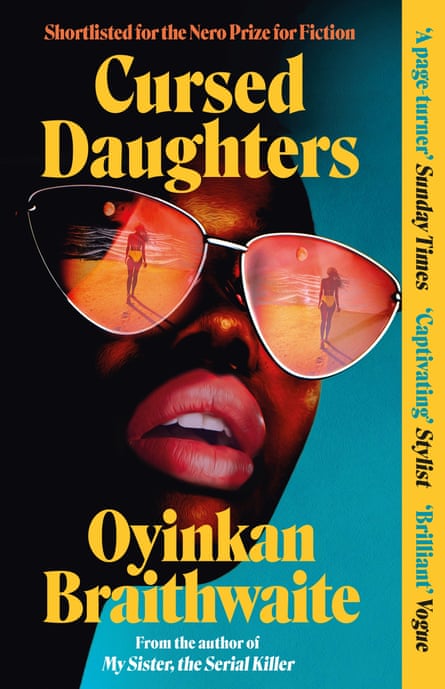
Repeat a family story often enough, and it becomes a kind of legend – or a curse. The Faloduns at the centre of Cursed Daughters share tales of heartbroken women across the generations who just can’t seem to hold on to a man. There’s Fikayo, whose husband left after he tired of tending to her chronic illness; Afoke, who seduced her younger sister’s boyfriend; Feranmi, the matriarch of the family, who got pregnant by a married man and received the curse from the man’s first wife.
Nigerian-British novelist Oyinkan Braithwaite splashed on to the literary scene in 2018 with My Sister, the Serial Killer, a taut debut about sisterhood, jealousy and murder. Cursed Daughters, her second novel, swaps true crime for a more atmospheric spookiness, but it shares a lingering fascination with the dark secrets that might bind the women of a family together. The Falodun curse forms an ominous, ever-hovering presence for the three main characters – Monife, Ebun and Eniiyi – as they grow up, fall in love, and attempt to defy the supernatural forces that seem to hold their family in thrall. Chelsea Leu
£8.99 (RRP £9.99) – purchase at the Guardian bookshop
Fiction
Pan
Michael Clune
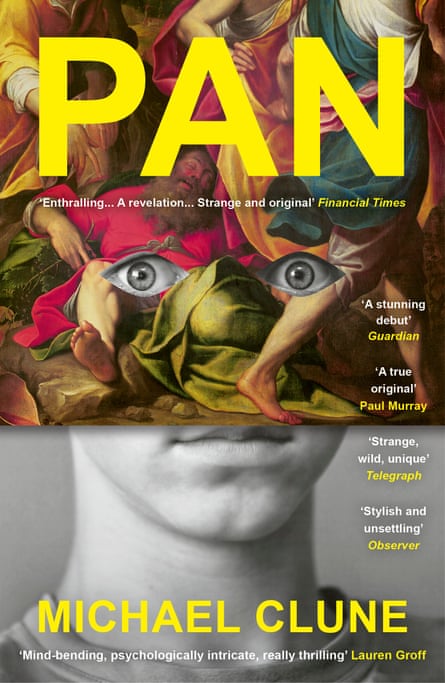
The narrator of American nonfiction author Michael Clune’s first novel is the 15-year-old Nicholas, who lives with his father in a housing development so cheap and deracinated it inspires existential terror. Just as frightening is Nicholas’s sense that “anything can come in”. One day in January, what comes into Nicholas is the god Pan – a possessing, deranging, life-threatening spirit. Or that, anyhow, is how Nicholas comes to interpret his increasingly disabling anxiety.
Pan is remarkable for the honesty of its treatment of both mental illness and adolescence. It shows more successfully than any other book I’ve read how these can be experienced as black magic – indeed, it allows that they might be black magic.
Nicholas becomes convinced that he is perpetually at risk of leaving his body – specifically, that his “looking/thinking could pour or leap out” of his head – and his friends, also being 15 years old, are ready to believe it, too. They are easy prey for Ian, a college-age man who sets himself up as a small-time cult leader among these high-school kids. Soon the group is staging rituals incorporating sex, drugs and animal sacrifice.
A reader who approaches Pan expecting the usual rewards of a coming-of-age story will be sorely disappointed. It offers not answers but visions; not growth but lambent revelation; not closure but openings. Nicholas ends his inner journey without arriving at the cure he has been pursuing. But when we close the book, we find ourselves in a larger world. Sandra Newman
£8.99 (RRP £9.99) – purchase at the Guardian bookshop
Fiction
Among Friends
Hal Ebbott
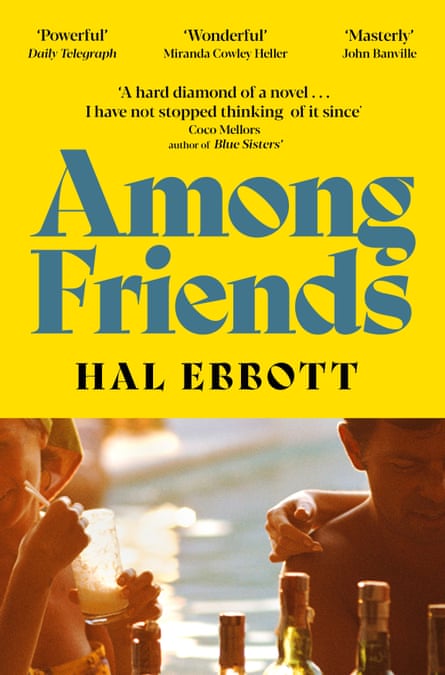
Amos and Emerson are the best of friends; everyone knows this. They met on the first day of college and bonded immediately despite their surface differences (Emerson is rich and handsome, Amos poor but clever). They are a model of male intimacy and understanding: confiding in each other, trusting each other, hugging each other (“real, loving hugs, clutches without irony”). Theirs is truly a friendship for the ages.
Or so it seems. For on the weekend of Emerson’s 52nd birthday, an occasion at the centre of Hal Ebbott’s probing and insightful debut novel, something happens that changes everything – and raises the question of whether we can ever truly know anyone.
Among Friends is a bracingly honest and affectingly intimate depiction of abuse, family dynamics and self-deceit. It is sharply observed and psychologically astute, somehow both passionate and dispassionate, and it upends its characters’ lives so ruthlessly and revealingly that it is hard not to take pleasure in a false facade being finally smashed. Christopher Shrimpton
£8.49 (RRP £9.99) – purchase at the Guardian bookshop
Fiction
The Matchbox Girl
Alice Jolly
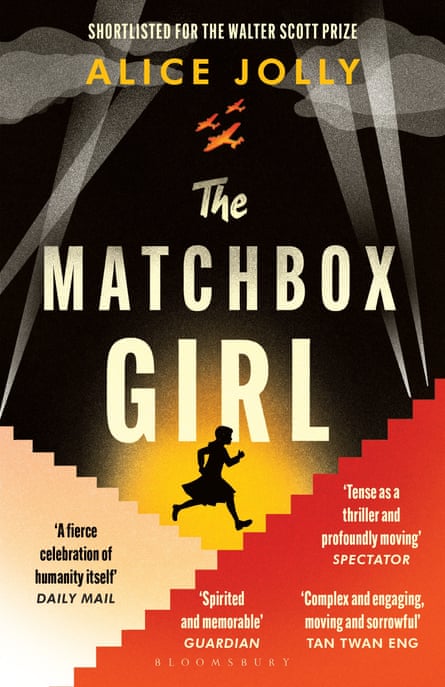
We meet our fierce narrator, Adelheid Brunner, when she is brought into a children’s hospital by her grandmother, who cannot cope with the little girl’s fixations. Adelheid is obsessed with the matchboxes of the title, which she is constantly studying, ordering and occasionally discarding. In the hospital, she finds that she and her fellow child inmates are the object of obsessive study in turn by their doctors – sometimes understood, sometimes valued, and then, tragically, sometimes discarded.
Adelheid sees how certain disabilities spark particular interest from one of the key doctors, Dr A, who is intrigued by the children he calls his “little professors”. This, we come to understand, is Dr Hans Asperger, whose research in the Vienna children’s hospital in the 1930s laid the groundwork for the understanding of autism.
Adelheid works out how she needs to present herself in order to thrive in this milieu: to show that she is valuable and not to be discarded. “One can put on the coat of a Life,” she realises, “and perhaps change for another garment when the need arises.” She is able to leave the hospital for a time, and watch the rise of nazism from her position as a waitress in her grandmother’s crowded cafe, returning as a ward assistant during the dark years of the second world war.
In Naomi Klein’s book Doppelganger, she also explores the way that the Vienna children’s hospital under Asperger became a “key node in the system of sorting who would live and who would be murdered”. Klein dissects Asperger’s shift from care to callousness, from curiosity to murder, in order to ask how we can resist that shift right now. As a novelist, Jolly is less interested in the bigger lessons and more interested in the moment-by-moment anguish and chaos of those times. But there is a synergy between Klein’s work and Jolly’s, both of whom seem to be on a journey to identify what makes us human and what destroys that humanity. Natasha Walter
£8.99 (RRP £9.99) – purchase at the Guardian bookshop
Fiction
Female, Nude
Rhiannon Lucy Cosslett
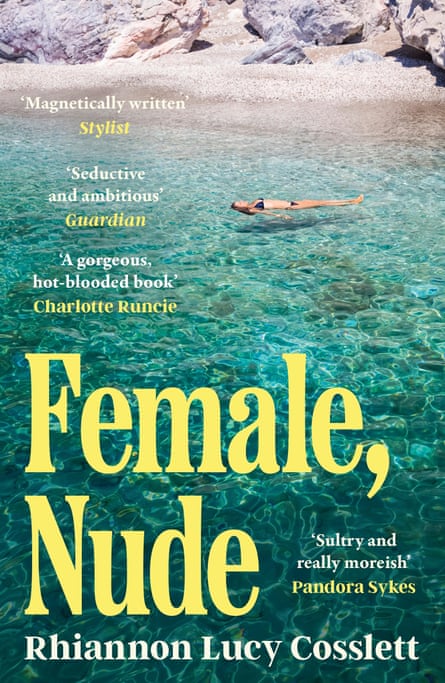
It is the summer of 2019, and Sophie Evans, the reckless protagonist of Rhiannon Lucy Cosslett’s unsettling second novel, has arrived on an idyllic island in the Cyclades with her university friends Helena, Iris and Alessia to celebrate Helena’s forthcoming marriage.
In the 10 years that have passed since they first met as students, the differences between the women have become more pronounced: money has “made itself known”. Elegant, chilly Iris, whose parents have bought her a place in Peckham, works in publishing; the family of spoilt, patrician art dealer Alessia seem practically to own the island on which the women are holidaying; and Helena’s aspiration is to be a trophy wife with a house full of “nice things”.
By contrast, Sophie – whose father is an electrician and mother the full-time carer for her disabled sister – is working in a museum shop while she tries to make her way as an artist. She is also under pressure from her reliable, thoughtful partner, Greg, to have a baby, when what she urgently wants is freedom to paint. Apparently understanding this, Alessia commissions a nude portrait from Sophie, to be painted during their time on the island in her private studio. But when the beautiful Ky, waiter, archaeologist and extraordinary lover, appears at the villa and begins to look at Sophie in a certain way, the rivalries that have been simmering turn toxic, and unease becomes something more dangerous.
Female, Nude is an energetic and ambitious novel. Cosslett – a Guardian columnist – is excellent at the sensual detail of light and food and physical pleasure; she immediately engages us with a seductive drama of friendship between women in an exotic and glamorous White Lotus-like location, while at the same time offering a serious-minded interrogation of art. Christobel Kent
£9.89 (RRP £10.99) – purchase at the Guardian bookshop
Fiction
Everything Will Swallow You
Tom Cox
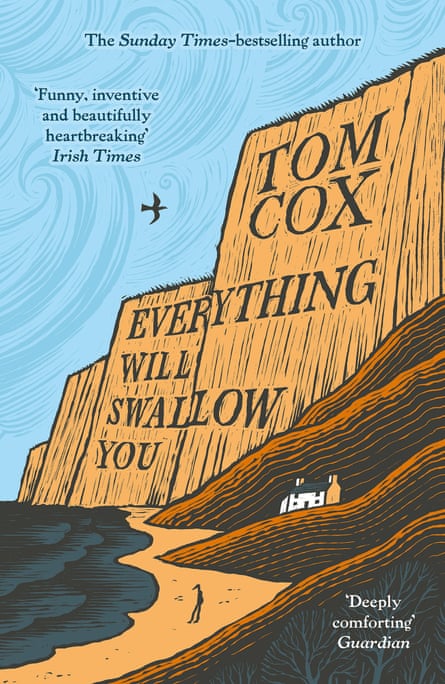
This shambling but intricate yarn of friendship, loyalty, alienation and record collecting features a depressed nature writer called Billy Stackpole. He is sitting around his hand-forged firebowl when he utters the woeful/hopeful plea: “This sounds weird but I’ve never had a big sloppy cardigan and I wish I did … Just something you can throw on, at a time like this. Maybe in a nice earthy green, a bit mossy.”
As far as Billy knows, he’s speaking to a group of eight human beings. However, also listening in, incognito, is the novel’s cosiest and most unusual character: a long-nosed, sleek-haired magical sea creature with 24 fingers who is capable of passing for a large brown dog, but also of hoovering, gardening, reading Barbara Kingsolver novels, speaking six languages, giving wise life advice, and most excellent knitting. Meet Carl – who, because he’s nice, will secretly knit Billy a cardigan.
Carl is one half of a charming odd couple along with Liverpudlian record dealer Eric. Everything Will Swallow You is the story of Eric’s life, without and then with his supernatural companion. But it’s also a materially hopeful “state of England” novel. Our social fabric may be fraying, but we’re still warm and woolly, most of the time. Toby Litt
£8.99 (RRP £9.99) – purchase at the Guardian bookshop
Fiction
Havoc
Rebecca Wait
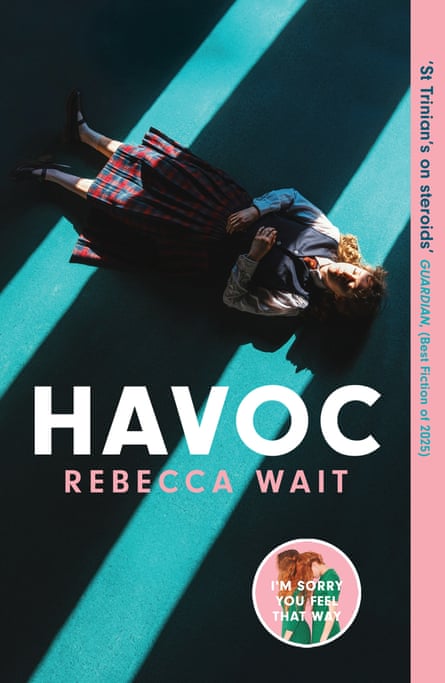
Even if it wasn’t perched on a cliff on the south coast, the position of St Anne’s, Eastbourne – the decaying girls’ school that is the setting for Rebecca Wait’s gleefully macabre novel, Havoc – might reasonably be described as precarious. Deeply eccentric, staffed by the barely employable, and permanently teetering on the brink of bankruptcy, St Anne’s hangs on, against all the odds. And then, in 1984, Ida Campbell turns up on the doorstep, in possession of a full scholarship and rather a lot of baggage.
Sixteen years old and already an outcast, Ida is in flight from her hapless mother, her foul-tempered sister, the small community in the Western Isles to which they have been transplanted, and the nameless scandal that has ruined their lives. St Anne’s is to be Ida’s salvation, but it soon dawns on her that the school might not be quite the refuge she had hoped for.
In Havoc, Waits mines the rich seam of girls’ school fiction to delirious and rewarding effect. There are welcome echoes of St Trinian’s, and there is abundant Ealing comedy in the madcap chases through school corridors and machinations in the lighting gallery during the school play. Yet beneath the comedy lies a distinctly unsettling undertone: the girls experience a convincingly visceral terror that edges towards Shirley Jackson territory and gives their hysteria an extra dimension. This, along with a genuine unexpectedness in the characterisation and a lot of very funny dialogue, loosens things up and brings real originality to the game. Combined with excellent pacing, a plot so deliciously thick you could stand a spoon up in it, and the boldness required to splice a darker thread into the narrative, it all adds up to a thoroughly satisfying contribution to a happily capacious genre. Christobel Kent
£9.89 (RRP £10.99) – purchase at the Guardian bookshop
Thriller
Thriller
The Persian
David McCloskey
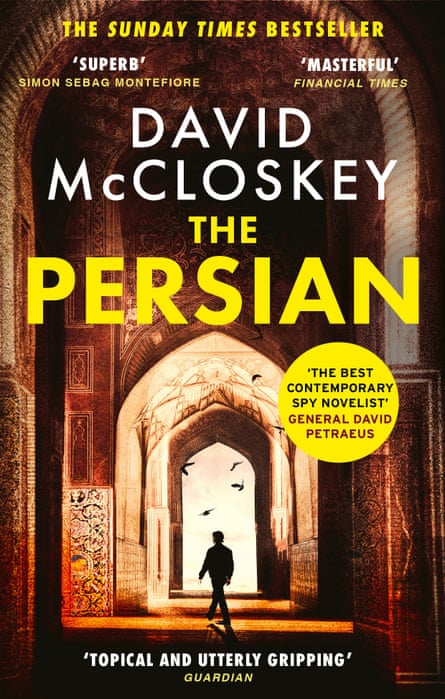
Former CIA analyst McCloskey’s fourth novel centres on Jewish Iranian dentist Kam Esfahani. Dissatisfied with life in Sweden, where his family relocated when driven out of Iran, and wanting the wherewithal to move to California, he accepts an offer from the chief of Mossad’s Caesarea Division. Returning to Tehran, he runs a fake dental practice as cover for assisting in “sowing chaos and mayhem in Iran”. Things go awry when he enlists double agent Roya Shabani, widow of an Iranian scientist killed by the Israelis. The book takes the form of a series of confessions that Kam, now caught and imprisoned, is forced to write by his torturer, and these documents – which may or may not reveal the whole truth – are interspersed with flashbacks. Kam’s cynical tone and mordant humour serve to underline not only the horror, but also the inherent hypocrisy of the endless cycle of violence and retribution: this masterly novel is tragically topical and utterly gripping. Laura Wilson
£8.49 (RRP £9.99) - purchase at the Guardian bookshop
Essays
Essays
On Friendship
Andrew O’Hagan
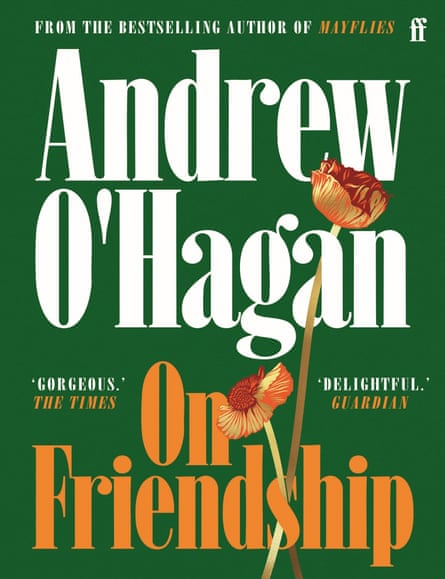
Novelist Andrew O’Hagan’s new book comprises eight brief essays reworked from a series recorded last year for Radio 4. The mode is reminiscence: we hear about a lost childhood friend from the council estate where he grew up in 1970s North Ayrshire; about former colleagues at the London Review of Books, where O’Hagan made his name in the 1990s; about his adult daughter’s bygone imaginary friend. He considers why actors, politicians and Republicans make bad friends, why the novelist Colm Tóibín makes such a good one, and how the experience of friendship is shaped by bereavement and the internet.
The most intriguing item here concerns the late Irish novelist Edna O’Brien, whom he first met in London in 2009 after leaving Seamus Heaney’s 70th birthday party. When he invites her to lunch at the Wolseley in Mayfair (“Perfect … ask for the corner table, Lucian Freud’s table”), it’s the beginning of a 15-year friendship during which “we called upon each other to complete thoughts we were unable to have alone”, in O’Hagan’s curious phrase, glancingly elaborated on when he later recalls “the soft sonatas we used to listen to while I helped Edna with her manuscripts”.
Of the various names dropped in these pages, she’s the only one permitted an insight into O’Hagan himself. In most of his anecdotes, he’s the guy who comes out best – whether as a schoolboy weeping over Charlotte’s Web when cruder classmates laughed, or as a hardy reveller who is nevertheless earliest to rise the morning after a big night out – so your ears prick up a little when, apropos of nothing, O’Brien tells O’Hagan (observed, for once, rather than observing) that she can see he’s “a wounded man who handles it very impeccably and very plausibly”.
For a memoir – which is what On Friendship is, however piecemeal – that would seem to leave money on the table, to say the least. Ultimately, these memories and musings – in appealingly slimline hardback, eminently gift-ready – leave you wondering about the larger autobiography O’Hagan might write, if and when he chooses. Anthony Cummins
£8.49 (RRP £9.99) - purchase at the Guardian bookshop
Memoir
Memoir
A Truce That Is Not Peace
Miriam Toews
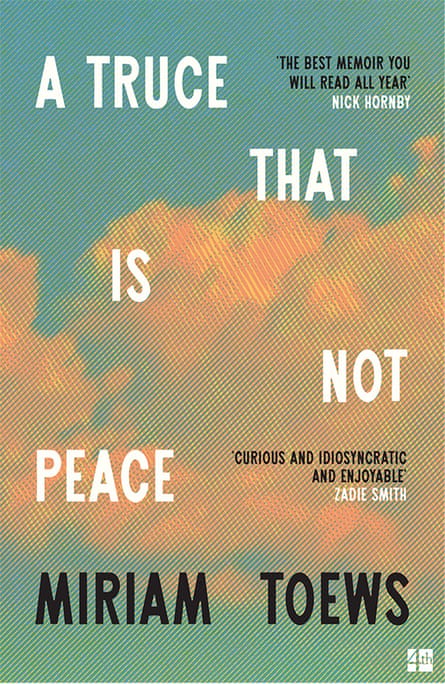
Asking himself “Why I write”, George Orwell gave four reasons: aesthetic enthusiasm, historical impulse, political purpose and sheer egoism. Asked the same question ahead of a literary conference in Mexico City, Miriam Toews mentions the teenage letters she sent from Europe to her sister Marjorie (Marj or M as she calls her) as the reason she became a writer. Sorry, that won’t do for an answer, she’s told. Try again.
This book is a triumph – a meditation on writing, suicide, guilt and silence; a fragmented account of Toews’s life so far; and an illustration of why she’s one of Canada’s most admired writers. Though the Mexico City organiser missed the point, those letters to her sister were indeed her prime reason for writing. “Why do I write? Because she asked me to.” That was the deal they made. “You live. And I’ll write.”
Marj suffered from depression and in 2010 she killed herself, 12 years after their father Melvin had done the same. “You people (meaning, my family) don’t talk about your pain,” Toews’s partner tells her, “you just kill yourselves.” Toews herself came close to doing so one day while walking by the river Assiniboine, in Winnipeg, but rather than throwing herself in the water she threw her mobile phone instead.
Despite the sadness and depression, there’s a lot of laughter in the family, including an episode when they take a boat out to an uninhabited island, disembark for a picnic and return to find the boat has disappeared – rather than wail they all begin to laugh (later, miraculously, the boat drifts back to shore). Toews’s mother, a Scrabble genius, remains indomitably cheerful despite her losses, and is arguably the heroine of the book.
Why were her father and sister so silent, Toews asks her mother. “That’s easy, she replies, it was something they could control.” For Toews, writing serves the same purpose, absorbing her sorrow and rage.
“Are you OK? I mean, you know, OK? I miss you so much,” Toews writes to her sister. “I wish I could take your sadness away.” She’s still trying, all these years later, closing with a 2023 letter to Marj (“You’ll like this”) about a stranger arriving at a Christmas Eve family gathering and being made welcome, though it turns out he has not been invited. There’s Toews for you. Her work’s so intimate you worry you’re intruding, but it’s fine, she welcomes you in. Blake Morrison
£9.34 (RRP £10.99) - purchase at the Guardian bookshop
True crime
True crime
Story of a Murder
Hallie Rubenhold
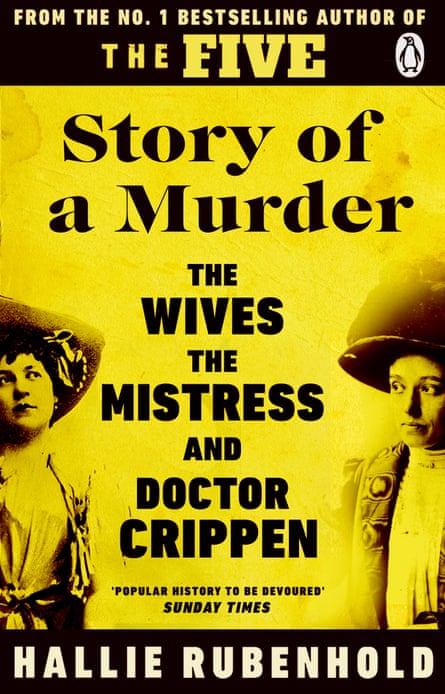
On the evening of 31 January 1910, two couples dined together at a house in Hilldrop Crescent, on the borders of Holloway, London. The hosts, Dr Crippen and his wife, Belle Elmore, had been entertaining their friends, Clara and Paul Martinetti, until the small hours. After some difficulty fetching a cab, the visitors headed home around 1.30am. It was the last time they, or anyone else, would see Elmore alive. When her colleagues at the Music Hall Ladies’ Guild made inquiries about their friend – she was treasurer of the organisation – Crippen told them she had gone off to America to deal with a family crisis. Some weeks later they were informed she had died of double pneumonia in Los Angeles.
Thus was sparked an international murder case, one of the most notorious in Britain, later called “the crime of the century”, of which Hallie Rubenhold gives an engrossing account. Her energy as a researcher is indefatigable, and admirable. It helped to burnish her award-winning previous book The Five, which ingeniously flipped the mythology of Jack the Ripper to focus upon the lives of his victims. She means to repeat the trick here by shifting the centre of gravity from the murderer to the women his shadow crossed, but it doesn’t quite come off. Unlike the Ripper, we know the killer’s identity, and Crippen, for all his mild-mannered blankness, remains the fiendish engine of the story. The mystery here is not who, but why, and the book cannot supply a convincing answer. Time and again, Rubenhold has to admit to the limitations of life-writing when her research meets a dead end: “is unknown”…“is a mystery”… “There is no indication of how” …“is uncertain”…“will never be known”.
Not that Story of a Murder: The Wives, the Mistress and Doctor Crippen wants for excitement or intrigue. The discovery of a dismembered corpse beneath the cellar floor at Hilldrop Crescent was the first of two sensational turning points in the tale, the bodily remains bearing traces of hyoscine, a poison that Crippen had recently purchased, alongside a scrap of his own pyjamas. The ineptitude was almost as remarkable as the callousness. Anthony Quinn
£9.34 (RRP £10.99) - purchase at the Guardian bookshop
Biography
Biography
Gwyneth
Amy Odell
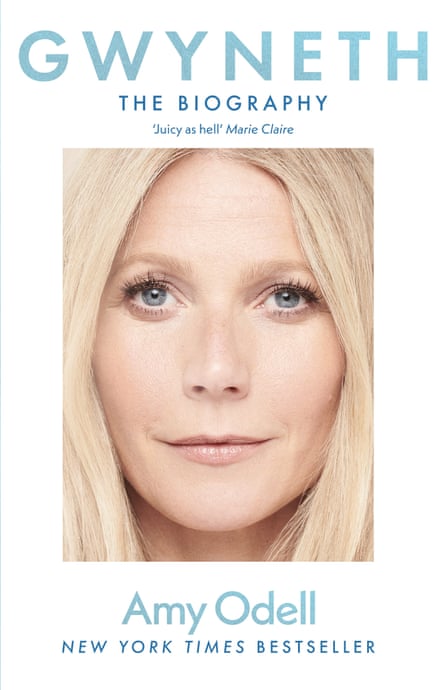
Gwyneth: The Biography opens, where else, with the vaginal egg, an episode that has come to stand for Paltrow’s general ability to sell dumb ideas to credulous rich women using widespread mockery as her marketing rocket fuel. (In case you need a reminder: this was the $66 jade egg Paltrow sold via her lifestyle brand Goop that promised various health benefits upon insertion.) Amy Odell’s book, billed as delivering “insight and behind-the-scenes details of Paltrow’s relationships, family, friendships, iconic films”, as well as her creation of Goop, takes no particular stand on this, nor on many of Paltrow’s more divisive episodes, instead offering us what feels like an earnest jog back through the actor and wellness guru’s years of fame.
I ripped through Odell’s account of Paltrow’s youth as the simultaneously indulged and benignly neglected daughter of two showbusiness big guns. But when she moves to the Hollywood years, everything becomes less fresh and more familiar. Finally, she turns to Goop: this was a story I hadn’t been paying much attention to lately, and so a genuine surprise of the book is to learn that the company founded by Paltrow in 2008 has been a much shakier business than advertised.
The difficulty is that Paltrow is a charmless subject who never rises to the level of monstrous. She’s an OK actor, a so-so businesswoman – Kim Kardashian, as Odell points out, has had much greater success with her company, Skims. The story, then, is less about how Paltrow became this figure in the culture than why on earth she was elevated in the first place. Emma Brockes