.png) 2 hours ago
4
2 hours ago
4
Margaret Hodge doesn’t do small talk. “So, how d’you think Andy’s doing?” is her opening gambit. “Not too bad, huh? I think he’s had a really good start.” It’s classic Hodge – sufficiently curious to ask the question about the new Labour prime minister, and assertive enough to provide the answer before you get yours out. “Yep. Fantastic empathy. But then he’s got to deliver. I think the budget is going to be the key moment. And we’ve also got these awful global challenges and Iran and Hormuz. God, it’s a mess. Ugh. Hahahaha!” She hoots with laughter at the horror of it all.
She says she was against ousting Keir Starmer. “I thought we were doing so badly that what we really needed was a complete change in what we were about, what our ambitions were, where we were going, what our priorities were and how we were going to have a message of hope. I thought it was about much more than Keir at that point. I thought changing leaders was like rearranging deckchairs on the Titanic. I think I was wrong, right?”
Hodge has seen it all. Decade-long leader of Islington council when it was regarded as part of the “loony left”; Labour moderate and Blair-Brown loyalist throughout the years in power; scrapper extraordinaire who has taken on the BNP as MP for Barking, antisemitism in Jeremy Corbyn’s Labour and tax-avoiding tech companies as the formidable chair of the cross-party public accounts committee (PAC).
Now, in the week of her 82nd birthday, Hodge is publishing a memoir, Battleaxe. “I’m reclaiming the term. It shouldn’t be a term of derision. It’s a strong woman.” Who came up with the title? “If I’m absolutely honest, it was my agent. My children don’t like it, but lots of people do.”
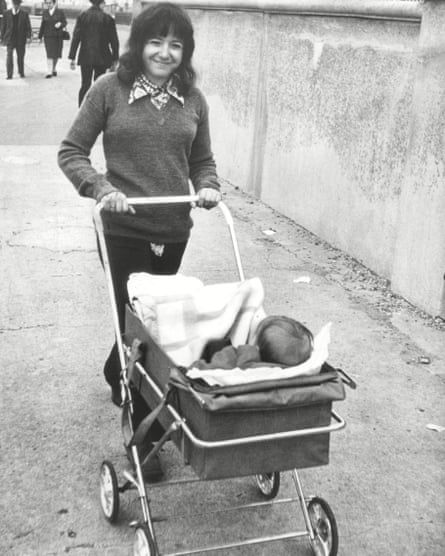
Does she really feel like a battleaxe? “People do say: ‘Oh, you don’t want to take on Margaret.’” She stares me down, fiercely proud, big brown eyes aglint. “Can I tell you what I think about myself? I listen and reflect, but when I’ve made up my mind I’m quite strong and determined.” She reminds me of the great football manager Brian Clough, who said: “If I had an argument with a player, we would sit down for 20 minutes, talk about it, and then decide I was right.”
We are at her London home, where she lives alone. It’s every bit as immaculate and stylish as she is. “Don’t look in the garden,” she says. “It’s such a mess – I’ve been away for six weeks.” Her gardening tools are at the ready by the door. The walls are covered in lovely paintings. There are busts of her husband (the high court judge Henry Hodge, who specialised in immigration and died aged 65 in 2009) and her father (Hans Oppenheimer, who co-founded Coutinho, Caro & Co, a steel trading firm that became the multinational Stemcor). On the main wall in the living room is a gorgeous splash of abstract colour by Gillian Ayres. “I love it because it’s painted in big bold strokes and is really optimistic.” You could say much the same of Hodge.
She’s had a fascinating life. Her Jewish parents fled Germany to escape the Nazis, and she was born in Egypt. After a window was broken at her father’s business in 1948 during the first Arab-Israeli war, he took the hint. This time the family fled to Kent in England. Although they were atheists, the family’s only friends were other Jewish refugees.
On Christmas Day in 1954, when Hodge was 10, her mother died of stomach cancer. Shortly afterwards, it was decided that as the brightest child in her class, she should skip a year. So within months she had lost her mother and her peer group. She was devastated, and became increasingly unruly. Oppenheimer didn’t know what to do with her and sent her away to boarding school in Oxford, which she hated. In 1966 she graduated from the London School of Economics with a third-class honours degree in economics.
She worked in corporate market research for seven years, and did a stint as an unqualified teacher. In 1968 she married Andrew Watson, an economist with whom she had two children. She joined the Labour party in 1973, and won a seat on Islington council in the same year. A friend had told her that getting involved in local politics would keep her sane while raising a family. She was, and remains, driven by two desires – to equalise life chances and fight racism.
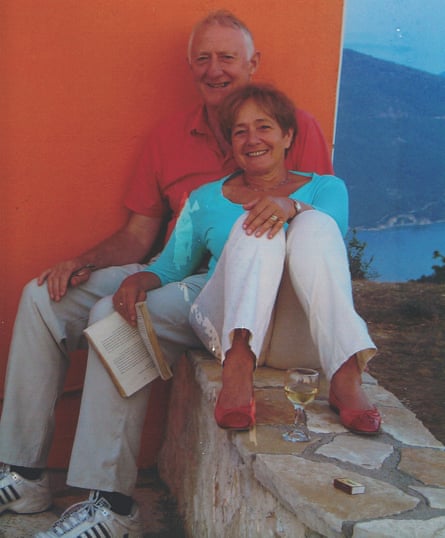
By 1975, she was chair of the council’s housing committee, with Henry Hodge, then a solicitor, as her deputy. In 1978, she divorced Watson and married Hodge. They went on to have two daughters. In 1982, she became leader of the council. Opponents nicknamed her Enver Hodge, a play on Enver Hoxha, the brutal communist dictator who ruled Stalinist Albania.
Hodge admits she was pretty hardline. “I don’t hold back. Henry always used to try to restrain me.” Can she give an example? “We did a walkout on Michael Heseltine because he did a conference on inner-city regeneration and he was chopping all our funding. I thought it was such hypocrisy.”
Why did Henry object to the walkout? “He said it was a daft thing to do. It was gesture politics. And in that era we were seen as engaging in too much gesture politics.” She pauses. “But,” she barks, “having said that, he was incredibly supportive.”
She gives another example of her gesture politics. “I refused to meet Margaret Thatcher. But she did do these awful things.”
I’m fully aware of the things she did, I say, but wasn’t it … She finishes the sentence for me. “It was stupid. It was stupid. I wouldn’t do it today, but isn’t that interesting to learn that of yourself and how you’ve changed? And it fitted with the time. She was taking on local government and the unions. She was destroying what Andy’s now going to try to recreate.”
She says that pre-Thatcher, she had so much power as a council leader, and the Iron Lady gradually stripped it away – rate-capping, grant cutting, privatisations, the abolition of the Greater London Council. “It was a terrible transformation. We did hate her. She was a Marmite figure, wasn’t she? You loved her or you hated her.”
That’s funny, I say: Marmite is how you describe yourself in Battleaxe. “Yep. Ha! This is true. I am controversial. I am seen as a Marmite figure, too. Why is that? Why is that?” And for once she doesn’t answer her own question.
Has she been surprised by her career? “Yes. As a school kid, I never thought I’d be anybody. I thought I’d be a mum. I’d lost my mother and it made me think the only thing I want to be in life is a mum. So I feel surprised by the extent of my experience and opportunities.” There’s another thing that has surprised her – this time, not so positive. “I never thought I would become a hate figure in the way that I became sometimes.”
What does she consider her greatest achievement? “BNP,” she says instantly. “It has to be the BNP, doesn’t it?” In 2006, the neo-Nazi party won 12 of the 51 seats on Barking and Dagenham council. It looked as if it could go on to win the 2010 council election and that the BNP leader Nick Griffin could oust Hodge as MP in the general election.
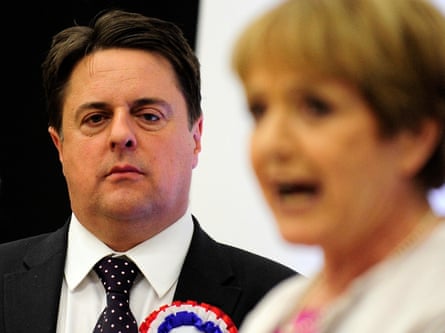
Labour had committed the cardinal sin of taking the electorate for granted, Hodge says. What’s more, it was terrified of talking about migration. Meanwhile, her constituency had become unrecognisable to many. “It went from 98% white to under 50% in a generation, which is massive. If your community or my community changed liked that in a generation, we would feel unsettled. At best, unsettled. Kids in the street change, neighbours change, food in the shops changes.”
Hodge discovered her constituents were furious because they believed they were being ignored and that migrants were being prioritised for social housing. She proposed that weighting be given to people’s links to the community rather than housing being based purely on immediate need, which eventually happened.
Many fellow Labour MPs criticised her. Keith Vaz said she “appears to want to be the Alf Garnett of Islington”, while Alan Johnson accused her of pandering to the BNP. “He said that on Question Time. He was going for the deputy leadership,” Hodge says. Did they have a point? “No. I never ever caved in to the racism. Ever. Ever!”
In 2010 Labour wiped out the BNP and she trounced Griffin by 18,000 votes. How did that feel? “Very mixed because it was just under a year since Henry had died. There was a lot of ‘why is Henry not here?’ in it. But I also felt fantastic. Jubilant. If I hadn’t changed the way I’d operated politically, and knocked on doors, I think we would have had a BNP council and a BNP MP. It took me four years of work – it wasn’t just a quick three weeks before the election.”
She talks about the echoes today with Reform. “We lost control of immigration so I think what Shabana [Mahmood] is doing is really important. Now you don’t have massive delays in dealing with asylum seeker applications. People who come here have to abide by our rules, and if they don’t, they lose the right to be here. If they commit a criminal offence they should lose the right to be here.”
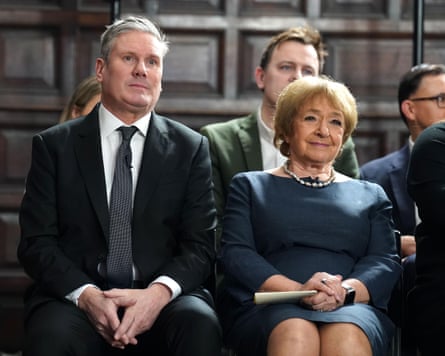
Really? Surely our rules are that you serve a sentence for a crime, then come out and get on with your life? I point out that many refugees are deported for minor crimes. “That changes once you’ve got your British citizenship,” she says. But under new Labour legislation, you could wait 20 years for that. “No, I agree,” she says. “I have problems with a 20-year wait.”
What was tougher, fighting the BNP or antisemitism? “The BNP was a much easier fight in an odd way. It was much clearer.” Why? “Because antisemitism was in the Labour party. It was horrible. Antisemitism is the worst of all the battles I have fought. I hated it. I absolutely hated it. It was miserable. I hated the abuse. I hated walking into rooms and thinking: ‘God, who’s for me and who’s against me in this room?’” Abuse on social media included: “The only support she deserves is a handrail to climb the gallows”.
Was she surprised when in 2018 she ended up calling Corbyn … Again she finishes the sentence for me. “An antisemite? Was I surprised at myself? No, that’s the battleaxe in me, isn’t it?” She had told two fellow MPs that she had planned to do it beforehand. So, I ask, was there a theatrical element to it? “I didn’t do it publicly. These two lads wanted me to say it to him on the frontbench. I said, ‘I’m not going to do that – I’ll catch him on his way out [of the House of Commons chamber]’, which is what I did.”
The 2022 report by Martin Forde KC into the toxic culture in the Labour party concluded that antisemitism was weaponised by the left and the right of the party. “I was anti-Corbyn; but no, I never used it as a weapon,” Hodge says. Does she agree in general that it was weaponised on both sides? “Yes, probably. I think there was some weaponising.”
If she saw Corbyn now, what would she say to him? “He doesn’t talk to me. Haha! He passes me by. Haha! Ignores me.” She chuckles with satisfaction. The Labour party asked her to apologise to Corbyn, but she told it where to go. After the party dropped its investigation in August 2018, she told Sky News: “On the day that I heard that they were going to discipline me and possibly suspend me, it felt almost like … what did it feel like to be a Jew in Germany in the 30s?”
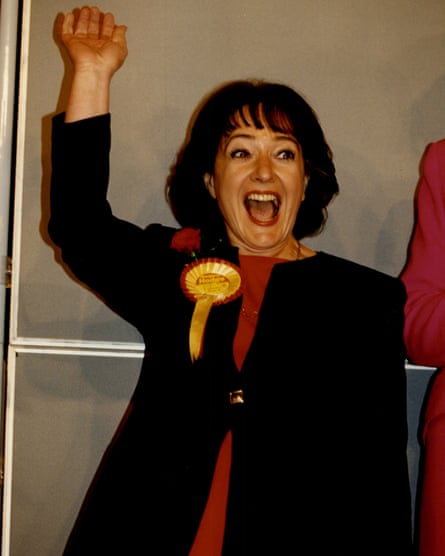
Was this when she felt most hated in politics? “Yep.” Has it left scars? “It’s still there. But it’s a joy now to be in the Labour party. When Keir became leader, he single-mindedly tackled antisemitism. I hadn’t expected that and I appreciate it. But it’s a part of my life, so it doesn’t disappear.” Now she says it took Corbyn to help her rediscover her identity. “It’s brought me back to feeling an empathy with who I am – a Jewish immigrant refugee.”
What is her biggest regret in politics? She immediately cites the sexual abuse scandal in Islington children’s homes when she was leader of the council. “I just don’t think any of us thought paedophiles were operating out of children’s homes. It was unconscionable. Now it’s unconscionable today to think that we didn’t realise it. That’s probably caused me more political problems than anything.” She had just been made the UK’s first children’s minister when the scandal became headline news again decades later in 2003. She offered her resignation to Tony Blair, who refused it.
But many people knew it was going on and told you so? “We went through each allegation, and I had all the officers there and they denied any of this was happening. Remember, back then kids in care were called naughty. Today that is unconscionable, isn’t it? I’d listened to all the officers, but I didn’t talk to the kids, and that’s a regret.”
What was even more unconscionable is that she tried to close down an investigation by BBC Radio 4’s Today programme and called Demetrious Panton, a child abuse survivor, an “extremely disturbed person”. She squirms when I mention it. “That was a terrible error. Terrible error.” Why did you do that? “I was advised. Everyone was ringing me up saying the Today programme was digging around and I thought: ‘How the hell can I stop this?’ That was an appalling bit of advice. But in the end I took responsibility. I did it.” Hodge was forced to issue an unreserved public apology in the high court, she paid Panton’s legal costs, and was ordered to pay him £30,000, which included a £10,000 donation to a charity of his choice.
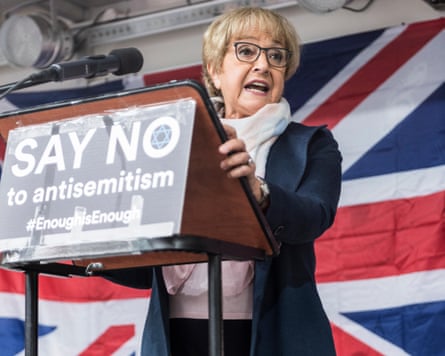
But in the end Hodge, who now sits in the Lords, will be remembered more for exposing corruption than for covering it up. Although she never achieved high office as an MP, she became a political rock star as chair of the PAC between 2010 and 2015. She was convinced it was going to be a dull job when she took it on, yet it proved anything but. The cross-party committee tasked with assessing the value for money of government projects became a must-watch as corporate executives and senior civil servants were held to account for dodging taxes, playing fast and loose with public money, failing to answer questions or simply being rude.
Hodge proved herself a fearless one-woman grilling machine. Google’s Matt Brittin (now director general of the BBC) was well and truly Hodged when she threw the company motto back in his face, saying: “You are a company that says you ‘do no evil’. And I think that you do do evil.” After a session challenging BBC execs over excessive severance payoffs, she concluded it was “a very unedifying experience watching seven people at the top of the BBC dancing on the head of a pin to try and avoid responsibility”.
In 2024, she was made the UK’s official anti-corruption champion, a fiscal Wonder Woman fighting dirty money, offshore tax dodgers and economic crime. On her kitchen table today is a tax file she tells me I mustn’t look at on pain of death. For all of Hodge’s warmth, I tell her she can be terrifying. “Why?” Well, I’ve seen you in action on the PAC, I say.
Again, Hodge hoots with happy laughter. That’s the battleaxe, she says. Then she half-whispers, almost conspiratorially: “I’m always surprised when people say: ‘God, you don’t cross Margaret.’” But I’m not so sure she is.
Battleaxe: A Memoir by Margaret Hodge is out on 10 September, published by HarperCollins (£25). To support the Guardian and the Observer, order your copy at guardianbookshop.com