.png) 3 hours ago
7
3 hours ago
7
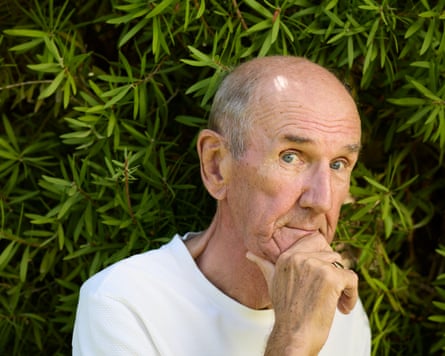
The electronic gates slide open to reveal a gorgeous Portuguese villa, a swimming pool and a beansprout of a man. “You’ve made me feel very important,” says Russ Abbot with a smile. “Come in!”
It’s more than 30 years since Abbot, aged 78, dominated Saturday night TV with his sketches, songs and impersonations. He appealed to all sorts. Kids, parents and grandparents united around the TV – first for Russ Abbot’s Madhouse, which ran from 1980 to 1985, then The Russ Abbot Show, from 1986 to 1991. He was joined by the inimitable Bella Emberg and a cast of young comics, including Les Dennis, Dustin Gee and Michael Barrymore. But make no mistake, it was Abbot’s show and the 80s was his decade. At his peak, he attracted 18 million viewers an episode.
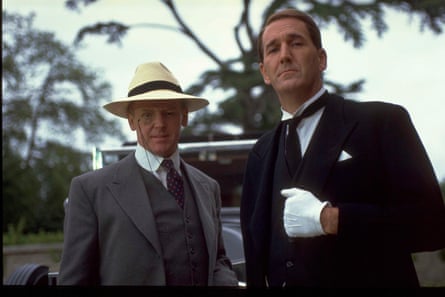
When TV commissioners tired of his brand of sketch comedy, he did stints in the sitcoms Boomers and Last of the Summer Wine and played it straight in the moving TV drama September Song. There was a run of West End musical smashes – Fagin in Oliver!, Roger de Bris in The Producers, Alfred P Doolittle in My Fair Lady. Then, in 2016, he quietly retired. For the past seven years, he has split his time between Barbados and the Algarve, where I find him today.

Abbot introduces me to his wife, Trish, who has a smart silver bob and a northern accent. How long have you two been married, I ask her. “Sixty years,” she says quietly. “Not even the Train Robbers got that!” Trish, 80, giggles.
We’re standing in a large, airy hall. On a table are figurines of Laurel and Hardy – Abbot’s heroes. Upstairs, I can make out lots of framed photos. He takes me on a tour. There are pics of him with the great entertainers of his era (Brucey, Elton, Tarby, Shaky) and the royals (Philip, Anne, Charles). We pass the silver discs from his brief period as Britain’s unlikeliest pop star (who can forget Atmosphere?). “That’s a certificate acknowledging the biggest box office in summer season history,” he says, like an accountant conducting an audit of his success. “And that’s whatshisname.” He squints at a picture. “Live Aid. Bob Geldof.”
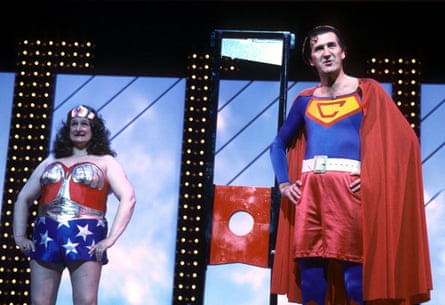
Pride of place is a photo of him dressed as Cooperman, with Tommy Cooper. Cooperman was one of Abbot’s more surreal mashup characters – Superman meets the brilliantly bumbling comic giant, who died on stage in 1984. He adored Cooper. “It was so funny at the funeral. All the faces were there. Max Bygraves, Eric Sykes, me. And when the cortege came in, we’d forgotten he’d got a younger brother who looked just like him. He walked in and we’re like: ‘Oh God! Another Tommy prank.’ When the curtain closed on the coffin, I thought: he’s going to come out in a minute because he was such a practical joker.”
He pauses. Now he sounds emotional. “After the funeral, we were walking out paying our respects to his wife, Gwen, and she said to me: ‘He thought you were the cat’s whiskers!’ I filled up. Amazing.”
More photos. Dennis and Gee, the double act who memorably impersonated Coronation Street’s Mavis Riley and Vera Duckworth on his show. Gee died in 1986, at 43. “So talented. Died too young.” We come to a picture of Abbot dressed as CU Jimmy, the incomprehensible, ranting Scottish stereotype that he’d struggle to get away with today. He says the character was based on his Scottish mother, whose accent got thicker the nearer the family got to Scotland for their holidays. He impersonates her – and she sounds as incoherent as Jimmy.
Abbot’s mother, Elizabeth, was in domestic service to the Duke of Westminster at Eaton Hall in Cheshire when she met his father, Don Roberts, a tanker driver for Pratt’s Oil who went on to become an area manager. Young Russell Roberts was a bright lad who went to Chester Grammar. But he became obsessed with drumming, flunked his O-levels and left school at 16 to join a band called the Black Abbots. He supplemented his income with a job as a stagehand at the Royalty theatre in Chester, where the band had a residency.
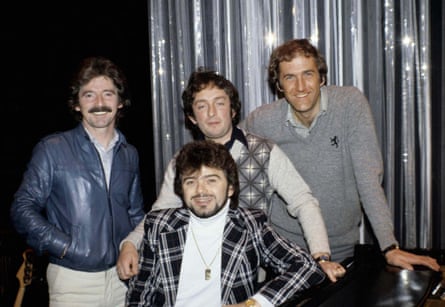
They soon became a comedy band, with Abbot dismounting the drums to tell daft jokes. The band won the talent show Opportunity Knocks six weeks in a row, became huge in the working men’s clubs, but never had a hit record. By 1973, Abbot was appearing on the TV standup comedy show The Comedians and his manager, Mike Hughes, didn’t think Russell Roberts had a ring to it. He suggested he become Russ Abbot. “He said: ‘Think about it, if your bill is in alphabetical order, you’ll always be top of the bill.’ He said: ‘Abba could top you, but that’s about it.’ That’s clever, isn’t it?”
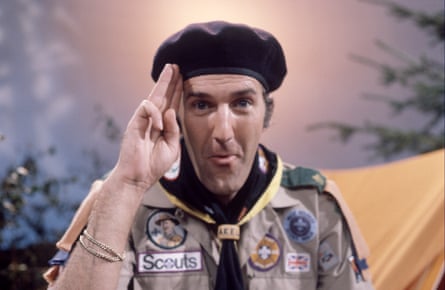
By the late 1970s, Abbot was well known as a comic and starred in the original Madhouse series with the more famous Freddie Starr. After 17 years as a Black Abbot, he left to go solo. Within months, Russ Abbot’s Madhouse started on ITV (The Russ Abbot Show would move during its run to the BBC) and he was a Saturday night fixture.
We join Trish outside in the shade. She’s made us coffee and piled a plate with digestive biscuits. Did life change when he became a household name? “No.” He looks at her for confirmation. “Just in the sense we moved up the ladder homewise, didn’t we, Trish? So we started in the caravan. Trish’s dad had a win on the pools that paid for the caravan as a wedding present. Then my dad got us a place with £1-a-week rent. Two up, two down. Then we got a £10,000 bungalow and sold it for twice the price.”
“Yep,” says Trish.
‘Then we moved down south, we moved to Wentworth. We looked at this nice house …”
“And that was it, yes,” says Trish.
“We bought it, cash.”
Were loads of women interested in you? “Not really, no,” he says. There’s a glint in his eye. “Oh, I suppose in my drumming days. Early.” The glint vanishes. “Actually, it was more the singers. Because I was just the drummer in the back.” He tells me how he met Trish. “She came to the stage door of the British Legion in Ellesmere Port as I was packing my drums up. We had a bass player in those days called Paul Dodd. He ended up a policeman. Trish says: ‘Is the bass player around?’ I said: ‘No, he’s gone, love.’ She said: ‘Oh, that’s a shame, I wanted to say hello to him.’”
Did you fancy the bass player, I ask Trish.
“Yeah.”
So you got the wrong bloke?
“Yeah, I got him instead.”
“I said: come on, I’ll buy you a drink. Then I said: let me give you a lift home. She said: I only live across the road. I said: you can’t walk alone at this time of night. So I left with a kiss and a cuddle. And it all started from there, didn’t it, Trish?”
Did she find him funny? “Oh no. Very normal. Lovely brothers, lovely mum and dad. Just normal, like the boy next door.” Did she like comedy? “Oh God, no!” Actually, she says, there was one occasion when he really made her laugh. “He opened the garden fete and chopped his nose off instead of cutting the ribbon.”
Genuinely?
“Yes, he was rushed to hospital. That’s what made me laugh.”
“I had stitches all round my nose.”
Trish is in stitches at the memory.
“But that wasn’t intentionally funny,” Abbot protests.
“No,” says Trish, still hooting. “But it was very funny, Russell. And we’ve laughed ever since.”
He must have been stopped a lot over the years by fans. “No, not really,” he says. “It was always a nod and a wink and a smile. There’s one funny story. We went to the opening show of Miss Saigon.” Trish is already giggling. “We go into the VIP area. We sit there and Trish nudges me. All these heads are turning. And I say: ‘It’s all right! The lights will go down in a minute.’ I say: ‘Trish, it’s a compliment.’ And she nudges me again and says: ‘Look who’s sitting next to me!’ And it was Burt Lancaster. She fell about. Lovely story.”
Abbot never considered himself a star. “I always think I’m playing that role of Russ Abbot. I go in the stage door as Russ Abbot and come out as Russell Roberts.” And he was too reserved to play the big I am. “I never used to like chatshows, because I was shy and I found them embarrassing. It’s like, now I’m retired, I’m not so shy and I can talk about it because it’s past.”
Trish has always been his biggest fan, he says. Then he corrects himself. “Trish and my mum. She used to do handouts for the WI. I’d sign the autograph and she’d sign the back: ‘Russ’s mum!’ She loved it!” In her 70s, his mother got dementia. She went into a home, but Abbot didn’t realise how bad it had got until he arranged for her to come to a show. “Trish brought her up to the dressing room and Mum walked in and said: ‘What a pleasure to meet you. Thank you so much, I’ve been so entertained. It was absolutely marvellous, and now to meet you in person.’
“I stood there and said: ‘Mum, it’s me,’ and she said: ‘I’ll have to go now, my family’s waiting for me.’ So Trish took her back. I slammed the dressing room door three times. It was terrible. It’s a terrible illness. She died about a year later. She was still a very elegant lady, very smartly dressed. She didn’t act like she had dementia. She just couldn’t remember who I was.”
Abbot worked incredibly hard in his heyday. “In 1984, I worked 363 days.” Meanwhile, Trish was working incredibly hard, too, bringing up their four children. “Trish raised them all. I was always away, summer season tour or pantomime. Pantomimes, gosh! You’d get home Christmas Eve, put the presents under the tree, go to bed, have breakfast, watch the kids open the toys and then go back to do a matinee.”
But, he says, they were great times. He tells me of all the wonderful people he worked with. It sounds like an Oscar acceptance speech. Barry Cryer wrote much of his material, but there was a whole team involved and there is not an actor, producer, writer or manager he misses out.
He was the ideas man, he says, rather than the wordsmith. “I loved it. All the nonsense.” He talks about the silly names they invented for characters. “My favourite was Miss Funnyfanny intead of Miss Moneypenny. I think that was my cousin Russell. I loved Basildon Bond because of the silliness of it.”
Suddenly he’s quoting a 40-year-old monologue from a sketch featuring his James Bond parody. ‘My name’s Bond. Basildon Bond, licence to kill and drive a heavy-goods vehicle. I’d been away on holiday when I was summonsed back to headquarters to see my boss P … ‘Was it a good holiday Bond?’ I said: ‘Yes, thank you, sir, I went away for a bit of peace and quiet. I found a nice little piece. I just hope she keeps quiet.’ He said: ‘Don’t bother me with a silly little thing like that.’ I said: ‘It’s funny, that’s what she said.’”
He quotes the monologue word-perfect, in all its anachronistic glory. For all the inappropriateness, there’s also an innocence to it, as there is to him. I notice he doesn’t swear and I ask if he’s religious. “Oh, I believe in God. I say my prayers every night.”
Abbot fell out of fashion in the 1990s, as did virtually all the standup rooted in working men’s clubs and seaside summer seasons. Did he mind when his TV show got cancelled? “I wasn’t distressed or angry or anything. It came about when the head of entertainment gave an interview and said: ‘The BBC’s going to change. No more of this, no more of that,’ and somebody said: ‘Does that mean Russ Abbot?’ and he said yes, meaning the sketch shows. So then it became ‘BBC sacks Russ Abbot’, but that didn’t bother me. I thought: well, I’ve had a very good run. Also, I’d just cracked the West End, so I was doing everything I wanted to do without the stress of the TV shows.”
Why did he fall out of fashion? “It was when the new wave came in. Alternative comedy. I thought, alternative comedy? What’s it alternative to? If the thing’s funny, it’s funny. Political correctness came in, and you can’t laugh at each other and you can’t laugh at yourself. At the same time, a lot of comedy started going blue and I thought: I’m not going down that road.”
So much of his show’s humour was rooted in stereotyping and many of the jokes were at the expense of his great friend Emberg’s weight. Did he understand why that was no longer acceptable? “Yes. Some of the scripts I used to look at myself and wonder. I’d say: ‘Bella, have you read the script?’ and she’d say: ‘Yeah, I think it’s funny’. I’d say: ‘Are you sure?’ and she’d say: ‘Yeah, why?’ ‘I’m just asking your opinion,’ and she’d say: ‘I think it’s hilarious,’ and I’d say: ‘So do I!’” Did she ever get upset? “No, she never got upset once.” Emberg died in 2018 at 80. Of all the people he’s worked with, he says he misses her most.
I loved it when Emberg as Blunderwoman lifted Abbot over her shoulders and carried him off. Even at his heaviest, he weighed only 12 and a half stone. Not much for a man over six foot tall. These days, Emberg would have had even less trouble. He’s lost two and a half stone. He knows Trish is worried, but he’s had every test going and nothing has been diagnosed. As for Trish, he says, she’s had two strokes in the past year, so they are taking it easy. Which doesn’t mean they’re not up to a round of golf. Abbot is a fine player and used to play off a handicap of 12, but he insists Trish is better than him. To be fair, so does she.
Stories circulated that Abbot retired because he was embittered that comedy had changed and no straight roles were being offered to him. It’s true that he’s not a great fan of today’s comedy, he says, and he was disappointed when Boomers and Last of the Summer Wine were cancelled, but he insists the stories are nonsense. He actually retired because Hughes, his manager, was retiring and he thought it was a good time to call it quits and spend more time with Trish and have a social life.
“I’ve seen something on YouTube saying ‘The tragedy of Russ Abbot’ and ‘He’s run away to Portugal’.” He smiles.
“We just watched it once,” says Trish. “I said, don’t watch it, Russell.”
It doesn’t look much of a tragedy to me, I say, glancing out at the cloudless sky, swimming pool and topiaried bushes.
“Thank you,” Trish says.
“I’ve had a wonderful career,” Abbot says. “Wonderful!”
“He’s always said that,” Trish says.
And now you’re enjoying a richly deserved retirement? “Absolutely,” he says.
How would Trish feel if he decided to go back to work? Her eyes light up. “Happy,” she says. Why? “I’d like him to do something like Last of the Summer Wine. I think he does miss it, I’ve got to say.”
Abbot gives her a look. “Yeah!” he says. “But not desperately, Trish.”