.png) 3 months ago
56
3 months ago
56
Sometimes it seems like my world is inhabited by ghosts, such are the remnants and reminders of past lives all around me.
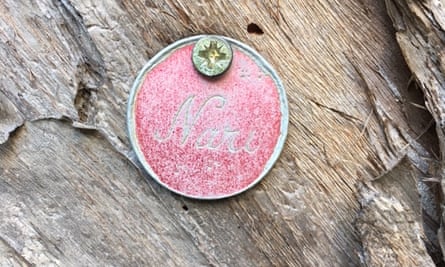
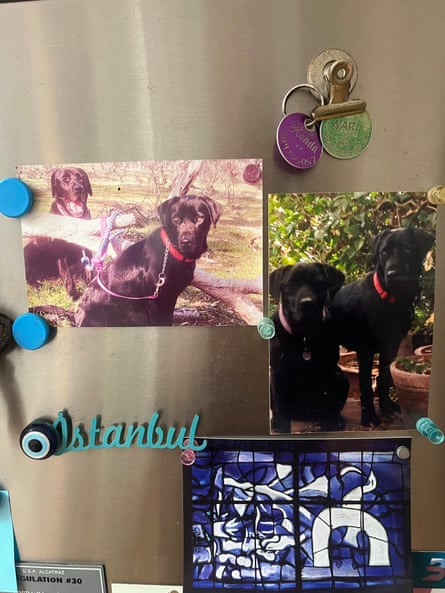
The dead dogs are everywhere. On a coatrack on the hallway wall just near the front door outside my study hang their sun-bleached and harbour-rusted collars and leads, memorial stalactites to much-loved animals who’ve never really left us. Their tags are clipped on the fridge, and one is screwed into the tree in the backyard under which its wearer is buried.
The ashes of the last to die sit in their urn on the mantlepiece to my right. We haven’t quite come around – or been able – to scatter her yet. Too soon! Photographs of them as shiny pups are on the fridge. Line drawings (kindly sent by a professional artist acquaintance when he read of my grief at losing the last one, Ronda), and watercolours, one by an artist daughter, the other by a talented mate, remind us daily that good dogs never really leave us.
I look around the room where I write this. On the wall in front of me hang two landscapes by an old mate, Bruce Haigh – good at so many things, including painting – who died a few years ago. A photograph of him is stuck to the wall nearby, not far from one of my grandfather (a blown-up copy of a cigarette card of him in his Australian Rules football team colours). I never knew him; he died suddenly, still a young man, almost a century ago and he remains a figure of some mystery to his kin.
Then there is the figurative painting of Mad King George given to me on one of the many trips I made to Belfast from London in the early 2000s. It was never hard to make friends in Belfast. One who welcomed me was Ivor Lavery, “Lightning”, they called him, on account of his lightning-bolt tatts.
He gave me this painting the first time we met. Whenever I returned, which was often, I always knew where to find him and others who’d welcomed me as a stranger from the other side of the world – the beautiful Crown Bar on Great Victoria Street. I’d rematerialise any evening after months of absence and he’d be there (no need to call ahead) with a warm welcome. Until one night when I arrived to be told he’d died. The memorial program from his recent funeral was still taped to the wall behind the bar.
Sometimes even the most fleeting acquaintances can bequeath disproportionately warm, indelible memories.
More framed pictures on the wall before me: the pubs in Collingwood (The London) and North Melbourne (the Royal Park) where two other grandparents who I never knew grew up. Small framed cigarette cards of heroic footy players – Roy (“Up There”) Cazaly, Syd Coventry and Jock McHale.
It’s inevitable, I think, that if you’re fortunate enough to live long enough you acquire more and more possessions and mementos of the dead. Wanted and treasured and, perhaps, some unwanted but kept (and added to our own already surplus possessions) out of deference to the departed nonetheless.
But it’s the deliberately, mindfully kept items that evoke the most potent memories. The curation of things belonging to the dead certainly comes with its quirks and curiosities for me.
In the corner of my study stands an antique armchair where my dad spent his final couple of years, unsteady and fading with dementia, but always beaming when his kids and grandkids visited.
Next to it stands the hefty packing trunk, its big brass lock and corner reinforcements burnished a deep russet and its leather outer still bearing Mum’s name in white paint, that she took on her daring 18-month adventure to Europe in the early 1950s.
I get particular comfort having these two things in the room with me every day, though I never stop too much to ponder why.
For some reason, even though I know it’s empty, I’ve always avoided opening that trunk. And I never use Dad’s chair (which was his father’s too). For it is now the throne of the surviving dog, Olive, who sits sentinel there all day until walk time since the older dog died, watching over me like the sole guardian she’s graduated into.