.png) 3 months ago
73
3 months ago
73
Iran was plunged into a complete internet blackout on Thursday night as demonstrations over economic conditions spread nationwide, increasing pressure on the country’s leadership.
While it was unclear what caused the internet cut, first reported by internet freedom monitor NetBlocks, Iranian authorities have shut down the internet in response to protests in the past.
NetBlocks had reported outages in the western city of Kermanshah earlier in the day, as authorities intensified their crackdown against protesters. The Norway-based NGO Iran Human Rights (IHR) said on Thursday that Iranian security forces have killed at least 45 protesters, including eight children, since the demonstrations began in late December.
Shopkeepers heeded calls on Thursday from seven Kurdish political groups for a general strike on Thursday, closing their doors in Kurdish regions and dozens of other cities around Iran. Demonstrations reached all 31 provinces on Thursday as the protest movement, now in its 12th day, showed no signs of abating.
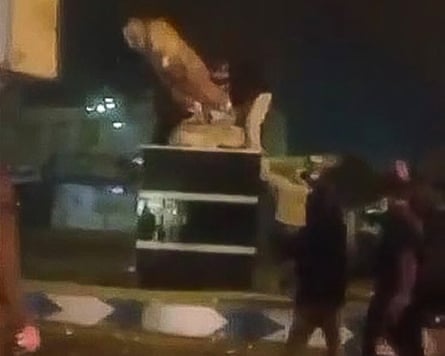
In the southern Fars province demonstrators pulled down the statue of the former senior Islamic Revolutionary Guards Quds Force (IRGC) commander Qassem Suleimani – considered a hero of mythical proportions by government supporters.
IHR said Wednesday was the bloodiest day of the now 12-day movement, with 13 protesters confirmed to have been killed. “The evidence shows that the scope of crackdown is becoming more violent and more extensive every day,” said IHR director Mahmood Amiry-Moghaddam, adding hundreds more have been wounded and more than 2,000 arrested.
Media inside Iran and official statements have reported at least 21 people killed, including security forces, since the protests began, according to an Agence France-Presse tally.
The protest movement is the largest in three years, and while it has not yet reached the size of the 2022 Women Freedom Life demonstrations, it has alarmed Iran’s political and security leadership.
The Iranian president, Masoud Pezeshkian, on Thursday called for restraint in how the demonstrations are handled. “Any violent or coercive behaviour should be avoided,” said Pezeshkian in a statement on his website, urging “utmost restraint” as well as “dialogue, engagement and listening to the people’s demands”.
The trigger for the protests, the sudden slide of the country’s currency and general economic malaise, has made it difficult for the government to address the grievances of protesters. The currency has continued to depreciate, while the government announced the end of a subsidised exchange rate for importers – a move which has already caused the price of groceries to soar.
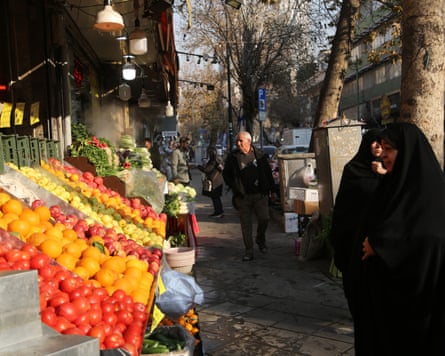
Everyday life has become increasingly unaffordable for Iranians. The average price of food has increased by more than 70% since last year, and medicine about 50% in the same time period.
The government has said that solving the economic crisis afflicting the country was largely out of its hands, and that while it will work to tackle corruption and price gouging, it had few tools to use. It blamed the economic woes of the country on external factors, primarily the harsh sanctions placed on Iran mainly by the west in response to Iran’s nuclear programme.
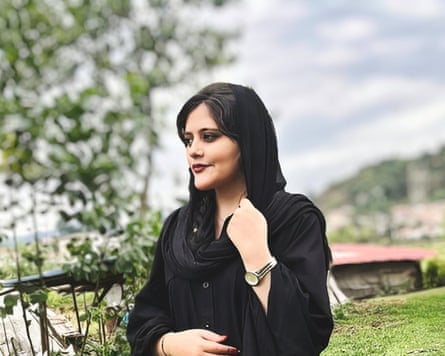
The protests thus far seem to be decentralised and lacking in a central figure, in contrast to the 2022 protests, when demonstrators rallied around 22-year-old Mahsa Amini, who died in police custody after being arrested for allegedly wearing the hijab improperly.
Exiled crown prince Reza Pahlavi, the son of the shah who was ejected by the 1979 Iranian revolution, has been trying to fill the leadership vacuum in the movement. He urged Iranians to yell from their windows on Thursday and Friday at 8pm local time to show their support.
“Based on your response, I will announce the next calls to action,” Pahlavi said in a widely shared video.
It’s unclear the level of support Pahlavi enjoys, though videos of protests over the last 12 days have showed demonstrators chanting in support for the exiled prince. A social media channel close to Iran’s security forces published a video which purported to show intelligence agents visiting people in their homes warning them not to take part in Pahlavi’s protest, with other outlets claiming drones would be used to identify those who do participate.
Though authorities have used violence against protesters, their crackdown has not reached nearly the same intensity as it did in 2022. Analysts have said that the state could feel less secure than it did three years ago, rocked by its June war with Israel.
The government also faces threats from abroad, with US president, Donald Trump, threatening to intervene in protests if Iran killed demonstrators. The US state department also encouraged protesters online, sharing footage of protesters placing Trump stickers on road signs.
“When prices are set so high that neither consumers can afford to buy nor farmers can afford to sell, everyone loses,” the state department said in a post on X.
The Iranian foreign ministry and military has lashed out over Trump’s comments, with Iran’s army chief threatening on Wednesday to carry out pre-emptive strikes on states which threaten Iran.
Authorities have increasingly cast protesters as violent, saying that while the right to protest was legitimate, that rioters and foreign-backed saboteurs have hijacked protests.
Outlets close to the government said that a police colonel was stabbed outside Tehran, while a police station in Chenaran, northeast of Tehran, was attacked on Wednesday night, leading to the death of five people.