.png) 2 months ago
49
2 months ago
49
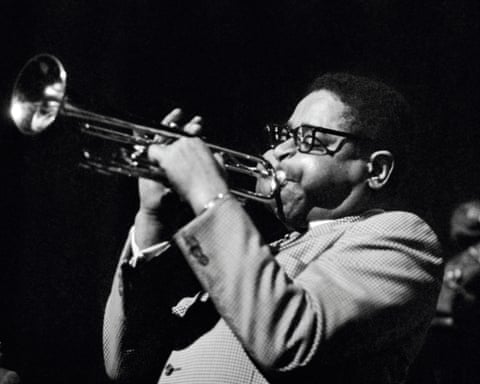
Schapiro’s stunning images of jazz greats in New York – from Dizzy Gillespie to Elvin Jones – make up a new book featuring a foreword by late saxophone icon Rollins
You spin me right round … Dizzy Gillespie, Apollo theatre, New York, 1962. All photographs Steve SchapiroSarah King
Thu 4 Jun 2026 08.00 CEST
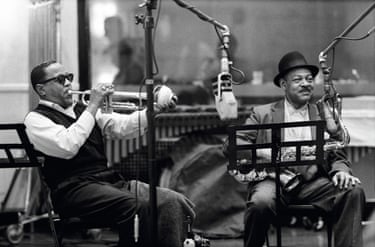
Roy Eldridge (left), Coleman Hawkins (right), New York, 1961
As social documents, Steve Schapiro’s images stand among the most important of the 20th century, covering Muhammad Ali, Martin Luther King Jr, and many others. These largely unknown photos of the New York jazz golden age showcase his mastery and empathy for his subjects. A new book collects them, alongside a foreword by the late saxophone icon Sonny Rollins Jazz: Best of the Apollo, Village Vanguard, and Riverside Sessions is published by ACC Art Books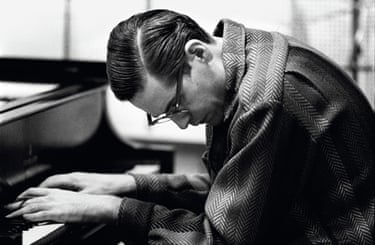
Bill Evans, New York, 1961
Sonny Rollins: ‘These pictures are very emotional for me. They take me back to a time when everything was, you could say, “copasetic”. Elvin Jones is smiling. All these guys: Ron Carter, Miles, Red Garland. I mean, these pictures take me back into a time which will never be like that again. Everybody was working. Everybody was contributing. Everybody was being appreciated. Jazz was appreciated. Of course, many of these guys aren’t here any more, and that’s emotional for me, too’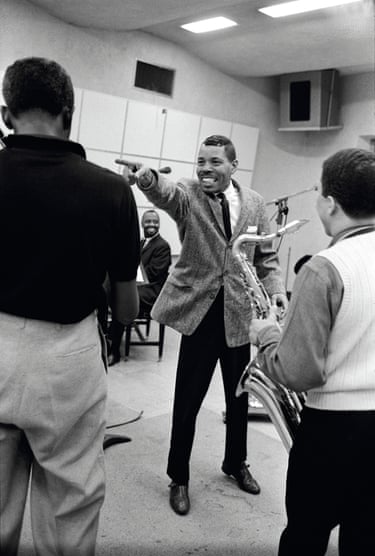
Babs Gonzales (centre, pointing finger), Junior Mance (background, piano), New York, 1961
Rollins: ‘I’m sure that the healthy habits I established around that time were responsible for my good fortune. It’s hard for me to look through these pictures with anything but great feeling. All these guys represent a family that’s special to me. I was lucky, because I always had a great family life at home. But these guys, you could say that they were a family, too. The photos that Schapiro took of me at the Apollo have special meaning for me. The Apollo was like my high school, I was there every week’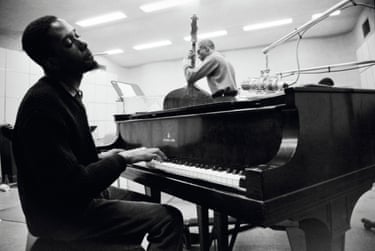
Bobby Timmons, Easy Does It session for Riverside Records, March 1961
US jazz journalist Richard Scheinin: ‘Head cocked, leaning away from the piano with a quietly ecstatic look on his face, that’s Timmons. We don’t know if he is tuning into the bass player in the background (Sam Jones) or just fooling around at the keyboard during a break, stumbling on chords that speak to him, that transport him. Whatever it is, Schapiro has captured this moment in the interior life of an artist’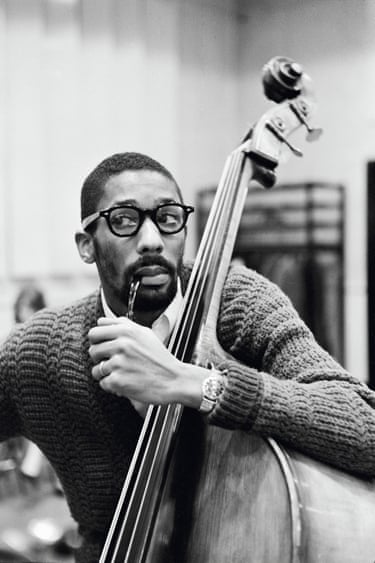
Ron Carter, New York, 1961
Scheinin: ‘For jazz fans, for anyone, this master musician is hard to miss as he wheels his double-bass along the sidewalk. At 6ft 4in he’s tall enough to play guard in the NBA. He’s also stylishly dressed, dignified, confident, relaxed. The forward motion of Carter’s bass lines and his uncanny way of re-harmonising tunes in a flash have made him, in the opinion of many, the foremost jazz bassist of the past 60 years’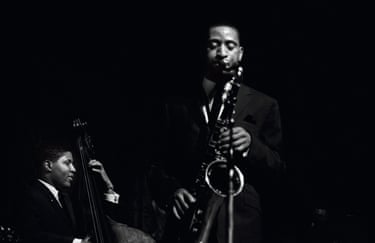
Bob Cranshaw (left, bass), Sonny Rollins (right), Apollo theatre, New York, 1962
Scheinin: ‘Steve Schapiro was in the right place at the right time when he photographed the illustrious saxophonist Sonny Rollins at the Apollo theatre in February 1962. Rollins grew up in Harlem, so his week-long stint was a homecoming. It was also among his first bookings after having vanished from the public eye for about two years. Though widely regarded as the most accomplished jazz musician of his generation – a hero of the tenor, a jubilant improviser – he had stopped performing in late summer 1959’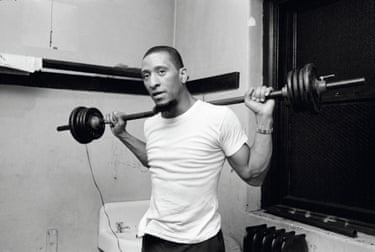
Sonny Rollins, Apollo theatre, New York, 1962
Scheinin: ‘From that summer of 1959, Rollins vanished. Focusing on spiritual improvement, every day he left his apartment on Manhattan’s Lower East Side and climbed the stairs to the Williamsburg Bridge walkway, high above the East River. He found a secluded spot, took out his horn, and practised, alone, for up to 16 hours a day. Then, in November 1961, he finally returned to public performance. “Don’t ever shrink from the belief that you have to prove yourself every minute,” he once said, “because you do”’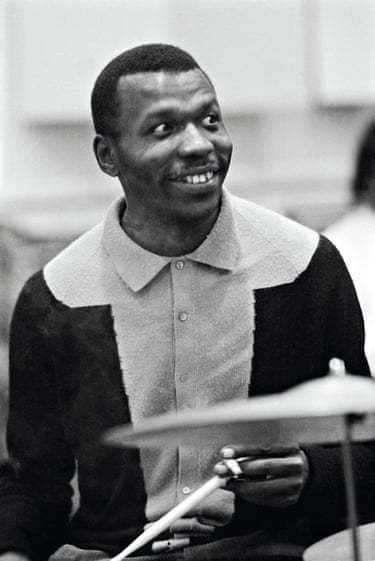
Elvin Jones, New York, 1961
Scheinin: ‘Elvin Jones had a beautiful smile and a forbidding glare. Among the greatest drummers of the 20th century, Jones revolutionised the notion of swing. His most important collaboration was with saxophonist John Coltrane, with whom he played for five years in the early 60s. The classic Coltrane band’s albums – including My Favourite Things, Impressions, Crescent and A Love Supreme – can be viewed as a soundtrack to the era’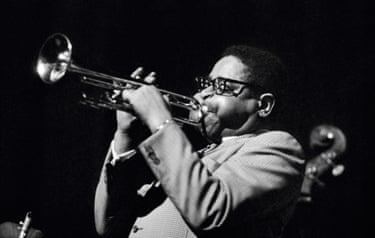
Dizzy Gillespie, Apollo theatre, New York, 1962
Scheinin: ‘When Schapiro took these photos, the Beatles were just a year or two away. Popular culture would change. But for now, jazz was in the air. It was sophisticated and it was the people’s music. In the 1940s and 1950s, Black neighbourhoods in US cities were hotbeds for jazz. Clubs were on every corner. Great musicians emerged in waves’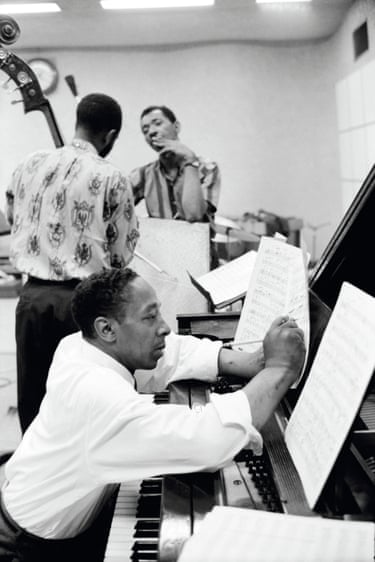
Elmo Hope, Percy Heath (back to camera), Philly Joe Jones (rear), New York, 1961
Scheinin: ‘This image hums with the pianist Elmo Hope’s mental energy. Pencil in hand, oblivious to what’s going on around him, Hope leans in towards the chart, making last-minute changes to his arrangement. He hears the music in his head. His eyes are bright – he likes these finishing touches’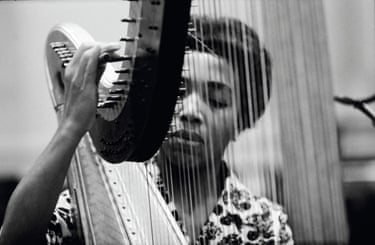
Dorothy Ashby
Scheinin: ‘From Detroit, Ashby began her career as a jazz pianist. Yet by her early 20s she was playing the harp, sporadically, in the city’s clubs while running into sceptical listeners. “The audiences I was trying to reach were not interested in harp, period – classical or otherwise – and they were certainly not interested in seeing a Black woman playing the harp,” she once said. Thus began a singular career that saw Ashby, in the course of a decade, push through the harp’s perceived limitations and take it into the nether-reaches of jazz, popular and experimental music’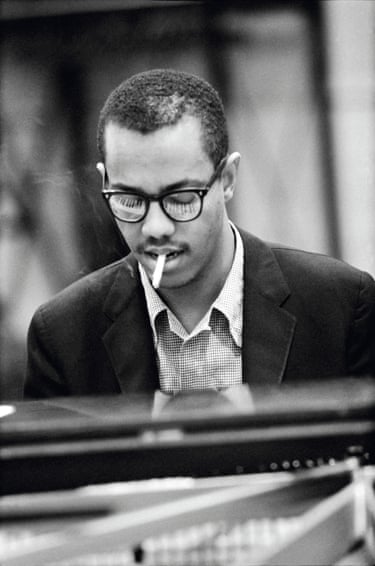
Cedar Walton, New York, 1962
Scheinin: ‘Until now, Schapiro has rarely been identified with the jazz world. After his death in 2022 at the age of 87, 20,000 images were whittled down by his wife Maura Smith (a film-maker) and son Theophilus Donoghue (a photographer). I got involved when the number of images had dropped under 1,000. In this book, you see 300, the best of the best’Explore more on these topics