.png) 2 hours ago
3
2 hours ago
3
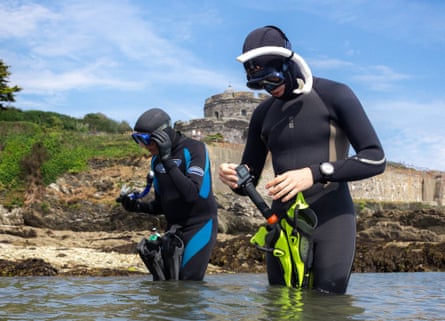
On a rocky beach in Cornwall, a group of wetsuit-clad freedivers and snorkellers are wading into the shallows. Below St Mawes Castle, built by Henry VIII to defend Falmouth harbour, they disappear in a swish of florescent pink and green fins.
They are volunteers, trained by the Cornwall Wildlife Trust to use underwater cameras and floating GPS devices to detect changes in marine habitats over time.
Their work is vital because beneath the surface of Falmouth’s busy natural harbour, known as Carrick Roads, are two of the UK’s most biodiverse and carbon-rich marine habitats: lush seagrass meadows and purple-pink carpets of ancient maerl – a rare and fragile coral-like seaweed. They are some of the largest such beds in England.
Parts of the slow-growing maerl beds, which stretch from St Mawes to St Just in Roseland, are believed to be up to 4,000 years old. They act as nurseries for commercially valuable species such as scallops and crab.
Last year, however, divers found a “worrying deterioration” in the maerl beds, which were being smothered by algae, preventing much-needed sunlight getting to the seaweed. Algal blooms, fuelled by excess nutrients from agricultural runoff and sewage in the River Fal’s catchment area, are unfortunately also present today.
-
Two volunteers, Simon Tagney and Max Behnert, prepare to survey the seabed beneath the 16th-century St Mawes Castle. Photograph: Luke Gartside/The Guardian
-
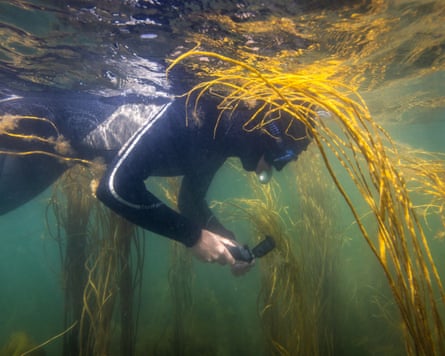
Max Behnert records on his compact camera as he swims through a forest of shallow thongweed, also known as sea spaghetti. Photographs: Luke Gartside/The Guardian
Simon Tagney, 65, is a retired TV camera operator turned citizen scientist. “When I went down in March this year, everything looked newly polished and clean,” he says. “But going in today, there’s lot of filamentous algae on everything. A lot of the maerl is obscured by it. You can’t see the detail – it is like going into a dusty room.”
The Cornwall Wildlife Trust is among several environmental organisations backing a new initiative from Cornwall council called Fal Rivers to Reef, which aims to work with farmers and landowners to restore nature, build climate resilience and reduce pollution from the river’s source in Goss Moor, through 22,000 hectares (54,000 acres) of farmland and woodland to Falmouth.
A key driver of the scheme was catchment data from the Department for Environment Food and Rural Affairs (Defra) published in 2022, which identified rural farm pollution and waste from the water industry as the reason the Lower River Fal failed to achieve “good” ecological status. The new initiative aims to improve water quality and protect seagrass, maerl and the last remaining native oyster beds in Falmouth estuary, which are harvested from sail and oar boats.
-
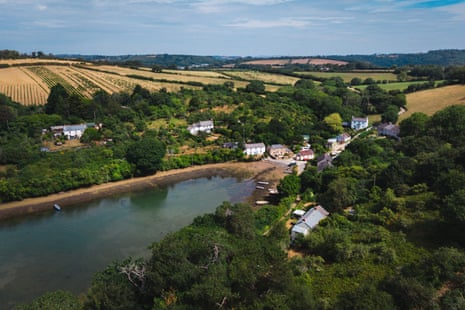
Cornwall council is seeking to improve the Fal’s water quality by reducing farm runoff. Photograph: Luke Gartside/The Guardian
“The Fal is full of nutrients and that can create mats of opportunistic algae that smothers seagrass like a blanket,” says Matt Slater, marine conservation officer at the trust, which has been forced to temporarily cancel a seagrass restoration project in Ardevora, on the Roseland peninsula, until the water quality improves.
“We know that small changes by farmers can make a big difference in reducing runoff,” he says.
About 14 miles (22km) from St Mawes, at Gare farm, over tea and home-baked cake, the tenant farmers Claire and Martin Tupper talk about their efforts to improve their soil and stop runoff, and the benefit they get from being involved in Fal Rivers to Reef.
“We are not organic but it is the unseen pollution that is a concern,” says Martin, 63. They have long used “herbal leys” – a mixture of grasses, clover, legumes and herbs – to improve soil, cut down on fertilisers and improve drainage. And they have noticed the benefits: the lambs are growing faster and the mix attracts butterflies and dragonflies.
-
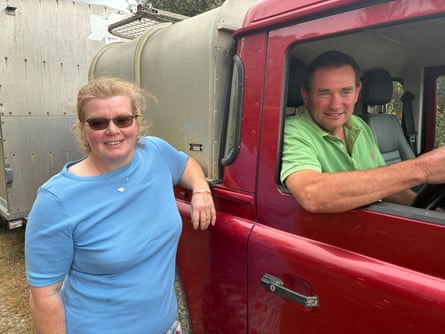
Claire and Martin Tupper say advice about how to manage runoff has been invaluable for them at Gare farm. Photograph: Karen McVeigh/The Guardian
With the council’s help, they have also taken other steps, including relocating a gate away from a slope where it was causing excess runoff.
And they are restoring an ancient orchard, a key source of biodiversity, which had lain neglected “because I was on my own and it wasn’t earning”, says Martin. “We didn’t know how to access that kind of help.”
Claire, 62, says: “You want to do the right thing but you don’t necessarily know the right people to talk to. The support has been invaluable.”
As part of Fal Rivers to Reef, the council runs workshops, get-togethers and recently, a boat trip on the estuary to get farmers, fishers and conservationists to better understand each other’s perspective.
Jason Pascoe, 56, one of a score of native oyster “sail-and-oar” fishers left in Cornwall, says silt washing down the river from development, farming and heavier rain is creating more mud in the river and threatening the fishery.
-
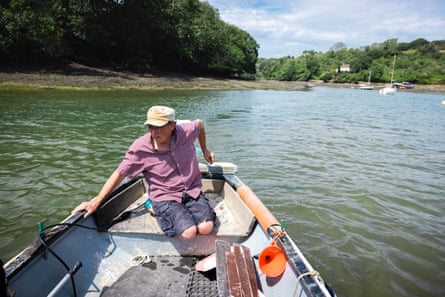
Jason Pascoe goes looking for oysters. Photograph: Luke Gartside/The Guardian
“One of the biggest problems for the oyster fishery is silt,” says Pascoe. “The oyster shells need to be clean and the larvae need clean substrate to build those shells.”
Chris Jones, a beef farmer, says he has made a big change to his farm that could help Pascoe and his fellow fishers if taken up more widely.
Since introducing beavers to an enclosure on his land in 2017, the animals have saved him from drought, he says, reduced flooding in the village of Ladock by cutting peak discharge through the site by half and the floodwater transit time from 10 to 90 minutes, and improved the native oyster beds downstream by trapping silt.
Jones, who was behind a change in the law allowing beavers to be released in England after witnessing benefits on his land, says: “This idea of looking at a river from its source to the sea is the only sensible way of doing it.”
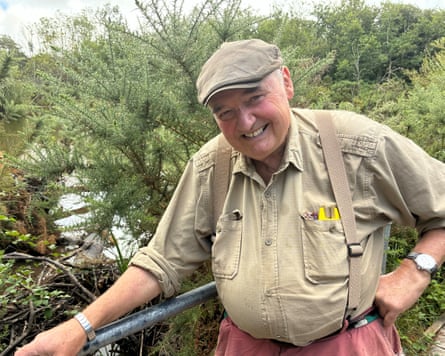
As he approaches the beaver enclosure, where water trickles through a series of dams, the soil is moist and the trees are covered in lichen and moss, Jones stops, takes off his shoes and socks and disappears into the reeds. He emerges holding his walking stick aloft, where a good 60cm (2ft) of silt and mud from the water remains.
-
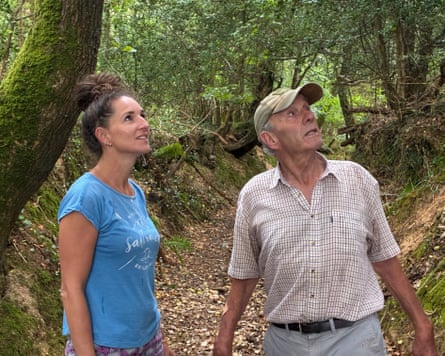
Chris Jones, left, believes reintroducing more beavers into the region could help; Amie and Jim Pascoe say planting trees is an important part of the solution. Photographs: Karen McVeigh/The Guardian
“It’s the most extraordinary thing,” Jones says, grinning. “These little dams act as silt traps; the silt is associated with nitrates and phosphates and pathogens. These beavers are a really good, very cheap – if not free – nature-based solution to achieve better water quality.”
That the scheme brought him together with Pascoe, who lives in the nearby village of Coombe , has been hugely beneficial, he says. “If we have enough beavers out there holding enough silt, it has the potential to make his job better. It is amazing.”
-
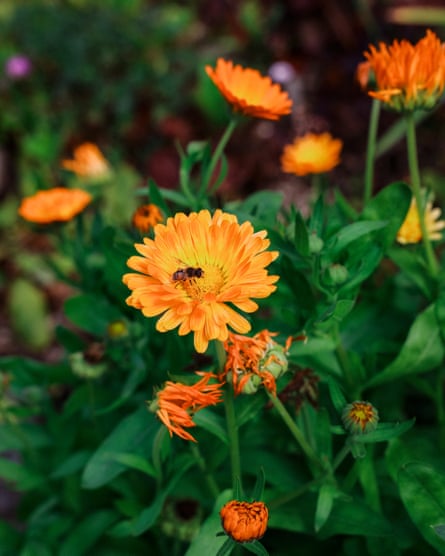
Farmers in the region have been encouraged to increase planting to help reduce runoff and increase biodiversity. Photograph: Luke Gartside/The Guardian
Jones is in the process of applying for a licence to release 150 beavers into the county. He acknowledges the fear of many farmers that they could damage trees and crops, but says these concerns can be easily addressed.
Meanwhile, at Court farm in Philleigh, on the Roseland peninsula, Jim Pascoe, a fourth-generation arable farmer, and his daughter Amie Pascoe are among 48 farmers and landowners in the Fal Rivers to Reef cluster. Planting trees has provided one solution to the problem of runoff pollution, they say.
“Forty or 50 years ago, you ploughed every ditch, every bit of land you could get your hands on,” says Jim, 77.
Now, driving around his 105 hectares, he can now point to the orchard of 100 fruit trees and 5.5 hectares of woodland, created with the help of the planting project Forest for Cornwall. With existing woodland, the farm now boasts a hundred-acre wood, extending a buffer to help stop runoff entering the estuary.
Forest for Cornwall exists alongside Fal Rivers to Reef, with the mission of planting 8,000 hectares of new trees across the county. This month, the council won £8.7m in additional Defra funding for it.
The Pascoes have also built a two-mile public walkway through the ancient woodland, “to the estuary’s edge, where you get a terrific chorus of bird life”, says Jim.
Amie, 47, who works in public relations, says: “We’ve spent our whole lives walking, riding in the woods and swimming in the river. I wanted to share that.”
-
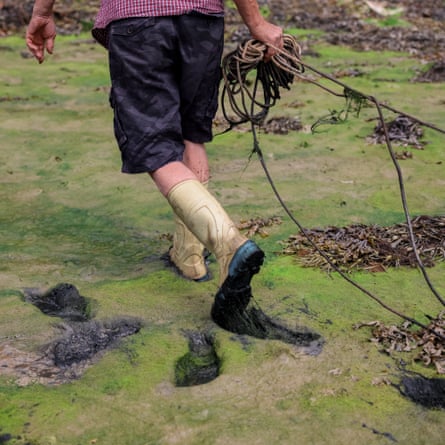
Algae on the banks of the River Fal. Photograph: Luke Gartside/The Guardian
The Pascoes’ neighbour, Philip Marsden, an author who has 18 hectares he has turned into woodland and wildflower meadows, says the key to the success of the farm element of Fal Rivers to Reef is that it is “farmer led”.
He says: “Farmers don’t have time to look into funding. There is huge untapped potential for nature recovery.”
Philippa Hoskin, nature recovery manager at Cornwall council, has a 25-strong, mostly externally funded team and key members are able to “speak farmer”, she says. This has helped communities engage with the wider aims of the project, she adds.
The source-to-sea initiative is a long-term project so may yet encounter unforeseen obstacles along the way, one of those being the potential environmental impacts of a proposed development at Falmouth Docks. But for now, a joined-up approach is paying dividends.
Loic Rich, Cornwall’s cabinet member for environment and climate change, says: “Here, you’ve got the people with the vision, you’ve got the farmers, you’ve got the fishers. Everybody’s together in the same room. It’s the ideal way to manage a landscape.”