.png) 2 hours ago
2
2 hours ago
2
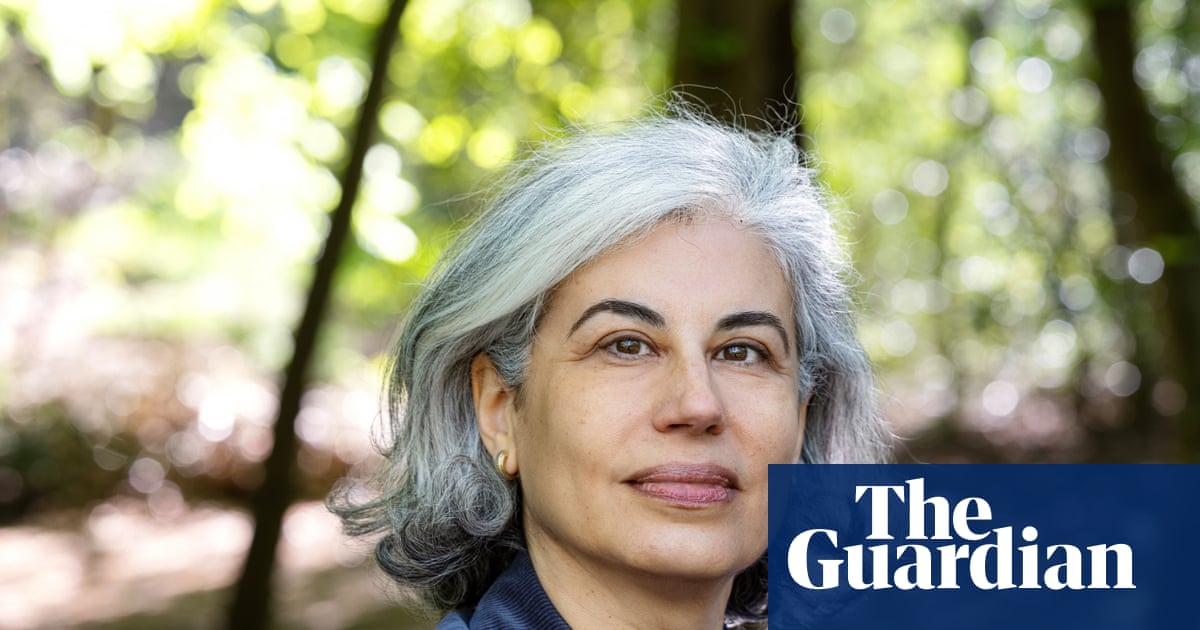
“Any resemblance to actual persons, living or dead, or actual events is purely coincidental,” writes the multi-award winning Jamaican-American poet, essayist and playwright Claudia Rankine in the disclaimer to her latest work. “Unless it isn’t.” The pretzel-logic of this statement, its assertive ambiguity, sets the tone for a book that digs directly into the question of what we are to do with the idea of truth, when the world we live in is asking us “to hold, visually and emotionally, realities we do not yet have a viable system of language for”. In Triage, Rankine borrows from her personal history and from a world whose landscape now encompasses “the rise of fascism, the implementation through deportations of the Great Replacement theory, the starvation of devastated populations subjected to war and climate change”, and uses the material she gathers to pose a simple question. When faced with realities such as these, what do you do? Do you stand, or do you fall?
The book begins with a friendship. Two young people – our narrator, and another she refers to only as “the theorist” – meet in college in the late 20th century, and are drawn to each other. They’re passionate; they’re idealistic; they’re committed to the activism of the time (“shantytowns were built on campus to protest apartheid South Africa”) and steeped in the texts and authors and philosophical conceits of the humanities. Over time, they develop a game. “When we spied each other during the day,” the narrator explains, “we had to collapse.”
This collapse is “literal, and on occasion, an inconvenience to those around us”: the pair fall to the ground “in the dirt, grass, on cement, wood”, all over campus. They become known for it (“Aren’t you the two who fall?”), even though they themselves don’t seem, fully, to understand what their falling means. That it is a response to the “toomuchness” of the world around them, to “all the fevered wretchedness we had no answers for”, is without question. But what exactly the response itself signifies is less clear. Looking back from a vantage point 40 or more years into the future, the narrator offers a range of possible interpretations: “a refusal of continuance”; “a way to say things were unaligned”; perhaps just “the easiest way to keep from breaking apart”. But between the narrator and the theorist, the meaning of the game is never definitively pinned down.
And it is perhaps this ambiguity that exists between them, even at the heart of a game that binds them to each other, that eventually drives them apart. The years pass; the world becomes wilder, more brutal, less sane; the crises and disasters to which the theorist and the narrator could, or should, respond multiply and intertwine. In the face of this worsening world, what began as a hair’s-breadth difference in the interpretation of their college game widens into a chasm. On the one side, the narrator sees her role as one of witnessing: her purpose, as she perceives it, is to record the atrocities around her, to acknowledge them, to mark them and to grieve them. Her work takes her into art criticism, and she focuses on images of couches, because “within the collapse, [they] seemed a place to land”. The theorist, on the other hand, is not content with reaction; they are compelled to act. What matters about falling for them isn’t the collapse itself, but the fact that the act of collapsing pushes them to rise up, over and over again.
Triage acknowledges the validity of both characters’ responses – the witnessing and bearing of grief versus the acts of intervention and remaking. The book itself is a fantastical hybrid – part memoir, part reportage, part essay, part lyrical lament – and the complexity of its construction both mirrors and engages with our present moment’s contradictions. But in the end, the question of what is the right, the proportionate, even the realistic response to the world’s atrocities becomes subsumed by the question of which is the hopeful one.
Triage is a challenging book for challenging times: it forces us to look at the world around us without blinking. There may be, as the narrator suggests in one of her final conversations with the theorist, “no solutions, only recognitions”. But at the same time, Rankine is clear that the truth of that statement doesn’t render action redundant: the book proposes courses of action even if it doesn’t offer the false promise of success. “Trying in the face of defeat is a thing,” the theorist argues. “For you, loss is a state of grief; for me, it’s a state to refuse … Things are unachievable only when you need the road to be short.”
Triage by Claudia Rankine is published by Allen Lane (£22).To support the Guardian, order your copy at guardianbookshop.com. Delivery charges may apply.
after newsletter promotion