.png) 4 hours ago
10
4 hours ago
10
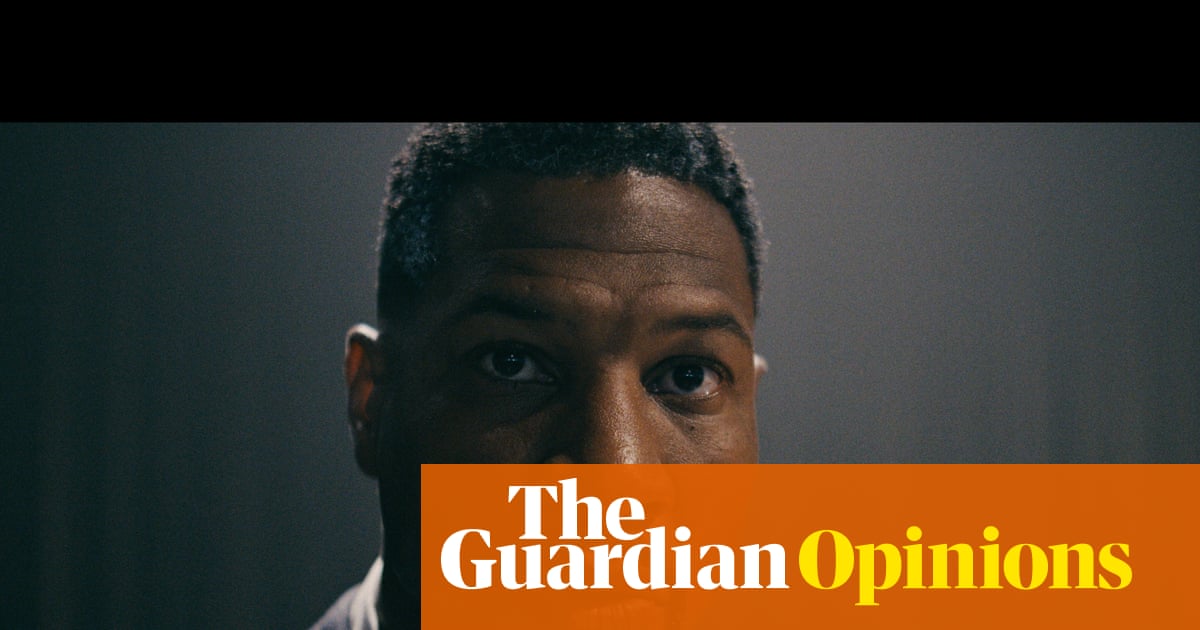
There was a time when LeBron James’s views on abuses of political power were considered dangerous enough that Donald Trump’s allies told him to shut up and dribble. But over time, James has become less outspoken. After he built a reputation as a voice on social issues and human rights, anti-government protesters in Hong Kong burned his jersey over what they saw as his lack of support for their campaign. Alongside plenty of other US athletes, he has barely spoken on politics during Trump’s second term in power. There was the recent dismal sight of him promoting a prediction market (although at least he kept his clothes on). Now he is happily associating with – and helping promote – an authoritarian leader.
On Sunday, Angola’s president, João Lourenço, welcomed two of the most famous people in America – James and Will Smith – to his presidential palace.
Officially, the two men were in Angola to attend a round of the E1 World Championship, an electric raceboat series featuring celebrity-backed teams. James and Smith are among those who have bought into the series.
According to local media, Lourenço discussed promoting Angola abroad with James and Smith, emphasizing his particular interest in tourism, cinema and basketball. And there are valid reasons to visit and promote Angola.
The country appears to be successfully tapping into roots tourism, with celebrities such as Smith and James leading the way. It has a significant connection to the African diaspora, with some researchers estimating that nearly 45% of enslaved Africans brought to the Americas left from ports in what is now Angola. The government is attempting to draw on this history to establish enduring ties between Angola and African Americans through heritage-based tourism. James, for example, visited the National Museum of Slavery during his trip to Angola, bringing global visibility to this connection.
“Obviously there is a lot of history here,” James told local media. “A lot of history that not only is here in the country but also [crosses] over to America.”
Meanwhile, Smith’s visit to Angola in March 2026 coincided with the International Day of Remembrance of the Victims of Slavery and the Transatlantic Slave Trade. During his trip, Smith was filmed discussing ways to support the country’s international tourism campaign.
“We came, we saw, it was beautiful,” Smith said in an Instagram post as he left Angola. “And we shall return.”
Some would say the actions of Smith and James are laudable, and in some ways they are. As members of the African diaspora, they are trying to help bring back money to a region whose wealth was stripped by slavery and colonialism. But they are also giving soft power to a head of state who oppresses his own people.
Ahead of Smith’s visit, Lourenço signed into law legislation that grants the government broad powers to monitor and suspend civil society organizations under vague claims of “security threats.” The law is the latest example of the increasingly authoritarian restrictions taking place in Angola.
Though Lourenço has enacted laws prohibiting discrimination against LGBT people, by 2024 he had effectively criminalized participation in peaceful protests when he signed a law enacting severe punishments of up to 25 years in jail for acts of vandalism. He also signed a law granting security forces the power to supervise media outlets, further restricting free expression.
after newsletter promotion
While Lourenço tightens his grip on Angolan civil society, his government is actively investing in sports and entertainment with the intention of cashing in on the soft power benefits, a tactic that Smith and James are aiding with their visits to the country. Last year, Angola hosted the Fiba AfroBasket, which it won. In 2026, the government inaugurated three new stadiums in compliance with Fifa and World Athletics standards. The stadiums boost Angola’s infrastructure and sporting footprint, allowing it to attract international tournaments. The E1 World Championship is merely the latest in its ambitious investments. Such campaigns are nothing new for Smith, who recently visited Egypt – another authoritarian country – and starred in a campaign for a new real estate project in Ain El Sokhna along Egypt’s Red Sea coast.
Angola is following in the footsteps of Rwanda and its longtime dictator Paul Kagame, who effectively used sports to legitimize his rule and portray himself as a pioneering figure in Africa.
As the de facto ruler of Rwanda since 1994, Kagame has ruled his country with an iron fist, with his regime committing severe and systematic human rights abuses. This includes forced disappearances, assassinations of political opponents, torture and state-imposed censorship. In an effort to soften his image, Kagame established partnerships with some of his favorite sports. From NBA appearances and sponsoring football clubs such as Aston Villa, Paris Saint-Germain and Atlético Madrid, to hosting international spectacles, the dictator is now firmly among a cadre of authoritarian leaders who exploit sports to enhance their reputations on the global stage.
James is hardly alone as an athlete happy to give positive publicity to dubious regimes – Lionel Messi and Cristiano Ronaldo have both promoted Saudi Arabia in a positive light, despite the kingdom’s myriad human rights abuses. Perhaps James could take a different approach – backing the people of Angola with his wealth and influence without giving legitimacy to the authoritarian who rules over them. After all, he’s already seen what that kind of figure can do in his own country.