.png) 3 months ago
61
3 months ago
61
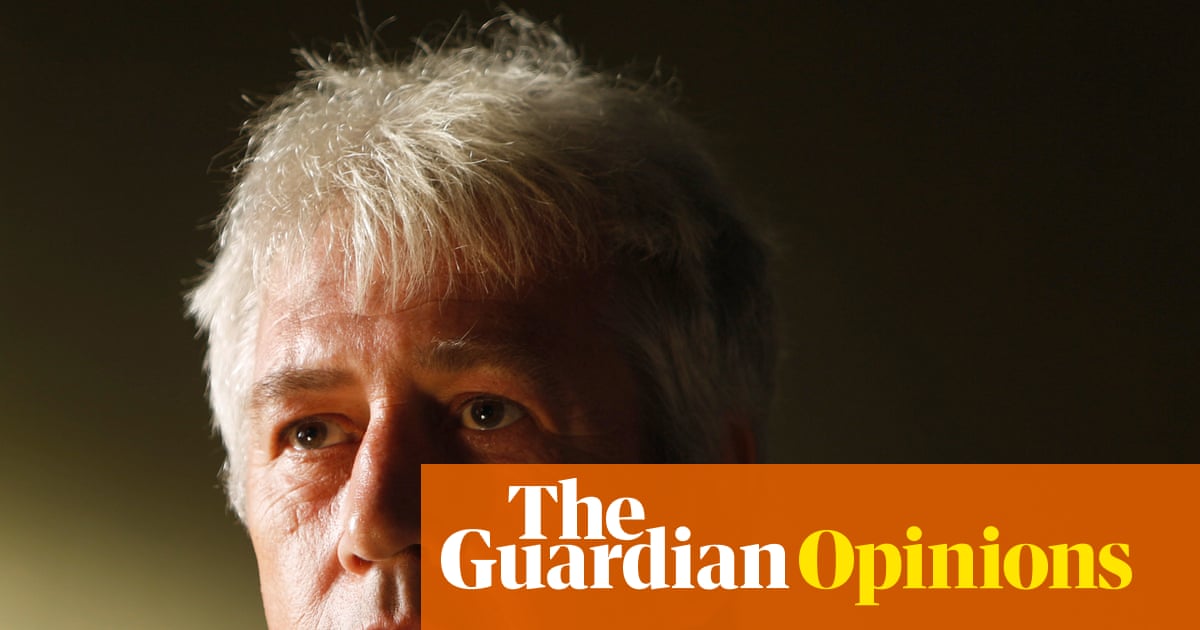
Families in Southport cannot be sure that officials who made “catastrophic” errors before the murder of three girls are not still making the same mistakes, a former victims’ commissioner has said.
Vera Baird KC said all those who failed to properly monitor the killer, Axel Rudakubana, should be held “personally accountable” and that authorities must not “shrug it off” with an apology.
“It really is time for personal accountability,” she said. “We have tragic failures many times followed by public inquiries but nobody actually has to stop doing what they’re doing badly. I do not see why that should be the case.”
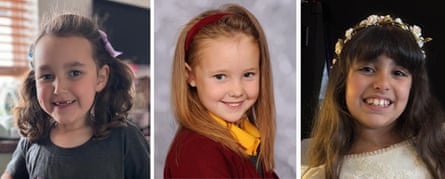
A public inquiry into the atrocity concluded on Monday that Britain’s multi-agency model had “completely failed” to prevent the killing of Bebe King, six, Alice da Silva Aguiar, nine, and Elsie Dot Stancombe, seven, and the stabbing of 10 others at a Taylor Swift-themed holiday club in July 2024.
Adrian Fulford, the inquiry chair, condemned what he called an “inappropriate merry-go-round” of state bodies passing the buck and their “frankly depressing” refusal to accept responsibility. “This culture has to end,” he said.
Baird, a former MP and barrister, said: “What you need to do is pinpoint exactly who didn’t take the responsibility they should have done and take disciplinary action.
“This is all pointless if we don’t make people accountable for the errors they made. You can’t be sure, if you’re living in Southport, that the people who made the mistakes won’t be making the same mistakes again today.”
The solicitor for the families of Bebe, Alice and Elsie said on Tuesday they were “aghast” at the failings and that he was prepared to name the individuals responsible if the families were not satisfied that action had been taken.
Chris Walker, of the law firm Bond Turner, told the BBC: “There are five particular state entities which are causing us most concern and we, frankly, find their behaviour unacceptable.”
He said these were the counter-terrorism agency Prevent, Lancashire police, Lancashire social services, Child and Adolescent Mental Health Services, and Forensic Child and Adolescent Mental Health Services.
Prevent refused three times to escalate concerns about Rudakubana because he did not present a coherent ideology, such as jihadism or rightwing extremism.
Baird said: “If Prevent get someone who is palpably dangerous they can’t just say: ‘It’s not Prevent – we’ll send him somewhere else’. It’s about people taking responsibility.”
Baird, who chairs the miscarriage of justice watchdog, the Criminal Cases Review Commission, said there was also a concern about young men being drawn into violent misogyny online.
Patrick Hurley, the Labour MP for Southport, said the findings of the inquiry strengthened calls for a social media ban for under-16s to prevent young people being radicalised against particular groups online.
“It will remove the pathway towards self-radicalisation, it will improve children’s mental health and it would stop these people from meeting like-minded souls online, who will egg each other on,” he said.
Hurley called on ministers to provide more funding for the agencies that failed, to “bring them up to scratch”. He said some frontline officials needed a “kick up the backside” where they were found to have made errors, “as happened with one of the consultants at Alder Hey when they missed the most important detail: that this lad had violent tendencies. That can’t be allowed to happen again.”
Shabana Mahmood, the home secretary, told the Commons on Monday that legislation to deal with people planning attacks without an underlying ideology would be brought forward in the wake of the Southport attack.
Mahmood said a wider issue of “boys whose minds are warped by time spent in isolation online” had been identified by the inquiry.
The second phase of the Southport inquiry, examining changes to laws and frameworks, is due to report in spring 2027.