.png) 3 months ago
51
3 months ago
51
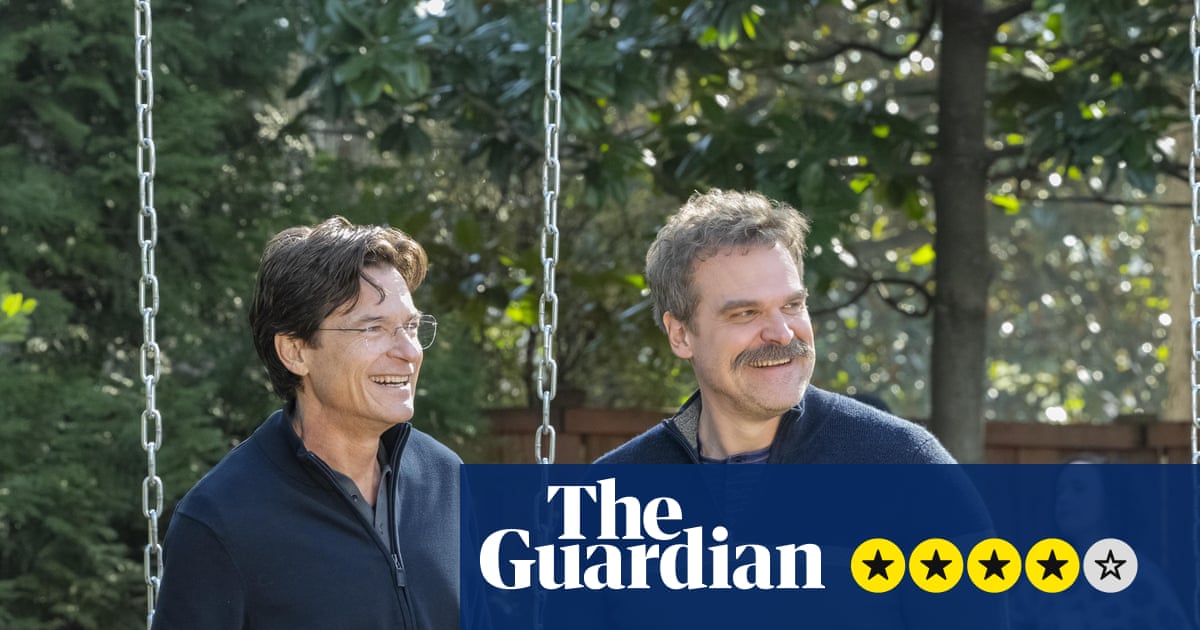
‘I like this, it’s good,” Ethan Hawke tells Richard Linklater, midway through a lively digression that has already hopped from politics to the Beatles to the late films of John Huston. “What’s good?” asks Linklater. “All of this,” says Hawke, by which he means the London hotel suite with its coffee table, couch and matching upholstered armchairs; the whole chilly machinery of the international press junket. “I like that we get to spend a couple of days in a room,” he says. “It feels like a continuation of the same conversation we’ve been having for the past 32 years.”
It’s all about the conversation with Linklater and Hawke. The two men like to talk; often the talk sparks a film. The director and actor first met backstage at a play in 1993 (“Sophistry, by Jon Marc Sherman,” says Linklater) and wound up chatting until dawn. The talk laid the ground for what would eventually become Before Sunrise, a star-crossed romance that channelled an off-screen bromance as it sent Hawke and Julie Delpy wandering around mid-90s Vienna, walking and talking and stopping to kiss. “Yeah, that was the moment. That set the tone,” says Linklater, remembering. “Meeting Ethan backstage, then flying out to Vienna.”
Blue Moon, Linklater and Hawke’s 11th collaboration, might be their splashiest number to date in that it’s a posh period drama – a tale of 1940s Broadway. Hawke plays the jilted lyricist Lorenz Hart, propping up the bar on the opening night of Oklahoma! as his former writing partner, Richard Rodgers, celebrates alongside Oscar Hammerstein. Hart dresses sharp and talks fast but he’s barely holding himself together, and so it was with the production itself. Blue Moon was shot at speed in 15 days on an Irish soundstage that masqueraded as midtown Manhattan. The ritzy trappings belie its indie roots.
For Hawke in particular, it was a tough film to get right. In previous collaborations, he has essentially played a version of himself, or some amalgamation of himself and Linklater, whereas Hart was a stretch and required a much bigger performance. It was as though he’d grown used to being a member of the band and then suddenly had to learn a whole different instrument.
“Yeah, you play the drums on this one,” says Linklater.
Hawke nods. “But workwise, that put us in a different position. It felt dangerous. You got kind of naggy. It felt like I was hitting the wall of my talent.”
“That’s the place where you want to be,” says Linklater.
Hawke isn’t certain. “Well, you want it when it’s over. Afterwards, my son asked, ‘Was it fun?’ and I said that it was like going down a ski slope that’s too difficult. When you land safely, you say, ‘That’s amazing.’ But I’m not sure I would have said it was amazing when I was trying to maintain some sense of grace. When I was trying not to hit all the trees.”
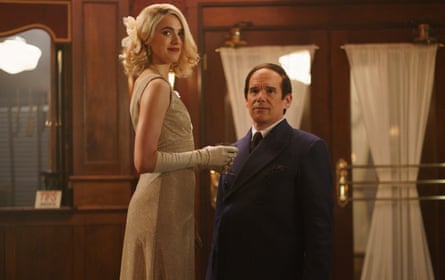
Graceful or not, it’s an eye-catching display, a flamboyant old-school physical transformation. Hart was bald and 5ft tall, so Hawke shaved his head and stood in a trench to appear shorter than his co-stars. This literally gave him a fresh view on the world. “Because the world is heightist. It’s ingrained in our culture, it’s in our language. Tall and handsome. Proud and strong. It’s tough when people don’t want to flirt with you. It changes how you see yourself.”
He had an actor friend on the set, he recalls, who was helping him with the sightlines. The friend positioned himself in the trench, with his wife close by; suddenly she towered over him. “Wow, that’s so interesting,” she said. “I definitely wouldn’t have married you.”
Hawke winces at the memory. “Because that’s shocking, right? That this woman who he’s been married to for 20 years should be put off by something so superficial. Not his brain, not his talent, not his looks, not his essence. You’re short and you’re bald. That’s not masculine to me.”
Linklater chips in. “Yeah, but your wife said that, too.”
“Yeah, OK, she did,” Hawke admits, laughing. The actor has been married to Ryan Shawhughes since 2008. It’s a good marriage; she loves him, although even she has her limits. “It wasn’t the height or the balding that bothered my wife,” he says. “It was the combover. The disguise is always worse than the thing itself. I dyed my hair, very obviously dyed, and then I did the combover. And Ryan came to visit the set one day, and she looked at me and said: ‘You know what, I’m leaving. I didn’t marry Larry Hart.’”
Hawke is 55 and Linklater a decade older. Their films have tracked and mapped their lives, moving from the weightless youthful joy of Before Sunrise through the burdensome adult responsibilities of its sequels (2004’s Before Sunset; 2013’s Before Midnight). The sublime Boyhood was pieced together over a 12-year period and featured Hawke as a deadbeat Texas dad who eventually straightens up, settles down and swaps his vintage sportscar for a family-friendly minivan. And now along comes Blue Moon, which is jaundiced and gin-soaked and pines for a world that’s moved on. It is – dare one say it – their first sad old man movie.
“Uh-oh,” says Linklater. “I think I know what you’re saying here: ‘You’re in the final chapter, buddy.’”
That’s not quite what I’m saying; they have plenty of road left to run. Certainly Hawke and Linklater have little in common with Hart, a brilliant, raging alcoholic who effectively died in the gutter at the age of 48. If anything, they resemble the duo that overshot and outlasted him: they’re the indie equivalent of Rodgers and Hammerstein.
Probably every profession contains people like Hart: tortured and talented, and finally too much trouble. Sooner or later, something has to give. “I’ve had my own artistic breakups,” says Linklater. “And it’s always for the same reason – addiction. It’s sad, it’s poignant. It’s the worst. But when you’re in a position of responsibility, you have to make a decision for the good of the ship. ‘We’ll send you to rehab, but you can’t stay here, you got to get out.’”
The tyranny of the sudden, early death is that it backshadows a life. Hawke began his career acting alongside River Phoenix and Robin Williams. He performed opposite Philip Seymour Hoffman in the 2007 thriller Before the Devil Knows You’re Dead. All three have since been posthumously framed as brilliant, tragic figures. According to Hawke, this was only ever half true. “Because there was nothing tragic about those people,” he says. “If they were sitting here on the couch, you’d see how utterly un-tragic they were.”
It is Hoffman’s death – in 2014 of a drug overdose – that remains the hardest to process. “To understand Phil, you have to understand how many days he beat addiction,” Hawke says. “Phil had a problem. He lost one day. But he won all the other days, for twentysomething-odd years. I don’t want to say that he had no agency in his death. But it was a difficult period and he was taking [his sobriety] seriously. He was on his way to a meeting [the day that he died].” He shakes his head as though to clear it. “And I know other talented people – less famous – who have been lost the same way.”
“Too much success or too much failure,” says Linklater. “You can react badly to both.”
The secret might be to maintain a nice even keel – or, failing that, have a regular collaborator to measure your own life against. Technically, Hawke and Linklater don’t need one another. Each man has forged a perfectly successful career of his own (Hawke is appearing in the lucrative Black Phone horror franchise; Linklater will soon release his jaunty, black-and-white Nouvelle Vague, all about the making of Jean-Luc Godard’s Breathless). But it may be this independence which keeps the relationship healthy and the partnership balanced.
“Yeah, my wife once said the same thing,” Hawke says. “She said: ‘Oh, well, it’s easy for them, because they’re on the same level.’ And maybe that’s right. Status plays such a big role in the world. “There are actor-director relationships where the actor becomes huge and is doing the director a favour by being in their movie. Or the reverse – the director becomes a big shot and starts doling out the favours.
“And yet, luckily, life has kept us steady.”
“We both percolate,” says Linklater. “Our underachieving careers have served us well.”
Hawke shrugs. “Well, it makes the friendship easier. I mean, when Ryan said it, I didn’t like how it sounded. I don’t want to think of myself that way. I like to think that I’m not status-conscious and can maintain a friendship with anyone. But she’s not wrong, it makes it easier.”
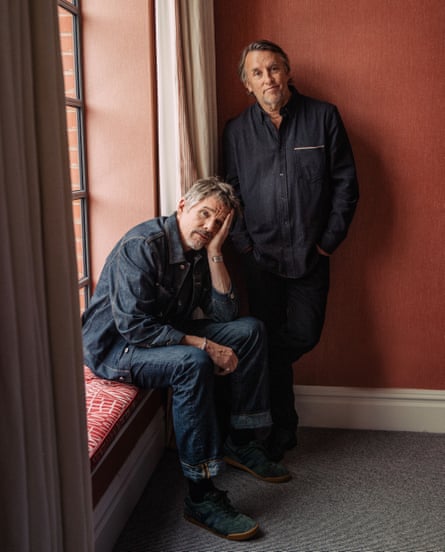
There are other factors to consider. “There’s the business side, too. One of the things that’s hard on an actor is that if you don’t make films that make money, people can’t hire you anyway. If I didn’t have what’s perceived as a successful career, I’d put Rick at a disadvantage. It doesn’t matter that he likes me; he wouldn’t get any funding. So I have to take care of that part of the ship by myself.”
Life is long and the film business is tough. Making independent movies doesn’t get any easier. This last one, says Linklater, was especially difficult. But the director feels good, full of energy as he approaches old age. Besides, film-makers aren’t like professional athletes, he adds. It’s not as though they start to lose a crucial step every year.
Now it’s Hawke’s turn to chip in. “I know what people lose. They lose idealism and curiosity. The profession beats you up. You get cynical and you lose the curiosity.”
“That’s depression, though,” Linklater says, frowning. “To not be interested in things. To think: what’s the point, why bother?”
“Yeah, but that’s just what I’m saying,” says Hawke, almost spluttering. “You haven’t lost that at all. I mean, look, we’re sitting here with this little indie movie that we had to make in 15 days.” He turns towards me. “There are directors of Rick’s age and in Rick’s position who would quickly lose interest in working that hard.”
“For no money,” adds Linklater. “They think: ‘Wait, this is where I started out. Why should I go back to the minor leagues?’”
“But you’d never think of it as the minor leagues,” says Hawke. “That’s because you never equated success with money. It’s nothing to do with the salary, it’s about making good art. That’s why we’re here.” He gestures at the suite: the coffee table, the couch and the matching armchairs. “And you know where we are? You know what this is?”
“The major leagues,” says Linklater and laughs.