.png) 3 months ago
62
3 months ago
62
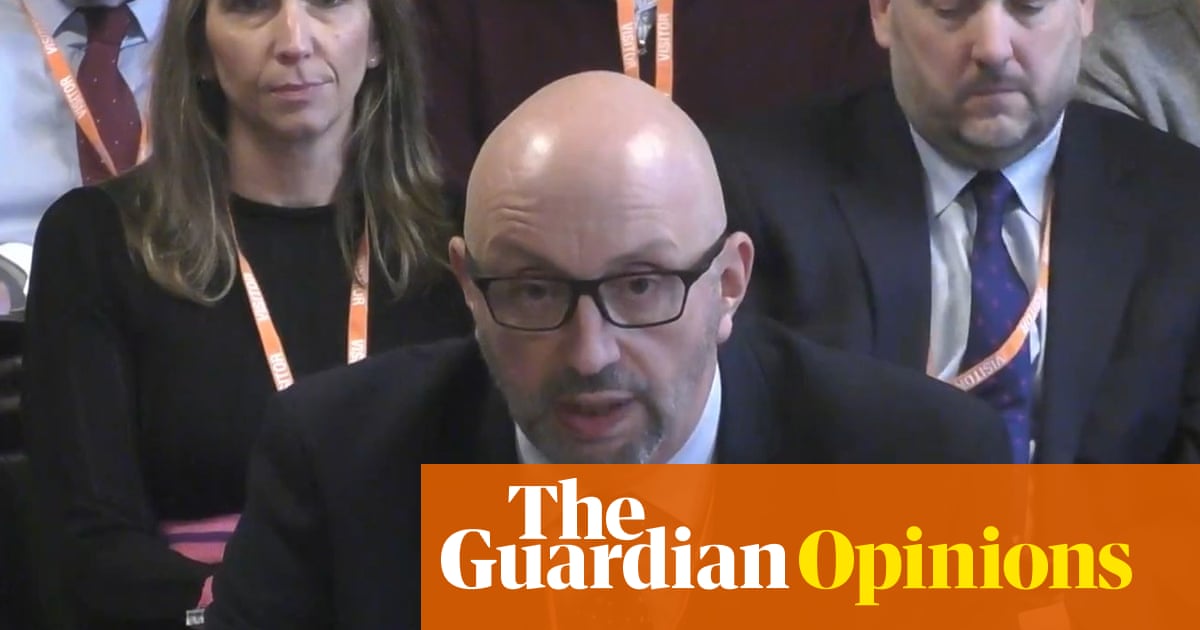
“It was Trumpian,” said Mark Mansfield, editor and CEO of Nation.Cymru, a small English-language Welsh news service. “It has perhaps given us a flavour of how a Reform UK government would behave towards the media.”
Mansfield is referring to what he described as an attempt by a figure at Nigel Farage’s Reform UK party to “bully” his publication, but he believes a wider lesson might be learned.
On 12 November, Nation.Cymru published an article when Reform’s only Welsh parliament member, Laura Anne Jones, was banned from the Senedd chamber for 14 days after using a racial slur to describe Chinese people.
The news website named Ed Sumner, now head of communications at Reform, as being one of the recipients of the offensive WhatsApp messages while working for her in August 2023.
Sumner’s name had been redacted in a Senedd report on the subject, but as Nation.Cymru had exposed the story – revealing the existence of the WhatsApp messages in the first place a year earlier, and having named Sumner at the time – the news service chose to name him again.
On the day of publication, they received a letter from Adam Richardson, a barrister from 4-5 Gray’s Inn Square chambers, who said he was representing Sumner.
He accused the news service of “misuse of private information” and “breach of confidence”, as well as breach of the editors’ code.
The news service was given two days to take Sumner’s name out of the article, otherwise Richardson said he had been instructed to commence proceedings and pursue damages.
“We were surprised really, because Reform hates us but they haven’t actually threatened us before,” said Mansfield.
As well as representing individual clients through his chambers, Richardson additionally works for the Reform UK national party, describing himself as a “barrister for Reform”.
Despite the legal letter from Richardson, Mansfield said he was having none of it.
No, was the response to Richardson’s demand. But that was not the end of the matter.
A second letter from Richardson that day said his client would now seek “aggravated damages” if Sumner’s name was not removed, Mansfield said.
Legal precedents cited by Richardson included that of the supermodel Naomi Campbell’s successful privacy claim in 2004 against the Daily Mirror when she was photographed as she came out of a Narcotics Anonymous clinic.
Mansfield responded again with a refusal. More emails came, said Mansfield, who accused Richardson of seeking to “bully into silence a small Welsh news outlet”. Richardson denied that in his subsequent letter, Mansfield said.
Mansfield asked Richardson whether he also acted for Reform UK.
That was irrelevant, Richardson responded, who suggested Mansfield get independent legal advice.
On 19 November, Mansfield’s news service published a new story, headlined: “Reform UK barrister tries to bully NationCymru into removing top party official’s name from story”.
Mansfield said the line of communication had gone quiet since.
A Reform source said: “Nation Cymru is a far-left Welsh nationalist blog pretending to be an honest media outlet. They make the Guardian look like a rightwing paper. They have broken the editors’ code numerous times and lack any journalistic standards.”
The press regulator, Ipso, has received five complaints against Nation.Cymru since 2022. Only one of those, regarding comments attributed to a planning officer, was upheld on the grounds of accuracy.
Richardson described Mansfield’s characterisation of his approach as “inaccurate” and rejected any suggestion of “bullying”, adding that the Nation.Cymru editor had displayed an “unusual amount of personal animus in response to a prescribed legal process on behalf of a client”.
“For the avoidance of doubt, the matter had nothing to do with Reform UK’s broader media approach, nor did it concern any attempt to inhibit legitimate reporting,” he added.
Questions are being asked, though: is Reform, riding high in the polls, taking a more aggressive approach to the media?
Mansfield’s description of his experience as “Trumpian” chimes with that of the publisher of the Nottingham Post and its website Nottinghamshire Live, after the nearly 150-year-old paper was barred from speaking to the council’s leader and removed from media mailing lists by the Reform-led Nottinghamshire county council. The council only relented last month after being threatened with legal action.
The Independent’s political editor, David Maddox, wrote in September that he had been warned by an unnamed senior member of Reform’s leadership team that the Independent would be banned from its events if the news website did not change a critical story or the tone of its questions and coverage. They did not follow through on the threat, Maddox added.
Last March, the BBC felt forced to apologise to Reform after describing it as “far-right”. “There are very significant implications of calling a political party, and by implication, its leader and senior leadership team, far-right,” said the party’s deputy leader, Richard Tice, who had previously championed free speech. “It is that which is defamatory and libellous. That is why they have apologised immediately.”
In recent weeks, it has been Richardson – as a “barrister for Reform” – who has been communicating with the Guardian as the party’s legal representative regarding the newspaper’s intention to publish claims made about Nigel Farage by multiple school contemporaries of his at Dulwich College.
After the Guardian first put the claims to Reform UK, Richardson described the allegations of racist and antisemitic behaviour as “wholly untrue” and a “grave and actionable libel”.
After reflecting on Richardson’s response, the Guardian put further allegations to him.
A final response from Richardson warned that if “the Guardian proceeds to publish any allegation suggesting that Mr Farage engaged in, condoned, or led racist or antisemitic behaviour, or that such claims bear upon his present character or fitness for office, proceedings will be issued without further notice.”
The Guardian published an article of about 3,700 words on 18 November with the headline: “‘Deeply shocking’: Nigel Farage faces fresh claims of racism and antisemitism at school.”
A Reform spokesperson told reporters in Westminster that the story was denied. “It’s one person’s word against another,” they said. Asked whether the party would sue the Guardian, he responded: “Not at this stage.”
It might be reasonably be argued that the deployment of legal threats is just a sign that Reform UK is a party that is serious about power. A Reform UK spokesperson said: “Reform engages far and wide with media and journalists. Additionally, Nigel Farage answers more questions from the media every week than any other party leader.
“Just as journalists are fully within their rights to criticise our elected officials, Reform are completely justified in pushing back against untrue and unbalanced coverage. This is the basis for a healthy, functioning democracy.”
For Mansfield, though, there is another way to see it, as he explained on his news site: “It seems free speech only exists for people who agree with them.”