.png) 2 months ago
55
2 months ago
55
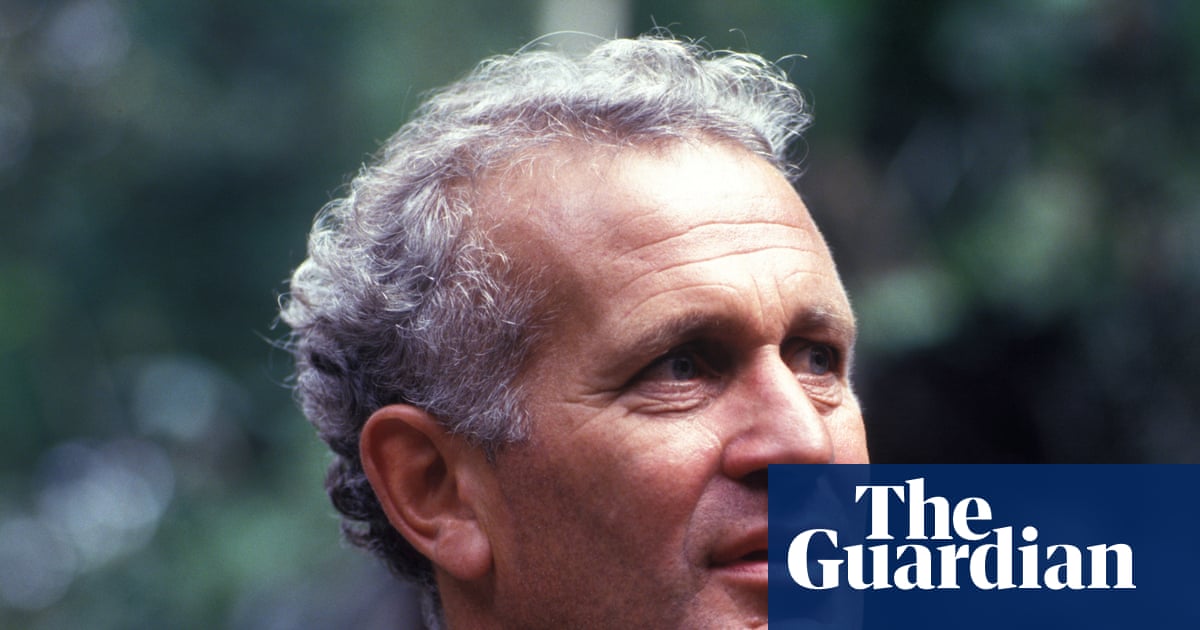
Exposing con artists, fraudsters, paedophiles and other villains on the BBC Radio 4 programme Checkpoint, then on ITV in The Cook Report, brought fame to Roger Cook – for both his foot-in-the-door journalism and the beatings he took from his targets. He received death threats, was roughed up, attacked with baseball bats, held at gunpoint, and suffered broken fingers, cracked ribs and dislocated shoulders.
While tackling one man who had been swindling pensioners out of money by lying that their properties were to be compulsorily purchased, Cook was run over by a car. As he came round after surgery, an Australian doctor told him: “Jeez, mate. Put it this way, if you weren’t built like a brick privy, you’d probably be dead.”
The bravery of the burly investigative journalist, who has died aged 83 after a short illness, was matched by a confidence evident in his calm indignation and bellowing voice as he threw leading questions at his targets on confronting them – armed with a tape recorder for his radio show and accompanied by a film crew for television.
He conceived Checkpoint (1973-85) after five years as a news reporter on Radio 4’s World at One programme. While there, he followed up listener complaints about a Bristol company selling mortgages that were inappropriate or unaffordable. “What are your qualifications for running a financial organisation other than being a heavyweight wrestler?” he asked the firm’s boss, who grabbed Cook in a bear hug and threw him down a flight of stairs – with the noisy reality caught on tape. With no television camera to capture the action, Cook always gave a running commentary on the reception that awaited him.
Although Checkpoint ran for 12 years as a consumer programme also featuring stories of injustice and bureaucratic bungling, Cook recalled that BBC bosses initially had the jitters about naming suspect individuals and companies, as well as the investigative approach and complaints of “aggressive” interviewing.
The show attracted more than 2 million listeners and Cook occasionally made similar television reports for Nationwide (1976-79) and Newsnight (1980-84). In 1981, when he confronted a fraudulent antiques dealer for Newsnight, he was beaten with a metal bar.
His pleas for a TV version of Checkpoint came to fruition, but it was dropped after one short series in 1984, with the BBC happier to launch Watchdog as a less confrontational, stand-alone, studio-based consumer affairs show, having already run it within Nationwide, then Sixty Minutes.
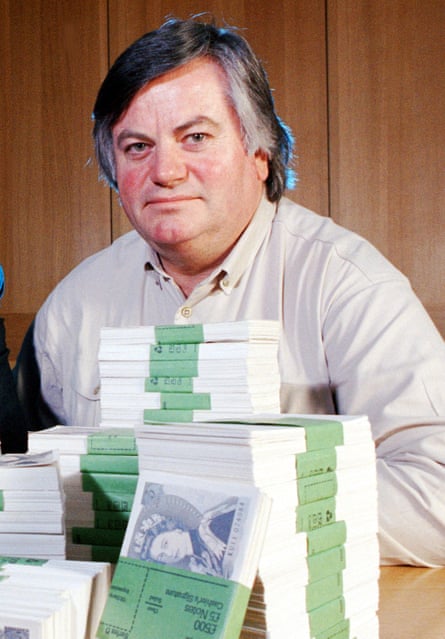
Instead, Cook moved to ITV for The Cook Report, made by Central Independent Television and, later, Carlton Television. It ran for 16 series between 1987 and 1997 – followed by one-off specials until 1999 – with ever more ambitious and fearless investigations, some overseas.
Its subjects ranged from loan sharks, counterfeit goods and drug-dealing, to people smuggling, the ivory trade, neo-Nazis in Germany, Northern Ireland protection rackets, and baby trading in Brazil and Guatemala.
But the bigger stories brought new challenges – and brickbats. A libel action against Central and Cook by an army corporal accused of battering a recruit in a 1992 programme meant they had to pay more than £700,000 in compensation and legal costs. Remarks made by a fertility expert in an episode on cot deaths two years later led to another libel action, brought by a doctor, which was settled out of court.
Then, in 2000, the News of the World claimed that four programmes had been faked, with bogus crimes set up by members of the production team – without Cook’s knowledge. Carlton insisted that “stings”, capturing on camera alleged criminals repeating what they had previously been accused of, were standard practice in investigative journalism.
The Independent Television Commission, then the regulator for commercial TV, eventually exonerated the programme and the News of the World accepted there had been no “fakery or deception”.
More damaging was a 1990 claim made by Cook – and the Daily Mirror – that the miners’ leader Arthur Scargill and two other union officials had paid off their house mortgages with money donated by Libya during the 1984-85 strike. Only 12 years later, following a French court case involving the union’s former chief executive, Roger Windsor, did Roy Greenslade, the Mirror’s editor at the time of the original story, acknowledge the claims to be untrue and make a public apology to Scargill.
Cook was born in Auckland, New Zealand, during the second world war, to Linda (nee Kirk) and Alfred Cook, an art teacher. When he was two, with the Pacific war continuing, the family moved to Sydney, Australia.
He studied at Yanco Agricultural high school, near Wagga Wagga, then Hurlstone Agricultural high school, Sydney. To fund his education, he took part-time jobs as a runner on the Sydney Daily Telegraph and an announcer and newsreader at 2GB, a commercial radio station in the city, and was soon working there full-time.
Leaving behind ambitions to become a vet, Cook was a film assistant on documentaries at Eric Porter Productions before joining the establishment-leaning national network ABC as a scriptwriter and reporter. When he moved on to its TV documentaries, his bosses saw him as “subversive”.
In 1968, after two years running the film department at the Warnock Sandford advertising agency, he moved to Britain and worked for BBC radio as a reporter on The World at One. He went on to present PM (1971-73) and The World at One (1973-76) until concentrating full-time on Checkpoint.
On moving to ITV, he first co-presented the 1986 series of the regional audience debate show Central Weekend. Although The Cook Report finished in 1999, he was back on ITV in 2007 with Roger Cook’s Greatest Hits, reflecting on – and returning to the scene of – some of his investigations.
Among many honours, he received the Bafta special award in 1998 for his investigative reporting. His autobiography, Dangerous Ground, published the following year, was updated as More Dangerous Ground in 2011.
Cook’s first marriage, to Madeline Koh in 1966, ended in divorce eight years later. In 1982, he married Frances Knox – they had a daughter, Belinda.