.png) 3 months ago
68
3 months ago
68
He has loved zoos all his life, but would close many of them down if he could.
David Field, who this month became head of the world’s zoo industry group, said of zoos that treat animals badly: “It makes me feel desperate. I’ve probably in my life tried to close down more zoos than open them.”
He’s taken up the mantle of keeping the world’s zoos in check at an interesting time, when their role in modern society is the subject of heated debate, with rows about lonely gorillas or penguins kept in a basement seem to erupt every week. Keeping wild animals solely for entertainment purposes was socially acceptable some decades ago, but there are now far more concerns for their welfare and the conservation objectives of their captivity. This particularly applies to animals such as elephants, which need large spaces to roam and in the wild have complex relationships within giant social groups.
As the new president of the World Association of Zoos and Aquariums, Field will be, he hopes, in a position to address some of that. Speaking to the Guardian exclusively, he said: “There are many zoos in this country and certainly abroad that I would like to see closed. I think there are zoos in the UK and exotic animal collections that are not achieving the standards we would expect and also are not giving back in terms of conservation and education, and that is fundamentally wrong.”
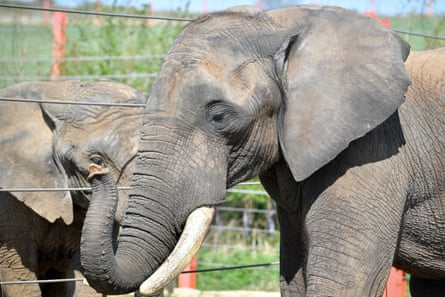
Zoo fans stress their role in conservation. But charities such as Born Free have pointed out that the vast majority of species kept in zoos do not have reintroduction programmes planned, and therefore they suspect the animals are only kept for entertainment purposes and “exploited”. A recent report found numerous welfare breaches in UK zoos, including animals kept outside in poor weather without access to shelter.
The UK government is now obliging zoos to have a conservation focus in an update to regulations, and elephants will need to be kept in larger enclosures and birds of prey must be kept in large aviaries rather than being tethered. Another new rule is a ban on visitors touching fish, rays or cephalopods such as octopuses.

Field, who has loved zoos all his life, first volunteering at Dudley Zoo aged 12, then working as a curator of animal collections in Edinburgh, Dublin and London before becoming CEO of the Royal Zoological Society of Scotland, welcomes these regulations.
But, he admits, the bad zoos, which are often not regulated as part of the network Field now chairs, are overbreeding animals. “There are a lot of bad zoos out there which are breeding animals for commercial and wrong purposes. As a matter of last resort, there are times when an animal might need to be euthanised. With lots of forward planning, this can be minimised as much as possible.”
Which animals should be in zoos? Elephants? Polar bears? Field agrees it’s a topic of discussion: “Currently there are some new polar bear exhibits in the UK and we are going through a very strong welfare audit. We have some concerns about those down south and we are concerned about the heat.” Elephants also need more space and company than captivity can provide, and Field says that the zoo must be suitable; Whipsnade is “exceptional”, but a zoo like Edinburgh doesn’t have the space.
75 Members of parliament recently signed a motion asking for the 15 penguins currently housed in the basement of the London Aquarium where they don’t get any daylight to be freed. “I think their veterinary and physiological needs are catered for.” Field said. “But if people are seeing an animal in an environment they don’t feel comfortable with, they lose their connection.”
One creature which should never be kept in UK zoos, he said, is the killer whale. “We don’t have anywhere in the UK that could keep orcas,” he said. “The way we keep cetaceans, we need to review and progress. The UK won’t ever be a place for them.”
Pandas, however, are a different matter. Field was at the centre of media headlines after the Chinese government took back two pandas, Yang Guan and Tian Tian, who were on loan to Edinburgh Zoo. There is controversy around China’s use of pandas in diplomacy and the way the government uses them to exert pressure abroad.
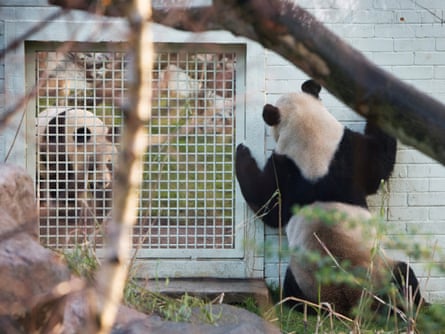
Field said: “I would have loved for them to have stayed for the rest of their lives. Sadly the contractual requirements around pandas and China and the diplomacy associated meant there was no loophole of any shape or form to have kept them. The way pandas are part of the bigger zoo network does need to be reviewed. I hope as far as my global role, I can engage with the Chinese zoos.”
Zoos can play a useful role in rewilding, says Field. His zoo recently pioneered the release of wildcats back to Scotland, breeding and releasing them in the Cairngorms national park. This pioneering release of carnivores, he believes, could pave the way for zoos to reintroduce big cats into the wild globally.
“Carnivores are a difficult one. The science we are doing is feeding into this work for different species. Lynx is definitely being spoken about in the UK, we have previously spoken about leopards, which are on hold at the moment, but there is the amazing Iberian lynx, the Florida panther – this work is going on.”
The zoo made headlines again after suspected rogue rewilders dumped Lynx in the Scottish highlands. Field had to clean up afterwards, and saysthe lynx dumping was “evil”.

“[The lynx] were so desperate for human care that they opened the traps and they walked in. This is a serious, serious science. It can’t just be done by anyone.”
He’d love to see lynx roaming wild again but doesn’t believe wolves have a place in the UK as wild animals, however, and fears the same person might dump wolves too.
Field is quite clear that zoos can make a huge contribution to society, and warns that sometimes, as in the recent stories about the “lonely gorillas” at Bristol zoo, readers must look beyond the headlines. “We do put our emotions into animals. If I went to smile at my chimpanzees right now they would have huge fear because if you bare their teeth you are expressing fear and anger. Perhaps it gave people a lot of emotion and care for the animals but we need to look behind the shocking headline. In the case of those gorillas I can vouch that they are looked after.”