.png) 3 months ago
78
3 months ago
78
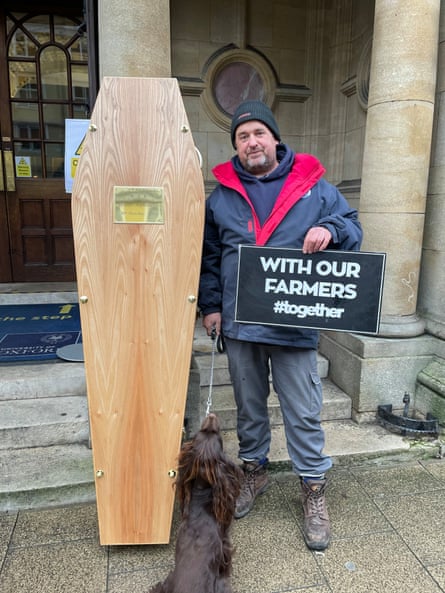
Few symbols were more potent than the wooden coffin bearing the inscription “RIP British agriculture, 30th October 2024” that greeted Labour’s environment minister at the annual Oxford farming conference.
It marked the date of Rachel Reeves’s first budget, when she announced plans to levy inheritance tax on farms. For the chancellor’s cabinet colleague Emma Reynolds, it underlined the anger among Britain’s farmers.
Christopher Marchment brought the coffin, along with his working cocker spaniel Grouse, from his arable farm in Hampshire to the annual gathering to call for the tax to be abolished.
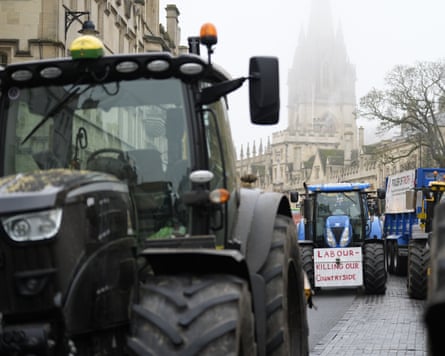
Not that Reynolds needed reminding. Since becoming environment secretary in September’s reshuffle, the former financial services lobbyist has faced a cacophony of rural outrage, including the tractor horns that played a soundtrack to the Oxford event.
The government’s pre-Christmas U-turn on the inheritance tax changes for farms, which raised the threshold at which estates are taxed, have been welcomed by groups including the National Farmers’ Union (NFU) and the Country Land and Business Association. However, they have done little to quell some food producers’ anger.
Marchment said he knew of two farmers who had taken their lives because of the planned introduction of inheritance tax for agricultural assets and other business properties worth more than £1m.
“They wanted to pass their farms on,” he said. “We need food production in this country. If people are out protesting like this, the government should think there’s something drastically wrong with their policies.”
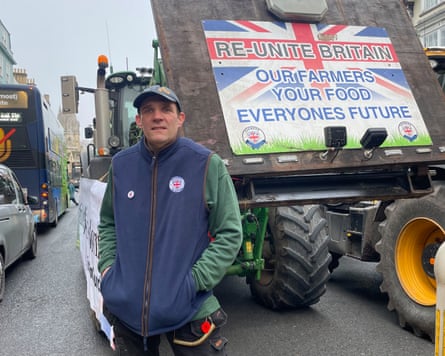
One tractor, adorned with a cardboard cow, urged: “Moov over Labour, it’s time to go”, while other signs read “Labour – killing our countryside” and “sheaves not Reeves”.
Derek Pearce, a third-generation arable farmer from Buckinghamshire, said the government did not understand the countryside.
“They are literally going after everything rural, whether it’s rural business, pubs are closing, business rates are going up, or farming. They’re going after the fishing, the shooting, everything,” he said.
Reynolds, who replaced Steve Reed in September, was on a charm offensive, telling the conference: “This government is serious about partnership with your sector.”
Thanking farmers for clearing snow from roads in recent days, she called them “the heart of our national life for what you produce”.
Reynolds insisted Labour’s climbdown on inheritance tax, which increased the threshold at which inherited farmland is taxed from £1m to £2.5m, was a sign ministers had listened.
The tax had been labelled a “family farm tax” by critics and triggered protests around the UK, with farmers arguing it would prevent many of them from passing on their farms to their children.
While Reynolds was at the conference, her cabinet colleagues were preparing to announce yet another policy U-turn, this time over changes to business rates for pubs after a wave of criticism from embattled publicans, particularly in rural areas, who have taken to banning their local Labour MPs.
Reynolds – who represents the constituency of Wycombe in Buckinghamshire that she described as rural and home to 89 farms – will face an uphill battle to win back the trust of food producers, who were little enamoured with her predecessor and accused him of betrayal over the inheritance tax.
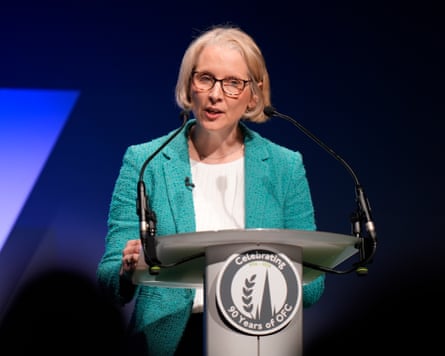
She told journalists: “As a government we truly care about rural Britain, we are the party with more rural representation than any of the others.” However, there will be no further concessions: “From our point of view that’s it, I’m afraid.”
Reynolds said she knew many people in rural communities decided to vote for Labour at the last election. “We took the rural wall in 2024. We have got 136 rural or semi-rural seats. That is a huge representation in parliament and I have conversations with those MPs week-in, week-out. There is huge growth potential in rural communities that is in farming but in lots of other areas as well, tourism, hospitality.”
Tom Bradshaw, the NFU president, said: “The government has got to make farmers and rural communities feel valued, and at the moment farmers don’t know where the goalposts are. Does domestic food production matter to the government or not?”
One tweed-jacketed attender, who did not want to give his name, had a more critical assessment. Ministers “handled the whole inheritance tax thing terribly”, he said. “A lot of rural communities won’t vote Labour again, even if the alternative isn’t much better. They were burned by them.”