.png) 3 months ago
47
3 months ago
47
Exhibition of the week
Monument to the Unimportant
With the birth of modernism, artists turned their gaze from the heroic to the “unimportant”. This attention to the everyday continues, as Rachel Whiteread, Claes Oldenburg, Robert Gober and others demonstrate.
Pace Gallery, London, until 14 February
Also showing
Lasting Impressions
A century of prints by women including Faith Ringgold, Laura Knight and Käthe Kollwitz.
V&A, London, until 27 September
Humphrey Ocean
Quietly haunting vistas of architecture by the former bassist of Kilburn and the High Roads.
Gainsborough’s House, Suffolk, until 22 March
Performing Trees
The brilliant George Shaw features in this survey of arboreal imagery in art.
The Whitworth, Manchester, until 4 April 2027
William Nicholson
Paintings of the golden summer before 1914 by a notable British artist whose life straddled two centuries.
Pallant House Gallery, Chichester, until 10 May
Image of the week
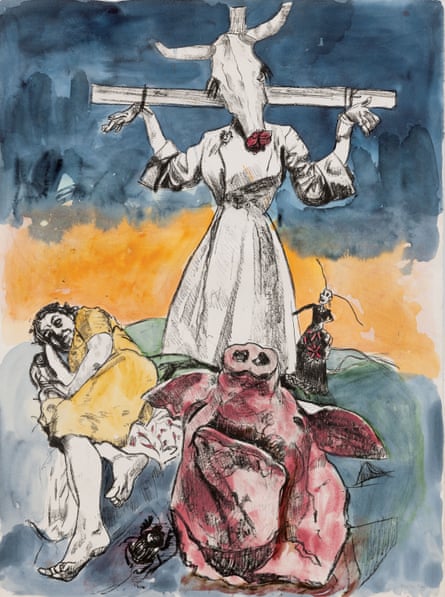
When the great artist Paula Rego saw a shocking play by Martin McDonagh about the torture of children, she began an excitable correspondence with him and asked for more dark stories. He ransacked his bottom drawer to find them and it was these cruel tales which would go on to inspire some of her best works. Read the full story.
What we learned
A previously unknown Renoir painting has sold for €1.8m in Paris
Tate staff began a week-long strike over pay amid reports of workers using food banks
Turner-winning sculptor Tony Cragg is fine with selfie-takers
An exhibition in London will explore mental health and social bonds in ‘polarised’ times
Artists are going to great lengths to recreate rubbish
Three thrilling Caravaggio works raise a question: who was the artist’s anarchic muse?
Tala Madani uses AI-generated robot children to critique how women giving birth are treated
after newsletter promotion
Actor Frances McDormand put on an adult-sized cradle art project
Masterpiece of the week
Still Life: A Goblet of Wine, Oysters and Lemons by Jan van de Velde, 1656
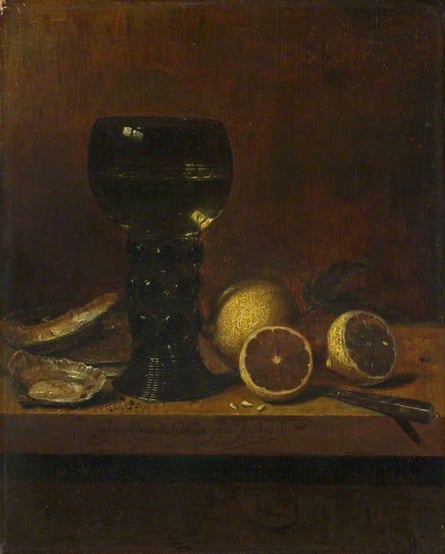
The still life has attracted artists for thousands of years. Ancient Greek artists competed to paint the most accurate bunch of grapes and depictions of foodstuffs decorated houses in Pompeii. The genre was revived around 1600 by artists including Caravaggio and Jan Brueghel the Elder. By the time this was painted in 17th-century Amsterdam there was a flourishing market for pictures with no story, no symbolic meaning – just a finely focused attention to the yellow of lemon peel, the way light is held by a wine glass, the silvery glint of opened oyster shells. This humble arrangement of food and drink is actually a humblebrag: oysters may not have been so hard to come by in the sea-surrounded Netherlands but lemons were posh in northern Europe four centuries ago, and that’s no common wine glass but a richly made, expensive one. So with quiet spiritual calm, a merchant might contemplate this image of passing pleasures and earthly wealth, and look forward to supper.
National Gallery, London
Sign up to the Art Weekly newsletter
If you don’t already receive our regular roundup of art and design news via email, please sign up here.
Get in touch
If you have any questions or comments about any of our newsletters please email [email protected]