.png) 3 months ago
79
3 months ago
79
Five days after the US seized Nicolás Maduro, Venezuela has announced it is releasing an “important number” of detainees in what the congressional president characterised as a gesture to “consolidate peace”.
Former opposition candidate Enrique Márquez was among those released from prison, according to an opposition statement. “It’s all over now,” Márquez said in a video taken by a local journalist who accompanied him and his wife, as well as another opposition member Biagio Pilieri, who was also released.
Spain’s foreign ministry also confirmed the release of five Spanish nationals, one of them a citizen with dual nationality, who it said were “preparing to travel to Spain with assistance from our embassy in Caracas”. The ministry called the development “a positive step in the new phase Venezuela is entering”.
Spain’s foreign minister, José Manuel Albares, told the public broadcaster RNE that the dual national being released was Rocío San Miguel, a Spanish-Venezuelan lawyer, activist and human rights defender who was detained in February 2024 and accused by the regime of treason, conspiracy and terrorism in connection with an alleged plot to assassinate Maduro.
Venezuela’s opposition leader, María Corina Machado, hailed the releases, saying they showed that “injustice” would not prevail in the country. “This is an important day because it shows what we have always known: that injustice will not last forever and that truth, although it be wounded, ends up finding its way,” she said in an audio message published on social media.
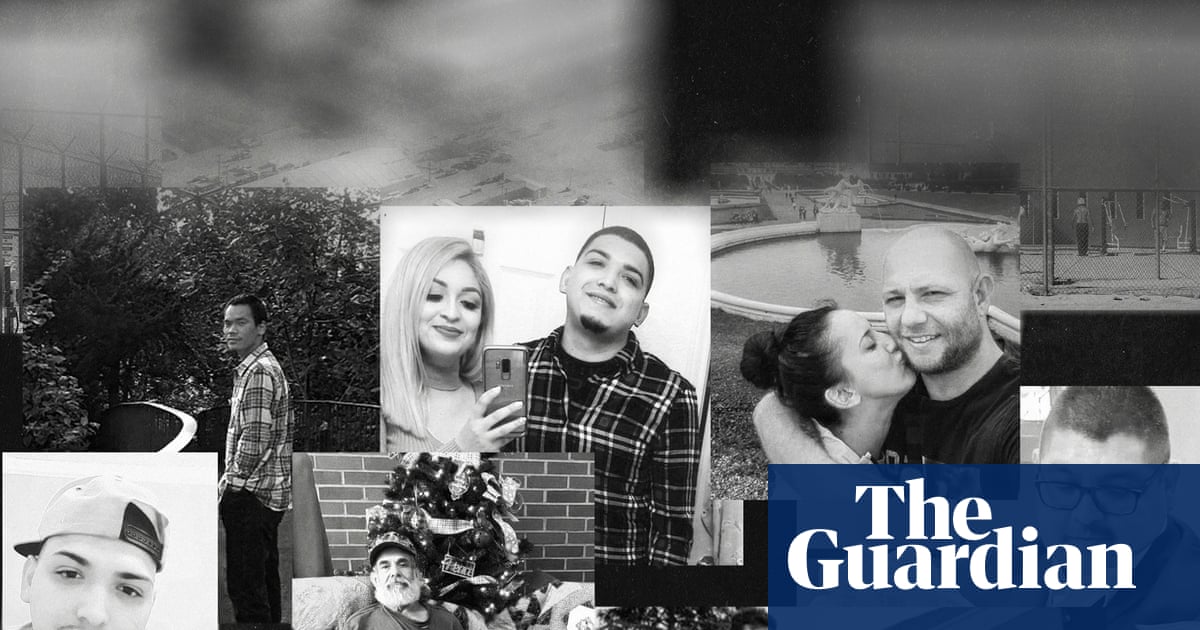
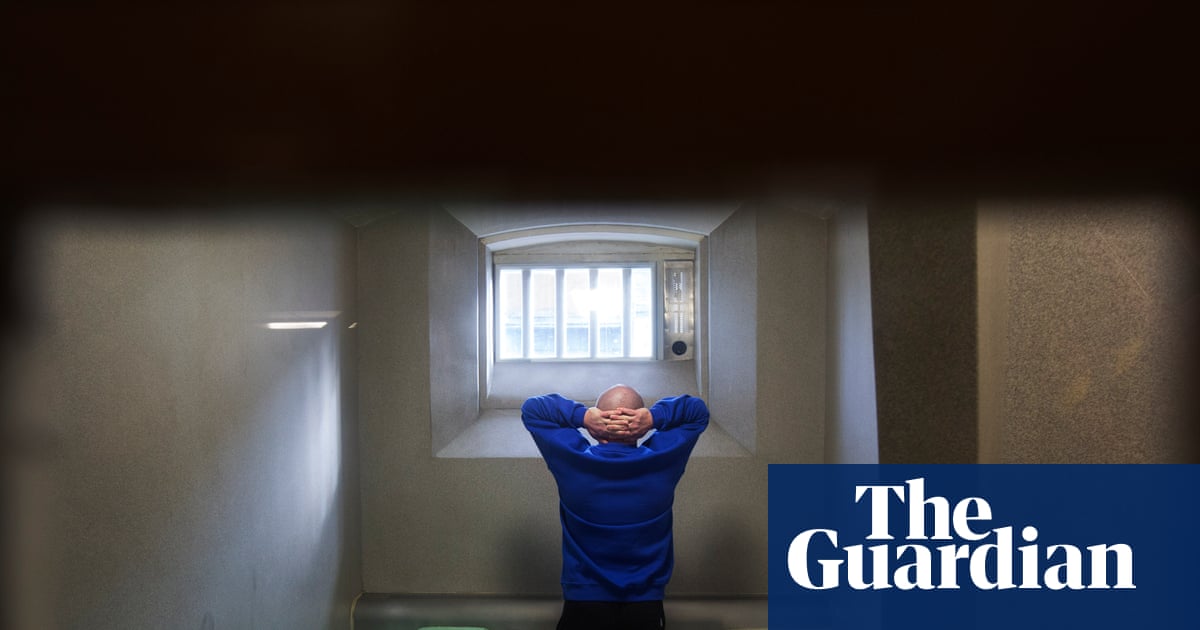
It is unclear how many people are being freed. Human rights organisations working in the country estimate that Venezuela holds between 800 and 1,000 political prisoners, most of them detained for taking part in protests after the 2024 election, widely believed to have been stolen by Maduro.
The head of Venezuela’s national assembly, Jorge Rodríguez, the brother of the acting president, Delcy Rodríguez, said the move was a “unilateral gesture to reaffirm our unbreakable decision to consolidate peace in the republic and peaceful coexistence among all”.
As the news of the planned release broke, families of detainees rushed to prisons across the country, seeking information.
Pedro Durán, 60, was among those hoping to reunite with his brother Franklin Durán as he waited outside a prison in the town of Guatire, about 43km (25 miles) outside Caracas. Durán said his brother was detained in 2021 on charges of trying to overthrow Maduro’s government – an accusation his family denies.
Durán, who has been living in Spain, heard rumours on Wednesday that the government could release a number of detainees and immediately bought a plane ticket from Madrid to Caracas to find his brother.
“I don’t have words to express the emotion I’m feeling,” Durán said. “We’re feeling a lot of hope ... We’re just waiting now.”
Before Venezuela’s announcement, estimates suggested there were more than 40 foreign nationals detained in the country, including about 20 Spaniards and five US citizens, among them James Luckey-Lange, 28, who disappeared in December and was being held at military counterintelligence headquarters in Caracas.
On Tuesday, Donald Trump said Venezuela had “a torture chamber in the middle of Caracas that they’re closing up”, without elaborating. In recent days, speculation has centred on the Helicoide de la Roca Tarpeya, an iconic structure inaugurated in 1956 as an avant garde shopping centre and later turned into a prison and torture site under Chavismo.
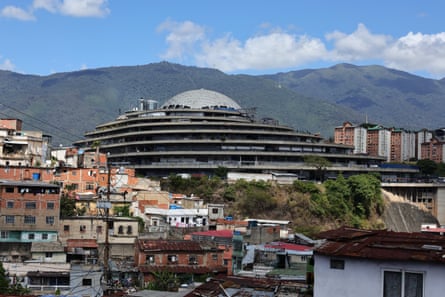
Martha Tineo, the general coordinator of the NGO Justicia, Encuentro y Perdón (Justice, Encounter and Forgiveness, or JEP), which monitors political detentions in Venezuela, said she had confirmed that some sections of El Helicoide are being vacated.
“But the Helicoide complex is vast. It not only houses the prison where political detainees are held, but also administrative offices of the Bolivarian National Police, and those are the areas that are being cleared … So we might assume that over the coming days – hopefully within a week, or however long it takes – we may indeed see the closure of that immense torture centre, but for now, that is not happening,” she added.
JEP estimated that there were 1,017 political prisoners before Rodríguez’s announcement. By 10.30pm UK time on Thursday, the organisation had confirmed only “around eight or perhaps 10 political prisoners”, but said it would not disclose names to avoid raising anxiety among families who have been waiting for months – and in some cases years – for news of their loved ones.
The announcement of the detainees’ release is being treated with caution by activists. In the days leading up to the US operation, the regime said it would release 187 people – 99 on Christmas Day and 88 on New Year’s Day – but organisations were able to independently verify the release of only a portion of that total.
Although she has so far confirmed only a few releases, Tineo remains hopeful. “The information we have is that it is very likely that many releases will take place – or at least that is what has been said [by the regime],” she said, adding that the release process, which involves legal procedures, can take time, potentially days when dealing with large numbers of people.
“That is why we have been calling for composure and calm, to keep us united in both hope and vigilance,” Tineo added.
Alfredo Romero, the head of Foro Penal, an NGO that estimates there are still 806 political prisoners in Venezuela, posted that by early evening he had only been able to confirm five releases. “We expect the freedom of all political prisoners, not partial and conditional gestures,” he wrote, referring to the fact that many people freed in recent months were granted only conditional liberty, subject to precautionary measures such as travel bans, mandatory court appearances and restrictions on speaking to the media about their cases.
At a press conference announcing the decision, Jorge Rodríguez – who many believe is now effectively running the country alongside his acting-president sister – said that “within a few minutes” the public would learn “the nature of the people who are receiving the benefit of release”, something that had still not happened hours later.
He added: “In order to contribute and collaborate in the effort that all of us must make for national unity and peaceful coexistence, the Bolivarian government, together with the institutions of the state, has decided to free an important number of Venezuelan and foreign individuals, and these release processes are taking place from this very moment.
“Consider this gesture by the Bolivarian government, with its broad intention of seeking peace, as the contribution that all of us must make so that our republic can continue its life in peace and in pursuit of prosperity.”