.png) 3 months ago
76
3 months ago
76
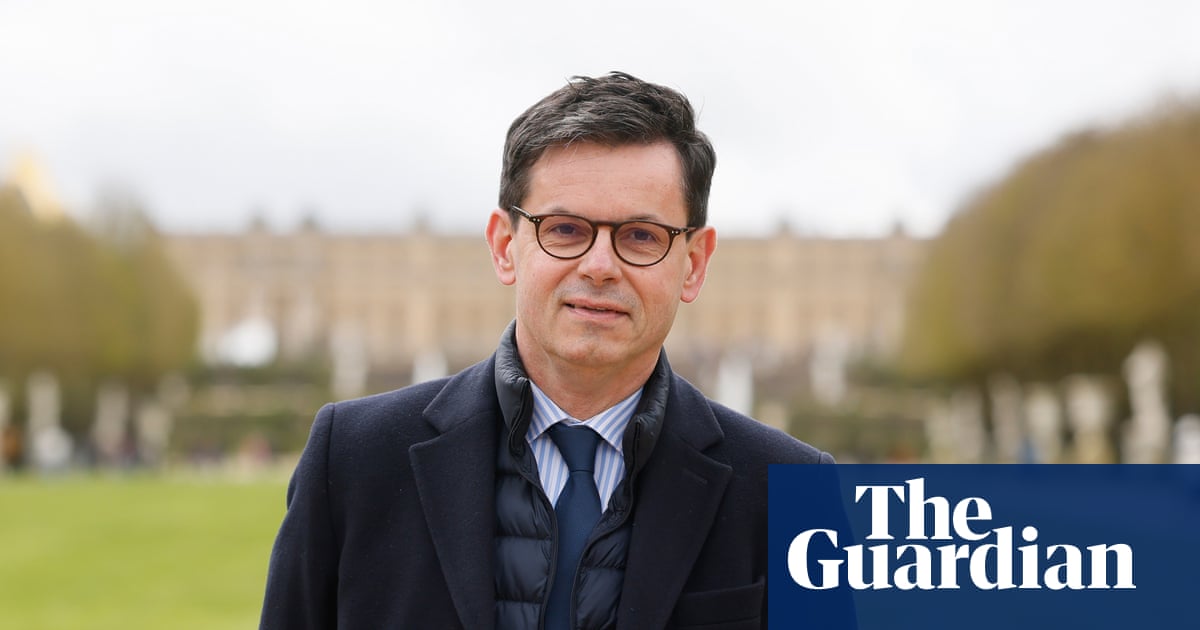
The Saturday morning I meet Andrew Lownie, the author of “the most devastating royal biography ever written” (according to the Daily Mail), the front page of every newspaper carries the arrest of Andrew Mountbatten-Windsor. Some have aerial shots of the police arriving to search his home, most including the now infamous photograph of his face in the back of the police car. He looks hunted, because he literally has been, but his expression is curiously blank, its most legible emotion grievance. One journalist, Lownie says, reported late on the night of Friday’s arrest that: “Andrew still can’t see what the problem is. He thinks he’s been hard done by. He’s obsessed with other details – whether he can take his horses up to Norfolk, who’s going to get the dogs, where he’s going to park his car. It’s a sort of disassociation.”
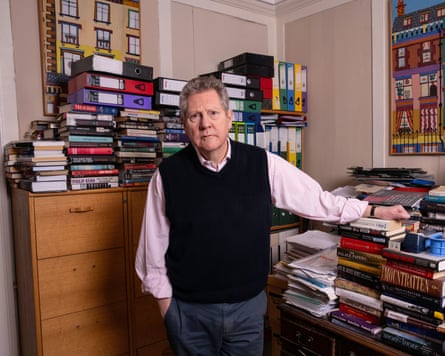
Lownie’s office, in his home a stone’s throw from parliament, is a monument to the success of his book, Entitled: The Rise and Fall of the House of York (along with his other books: one on the Mountbattens, one on Guy Burgess, one to come on Prince Philip). One desk is piled high with books about Andrew and Sarah, some of them by Ferguson herself, others warts-and-all, kiss-and-tell accounts from confidants and clairvoyants. Lownie has stacks of rejected freedom of information requests, from UK Trade and Investment; the Foreign, Commonwealth and Development Office; the Information Commissioner – “They sometimes took so long to respond that they haven’t even downloaded the request before it expires.” He approached 3,000 people from all the way through Mountbatten-Windsor’s life; only a tenth of them would speak to him, which to me feels quite unsurprising, and yet Lownie is indignant. “I wrote to ambassadors, and they said ‘not interested’. This was a matter of public interest. Others, very cheerily when I wrote to them a third time, said ‘nice try’, as if it was some sort of joke. These are the guys I want in the dock, in parliament, on oath. This is the thing that makes me upset. I, perhaps naively, expect standards in public life.”
Entitled was published last year, after four years of research. It builds a cradle-to-police-station picture (he is now updating the book for a new edition) of a royal whose long association with a known child sex offender may look like the nadir of his behaviour, but is also completely congruous with a priapic, exploitative and money-grubbing life in which nothing was ever refused him.
Before her death by suicide last year, Virginia Giuffre stated that she had been trafficked by Jeffrey Epstein to Mountbatten-Windsor, and raped by him on three occasions as a minor (under US law) when she was 16 and 17. The third time was an orgy on Epstein’s island at which girls were present whom she believed to be underage, but didn’t know for certain because they spoke no English. After a review, the Metropolitan police said last December that it would not be launching a formal criminal investigation into Giuffre’s allegations about Mountbatten-Windsor, which he has denied. He claimed first that he had “no recollection of ever meeting this lady”; then, after a photo emerged of them together, that he was “at a loss to explain this particular photograph”. She brought a civil case against him in 2021, which he settled out of court the following year on no admission of liability. There has been no transparency over the amount, though the figure of £2m to Giuffre’s chosen charity, fighting sex trafficking, is known to have come from the queen. King Charles’s office has always denied that he contributed to Giuffre’s own settlement – estimated at between £7m and £12m – but “since he was running the show with the queen [by 2022], he must have been aware of what was going on,” Lownie says. If 2022 was an obvious moment to strip Mountbatten-Windsor of his royal title, it was by no means the first.
There was a complaint going back years from a royal protection officer on the north gate of Buckingham Palace, who said, as Lownie describes it: “We were concerned that prostitutes were being brought in; we weren’t being given names.” (This witness, Paul Page, was himself found guilty of fraud, “but that doesn’t invalidate what he says”, Lownie continues). In 2006, representing the British monarchy at King Bhumibol Adulyadej’s diamond jubilee celebrations in Bangkok, Andrew was said to have had more than 10 girls a day going in to his room at the Grand Hyatt Erawan. “Often, as soon as one left, another would arrive,” the Reuters correspondent reported, “and this was all juggled amid official engagements.” Throughout Mountbatten-Windsor’s time as special representative for international trade and investment, ambassadors would feed back that he was a liability, rude and visibly bored at official engagements. His staff often requested attractive women be invited to events, to which “one consul replied, ‘I’m a diplomat, not a pimp,’” according to Entitled. “One bean-counter had complained about Andrew’s expenses,” Lownie says, “querying whether he could put massages on the taxpayer’s tab, and it was pushed through. We’ve been paying for happy endings for Andrew for years.” These warnings were unheeded: “There was a safe at the Foreign Office to keep all this stuff,” Lownie says.
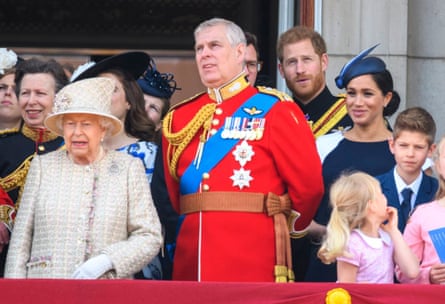
There were so many moments that “should have been alarm signals, in the palace, the government and the police”, he continues. An unrelated trial of a former banker, Selman Turk (who is appealing against his jail sentence for fraud), in 2022 unearthed in passing a £750,000 payment made to Mountbatten-Windsor by one of Turk’s clients, who claimed that he advised her to pay the sum to the prince in return for assistance with a UK passport application. (Turk said the money was a wedding gift for Princess Beatrice; Andrew repaid the £750,000 roughly 16 months after he received it and it remains unclear whether he was aware of the money entering his personal bank account, or what it was for.)
“That’s what the Chinese and Russian secret services realised – that the easiest vulnerability of the British establishment is the royal family,” says Lownie. “There’s no scrutiny. They’re greedy. They’re short of money.” And in Andrew’s case in particular, “they’re kind of immoral because of the way they’ve been brought up. And they mixed with lots of important people.”
Mountbatten-Windsor went to Heatherdown, an aristocratic prep school, and then to Gordonstoun, where King Charles also went. Lownie mainly met a wall of silence from the public school, except among people he knew personally. (Lownie went to Fettes College, another Scottish public school, and one of his friends from prep school went on to Gordonstoun as a scholar and used to do Mountbatten-Windsor’s homework. Lownie is very much part of the establishment, and isn’t driven by radicalism. “What drives me is that I just hate bullies. I describe myself as Winslow Boy meets Erin Brockovich,” he says, drolly.)
Mountbatten-Windsor at school was known for being a bully, a loner, supercilious, entitled, indulged. One story from Heatherdown says that he took someone’s exotic stamp collection, simply crossed their name out and wrote in his own, and was never punished. This foreshadows a toe-curling incident 30 or so years later, described in Entitled, quoting Tim Reilly, a former risk management executive. On a museum visit in Russia, Andrew “was angling to be given a Fabergé egg”, Reilly told Lownie. “Even they were stunned by his undisguised avarice … Putin could finish Andrew any time he likes with photos, tales and evidence he no doubt has on Andrew in Russia.”
Anyone who remembers the short marriage of Andrew and Sarah Ferguson will have bits of their lifestyle filed away. The tabloids were salacious but forgiving towards him, calling him “Randy Andy” one minute, then overwhelmed with patriotism when he appeared in uniform. Towards Ferguson, they pulled fewer punches, reporting on her ex-boyfriend Paddy McNally’s “cocaine castle” (in a News of the World headline), her endless holidays, her excessive luggage. Over time, it was priced in that Ferguson’s charity dabbling might not be entirely altruistic, but also attention-getting. Entitled details the hotel suites she leveraged from charities for visits of dubious usefulness, the organisations she affiliated with that never saw any of the money she’d promised, or only saw part of it, the rest going on the fundraising event itself, or on her staff or costs. At the time it seemed par for the course; this is how high net worth philanthropists operate. When you read about the conditions in the orphanages that she was ostensibly fundraising for, you think: who would use that hardship to fund their personal luxury?
The sheer extravagance of the couple, meticulously noted, is bizarre: £150,000 on flowers, scores of thousands on personal trainers Ferguson rarely troubled, him never using a car when a helicopter was faster (which is always), her demanding “a whole side of beef, a leg of lamb and a chicken, which are laid out on the dining room table like a medieval banquet” every night, even when it was just her and the kids. They’d often end up eating crisps anyway (as told by a departing member of staff). They were both having affairs. One of Ferguson’s highest-profile liaisons, with Steve Wyatt, a US multi-millionaire, appears to have started when she was five months pregnant with Eugenie.
They both often claimed to be broke, Ferguson regularly announcing bankruptcy, but it never seemed to dent their spending. In the maelstrom of their divorce in 1996 were questions about what it might mean for the queen, for the constitution, for Charles and Diana, for the royal family. There was also, I suppose, a collective astonishment at the dissonance between the monarchy’s self-fashioning (restraint, duty, asceticism, higher purpose) and this completely trashy couple who would renovate their Berkshire residence, Sunninghill Park, with teddy bears, a helipad and a swimming pool when they were both half out of the marriage anyway. Amid all this, the questions that really mattered were pushed to the margins. Where was the money coming from? What were its sources getting in return?
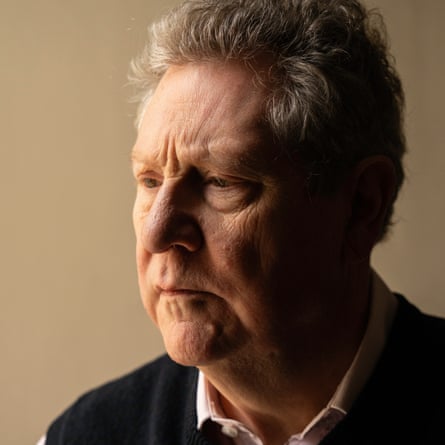
“It remains a mystery,” Lownie writes in Entitled, “how Andrew has been able to enjoy such an extravagant lifestyle without any obvious sources of income beyond his naval pension, family money he may have inherited and handouts first from Queen Elizabeth and now King Charles. He travels by private jet, has a collection of watches and expensive cars – including a £150,000 Patek Philippe watch, a £220,000 Bentley and a brand-new £80,000 Range Rover … An acquaintance told one paper, ‘I would compare Andrew to a hot-air balloon. He seems to float serenely in very rarefied circles without any visible means of support.’”
The couple’s relationship with Epstein is revolting on its own terms. “They have no real moral boundaries,” Lownie says. “They go and see sex offenders not because they’re concerned about their crimes, but because [these people] might be able to pay some bills for them or introduce them to some useful people.” But what we know of the Epstein files, as shocking as they must be to institutions accustomed to making scandal go away, is only the beginning.
“I know that Epstein was a Soviet asset,” Lownie says. “Robert Maxwell, of course, had strong connections not only with Mossad, but also with Russian intelligence. He had made his money with these textbooks, which he bought cheaply with Russian money.” Ghislaine (Maxwell’s daughter) and Epstein were introduced in the 80s by the grandson of another Russian asset, Armand Hammer, and the relationship between them and Andrew Mountbatten-Windsor goes back to 1985. “There’s a huge national security scandal here of penetration,” Lownie says.
Since Entitled was published, people contact Lownie all the time with more information: the day Mountbatten-Windsor was arrested, Lownie received 760 emails. He was passed a letter, dated last December, from the Metropolitan police reminding royal protection officers of their duty towards “the privacy of the protected” – it’s ironic to hear the Met now reminding those officers of their duty to report what they saw.
Lownie had lunch recently with Epstein’s brother, Mark, who doesn’t believe the suicide verdict and has brought in an expert coroner who increasingly doesn’t believe it either. “However incompetent the correctional facility was, it is the prime correctional facility in New York; it’s their most high-profile prisoner; he’s on suicide watch; you take a cellmate out; you don’t make sure the cameras are working; at a key moment, both the guards conveniently fall asleep; you panic and get rid of the body so there’s no proper autopsy – it just doesn’t make a huge amount of sense,” Lownie says. The FBI debriefed Epstein’s cellmate on what he’d said. “Now, Epstein did make stuff up, so you have to take it with a pinch of salt,” Lownie says. But he reeled off a list of names before he died, one a high-level British politician, present at an orgy.
The palace is in damage-limitation mode, it seems. “Keep it to the sexual side – everyone understands that bit – and certainly not go anywhere near the national security scandal,” Lownie says. “The plan [of the palace], I think, at the moment, is to throw Andrew to the wolves.”