.png) 3 months ago
59
3 months ago
59
BP chairman removed over 'serious concerns' related to 'important governance standards, oversight and conduct'
Newsflash: The board of oil giant BP has removed chairman Albert Manifold from his role with immediate effect.
Announcing the shock move to the City, BP says “serious concerns” have been raised related to “important governance standards, oversight and conduct.”
Amanda Blanc, senior independent director at BP, told shareholders:
“Albert has helped bring a welcome focus and pace to bp’s transformation. However, the board has been surprised and disappointed to learn of governance oversight and conduct issues it deems unacceptable and has taken decisive action.”
Manifold was only appointed as BP’s chair less than a year ago, in July 2025, as the energy giant cut back on green spending and returns its focus to oil and gas.
Manifold had previously run building material company CRH.
He also suffered a shareholder rebellion last week, when about 18% of shareholders voted against his re-election as chair.
Key events Show key events only Please turn on JavaScript to use this feature
The Financial Times are reporting that Albert Manifold was ousted from BP after being too aggressive, and “shouty”, with colleagues.
They say:
Manifold, a former chief executive of Irish building supplies group CRH Plc, was viewed by other directors as too aggressive, according to two people familiar with discussions inside BP.
They said that Manifold at times spoke down to senior members of staff, both in one-to-one encounters as well as in larger meetings, where he is said to have belittled senior figures in front of colleagues.
He was described by one person close to BP’s board as “shouty”.
Albert Manifold’s surprise departure is the latest in a series of changes at the top of BP in recent years.
His predecessor, Helge Lund, decided to step down in April 2025 amid pressure from investors including activist Elliott Management, who had lobbied BP to reverse its green energy agenda.
That net zero strategy was set by the former BP chief executive Bernard Looney, who resigned in September 2023 after failing to fully detail relationships with colleagues.
Looney was replaced by BP’s chief financial officer, Murray Auchincloss, who abandoned that green transition strategy before being ousted last December.
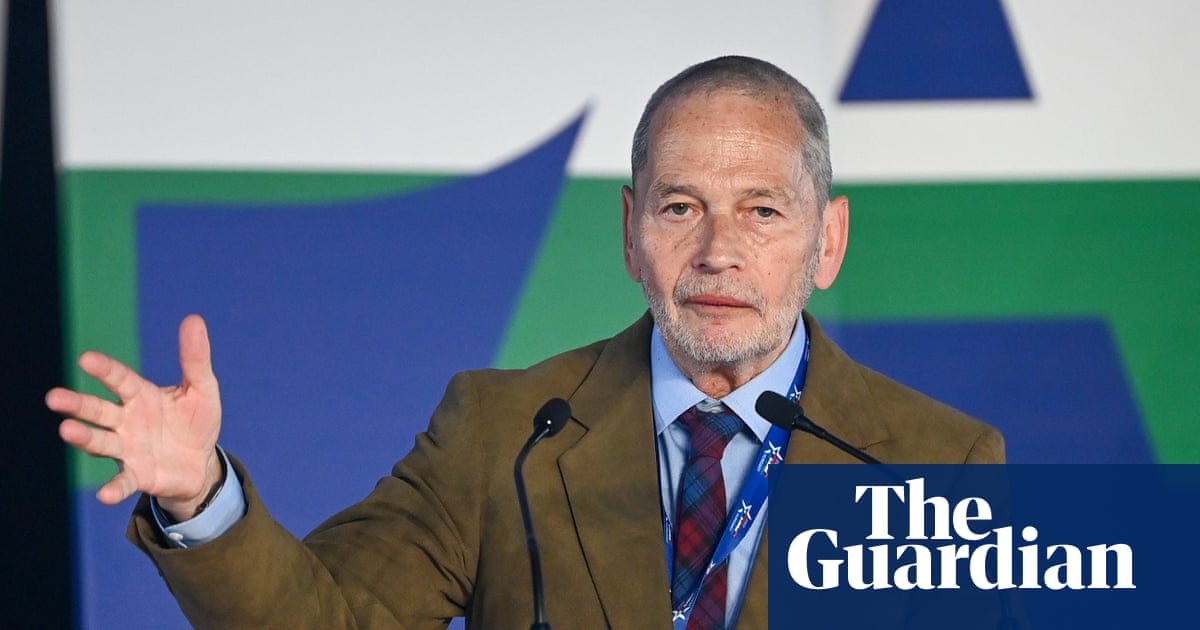
Albert Manifold is “seen as the architect of the company’s most recent turnaround”, points out Bloomberg columnist and energy expert Javier Blas on X, explaining why BP’s shares have dropped by over 5% since news of the chair’s removal broke.
BP says a succession process for a permanent chair to replace Albert Manifold will now start.
In the meantime, it has appointed senior independent director Ian Tyler as interim chair with immediate effect.
Tyler says:
“The Board and leadership team have deep conviction in the strategic direction we have laid out, and the company is moving at pace to deliver it. bp is building a track record of strong underlying operational performance and a tight focus on financial discipline - all in the pursuit of growing shareholder value and returns.
Tyler also pays credit to BP’s new CEO, Meg O’Neill, who joined the company at the start of April, saying:
“The Board has been very impressed with Meg O’Neill since she joined as CEO. She has extensive industry and operational experience and real clarity about the direction and opportunity for the business. She has already taken bold action to simplify and strengthen the organization such as announcing the move to a clearly defined upstream/downstream model. Under her leadership we are building a simpler, stronger, more valuable bp.”
BP shares slide
BP’s share price has been hit by the shock removal of chairman Albert Manifold.
They were briefly down 9%, forcing a short halt to trading – and are now down over 5%.
BP chairman removed over 'serious concerns' related to 'important governance standards, oversight and conduct'
Newsflash: The board of oil giant BP has removed chairman Albert Manifold from his role with immediate effect.
Announcing the shock move to the City, BP says “serious concerns” have been raised related to “important governance standards, oversight and conduct.”
Amanda Blanc, senior independent director at BP, told shareholders:
“Albert has helped bring a welcome focus and pace to bp’s transformation. However, the board has been surprised and disappointed to learn of governance oversight and conduct issues it deems unacceptable and has taken decisive action.”
Manifold was only appointed as BP’s chair less than a year ago, in July 2025, as the energy giant cut back on green spending and returns its focus to oil and gas.
Manifold had previously run building material company CRH.
He also suffered a shareholder rebellion last week, when about 18% of shareholders voted against his re-election as chair.
UK petrol prices hit Iran war high
UK petrol prices have hit their highest level since the Middle East conflict started.
The average price of petrol is now at an Iran war high of 159.43p, the RAC has reported.
That’s the highest level since December 2022, and 26.6p more expensive than it was on 28 February, the day the conflict began.
That’s despite oil having slipped back in recent weeks. Back on 30 April Brent crude traded above $126 a barrel – it’s now slightly below $100 in somewhat volatile trading today.
It means a 55-litre tank of petrol for an average family size car now costs £87.69 which is £14.63 more expensive than it was on 28 February.
Diesel prices, though, are below their recent peak set in mid-April. A litre of diesel costs, on average, 184.96p today, a fall of 6.58p since it peaked on 15 April.
This is the first sime since 1 April that diesel has cost below 185p a litre, the RAC say.
Even so, filling a 55-litre tank of diesel would now cost £101.73 – £23.42 more than it was at the start of the war.

The economic consequences of the spike in oil and gas prices since the Iran war started will be brought home to British households tomorrow.
Energy regulator Ofgem is due to set the latest price cap at 7am on Wednesday, dictating the maximum a supplier can charge for the July-September quarter.
That cap on typical dual-fuel costs is expected to climb by nearly 13% under the government’s energy price cap, which could add £209 a year to the cost for an average household.
Ahead of that announcement, British Gas has launched a new “Fix & Fall” tariff which allows customers to fix their energy prices for two years.
They are pledging that if the Ofgem price cap falls in a year’s time, rates will be lowered by up to £50 on the average dual fuel bill. More here.
New doubts about the prospects for a US-Iran peace deal mean UK gas prices haven’t fallen as much today as you might have hoped.
The month-ahead UK gas price is down 2.8% today at 115.15p per therm, its lowest in almost two weeks.
But that follows a bigger drop on European gas markets yesterday, when the benchmark month-ahead Dutch contract fell by 6.7%. It’s up over 4% today.
Oil back at $100 again
Back in the energy markets, the oil price has hit $100 a barrel again.
Brent crude has gained almost 4% today, wiping out much of yesterday’s fall which had pulled it below the $100 mark.
Oil picked up as traders remain anxious about the prospects of a US-Iran peace deal, after American forces launched overnight attacks on Iranian missile launch sites.
Iranian supreme leader Mojtaba Khamenei has now said on his Telegram channel that Gulf powers will no longer be a shield for US bases and the US will no longer have a safe haven in the region.
UK bond yields lowest since mid April.
British government borrowing costs are falling sharply this morning on hopes that US and Iranian negotiators will make progress reopening the strait of Hormuz.
UK bond prices are ralling in early trading, pushing down the yield (or interest rate) on the debt.
Investors will be calculating that a peace deal would lead to a recovery in oil and gas flows from the Middle East. That would push down inflation and removing some pressures to raise interest rates.
The UK bond market was closed yesterday, so traders are now able to respond to the news that Tehran and Washington are discussing a framework to end their three-month-old war.
Ten-year gilt yields fell as low as 4.824% at the start of trading, a drop of seven basis points (0.07 of a percentage point). That’s the lowest level since 21 April, before UK yields began rising in early May amid uncertainty over prime minister Keir Starmer’s future.
Longer-dated 30-year bond yields have dropped too – down as much as six basis points to 5.49%, the lowest since 17 April.
Ipek Ozkardeskaya, senior analyst at Swissquote, explains:
Rising oil prices have been fuelling inflation expectations across the globe, putting upward pressure on global yields — in some places to levels not seen since the subprime crisis, and in others to levels unseen for decades.
Melrose shares fall after California chemical leak
Shares in UK aerospace manufacturing group Melrose have tumbled around 5% in early trading after its factory in California suffered a chemical leak.
The leak, at a GKN Aerospace manufacturing facility in Garden Grove in Orange County, began last week when a large storage tank containing methyl methacrylate, a highly flammable industrial chemical used to make acrylic plastics, overheated and began venting vapors.
This prompted the Orange County Fire Authority to evacuate almost 50,000 people in the area while emergency services responded.
There were fears over the weekend that the tank would either explode, or rupture and spill thousands of gallons of chemicals, before a “pressure-relieving crack”was discovered that might reduce the danger.
Melrose told the City this morning that the mandatory evacuation area had been “significantly reduced” yesterday, explaining:
At 6pm local time on 25 May, the local authorities confirmed that no injuries, leaks or contamination have occurred. GKN is working closely with customers on operational recovery and supply plans.
The progress made over the last few days is testament to the continued skill and dedication of all the support teams and services involved.
FTSE 100 jumps
Britain’s stock market has opened higher as investors in the City embrace hopes for a peace deal to end the Iran war.
The London market, which was closed yesterday for the Bank Holiday, is rallying, lifting the FTSE 100 share index by 65 points or 0.63% to 10,531 points.
Airlines group IAG (+3.3%), and jet engine maker Rolls-Royce (2.7%), are among the top risers, along with mining companies.
Italy antitrust authority investigating easyJet over baggage fees
Italy’s antitrust authority said on Tuesday it had opened an investigation into easyJet Airline Company Limited over alleged unfair business practices, Reuters reports.
The company’s website and app made bundled baggage and sports equipment check-in for round trips the default option, showing only the average service price even when customers only wanted it for one leg of their journey, the authority said in a statement.
The pound is slipping this morning, as investors fret about the prospect of a US-Iran peace deal.
Sterling is down a quarter of a cent against the US dollar at $1.3480, having yesterday jumped by three-quarters of a cent.
UK consumers likely to face higher prices ‘for many months to come’

Rob Davies
Higher prices could persist over the summer even if ceasefire talks between the US and Iran bear fruit, consumers have been warned, with economic shock waves likely to be felt “for many months to come”.
Disruption to global shipping, coupled with soaring prices for energy and raw materials, have driven up costs for UK companies, with the impact already filtering through to prices paid at the tills, according to fresh inflation figures.
Retailers have responded by launching promotions to tempt bargain hunters but businesses said it was getting harder to stave off price increases, and called on the government to go beyond existing measures to help alleviate the pressure.
Shop price inflation is already on the rise, according to figures from the British Retail Consortium (BRC).
Furniture and health and beauty products are among the items that have risen most in recent weeks, driving an increase in shop prices of 1.2% year on year in May. The rate was slightly above the three-month average of 1.1%.
Introduction: Oil rising back towards $100...
Good morning, and welcome to our rolling coverage of business, the financial markets and the world economy.
Global investors are clinging to hopes that a US-Iran peace deal could be close, but optimism could be waning after fresh US strikes in the Middle East.
Brent crude oil is creeping back towards the $100 a barrel mark, up 2.5% today at $98.57 a barrel, having dropped below that $100 mark yesterday for the first time in a fortnight.
US and Iranian negotiators are in Doha to discuss a potential end to the three-month war, after Donald Trump declared last weekend that a peace deal with Iran “has been largely negotiated”.
However, yesterday US forces attacked missile sites in southern Iran and boats trying to lay mines, which has created some doubts that a deal is genuinely close.
Jim Reid of Deutsche Bank suggests the US attacks were “a warning shot that the ceasefire is fragile”, explaining:
These actions were described as “defensive” and not an end to the ceasefire with Iran.
Net net, optimism is still elevated that an agreement can be made to end the war. We have been here before, of course, but it has felt for some time that the move towards peace has been three steps forward and one or two back.
There are encouraging moves in the government bond market too. The yields (or interest rates) on US debt have dropped today as prices rally, lifted by hopes that a peace deal will reopen the strait of Hormuz and ease the inflationary pressures hitting the world economy.
Wall Street, which was closed yesterday, is on track to open higher.
Markets have become more “risk-sensitive,” reports Daniela Hathorn, senior market analyst at Capital.com, who cautions:
Markets are still leaning optimistic, but the tolerance for negative headlines is shrinking. If negotiations stall further or the Strait disruption worsens, the reaction across oil, yields and equities could become much sharper than it has been over the past few weeks.
The agenda
-
11am BST: CBI distributive trades survey of UK retail for May
-
1.30pm BST: Chicago Fed index of US National Activity for April
-
2pm BST: S&P/Case-Shiller index of US house prices