.png) 1 month ago
50
1 month ago
50
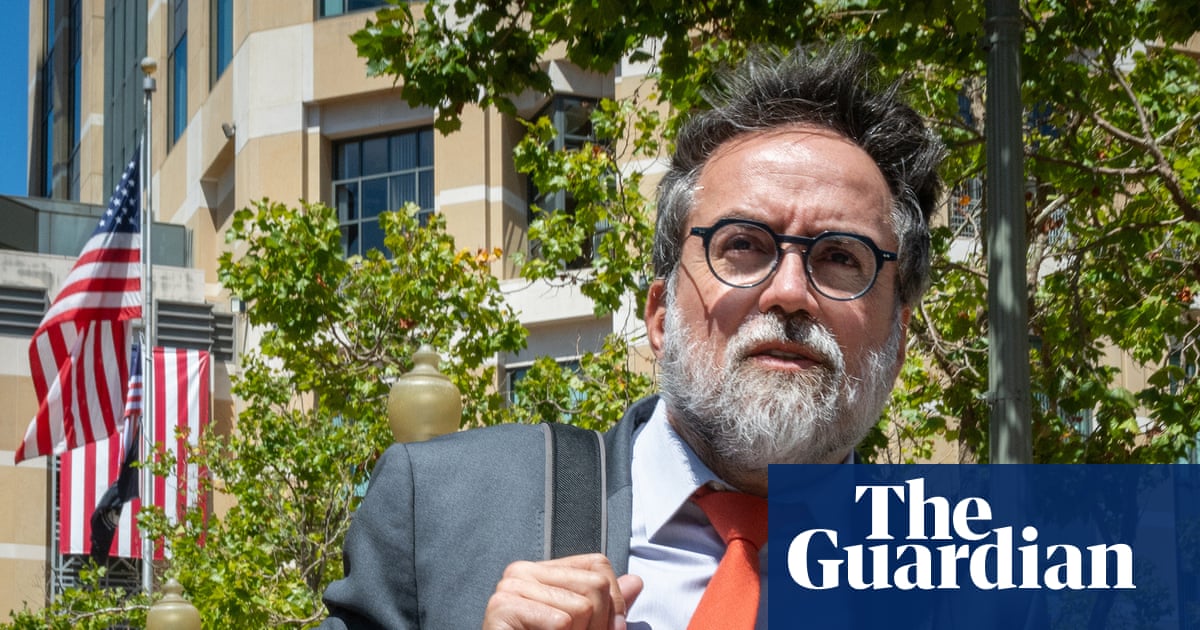
The award-winning investigative journalist David Hencke, who has died from liver cancer aged 79, had his byline on many of the most important scoops carried by the Guardian during his 33-year career on the paper.
An ebullient and unfailingly genial figure, he was one of those whose exposure of the cash-for-questions scandal in 1994 led to the downfall of the Tory ministers Neil Hamilton and Tim Smith, and in 1998 he was the first to publish the home loan scandal that caused the first of Peter Mandelson’s resignations as a minister.
Hencke was an equal opportunities investigator, motivated by the thrill of the chase and the exposure of scandal rather than the political effect his stories might have, though he was aware of that too. Norman Tebbit, hardly a fan of the Guardian, told him once: “You’re the sort of chap who looks for information by hunting through people’s bins. But I don’t mind because you’re not biased: you don’t care whose bins you’re looking through.”
Actually Hencke was not at all the sort to rifle through bins, but assiduously to scrutinise official documents and reports leaked to him by a wide variety of political contacts – the piles of paper on his desk constantly threatening to topple on to the heads of those sitting nearby (including myself for a period). They included Labour cabinet figures, but he also retained friendships with many Tories, including John Major.
His integrity meant he remained friends with them even as he occasionally exposed their wrongdoing. One such was Sir John Bourn, the government’s auditor general and an assiduous leaker, who was forced to resign after the exposure of his lavish travel expenses. “There’s always a grain of truth in a Hencke story,” the former Tory cabinet minister Tony Newton once ruefully acknowledged.
Together with the apparently guileless good humour and personal integrity, Hencke had a tunnel-visioned focus on stories and a certain excited naivety.
Colleagues in the Guardian office – and rivals from other papers – could tell when he was on to something by the conspiratorial grin. Sometimes he could miss the bigger picture, pursuing an issue that was interesting but not necessarily urgent or important. Nevertheless his output produced at least weekly scoops for many years and he was unintimidated by press officers, spin doctors or special advisers.
He could be exasperating, but his enthusiasm made him impossible not to like. As Peter Preston, the paper’s then editor, told the sceptical political correspondents in announcing he had appointed Hencke as Westminster correspondent with a ticket for the political lobby but a roving brief in 1986: “I know Hencke comes from another planet, but it is a friendly planet.”
David was born in Streatham, south London, the only child of Enid (nee Rose) and Charles Hencke. His father was a manufacturers’ agent and textile importer whose German Christian family had emigrated in the 19th century. His mother’s family was Jewish, originally from Lithuania, her father having been a builder in London as well as, incongruously, owning an ostrich farm in South Africa, to which the family moved briefly when David was a toddler before returning to London.
David failed his 11-plus examination and was among the first pupils to be educated at the all-boys Tulse Hill comprehensive, going on from there to be one of the first students at the newly opened Warwick University. It was there, studying history and politics, that he first dabbled in journalism, editing the subversive newspaper Giblet, set up to compete with the more official publication, Gibbet, named after the road on which the university was based. Within a term he was the editor.
In his second year he met his future wife, Margaret Langrick, daughter of Nottinghamshire miners, who was to have a formative influence, not only suggesting journalism as a future career – he became a trainee at the Northamptonshire Evening Telegraph group after graduation – but also moving him leftwards politically.
Hencke had been a Young Conservative, but found himself alienated after being thrown out of a political meeting he was covering and disciplined by his newspaper when Margaret accompanied him to a byelection meeting in Wellingborough and heckled the speaker, Enoch Powell. The Tory candidate, Peter Fry, who had called for him to be sacked by the Wellingborough News after the meeting, later became a contact when both of them ended up at Westminster. Characteristically Hencke’s first award-winning scoop revealed secret plans for Wellingborough’s ring road.
He moved to the Western Mail in Cardiff and then to London in 1973 to work for the Times Higher Education Supplement, where – another significant scoop – he leaked the prime minister James Callaghan’s major speech on education, which called for a national curriculum to raise school standards. It brought him to the attention of the Guardian and he was appointed a general reporter in September 1976 – one of the new editor Preston’s first editorial appointments.
Hencke was made planning correspondent in 1978 and social services correspondent in 1982 and had a reputation for obtaining exclusive stories by the time Preston decided on his Westminster brief to ginger up the coverage of government departments as well as parliament itself, an insider but with a wide-ranging outside remit beyond the daily political squabbles.
Hencke’s name on stories occasionally led to destabilisation attempts. One such was when he bumped into the housing minister John Stanley after a party and told him – drink having been taken – that the government’s divisive policies would turn Britain into a lawless South American republic where a minister’s children might be kidnapped. The excitable Stanley reported the matter to his boss, Michael Heseltine, who ordered an investigation into Hencke’s possible links with the IRA. Fortunately, he was able to reassure the anti-terror police shortly before they planned to batter down his front door in search of evidence.
In 1994, Hencke’s was one of the main bylines on the “cash-for-questions” scandal in which the Guardian exposed payments to Conservative MPs by Mohamed Al Fayed, the owner of Harrods – with his connivance – to ask parliamentary questions that might influence his business battle with the Lonhro conglomerate.
This led to the resignations of Smith and Hamilton and the collapse of the political consultancy run by the lobbyist Ian Greer, who had facilitated Fayed’s dealings. Hamilton and Greer were forced to abandon a libel action against the paper, leading to its front-page headline “A Liar and a Cheat”, which bore Hencke’s byline and that of his colleagues David Leigh and David Pallister. This was followed by the exposure of the cabinet minister Jonathan Aitken for his covert links with a Saudi arms dealer, which ultimately led to Aitken’s imprisonment for perjury.
In 1994 Hencke was named journalist of the year at the What the Papers Say awards and four years later won the scoop of the year award for his exposure of the £373,000 undisclosed loan given to Mandelson by his Treasury colleague Geoffrey Robinson to enable him to buy a house in Notting Hill, west London – the first of Mandelson’s forced resignations, but not the last.
Hencke collaborated on several books with the author Francis Beckett, including The Blairs and Their Court in 2004, Marching to the Fault Line, about the 1984-85 miners’ strike, also in 2004, and The Survivor: Tony Blair in Peace and War the following year.
His investigative journalism did not end with his retirement from the Guardian in 2009. He subsequently worked for Tribune magazine and the Exaro website.
In 2019 he was successfully sued by the former Liberal Democrat MP John Hemming over a defamatory article on the website. His last stories were filed the day he went into hospital earlier this month, and his last broadcast interview, conducted from a wheelchair, was a fortnight before his death.
He married Margaret in 1969 and nursed her devotedly for several years after she suffered a stroke, including taking her on a round-the-world cruise shortly before her death in 2025: which characteristically led him to report on inadequate provision for wheelchair passengers on cruise ships.
The couple had a daughter, Anne, who survives him, together with five grandchildren, Tegan, Leon, Ryan, Daryan and Atayna.