.png) 1 month ago
47
1 month ago
47
The football has taken over. Ultimately, that’s what always happens. Football is an incredibly resilient sport, the World Cup an incredibly resilient tournament. It has withstood authoritarian leaders and corruption scandals, the horrific exploitation of migrant workers and military dictatorships, and it looks as though it will survive sky-high ticket prices and immigration policies that make a mockery of Gianni Infantino’s claim that this is the most inclusive World Cup of all time.
This is not to say that those are not major issues. The situation with Iran has been unique, but the treatment of the team has been outrageous. That they could pass through the tournament unbeaten, eliminated only because of a last-gasp Austria goal against Algeria, is remarkable enough in itself, but they could surely have achieved far more had they not had to switch training camps, been allowed their full backroom staff and been able to travel to games without punitive restrictions.
The struggles of others to get visas has also soured the tournament, with reports that both the US and Canada rejected more than 80% of applications from certain countries. The World Cup is supposed to be for the world. Fans and journalists not being able to travel undermines that. Senegal’s official photographer couldn’t enter Canada. The Democratic Republic of the Congo’s (DRC) most recognisable fan, Michel Nkuka Mboladinga, has only been able to go to a game in Mexico. Hundreds of Scotland fans found their Estas de-authorised at the last minute.
All of that is bad, and is indicative of Fifa’s disregard for fans. It also sets a dangerous precedent. To ask whether host countries should be expected to overturn their immigration protocols for the World Cup is to ignore previous practice. Of course they should: that’s part of being a host of a global event. Sub-Saharan African journalists and fans found the process for the Cup of Nations in Morocco difficult; what now is the incentive to improve that for the next World Cup? Why shouldn’t Saudi Arabia in 2034 be extremely selective in whom they admit?
Decades of supporter culture have been overturned in the lust for quick profit. There is now no reward for loyalty, no acknowledgment that regular fans who create atmosphere are part of the experience being sold and that tickets should be priced accordingly. The cost of not just tickets but also transport and necessities such as water in stadiums is exploitative. Logic says there must at some point come a reckoning, but it does not seem likely to come any time soon.
Expansion has worked in the sense that there has been only limited dilution of quality. Cape Verde topped their qualifying group so they may have made it to a 32-team World Cup, but the DRC needed the playoffs, and both have been clear assets to this tournament. Even Curaçao got a battling point. But having best third-place teams go through is unsatisfactory, not only in reducing jeopardy – a problem magnified by the preference for head-to-head over goal-difference to separate sides level on points – but also leaving teams and their fans hanging around to see if they’ve been eliminated while those who have sealed qualification have had to wait to find out who they’ll be facing, affecting preparation. Further expansion to 64 teams seems only a matter of time and, while placing an additional burden on hosts, is probably preferable from the point of view of the competition.
But the football has been good, and that’s what will, ultimately, be remembered. There have been goals: a mean of 2.99 per game in the group stage. The tendency is for the average to drop in the knockouts but, were that to be maintained, it would make this the highest-scoring World Cup since 1958.
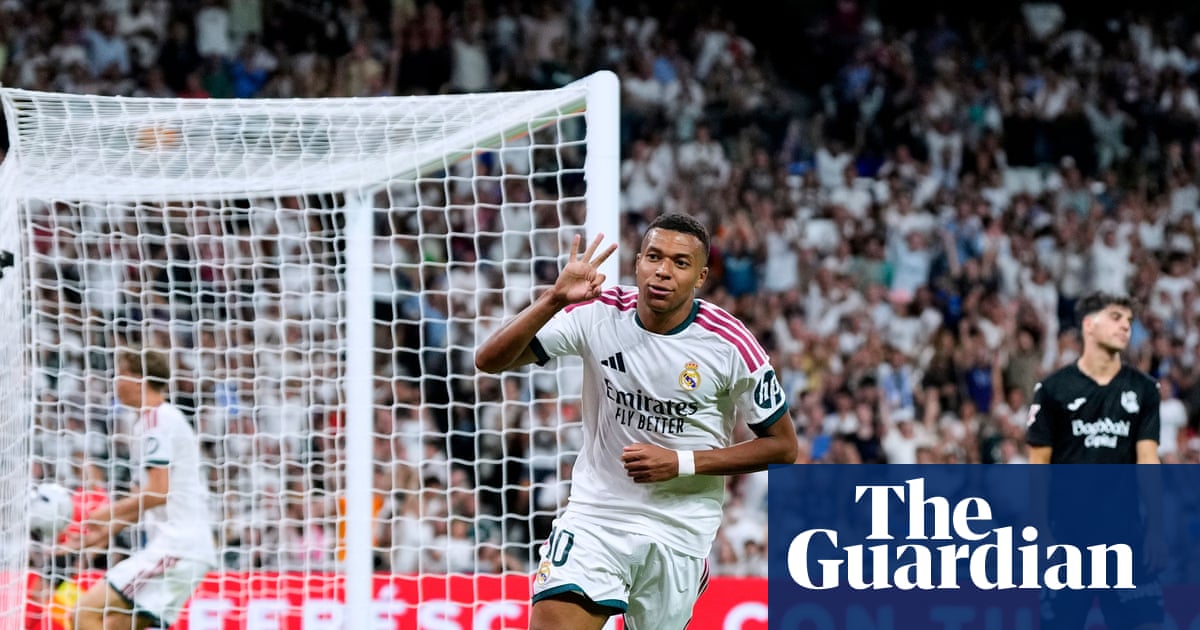
From a marketing point of view, big names have already delivered: five goals in the group stage for Lionel Messi and four each for Ousmane Dembélé, Erling Haaland, Kylian Mbappé and Vinícius Júnior. Although there have been notable draws for several sides, there have been very few actual shocks: Uruguay, Turkey and South Korea have underperformed, but none of their exits could really be termed a surprise. The result is a last 32 replete with intriguing ties, or at least the potential for intriguing ties in the last 16.
There has been drama: Ecuador’s win over Germany, the DRC’s victory against Uzbekistan, the baffling injury-time of Algeria v Austria. There have been the scenes of great fan mobilisation that were far less possible in Qatar: the Scots in Boston, the Colombians in Guadalajara, the Dutch in Kansas City.
after newsletter promotion
All of this is true and should be celebrated. But the World Cup habitually runs on two parallel tracks. The football is almost invariably engaging; even if the quality dips, there are always storylines. But the politics, the injustices, the problems are still there, even if the view of them is occluded.
-
This is an extract from Soccer Desk: World Cup edition, a newsletter from the Guardian US that will run regularly during the tournament. Subscribe for free here.