.png) 1 month ago
50
1 month ago
50
An overview of today's supreme court rulings
-
The supreme court ruled that Donald Trump’s firing of Federal Reserve governor Lisa Cook was unconstitutional, in a landmark ruling that limits a president’s authority over the central bank. In its opinion, the court said that Trump does not have the constitutional authority to fire a Fed governor without cause. The ruling is a major win for the central bank, which has spent the last year under attack from the White House.
-
But, in a separate case, the justices ruled that Trump can fire leaders of independent agencies or commissions, ending 90 years of court precedent that curbs executive power. That case centered on Rebecca Slaughter, whom Trump fired as Federal Trade Commission member in March last year over email, telling her that keeping her as a commissioner would be “inconsistent with [the] administration’s priorities”.
-
The court handed Trump another loss, refusing to hear his bid to overturn a $5m verdict in favor of E Jean Carroll in a case in which a jury found him liable for sexually abusing the former magazine columnist and then defaming her. The 2023 jury verdict and a $5m civil judgment remain in place. The high court declined to take up the case in a brief, unexplained order. There were no noted dissents.
-
The supreme court sided against national Republicans and the Trump administration to allow mail-in ballots that arrive after election day to be counted, upholding the law in more than a dozen states. The Republican National Committee had challenged a Mississippi state law allowing mailed ballots to be counted if they arrive within five business days of election day, so long as they were postmarked by election day. The court’s liberal justices pointed to federal laws that allow for grace periods, while noting that a ruling here could also implicate early voting, another common practice.
-
The court also refused to revive a $300m defamation lawsuit filed against CNN over its coverage of a prominent attorney’s remarks made while defending Trump during his 2020 impeachment. Alan Dershowitz said CNN aired only a portion of the comment made during his defense of the president, distorting his meaning to make him look like he’d “lost his mind”. The network said that multiple outlets had interpreted his remarks in a similar way, and Dershowitz couldn’t show CNN was trying to mischaracterize what he said. The court’s majority declined to take up the case in a brief, unexplained order.
-
And finally, the supreme court threw out a judicial decision involving a Virginia man’s challenge to a “geofence” warrant used by police to access cellphone location data near a crime scene leading to his conviction for armed robbery. The justices threw out a lower court’s ruling against defendant Okello Chatrie, who had argued he was subjected to an illegal search and that evidence in his case should be excluded. The court agreed that a search had occurred, but sent the case back to a lower court to conduct further analysis.
Key events
Senate minority leader Chuck Schumer has issued this statement condemning the supreme court ruling allowing Trump to fire leaders of independent agencies or commissions:
Trump’s MAGA Supreme Court just gave him a permission slip to turn independent federal agencies into members-only clubs for his golf buddies and cronies.
When Trump fired Rebecca Kelly Slaughter – my former Chief Counsel – from the FTC for no reason other than she was doing too good of a job protecting consumers, Trump sent an open invitation to bad actors to game the system. Instead of preserving independence intended to keep markets fair and protect consumers, Trump’s instead catering to fraudsters and monopolists. And the Supreme Court is giving him a green light to do it.
As Americans are crying out for relief from sky-high prices, we should be strengthening consumer protections—not tilting the playing field further for billionaires, monopolists, and special interests.
With its ruling in Trump v Slaughter, the supreme court has opened the door for Donald Trump and the presidents who succeed him to fire heads of agencies created by Congress to operate independently.
The non-profit Partnership for Public Service warns that could have far-reaching implications across the US government.
“Congress created bodies like the Federal Trade Commission, National Labor Relations Board and the US Consumer Product Safety Commission to function through deliberation: multi-member bodies representing different political parties and often appointed by different presidents so that no single political actor could dictate their decisions,” the group’s president and CEO Max Stier said in a statement.
“A consumer safety commission should pull a dangerous product from shelves because it is dangerous. A labor board should protect workers’ rights because the law requires it. Without the guarantee of independence, boards and commission members will now make decisions under the constant threat of politically motivated removal. That is compliance, not independence, and the American people will pay the price.”
Jamie Raskin, the top Democrat on the House judiciary committee, said the Slaughter decision took a “wrecking ball to a 90-year pillar of American law” and “invites presidential domination of the independent agencies Congress created to protect the people against corporate fraud, financial corruption, attacks on workers’ rights, and other abuses of concentrated economic and political power.”
The congressman went on to argue that the ruling was inconsistent with the court’s separate decision today preventing Trump from firing Federal Reserve governor Lisa Cook:
Central bank independence matters immensely to the American economy and to every family paying a mortgage, using a credit card or trying to keep up with prices. But Congress’s constitutional judgments about the necessity of institutional independence should matter just as much at the FTC, the Securities and Exchange Commission, the National Labor Relations Board, the Federal Communications Commission and the many other important independent agencies Congress has created to serve the interests of the American people.
Lisa Cook says Trump tried to fire her for refusal 'to bow to political pressure'
In a statement after the supreme court rejected Donald Trump’s attempt to fire her, Federal Reserve governor Lisa Cook accused the president of seeking to retaliate against her over her views on interest rates.
“This was never about mortgage documents signed years before I became a Federal Reserve governor,” Cook said, referring to the Trump administration’s rationale the she was removed from her post last year over allegations of mortgage fraud.
“It was an attempt to remove me on a manufactured pretext because I refused to bow to political pressure and continued to set interest rates based only on what would best serve the American people. That is the most fundamental obligation of a Federal Reserve governor.”
Trump has publicly called on the Fed to cut interest rates, but at its most recent meeting under the new chair Kevin Warsh, it held rates steady. Cook participated in that meeting, and the central bank said that the rate decision was unanimous.
“Today’s ruling affirms a principle that has underpinned sound economic stewardship for generations: that the Federal Reserve must make all its policy decisions guided by evidence and independent judgment, free from political interference. This bedrock principle has guided the Federal Reserve since its founding,” Cook added.
Democratic leaders hail supreme court ruling allowing late-arriving mail-in ballots to be counted
Democrats have applauded the supreme court’s ruling in Watson v Republican National Committee, in which the court found that ballots that arrive after election day can be counted, if they were mailed in time.
“The supreme court just upheld this bedrock American principle: if you cast your ballot on time, your vote will count,” Senate minority leader Chuck Schumer said in a statement.
“Participation in democracy should never be limited – not by your race, where you live, or how you vote.”
Ken Martin, the chair of the Democratic National Committee (DNC), said:
The RNC’s lawsuit attempted to rip away democratically enacted safeguards for millions, including U.S. service members. Trump and Republicans are attacking our elections and trying to rig the system in their favor because they know the American people are ready to reject their chaos and corruption this November. The DNC will remain vigilant and use every tool at our disposal to protect every eligible voter’s access to the ballot box.
Supreme court Slaughter ruling gives the president a 'power unknown even to the English Crown', writes Sotomayor in blistering dissent
As we’ve been reporting, the supreme court’s decision in Trump v. Slaughter upends almost 100 years of precedent limiting the ability of the president to fire leaders of independent agencies or commissions at will.
In a blistering dissenting opinion, Justice Sonia Sotomayor wrote that this “destabilizing” decision “reshapes the government … shifting tremendous power over broad swaths of American life in to the president’s hands”, and gives him “a power unknown even to the English Crown against which the Founders revolted”.
Here are some extracts from her dissent, in which she was joined by the court’s other liberal justices, Elena Kagan and Kentaji Brown Jackson.
Today, this Court undoes centuries of political practice and concludes that all three branches of Government have been acting in open defiance of the Constitution all this time. Its conclusion is wrong.
The text of the Constitution, along with its history, the longstanding practices of the political branches, and the precedents of this Court, make clear that Congress may limit the causes for which the heads of Commissions like the FTC can be removed by the President. In holding otherwise, the Court gives the President a power unknown even to the English Crown against which the Founders revolted, elevating him above his once coequal branches by transforming a duty to take care that the laws be faithfully executed into a license to act in defiance of those very laws.
The very existence of independent commissions like the FTC thus depended on (and Congress’s decision to create the agencies relied upon) the premise that these agencies would exist at some remove from partisan politics and enjoy the removal protections necessary to achieve that goal.
Today’s decision profoundly undermines this reliance and, as a result, undercuts one side of the balance that the political branches struck. Put simply, today the majority reshapes our Government. Dozens of independent commissions are now likely to become purely executive agencies, shifting tremendous power over broad swaths of American life into the President’s hands.
Seldom, if ever, has this Court worked such a profound bait and switch on a coequal branch: For more than 90 years, Congress believed, with this Court’s express approval, that it was allowed to create a workable Government, including by granting certain agencies tasked with certain responsibilities some independence from Presidential control. In rejecting that project, after decades of promising the political branches that structures like the FTC’s were permissible, the Court creates an Executive Branch that Congress never dreamed of establishing and that it now has little hope of ever reining in.
Not two years ago, I wrote of a ‘disconcerting trend’ in this Court’s cases: ‘When it comes to the separation of powers, this Court tells the American public and its coordinate branches that it knows best.’ Matters that for centuries had been left to the political branches have been subordinated, one after another, to this recent Court’s rigid theories of how Government should operate. The majority’s decision continuing that trend today is egregiously wrong. In this case, the Court takes one of the oldest debates in American history and decides that the six Justices in the majority, alone, ought to be the ones to settle it for all time. That decision does not just overrule precedent; it all but ignores that precedent exists. It does not just hamstring the political branches’ ability to respond to new challenges; it rewinds the clock nearly 150 years, holding that a common agency structure is, and always has been, forbidden. It is true that today’s decision does not eliminate the FTC or the many other agencies whose structures are implicated by overruling Humphrey’s. It is undeniable, however, that those agencies will be transformed in ways that those who created them never could have expected and actively sought to avoid, fundamentally recalibrating the balance of power in this country in the process.
Trump hails court decision allowing him to fire independent officials
Donald Trump is celebrating the win the supreme court handed him in allowing him to fire a Federal Trade commissioner – and strengthening the White House’s authority to staff elite jobs in independent agencies with political allies.
The president posted on Truth Social:
BIG WIN just moments ago at the Supreme Court, in the Slaughter Case, confirming Presidential Power in our Country to remove Executive Branch Officers and Agency Appointees, or Representatives, under Article II. This Decision was long sought by United States Presidents, dating all the way back to the 1930s. It is such an Honor to be the sitting President who won this Historic and Unprecedented Ruling, one of the most important ever given with respect to Presidential Powers.
An overview of today's supreme court rulings
-
The supreme court ruled that Donald Trump’s firing of Federal Reserve governor Lisa Cook was unconstitutional, in a landmark ruling that limits a president’s authority over the central bank. In its opinion, the court said that Trump does not have the constitutional authority to fire a Fed governor without cause. The ruling is a major win for the central bank, which has spent the last year under attack from the White House.
-
But, in a separate case, the justices ruled that Trump can fire leaders of independent agencies or commissions, ending 90 years of court precedent that curbs executive power. That case centered on Rebecca Slaughter, whom Trump fired as Federal Trade Commission member in March last year over email, telling her that keeping her as a commissioner would be “inconsistent with [the] administration’s priorities”.
-
The court handed Trump another loss, refusing to hear his bid to overturn a $5m verdict in favor of E Jean Carroll in a case in which a jury found him liable for sexually abusing the former magazine columnist and then defaming her. The 2023 jury verdict and a $5m civil judgment remain in place. The high court declined to take up the case in a brief, unexplained order. There were no noted dissents.
-
The supreme court sided against national Republicans and the Trump administration to allow mail-in ballots that arrive after election day to be counted, upholding the law in more than a dozen states. The Republican National Committee had challenged a Mississippi state law allowing mailed ballots to be counted if they arrive within five business days of election day, so long as they were postmarked by election day. The court’s liberal justices pointed to federal laws that allow for grace periods, while noting that a ruling here could also implicate early voting, another common practice.
-
The court also refused to revive a $300m defamation lawsuit filed against CNN over its coverage of a prominent attorney’s remarks made while defending Trump during his 2020 impeachment. Alan Dershowitz said CNN aired only a portion of the comment made during his defense of the president, distorting his meaning to make him look like he’d “lost his mind”. The network said that multiple outlets had interpreted his remarks in a similar way, and Dershowitz couldn’t show CNN was trying to mischaracterize what he said. The court’s majority declined to take up the case in a brief, unexplained order.
-
And finally, the supreme court threw out a judicial decision involving a Virginia man’s challenge to a “geofence” warrant used by police to access cellphone location data near a crime scene leading to his conviction for armed robbery. The justices threw out a lower court’s ruling against defendant Okello Chatrie, who had argued he was subjected to an illegal search and that evidence in his case should be excluded. The court agreed that a search had occurred, but sent the case back to a lower court to conduct further analysis.
Supreme court rules Trump can fire leaders of independent agencies
Michael Sainato
The supreme court has ruled that Donald Trump can fire leaders of independent agencies or commissions, ending 90 years of court precedent that curbs executive power.
The vote in the case of Trump v Slaughter is 6-3, with dissents from Justices Sonia Sotomayor, Ketanji Brown Jackson and Elena Kagan.
The case was focused on the White House’s March 2025 firing of Federal Trade Commission member Rebecca Slaughter. Trump fired Slaughter over email, telling her that keeping her as a commissioner would be “inconsistent with [the] administration’s priorities”.
Upon her termination, Slaughter sued the Trump administration, saying she was fired without cause, and a lower court ruled for her reinstatement.
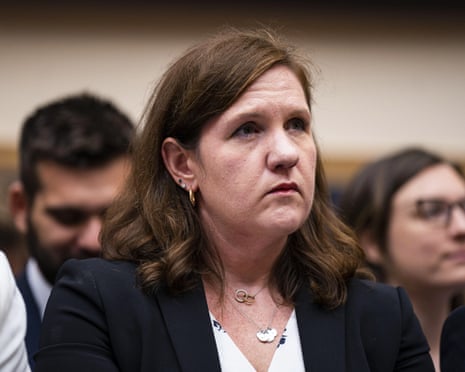
In challenging Slaughter’s suit, the White House argued the court should overturn Humphrey’s Executor v United States, a landmark ruling from 1935 where the supreme court ruled that the president unlawfully fired a member of the Federal Trade Commission (FTC), limiting the president’s power over independent agencies.
The FTC is tasked with enforcing consumer protection and anti-trust laws. The agency is structured with five bipartisan commissioners, and no more than three can come from the same party. Congress placed restrictions on the hiring and firing of commissioners in an effort to insulate the agency from partisan politics. The Trump administration asked the court of appeals to put the ruling on hold while it appealed, but was denied.
“The government is not likely to succeed on appeal because any ruling in its favor from this court would have to defy binding, on-point, and repeatedly preserved supreme court precedent,” two appeals judges wrote in the majority opinion.
The Trump administration then went to the supreme court, requesting a stay of the order while the government appeals. The supreme court voted to grant the stay of the order in September 2025, with three justices dissenting.
Overruling Humphrey’s executor, former government officials have warned, would undermine the independence of federal agencies.
“Eliminating these removal protections would jeopardize all facets of agency independence, as agency leaders would be reluctant to engage in regulatory or enforcement actions – or even day-to-day agency decision-making – without coordinating with the White House for fear of termination,” wrote Lauren McFerran, former National Labor Relations Board (NLRB) chair, and Celine McNicholas, a former official at the NLRB, in an Economic Policy Institute report from October 2025.
Supreme court rules Trump’s firing of Lisa Cook from Fed was unconstitutional

Lauren Aratani
The supreme court has ruled that Donald Trump’s firing of a Federal Reserve governor was unconstitutional, in a landmark ruling that limits a president’s authority over the central bank.
In its opinion, the court said that Trump does not have the constitutional authority to fire a Fed governor without cause.
The case was centered on Lisa Cook, a Biden appointee whose 14-year term on the Federal Reserve board of governors is scheduled to expire in 2038. Cook is the first Black woman to serve on the Fed’s board.
Last August, on social media, Trump abruptly fired Cook. The president claimed he had evidence that Cook committed mortgage fraud, an illegal practice where a homebuyer lists a second property as a primary residence to get a better mortgage rate. Cook denied the allegations and sued the Trump administration, saying it fired her without cause.
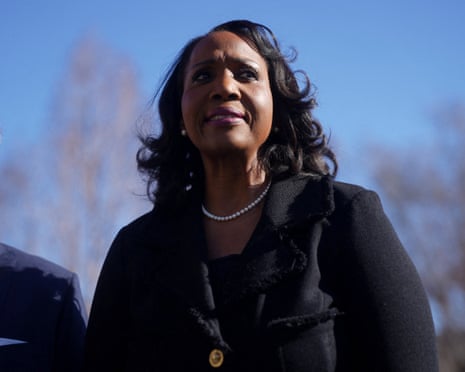
The justices’ protection over the Fed decision is a departure from how the court has handled Trump in his second term, allowing the president broad power to carry out his agenda without congressional approval.
The court allowed Trump to remove a Democratic-appointed member of the National Labor Relations Board (NLRB), leaving the powerful union board without a quorum needed to decide on labor disputes. The court also stripped lower district courts of their power to issue nationwide injunctions, which was often used to block Trump in his first administration, and stayed a lower court’s ruling that restricted Immigration and Custom Enforcement’s (ICE) from using race and ethnicity as the basis for reasonable suspicion in immigration enforcement.
But Trump has finally met his limit. The ruling is a major win for the central bank, which has spent the last year under attack from the White House.
Here’s Lauren’s full report:
Supreme court orders lower court to reconsider 'geofence' warrant case
The supreme court threw out a judicial decision involving a Virginia man’s challenge to a “geofence” warrant used by police to access cellphone location data near a crime scene leading to his conviction for armed robbery.
The justices, in a 6-3 decision, threw out a lower court’s ruling against defendant Okello Chatrie, who had argued he was subjected to an illegal search and that evidence in his case should be excluded. Chatrie conditionally pleaded guilty in 2022 to robbing a Midlothian, Virginia, credit union, while continuing to press his appeal.
The supreme court agreed that a search had occurred, but sent the case back to a lower court to conduct further analysis.
Court-approved geofence warrants compel third-party companies - such as Alphabet’s Google in the case before the justices - to search customer location data for mobile devices that were near the scene of a crime around the time it was committed. Google is not a party to the case.
Donald Trump’s administration defended the investigative method in the case.
With Reuters.
Supreme court upholds law to count mail-in ballots arriving after election day
Rachel Leingang
The supreme court sided against national Republicans and Donald Trump’s administration to allow mail-in ballots that arrive after election day to be counted, upholding the law in more than a dozen states.
The Republican National Committee (RNC) had challenged a Mississippi state law allowing mailed ballots to be counted if they arrive within five business days of election day, so long as they were postmarked by election day.
Fourteen states, Washington DC and three US territories have similar laws that allow for late-arriving ballots to be counted.
Some states, including Mississippi, changed their laws in 2020, during the Covid-19 pandemic. Mississippi, a red state, defended its ability to set its own procedures for elections against the challenge from the Republican party, which argued that the grace period after election day violates federal laws that set election day for the first Tuesday of November.
During oral arguments in Watson v Republican National Committee in March, the supreme court’s conservative justices laid out hypothetical situations to probe the limits of counting ballots after election day, and nodded to the potential for election fraud.
Several justices also questioned whether a voter could recall their ballot through the mail and change their vote – a hypothetical practice that Mississippi solicitor general Scott G Stewart said does not happen, claiming “nobody cited a single example in history”.
Liberal justices pointed to federal laws that allow for grace periods, while noting that a ruling here could also implicate early voting, another common practice.
“You’re basically saying there are two things that have to happen, and they have to happen on election day, and it’s the casting of the vote and the receipt of the vote,” Justice Elena Kagan told Paul D Clement, who is arguing on behalf of the Libertarian party of Mississippi.
The RNC lost its initial case in district court, then won in the fifth circuit court of appeals. In its brief to the supreme court, Mississippi argued that the appellate court’s decision was “wrong”.
A host of groups representing voting rights advocates, military voters and overseas voters filed to support Mississippi’s position in the case, saying that a grace period allows voters with unique burdens to have their ballots counted.
Here’s Rachel’s full report:
Supreme court won't revive Alan Dershowitz's $300m suit against CNN
The supreme court has also refused to revive a $300m defamation lawsuit filed against CNN over its coverage of a prominent attorney’s remarks made while defending Donald Trump during his 2020 impeachment.
The majority declined to take up the case in a brief, unexplained order. Justices Neil Gorsuch and Clarence Thomas dissented, calling on the court to reconsider the legal standards for public figures who claim defamation.
Alan Dershowitz said the news network aired only a portion of the comment made during his defense of the president, distorting his meaning to make him look like he’d “lost his mind”, according to court documents.
The network said that multiple outlets had interpreted his remarks in a similar way, and Dershowitz couldn’t show CNN was trying to mischaracterize what he said.
In his appeal, Dershowitz had urged the court to reconsider New York Times Co v Sullivan. The landmark first amendment case that made it harder for public figures to win libel lawsuits because it requires proof that an outlet knowingly published something false, or showed a reckless disregard for the truth.
Dershowitz, a retired Harvard Law School professor and legal commentator, was part of Trump’s defense team during his impeachment trial over allegations that Trump wanted political favors from Ukraine in return for US military aid. Trump was acquitted by the Senate.
Dershowitz responded to a question at one point by saying, “the only thing that would make a quid pro quo unlawful is if the quo were somehow illegal.” Providing arms to Ukraine , he said, wasn’t illegal.
He alleged that CNN only played what he said moments later:
Every public official that I know believes that his election is in the public interest and, mostly, they are right, your election is in the public interest, and if the president does something which he believes will help him get elected in the public interest, that cannot be the kind of quid pro quo that results in impeachment.
Dershowitz said the edit made it seem like he was arguing a president could avoid impeachment for illegal acts as long as he was doing it to get re-elected – a concept his original suit called “preposterous and foolish on its face”.
CNN countered by saying it did air his full remarks during its live coverage, and invited him on twice more to expand on his meaning.
Lower courts tossed out the suit, finding that Dershowitz hadn’t shown CNN acted with “actual malice” in its reporting, making it fall short of the standard set by New York Times Co v Sullivan.
With the Associated Press.
Supreme court rejects Trump’s push to toss $5m verdict in E Jean Carroll sexual abuse case
The supreme court has rejected a push by Donald Trump to throw out a jury’s finding that he sexually abused the writer E Jean Carroll at a New York City department store in the mid-1990s and later defamed her.
The high court declined to take up the case in a brief, unexplained order, as is typical. There were no noted dissents.
Trump’s lawyers had argued that allegations leading to the $5m verdict were propped up by “highly inflammatory” evidentiary rulings, including those that allowed the testimony of two other women who accused Trump of sexual abuse decades ago. Trump has denied all three women’s allegations.
Trump’s attorneys argued the judge broke federal evidence rules in the case. They framed it as a distraction from Trump’s unique duties as president, though the verdict came before his return to the White House.
“This mistreatment of a President cannot be allowed to stand,” attorney Justin D Smith wrote in court documents. Trump has since nominated Smith to be an appeals court judge.
A message from the Associated Press seeking comment was sent to Carroll’s attorneys after the supreme court decision.
Carroll’s lawyers had urged the justices to pass on the case. They argued that the women’s testimony was relevant because the allegations were similar and that Judge Lewis Kaplan’s decisions were in line with others around the country. “This question is not worthy of review,” wrote attorney Roberta Kaplan, who is not related to the judge.
Carroll, a longtime advice columnist and former TV talkshow host, testified at a 2023 trial that Trump turned a friendly encounter in spring 1996 into a violent attack in the dressing room at Bergdorf Goodman, a luxury retailer across the street from Trump Tower in Manhattan. The jury also found Trump liable for defaming Carroll when he denied her allegation in 2022.
A jury also awarded Carroll an additional $83.3m after a second defamation trial. Trump is also appealing that ruling, though it’s not yet before the supreme court.