.png) 3 hours ago
8
3 hours ago
8
Five years on from their excellent production of Jitney, Leeds Playhouse and Headlong return to August Wilson’s Pittsburgh cycle of plays with a revival of his 1985 classic Fences. It’s another drama of family, masculinity and thwarted ambitions, painting national issues of race and inequality on a domestic canvas.
Set in the 1950s, the focus is the African American Maxson family and its patriarch, Troy: a trash-collector, former convict and one-time baseball player robbed of professional success by the colour of his skin. Ray Fearon is horribly compelling as this tragic figure, a man made monstrous by circumstance. His anger at the world seems to radiate across his wide shoulders, which he braces against the anticipated onslaught. Raised in hardship and denied his dreams, Troy rains this same harshness down on his two sons, not allowing the possibility of a better future for his offspring.
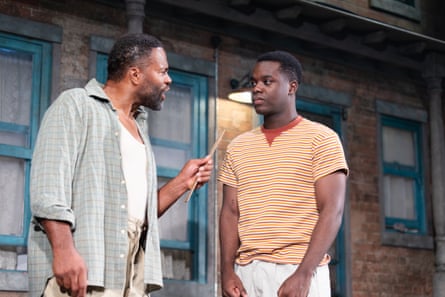
For Troy, responsibility towards his flesh and blood is a matter of providing food and shelter, absent of any affection or encouragement. Over the course of the play we see the effect of this on his sons: grownup musician Lyons (Michael Ahomka-Lindsay) and high school football player Cory (Josh Tedeku), who visibly hardens as his father sabotages his chance of a college scholarship. Similarly ill-treated is Madeline Appiah’s heartbreaking Rose, the loyal wife whose own dreams have to be squashed down in service of her family.
Daniel Bailey’s dynamic production pulses with the jazz played by Lyons, weaving music around the taut scenes. These eruptions of joy and expression are what Troy’s impoverished worldview lacks. A similar emptiness is suggested by Lily Arnold’s set, which revolves to reveal the shell-like interior behind the naturalistic veneer of the Maxsons’ home. Bailey also reminds us that this is a fiction, with house lights remaining up for a beat at the start of each half and actors occasionally stepping in and out of the dramatic frame.
The overall effect is a striking blend of gritty realism and playful theatricality – an apt stage metaphor for Wilson’s story of brutality and injustice shot through with fleeting moments of possibility.