.png) 2 hours ago
4
2 hours ago
4
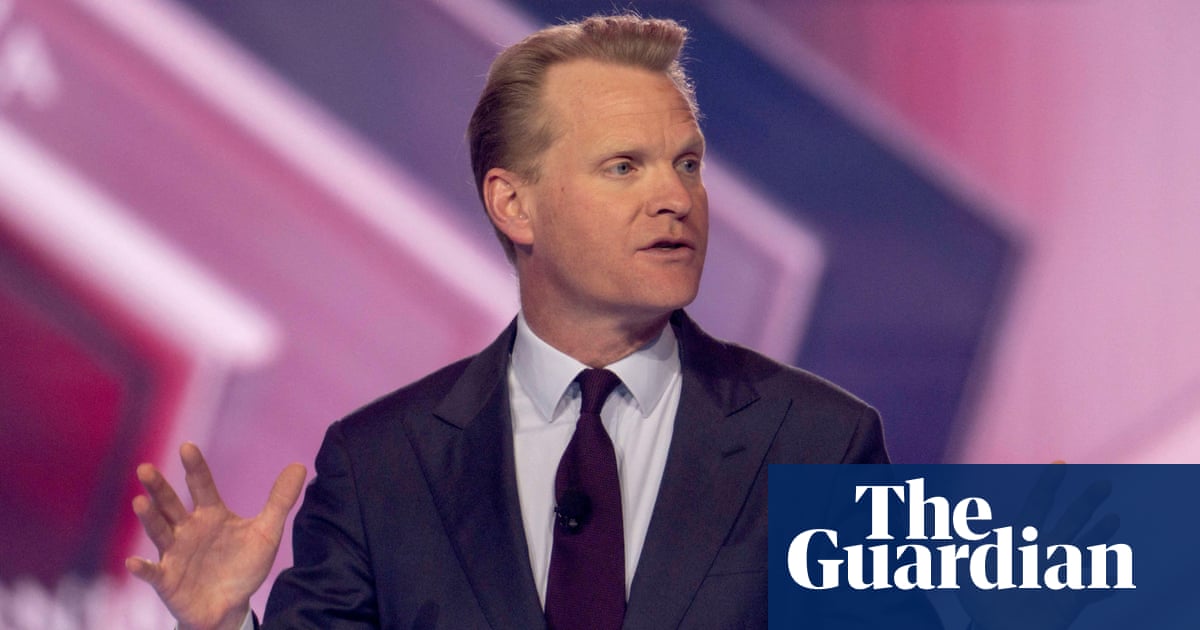
Mark Carney has welcomed the goal of Canada becoming the EU’s first associate member, calling for “deep cooperation” between Europe and his country to secure their sovereignty, after Donald Trump derided the idea as “laughable.”
In an address to the European parliament in Strasbourg, Carney said polling showed that an overwhelming majority of Canadians supported much closer ties with Europe.
“Canada and Europe should secure our strategic autonomy through deep cooperation in the full range of strategic capabilities,” he said on Thursday, listing sectors including critical minerals, energy security and AI.
The European Commission president, Ursula von der Leyen, had on Wednesday invited Canada to become the EU’s first ever associate member in a speech in which she declared she wanted to bring the bilateral relationship “to the highest level possible”. A few hours later, Trump threatened “very serious tariffs” on Europe if the plan went ahead.
The EU and Canada, which already have a web of bilateral trade and sectoral agreements, have sought to move closer in recent months in the face of Trump’s trade tariffs and relentless belligerent rhetoric.
Carney received a standing ovation from MEPs in Strasbourg, who waited to shake his hand and get a selfie with the Canadian leader. European lawmakers from pro-EU mainstream parties have already praised Carney’s January speech in Davos, in which he called for middle powers to work together to preserve their sovereignty in a world of great power rivalry where the strong accept no constraints.
Carney reprised the theme in Strasbourg, saying: “Canada and Europe are each strong. Europe and Canada are stronger together … The objective is not self-sufficiency, it’s collective resilience.”
He went on to say: “I am not proposing a third bloc in order to become a great-power rival, only with better manners,” saying an EU-Canada alliance would be a “beacon for other democracies”.
after newsletter promotion
In a speech frequently interrupted by rounds of applause, Carney detailed his plans for the future relationship, saying the two sides could cooperate on critical minerals, defence industrial capacity, AI and computing, energy security, space and payments. He also called for “seamless digital trade in non-agricultural goods and a wide range of services”.
He proposed a youth exchange programme that would enable young people to work, study and live in both jurisdictions, as well as Canadian membership of the Erasmus+ scheme, the EU’s education, training and sport programme.
No country has ever been offered associate membership before, a category that does not exist in the EU’s treaties. The German chancellor, Friedrich Merz, floated the idea of associate membership for Ukraine as an interim step to joining the bloc earlier this year, but the idea was shot down by other member states.
EU member states support the idea of closer ties with Canada, but some have reacted coolly to the name “associate membership”.
Asked by a Bloomberg reporter about the concept he preferred, Carney said: “The precise nomenclature for Europe is a question for Europe,” adding that leaders and lawmakers involved “take the view [that] what matters is the substance”.
He also said Canada was “not in a position, nor seeking to become, a full member of the European Union” and that the Canadian parliament would debate and vote on the future relationship.
Speaking before Carney’s address, Trump warned that if the EU moved forward with the plan, Washington could impose “very serious tariffs or stop trading with Europe”. He added: “If it’s a good intention, that’s fine. If it’s a bad intention, we’ll put very heavy tariffs on Europe.”
Responding to Trump’s overnight comments, Carney said the deepening of the EU-Canada relationship was “a positive initiative” and “not a reaction to something else”.