.png) 3 months ago
51
3 months ago
51
November 2026 will mark the 75th anniversary of the world’s first commercial job run on a stored program computer. On 29 November 1951, the Bakery Valuations job calculated the costs, earnings and margins of the baked goods produced by J Lyons & Co, which was then the UK’s largest catering firm and the first business in the world to use a computer to support its operations.
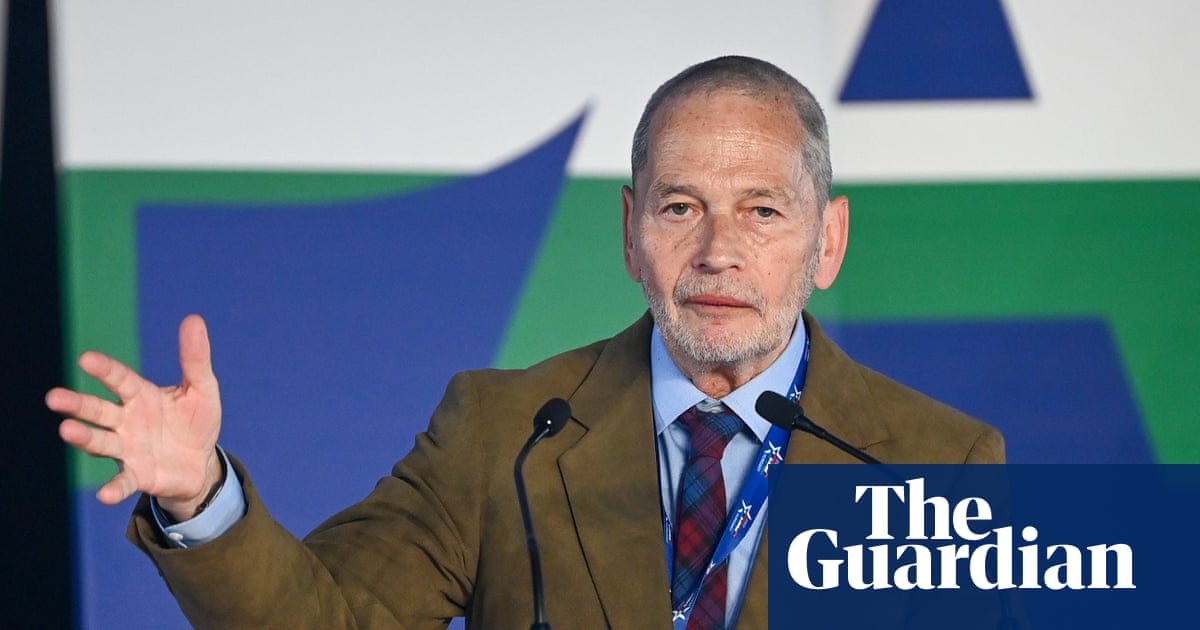
Lyons recruited a programming team to work on the Lyons Electronic Office – Leo – and in 1953 Frank Land was among the new cohort. His pioneering role led both to his founding of the academic study of information systems and to a passionate commitment to preserving Leo’s heritage.
Land, who has died aged 97, helped to implement the systems approach taken by the Lyons manager David Caminer to automating payroll, stock control and distribution to the company’s 250 high-street tea shops.
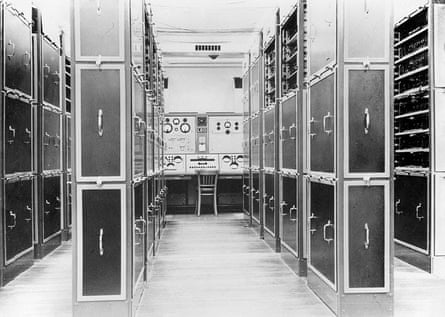
Leo I was an intrinsically unreliable machine with thermionic valves for processors and mercury delay lines for storage. Programmed using punched cards or paper tape, it took up a large room. Yet, as one of the few computers operating in the early 1950s, it quickly had outside customers queueing up to use it.
One of Land’s first jobs was to program Leo to calculate tax tables for the Inland Revenue (now HMRC) as soon as the chancellor of the exchequer’s budget speech had been delivered. For Lyons, Land wrote a suite of linked programs to encapsulate the blending of Red Label and Green Label tea. “There was a buzz,” he told the British Library’s National Life Stories in 2010. “There was not a single day when you didn’t do something which had never been done before.”
In 1954 Lyons set up Leo Computers Ltd to manufacture computers for sale. Land became the company’s senior consultant, analysing the needs of potential clients and custom-designing suites of programs. “Our role was still to understand and interpret the needs of users,” Land wrote, “but the object was to sell Leo computers.”
Leo’s “user-driven” approach could not survive in an increasingly competitive market. After the company went through a series of mergers, Land “felt the need to think more clearly about the way computers should be used”, and so in 1967 he accepted a research fellowship at the London School of Economics, soon afterwards becoming the UK’s first professor of information systems.
At the LSE he developed postgraduate courses that sought to integrate knowledge of the technical capacities of computers with a deeper understanding of the needs of business, a key feature of the Leo legacy.
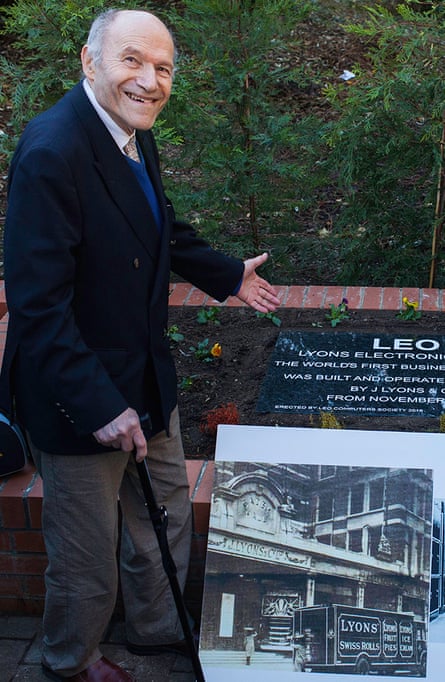
Land was born into a Jewish family in Berlin, one of the identical twin sons of Louis Landsberger, who ran a motor accessories firm, and Zofia (nee Weinberger), an artist. They fled to the UK in 1939, after all their property was confiscated by the Nazi regime. In 1940 Louis was interned as an alien on the Isle of Man for almost a year. Zofia, known as Soscha, supported the family through making handicrafts until Louis was able to start a new business in London after the second world war. Frank and his brother, Ralph, attended Willesden county grammar school in north-west London, and both went on to study economics at the LSE, where a careers adviser suggested they change their surname to the less German-sounding Land.
The twins joined Lyons as clerks in the statistical office before Frank moved to the Leo programming team, having survived a gruelling week-long “computer appreciation course”. He credited the mathematical strengths of his wife, Ailsa (nee Dicken), a fellow LSE graduate, whom he had married in 1953, with helping him get through the nightly homework.
After his formal retirement in 1998, Land continued to write and lecture as an emeritus professor. In 1996 he had co-edited the book User Driven Innovation, with chapters on the Leo story by former staff and customers. He was an active member and trustee of the Leo Computers Society, bringing the story into the public eye at the time of the 50th anniversary of Bakery Valuations in 2001 through his animated and cogent video interviews.
He created and regularly updated Leopedia, a catalogue of references and holdings related to Leo, now hosted by the Centre for Computing History in Cambridge. In 2019 he was appointed OBE.
Land pursued a regular fitness regime to the end of his days, and with Ralph did a tandem parachute jump at the age of 82, raising £14,000 for cancer research. He enjoyed it so much he did it again for his 60th wedding anniversary two years later.
Acutely interested in world events, he joined the Labour party in 1950 and remained a member for the rest of his life. In 2019, on behalf of Jewish Voice for Labour (now Jewish Voice for Liberation), he stated that he had never experienced antisemitism in the party, and deplored the oppression of Palestinians by the Israeli government.
He was discussing a Leopedia entry with Hilary Caminer, David Caminer’s daughter and the former secretary of the Leo Computers Society, only days before his death in hospital from an infection.
Ailsa, who rose to be a professor at the LSE, died in 2021. Land is survived by their three children, Frances, Richard and Margi, seven grandchildren and four great-grandchildren, and by Ralph.