.png) 3 months ago
32
3 months ago
32
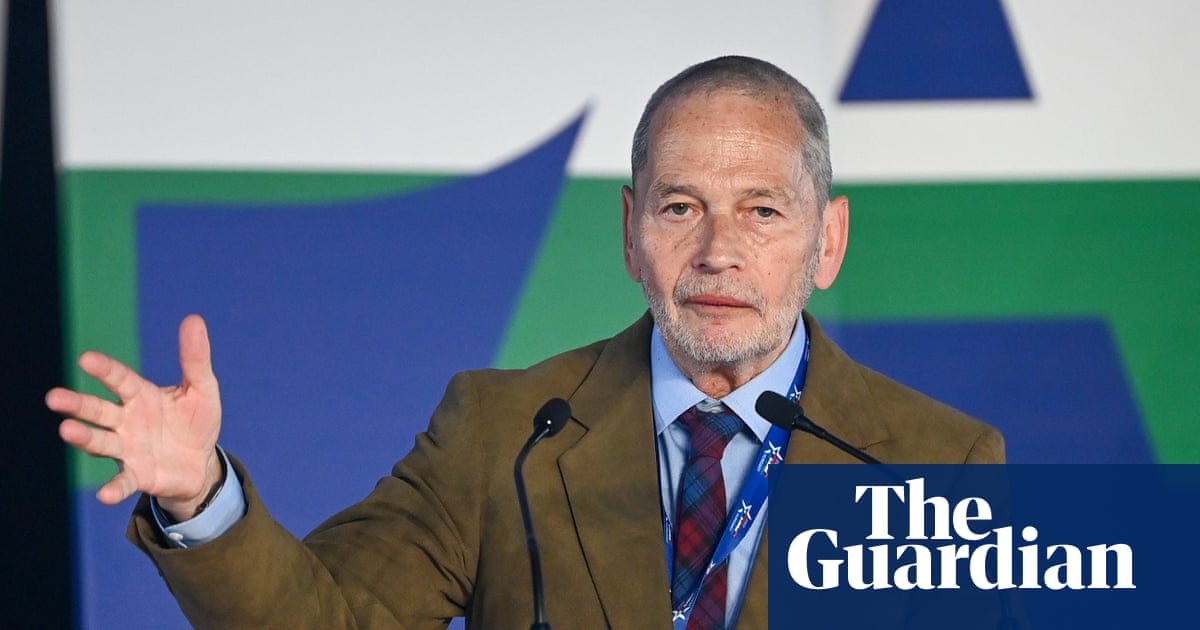
When Tori Dunlap writes a letter or email to a heterosexual couple, she puts the woman’s name first in the greeting. When her good friend got married, Dunlap waited until the name-change documents were officially signed to update her surname in her phone contact. These tiny rebellions are not activism. They are “microfeminisms”, or what Dunlap, 31, describes as “little actions for women’s equality, as opposed to going to a protest or donating to a cause you believe in”.
Dunlap, a Seattle-based author and podcast host who focuses on promoting women’s financial literacy, posted on TikTok last year asking her 2.4 million followers: “Tell me your most unhinged way that you practice microfeminism.” The comments section filled with niche – and not entirely serious – answers, such as starting every work presentation by saying “hello ladies and sons of ladies” and “immediately assuming men are talking about women’s sports instead of men’s”.
Women on TikTok have revived the trend in recent weeks, sharing their own microfeminisms. “I call the spiders MOMMY long legs,” one user wrote in the caption of her TikTok. “Only planting female trees in my yard,” said one commenter. “As a waitress, whenever a couple orders the same thing, I give the larger portion or better looking one to the female,” wrote another.
The examples go on: “I default to ‘she’ when I don’t know the gender of an animal.” Saying, “‘I like your costume’ when they’re wearing a jersey.” “Instead of ‘Thank God’, I say, ‘Thank Goddess’.” “Assume the drink with the fruit and the umbrella is the man’s order.”
The term “microfeminism” recalls the concept of “microaggressions”, or everyday instances of bias based on race, gender, sexual orientation or disability: the store manager who follows around Black customers thinking they will shoplift, or the parent telling their newly out child that it’s “just a phase”. Microfeminisms push back on what Andrea Press, a professor of sociology and media studies at the University of Virginia, calls “everyday sexism” by subverting expected gender roles. (She co-wrote a book on the topic in 2021.)
“Women constantly experience all these assumptions that are incredibly sexist but we just kind of accept: women will make dinner, or asking them ‘do you work?’ while you assume men always work,” Press said. “[Microfeminism] is evidence that women’s consciousness is somewhat raised in this current environment so that they notice everyday sexism that our culture basically incorporates into common sense and normal life.”
Under this deeply antifeminist presidential administration, US women have experienced the systemic erosion of reproductive and civil rights, and a wider cultural shift towards misogyny led by rightwing manosphere figures. Against this backdrop, discussion of microfeminism “turns into this really interesting microcosm of what it is to be a feminist today”, Dunlap said. “These small actions are ways that we can contribute to our own equity and equality.”
Jordan Palermo, a 24-year-old from Toronto, did not grow up with gendered assumptions; her mother worked while her father did most of the household chores and child rearing. But later, when she got a job in the hospitality industry, she realized that “a lot of people perform gender roles in their day-to-day life without realizing it”.
Palermo believes it’s important for women to call out microaggressions from men that might otherwise go unnoticed, because they speak to larger issues about equality and autonomy. She practices microfeminism herself when she refuses to move aside on the sidewalk for men, who often assume she will and sometimes plough right into her. “It’s about being able to take up space in public settings,” she said.
Brianna Wood, a 34-year-old therapist, content creator and mother of five, has experienced this with men, too, even while out walking with children and a stroller. “I don’t move out of the way, but that’s also really difficult to do, especially if you’re a smaller person,” she said.
Wood has posted TikToks about microfeminism that have been viewed over 1m times. She says this content “makes a certain type of man very pissed off”.
Digital spaces can be hostile to women, with misogynists weaponizing their hate and toxic masculinity to harass feminists in inboxes or comments sections. When a manosphere influencer says that men are the “real victims” of DEI and gender equality – a favorite talking point of theirs – those ideas trickle down to faceless acolytes. Wood saw some men in her comments calling microfeminism displays of sexism – towards men.
“I’m like, yes, that’s exactly the point!” Wood said. “If you flip the script, it looks very sexist to men. So if you’re doing it to women, it’s also sexist, too.”