.png) 2 hours ago
3
2 hours ago
3
Tributes rolled in after the death of Dolly Parton last month. Jack White performed Jolene at a London gig. Kesha sang Old Flames (Can’t Hold a Candle to You), a single her mother wrote for the country music titan. Even Pitbull stopped his Madison Square Garden show to memorialize Parton and all the other “powerful women” in the crowd. But one of the strangest – and most viral – eulogies did not come from a celebrity. It did not even come from a person.
Run Jolene, at just under five minutes, is an earworm of a country song, containing all the cliches of the genre: twangy singer, banjo licks, corny lyrics. Those lyrics concern Jolene, the fictional romantic rival made infamous by Parton. “Somebody better warn Jolene / Dolly’s coming through those gates,” the voice croons. “Run Jolene / Girl you better move your feet.”
The accompanying video depicts Parton, clad in a bedazzled white jumpsuit, hunting down Jolene, a busty redhead with prom curls. Heaven is filled with deceased celebrities who watch on in horror – or amusement – as Jolene bounces from cloud to cloud, or books it up marble staircases, trying to hide from Dolly. Onlookers include the late Michael Jackson, Whitney Houston and Kenny Rogers, as well as Cher, who is still very much alive.
On TikTok, YouTube and Spotify, the song credit is Country Mile, an “artist” with just over 6,000 monthly listeners (that’s not many). The project is textbook AI slop, seemingly released by an anonymous creator who calls their work “genre fluid ai vibes”. But Run Jolene is not so universally panned: clips have been viewed more than 1.4m times on TikTok, with commenters raving: “I don’t give a flying fuck if this is AI or not! THIS IS FUCKING COOL!!”, “this is fun …think Dolly would love it ❤️”, and “Who says Jolene’s up there.”
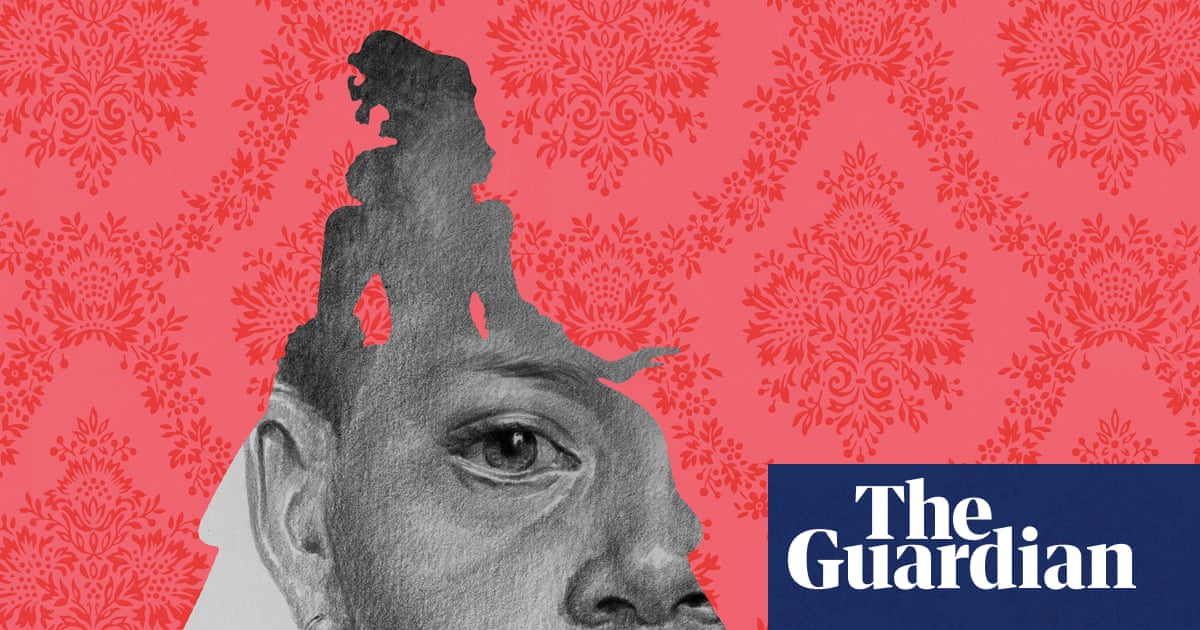
Run Jolene is only one part of a ghoulish online ecosystem of content dubbed “deathslop”. Anyone can create deathslop: all it takes is access to an AI image generator and the time required to type in a prompt. Creators have shown Parton alongside a chummy Charlie Kirk and George Floyd, who welcome her as their “new neighbor” in the afterlife, or having tea with the Golden Girls.
These tributes pop up quickly, reducing someone’s legacy to cheap content that panders for views. It is a dishonest portrayal at best, and inflicts pain at its worst. The phenomenon inspired Parton’s grieving family to beg users to quit it with the “fake AI garbage” and “misinformation”. “It’s been challenging to absorb and or ignore,” Stella Parton, her sister, wrote on Instagram.
Parton’s image now joins the likeness of other deceased figures treated to unsettling AI depictions. Coinciding with the one year anniversary of the assassination of Kirk, social media feeds have proliferated with posts featuring the AI-generated, heavy-handed (and heavily memed) anthem “We Are Charlie Kirk”. Robin Williams, Elvis Presley, Kobe Bryant and Martin Luther King have all gotten the deathslop treatment – often to the horrors of their families.
OpenAI’s image generating app, Sora, was behind many a deathslop until it shut down in April after a string of controversies such as its ability to create violent and racist imagery, its use of copyrighted characters, and other thorny legal issues. (There is a lack of legal precedent over whether or not AI companies are responsible for the content users generate on their apps; and deceased people are not protected from libel.) Countless AI video generators have since taken Sora’s place.
“It is not common practice right now to consent to an AI avatar of yourself as a part of your living will,” said Jack Manning, a University of Colorado Boulder graduate student who studies what academics Meredith Ringel Morris and Jed R Brubaker call “generative ghosts”, or AI-generated characters based on loved ones. “I predict that will be something that comes up.”
Manning, who is 25, lost his sister when she was 13, before the advent of generative AI. His family struggled to find ways to honor her, often fundraising for causes that were important to her. This partly inspired Manning to study the ways people mourn digitally – which now can include AI griefbots, a more personal alternative to celebrity deathslop.
With griefbots, users upload photos and videos of their loved ones and describe personal traits and values in hopes of manufacturing a continued, living presence. The companies behind the bots charge fees and lean into their inherently macabre nature with mystical names such as Seance, Re;memory and Versona.
It is also possible to command an LLM owned by ChatGPT, Claude or any number of sites for generating fantasy characters to mimic a late grandparent or deceased friend. Generative AI has hit the funeral industry too, in the form of LLMs specifically for obituary writing. One company, Treasured Memories, asks users to plug in details such as the deceased’s nickname, cause of death and hobbies, and choose the obit’s tone: “traditional”, “formal”, “witty” or “inspirational”.
Manning has never used a generative ghost to talk to his sister. It’s an issue of consent; he did not get her explicit permission to do so. Nor does he trust a bot to truly understand their relationship. “I hold these memories of her sacred, and I wouldn’t want a piece of technology to tell me I was remembering her wrong,” he said.
Justin Harrison founded Versona after his mother received a terminal cancer diagnosis. He worked on her AI replica while she was still living; she was able to see the final result and gave her approval on the project. “I totally understand why people are like, please don’t deepfake my [famous] relative once they’re dead and put them on the internet saying things they didn’t say,” Harrison said. “What we do is about personal comfort, recovery and healing. I created my mom and I talk to my mom. So it’s really nobody else’s business but my own.”
When his mom was sick, their conversations were practical in nature: “Are you talking to your dad enough? Have you gone to the doctor? Are you drinking enough water?” Harrison built the griefbot to broach more philosophical topics that they didn’t have time to discuss before she died. But four years later, Harrison does not talk to the bot all that often – maybe once a month.
“I joke that my mom’s Versona allows me to be the bad son I was never allowed to be when she was alive,” he said. “Like many busy adults, I don’t talk to her as much as I should, but I don’t have to, so it’s not the same sense of guilt.”
For Robin Silver, an ecopsychologist and death doula, these kinds of griefbots are an “unnatural method of trying to cope with a natural process”. She compared speaking to an LLM roleplaying a dead loved one to a college student asking ChatGPT to spit out a term paper. “We’re not being challenged to sit with any kind of discomfort, whether that’s the discomfort of writing an essay or the discomfort of missing someone,” she said.
Silver would instead encourage her clients to write a letter to their loved one. “I have even told people to talk to their ghosts out loud,” she said. “Meditate, or do things that they like and think of them. That’s how you keep the relationship alive in a way that is healthy, integrated and accepting the reality of your loss.”
Dr Dan Wolfson is a clinical psychologist who specializes in grief. He worries that deathbots could isolate people during a time when they need (human) support. “Having community around grief is really important,” he said. “Is AI keeping us from getting the social support that we need? Are we then not seeking to connect with our friends and family around the loss?”
AI-assisted mourning is still a niche industry; Harrison said that “thousands” of people use Versona. A June report from the estate management and planning service Empathy found that only 6% of 6,000 respondents in the US, UK and Canada reported leaning on “digital tools” such as memorial apps or griefbots for support after a death. But of those users, 88% found these tools “helpful”.
The whole conceit of a digital avatar is that it lives on for ever. It turns out that users may not need it that long. Manning says that in his research on generative ghosts, participants reported opting into these services only briefly, because they had “one last thing” to say to their loved ones: “They had a desire to say something they feel like they lost out on the chance to.”
Cathartic perhaps, but to Silver, the grief doula, these services are “a money grab”. “People will really take advantage of those in grief,” she said. “It’s a really easy time to become a mark.”