.png) 3 hours ago
5
3 hours ago
5
More than 1,000 women invested in the slave trade, challenging the conventional notion that they were passive beneficiaries and largely fought for its abolition.
Researchers found women bought, sold and brokered shares in the Royal African Company, South Sea Company, and other separate ventures, and used profits from the trafficking of enslaved Africans to secure financial independence and provide for their families.
By the time the RAC, which trafficked about 150,000 enslaved people, was dissolved in 1752, women made up about 10% of shareholders.
The Register of British Slave Traders, revealed exclusively in the Guardian, shows that women from across society played an active role in financing and sustaining the transatlantic trafficking of enslaved Africans.
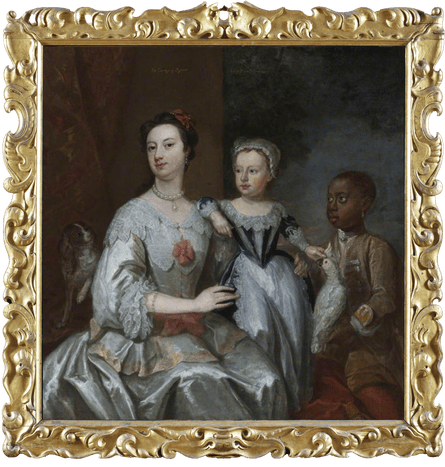
Investors ranged from queens and princesses to titled nobility, merchants, shopkeepers and cowherds.
The archives include letters in which women discuss profits from “African stock”, while company records show one investor, Helen Gladman, asking the RAC to transport a young African girl from Sherbro Island, off Sierra Leone, to England to serve in her household.
Researchers found women were involved “at almost every level” of the company’s activities. They acted as brokers, supplied goods including barrels and swords traded on the Atlantic African coast, managed company property and used their familial and social networks to strengthen the company’s finances and political influence.
Lila O’Leary Chambers, a lecturer at the University of Cambridge who researched women’s involvement for the register project, said: “This research really shows that this was not just a flash in the pan.
“Across the entirety of the Royal African Company and its various guises, there were women contributing financially and expecting a financial return from the slave trade.”
Women invested from the earliest years of enslavement, from Queen Elizabeth I’s backing in the 1560s to Lady Elizabeth Craven’s £1,000 loan financing a voyage to the Gambia through the Guinea Company. Some investors, unable to write their names, signed company records with a spidery “X”.
The research identifies 1,100 female investors across the histories of the RAC, the South Sea Company, and other separate ventures, though the true number is likely to have been higher. Of the 457 women whose marital status could be identified, almost half were widows and just over 42% were unmarried. Of the 7% who were married, most were aristocrats.
For many, these investments were crucial to gaining economic independence. “They were making the decision to invest, or they inherited shares and suddenly had this other asset they did not have before,” Chambers said.
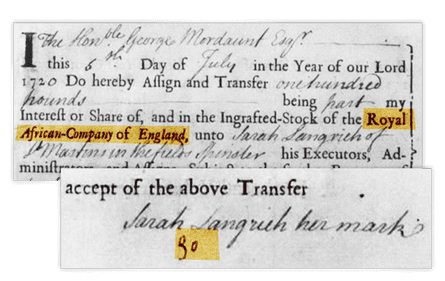
Some became active traders and traded shares for friends and family, she added. “It was not a career as they would see it, but we might think: this has become your job.”
Chambers said the research directly challenged the conventional narrative that “white women come in at the point of abolition, see the suffering of enslaved people, identify with that oppression, and then work either to reform or ultimately abolish the slave trade and slavery itself”.
Work to overturn that misconception builds on decades of scholarship by historians from the Caribbean and west Africa, including Eric Williams, Elsa Goveia and Walter Rodney. More recent public-facing projects, such as the Legacies of British Slavery archive compiled by historians at University College London, have helped bring this history to wider audiences. The archive revealed that women were among those connected to the ownership of enslaved people who received compensation after slavery was abolished in a large portion of the empire in 1833, she said. Enslaved people received nothing.
“But this tells a much longer story, and that helps us see past a simple narrative that positions women historically as actually less complicated than they were.”
For Chambers, the accumulation of more than 1,000 names was itself a “gut punch”, because of the lack of similar information about enslaved African women.
“Historians and activists have really struggled to locate the names of enslaved people, to restore biographies to them, and to give a sense of their world,” Chambers said.
“The comparative opportunity to do this research for the people who invested is just really striking.”
Olivette Otele, a distinguished professor of the legacies and memory of slavery at Soas University of London, said while the lack of comparable detail about enslaved African women remained startling, “the more we know about enslavers, the better chance we have to know about enslaved women from the archives, because sometimes through diaries you can find more details”.
She added that archives alone cannot tell the full history, and future research should look at other evidence to help recover the lives and agency of enslaved women. “These women were the transmitters and the holders of their cultures wherever they were taken from,” she said. “Through food, music, and dancing, it’s about resistance and agency, and they transmitted that.”
The research also found that because female investors seemingly did not vote or hold board positions, they often relied on informal efforts to influence and shape a company.
Meeting minutes show women acting as witnesses, running the meeting house, delivering the goods exchanged for African lives, petitioning for wages, passing information and, most importantly, lending money and buying and selling shares.
Under English law, women who were single or widowed were in control of their own property and could operate as legal persons, while married women could not.
“That becomes really important for the Royal African Company as it stutters between financial crises,” Chambers said. “Women provided this important well of capital they could go to.”
In the early 18th century, the RAC secretary, John Perry, wrote to female investors, including Lady Dorothy Thomas and Mrs Stacy, urging them to exchange company debts for shares and persuade friends and relatives to do the same.
Chambers said: “That is a financial project, but it is also a political one, because he knows that they might not hold official positions, but women were very influential with their family members and with the way companies were perceived.”
The company survived long enough to attract at least 60 new female investors between 1713 and 1719, followed by another 250 women during a revival in the early 1720s.
The research also found many investors understood the violence underpinning their wealth. Some widows petitioned the courts for “head money” – bonuses owed to husbands according to the number of enslaved people they had trafficked.
“They would go and ask: he was supposed to get head money for 28 people he trafficked. Where is it? I am his widow and I need that,” Chambers said.
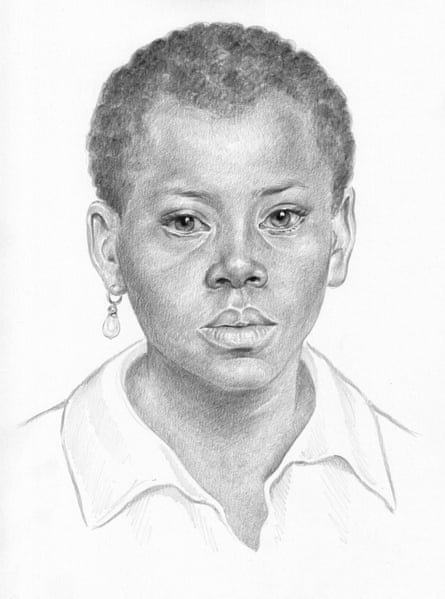
Chambers was also able to cross-reference some of the female investors with portraits of women with Black children who worked as their servants.
Women left RAC shares to their daughters to shore up their economic position, or used investment income to support widowed, disabled and vulnerable relatives.
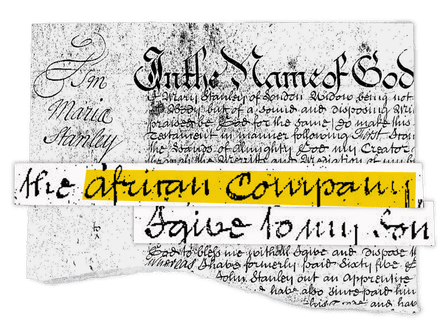
In one letter, Mary Stanley committed to leaving £300 RAC stock and its proceeds to her son, Peter, with the caveat that if her daughter’s husband failed to provide her with “the necessaries of life”, Peter would use the stock to support her.
For Chambers, the research revealed a stark contradiction between white British women using their investments to protect their own families while investing in the destruction of African families.
“You cannot separate the way you think about investment from these structures of kinship, intimacy and violence,” she said. “That profit comes from denying those same kinship ties to African people, and denying their ability to make sure their own children are safe.
“That is so important to this story in particular, but also to how slavery shapes capitalism in general.”
Some investors endowed schools, churches, charities and universities that still exist today. Lettice Cornwallis, for example, funded education and charities while discussing acquiring an African boy for her household in family correspondence.
“This is an everyday conversation happening in houses,” Chambers said. “You see it in correspondence. There are these newsy, gossipy letters about someone getting married, someone being sick, or having a new recipe for a cordial, and then: by the way, how are your South Sea Company or Royal African Company shares doing?”
Female investors would have encountered African people in Britain, both free and enslaved, the research found. Dame Hester Buckworth, who bought £1,000 of RAC stock, knew Robert Negar, who was described in her husband’s will as his “Black servant”.
Another investor, Sarah Cornish, is thought to have shared a household with an African man named Paupey, whose legal status in England remains unclear.
Chambers often returns to the story of Susanna Sedgewick Phipps, who had a financial connection to the RAC throughout her life. Her grandson, James Phipps, later worked at Cape Coast Castle and married an Afro-Dutch woman, Catherina. He acknowledged their children in his will, some of whom later lived in England. One of their descendants, James Townsend, would eventually become Britain’s first elected Black MP.
Other women stood out to Chambers for the seeming mundanity of their concerns. She points to Sarah Clerke, who wrote frustrated letters to her nephew because she wanted to go to Tunbridge Wells to visit the spa and needed money from her African stock to do so.