.png) 1 hour ago
4
1 hour ago
4
No 10 says government still committed to ensuring pensioners only just above tax threshold next year won't pay income tax
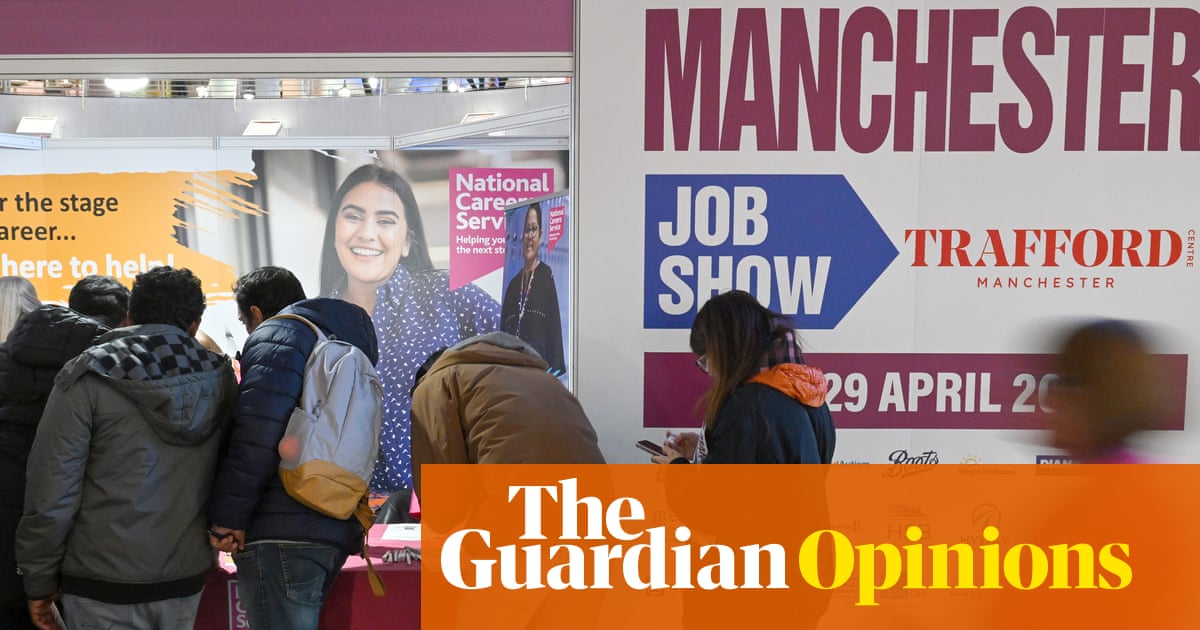
The wage growth figures out today mean that the state pension is likely to rise by 3.9% next year. That is because, under the triple lock, the state pensions rises in line with earnings, prices or 2.5%, whichever is higher. Today’s figures are the ones for the earnings benchmark, and it is unlikely that the relevant inflation figure will be higher when it comes out. So next year the state pension should rise in line with earnings – by 3.9%.
As a result, pensioners should get an increase of £488 next year, taking the annual payment over £13,000. That means they will be above the £12,570 tax-free personal allowance.
Rachel Reeves anticipated this when she was chancellor and, in her budget last year, which confirmed a freeze in the personal allowance, she said that anyone who receives the state pension but no other income will not have to pay income tax before 2030.
In interviews this morning, Jonathan Reynolds, the business secretary, repeatedly refused to confirm that the government would commit to this promise. He just said it was a matter for the chancellor.
At the Downing Street lobby briefing this morning, No 10 said the Reeves promise still held.
The PM’s spokesperson said:
In line with the commitment made at the budget in 2025, pensioners who only just the personal allowance will not have the administrative burden of paying small amounts of tax in this parliament.
The chancellor will set out further details on how that commitment will be delivered at the budget shortly.
And work is already underway to ensure anyone whose only income is the full new or basic state pension, without any increments, will not pay income tax in this parliament. We’ll set out further details in due course.
The spokesperson did not say how the Treasury would decide if pensioners “only just” passed the income tax threshold.
Asked if this pledge would only apply to people relying entirely on the state pension, or whether it might include pensioners with a small private pension income, the spokesperson just said further details would be issued in due course.
Key events
Nandy to raise online abuse of RNLI volunteers in talks with social media firms
Lisa Nandy, the culture secretary, has told RNLI volunteers she will raise online abuse and so-called doxxing in talks with social media platforms as she looks into taking further action to target it, the Press Association reports. PA says:
Nandy has written to RNLI staff and volunteers to express her support and tell them she was “shocked and saddened” to see them targeted during anti-migrant protests in Portsmouth and Dover earlier this month.
The head of the RNLI has said that recent protests generated “deliberate misinformation” about the charity after footage posted on social media showed volunteers labelled as “traitors” after helping a dinghy to safety in Portsmouth.
Nandy told the Commons last week she was “personally concerned” about doxxing, when a person’s private information is shared online without their consent, and had already held an initial discussion with some tech companies about the practice.
She will convene a roundtable this afternoon with social media companies to discuss harmful online content.
In the letter she wrote: “I was shocked and saddened to see RNLI staff and volunteers targeted during the unacceptable intimidation that took place during the weekend of 5-6 September in Portsmouth and Dover, both in-person and online.
“This behaviour is not acceptable and we will not tolerate it.
“I know that the police are working with you to ensure that your staff and volunteers are safe.
“They have my backing, and I am keen to explore with you what more we can do to protect staff and volunteers from targeting and abuse.”
A Labour MP has attacked government plans for a levy on overnight tourism, describing it as the “wrong tax at the worst time”.
Speaking in the Commons during an urgent question on the visitor levy, Emma Lewell warned that introducing the tax would place an extra burden on businesses in her South Shields, Tyne and Wear constituency, which could “tip my local industry over”.
She said:
South Shields tourism is largely made up of families from neighbouring regions who have saved hard all year round to spend a few days at the seaside – they will not come, even if the increase is marginal.
My constituents, family-run B&Bs, caravan parks, hotels and the wider hospitality industry have been unequivocal with me that they do not want this. It is the wrong tax at the worst time.
This extra burden on their business will tip my local industry over. Devolution only works when it reflects what communities want.
In response, Jim McMahon, the local government minister, said it would be up to local leaders to decide whether or not to impose the tax. The tax could provide revenue to improve communities, he said.
No 10 rejects claim new 'enhanced residency test' for donors just ploy to stop Reform UK getting its £72m
Downing Street has rejected claims that the government is toughening up its restrictions on parties getting donations from Britons who recently lived abroad as a direct response to the £72m being donated to Reform.
The money has come from Ben Delo and Christopher Harborne, who are both cryptocurrency billionaires who have been living overseas but who have returned to the UK.
At the morning lobby briefing, the PM’s spokesperson confirmed that, in addition to the restrictions already announced, tighter residency rules will be introduced.
But he insisted this was not related to the Reform UK donations – even though plans for the tighter residency rules have only been made public in recent days.
Confirming that the government will toughen the rules, the spokesperson said:
Eligibility to make donations over £100,000 will be based on donors being registered to vote as a resident in the UK, not overseas.
Under the overseas elector donation cap, this means that in order to make a donation, an individual must be registered to vote as a resident in the UK for a minimum residency period. That period is the remainder of the calendar year in which they moved, and then a further full calendar year.
We’re also looking to introduce an enhanced residency test for political donors. These enhanced rules will mean you also have to demonstrate an ongoing presence in the UK, details of which will be set out shortly.
And that’s because, as the business secretary set out this morning, we firmly believe it’s right that those contributing to politics in the UK reside in this country, and that foreign money shouldn’t be used to interfere in UK elections and politics.
The spokesperson did not say whether this “enhanced residency test” would be introduced through amendments to the representation of the people bill as it goes through the Lords, or whether it would come in separately.
Asked if the test would be based on people paying taxes in full in the UK, the spokesperson just said details would be set out shortly.
When it was put to the spokesperson that the government had not mentioned an enhanced residency test before the weekend, the spokesperson declined to say when the government started working on this aspect of the plan to block large donations from Britons living abroad.
When it was put to the spokesperson that this looked like a move just intended to stop Reform UK getting the £72m offered by Harborne and Delo, the spokesperson replied:
No, I completely reject that. As the business secretary set out [in interviews this morning], this isn’t about political parties. He said it’s reasonable that people who contribute vast sums to political parties in the UK should have a stake in the UK.
The spokesperson also dismissed claims that the legislation was unfair because it was retrospective (in the sense that it will apply from when the plan was announced, in March, not from when the bill actually becomes law, later this year or next year).
The spokesperson said:
Retrospective legislation isn’t a new concept. We’re clear on why these moves are required, and that was in order to make sure that people couldn’t pre-empt the legislation between the date the plans were announced and then coming into force here.
No 10 says government still committed to ensuring pensioners only just above tax threshold next year won't pay income tax
The wage growth figures out today mean that the state pension is likely to rise by 3.9% next year. That is because, under the triple lock, the state pensions rises in line with earnings, prices or 2.5%, whichever is higher. Today’s figures are the ones for the earnings benchmark, and it is unlikely that the relevant inflation figure will be higher when it comes out. So next year the state pension should rise in line with earnings – by 3.9%.
As a result, pensioners should get an increase of £488 next year, taking the annual payment over £13,000. That means they will be above the £12,570 tax-free personal allowance.
Rachel Reeves anticipated this when she was chancellor and, in her budget last year, which confirmed a freeze in the personal allowance, she said that anyone who receives the state pension but no other income will not have to pay income tax before 2030.
In interviews this morning, Jonathan Reynolds, the business secretary, repeatedly refused to confirm that the government would commit to this promise. He just said it was a matter for the chancellor.
At the Downing Street lobby briefing this morning, No 10 said the Reeves promise still held.
The PM’s spokesperson said:
In line with the commitment made at the budget in 2025, pensioners who only just the personal allowance will not have the administrative burden of paying small amounts of tax in this parliament.
The chancellor will set out further details on how that commitment will be delivered at the budget shortly.
And work is already underway to ensure anyone whose only income is the full new or basic state pension, without any increments, will not pay income tax in this parliament. We’ll set out further details in due course.
The spokesperson did not say how the Treasury would decide if pensioners “only just” passed the income tax threshold.
Asked if this pledge would only apply to people relying entirely on the state pension, or whether it might include pensioners with a small private pension income, the spokesperson just said further details would be issued in due course.
DWP figures show claims for Pip disability benefit at record high
The number of people in England and Wales entitled to personal independence payments, known as Pip, has climbed to a record high, the Press Association reports. In its report on Department for Work and Pensions figures released today, PA says:
Pip is the main benefit paid to someone who has a long-term physical or mental health condition or disability, and is intended to help with everyday tasks and extra living costs.
The figures come ahead of the publication later this autumn of a government-commissioned review, led by Stephen Timms, into the costs and operation of the disability benefits system.
A total of 4.09 million people were entitled to claim Pip as of July 31 2026, according to data published today by DWP.
This is up from 3.83 million a year earlier – a rise of 262,045, or 7%.
The number of claimants has roughly doubled since comparable figures began in January 2019, when the total stood at 2.05 million.
Of the 4.09 million claimants, 3.4 million (83%) are of working age and 690,000 (17%) are state pension age.
People aged 50 and over account for more than half of those entitled to claim Pip, at 55% of the total, while 30-49 year-olds make up nearly 29% and 16-29 year-olds almost 17%.
Spending on Pip stood at £16.3 billion in 2019-20, when adjusted for inflation to today’s prices, and had increased to £27.3 billion by 2024-25, DWP figures show.
It is currently forecast to rise to £41.5 billion by 2030-31.
The DWP has said the Timms review will ensure Pip is “fit and fair for the future”.
Of the 4.09 million Pip claimants at the end of July, 1.60 million were listed as having psychiatric disorders, or 39% – the highest proportion for any type of disability.
Some 268,965 claimants were classed as having autistic spectrum disorders, more than three times the 79,395 in January 2019 when data began, according to Press Association analysis.
A further 442,666 claimants had mixed anxiety and depressive disorders, up from 171,833 in January 2019, while 106,087 had the hyperkinetic disorders ADHD or ADD, up from 23,741.
The second most common type of disability among claimants was general musculoskeletal diseases, which applied to 764,305 people in July this year, or 19% of the total.
Just over a third (35.8%) of new Pip claims in July were granted, while 61.4% were disallowed and 2.8% were withdrawn.
The grant rate for new claims has been on a downward trend for the past two years, having stood at 41.1% in July 2025 and 46.4% in July 2024.
This chart, from the DWP report, highlights the trend.
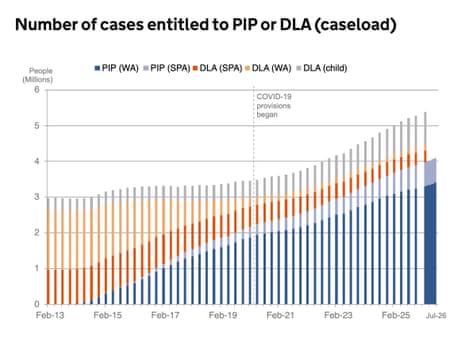
The chart implies there has been a sudden drop in claims recently.
But that is because it shows figures for claims for Pip and DLA, a seperate disability benefit. Pip is the new benefit replacing DLA and over time people are migrating from DLA to Pip.
The chart shows Pip figures going up to July 2026 (the dark blue and light blue lines). But the DLA figures only go up to March 2026.
Badenoch confirms Tories looking at 'fiscally responsible' ways of cutting inheritance tax
Kemi Badenoch has confirmed that the Conservatives are looking at “fiscally responsible” ways of cutting inheritance tax. In a post on social media yesterday, prompted by reports saying she will make an announcement about this at Tory conference, Badenoch said:
Reform says abolishing inheritance tax is “morally wrong”. I think it is morally wrong to punish people for doing the right thing - spending a lifetime working, saving, building up a business or a home to pass on to the next generation.
That’s why I’ve asked my team to explore fiscally responsible ways to do address this burden. The people caught by inheritance tax are mostly home-owning middle-class families due to house price inflation, diligent savers, and small-business owners.
The super-wealthy can afford trusts and sophisticated tax planning or move abroad.
In a report about this for the Financial Times, Lucy Fisher says:
The number of people paying IHT [inheritance tax] in the UK, which is applied to estates above a threshold of £325,000, has been increasing, mainly because of rising property prices, inflation and the threshold having been frozen since 2009. The total more than doubled to 30,400 between 2009-10 and 2023-24, according to HM Revenue & Customs data.
Labour has tightened the inheritance tax regime since coming to power in 2024, including by introducing plans to bring pensions within its scope from next April, a move that will see the number caught by the levy rise further.
In the first year after the changes are introduced, about 10,500 extra estates will have an IHT liability and roughly 38,500 estates will pay more IHT than before, according to government estimates.
Reducing or abolishing the levy would likely cost billions of pounds and come under fierce attack from the left as being a regressive and unfair move.
Robert Jenrick, the Reform UK Treasury spokesperson, has ruled out cutting inheritance tax. He argues that the Tory obsession with inheritance tax shows they are a party for the rich, and he says Reform UK’s decision to prioritise lifting the income tax threshold instead shows it is more interested in the needs of ordinary workers.
According to a story by Steven Swinford in the Times, Reform UK is already starting to spend some of the £72m it has been given – even though legislation going through parliament means some or all of it might have to be given back.
Swinford says:
Reform UK is already using the funding to expand its staff. It is doubling its policy team from ten to 20 staff as well as recruiting 400 field agents. Seventy job adverts are already live.
The party is also expected to announce a new online Reform UK TV channel, which will broadcast content over YouTube. It is investing significantly in the party’s media facilities at its headquarters on Millbank.
Some might argue that Reform UK does not need its own TV channel – because GB News does that job for the party already.
UK state pension set to top £13,000 a year as wage growth slows to 3.9%
Wage growth in the UK has slowed as workers come under pressure from a renewed cost of living squeeze fuelled by the Iran war, highlighting the challenge for the Bank of England as it prepares to set interest rates, Richard Partington reports. He says:
Data from the Office for National Statistics (ONS) shows average growth in total earnings, including bonuses, eased to 3.9% in the three months to July, down from 4.1% in the three months to June, matching the forecasts of City economists.
The figure is expected to dictate the rise in the state pension this year under the triple lock, where the benefit rises by either 2.5%, inflation, or average wage growth, whichever is highest, each year.
If the 3.9% number is used, that would push the annual state pension up by £488 from April to more than £13,000 a year.
The full story is here.
Today is the last day the Commons is sitting before the party conference recess. There are three urgent questions after 12.30pm, followed by a statement. They are (with rough timings):
After 12.30pm: A culture minister responds to a Tory UQ on the overnight visitor levy.
Around 1.15pm: An energy minister responds to a Lib Dem UQ on the implications of the closure of the Saudi East-West oil pipeline.
Around 2pm: An environment minister responds to a Lib Dem UQ on the English whisky geographical indication single malt definition.
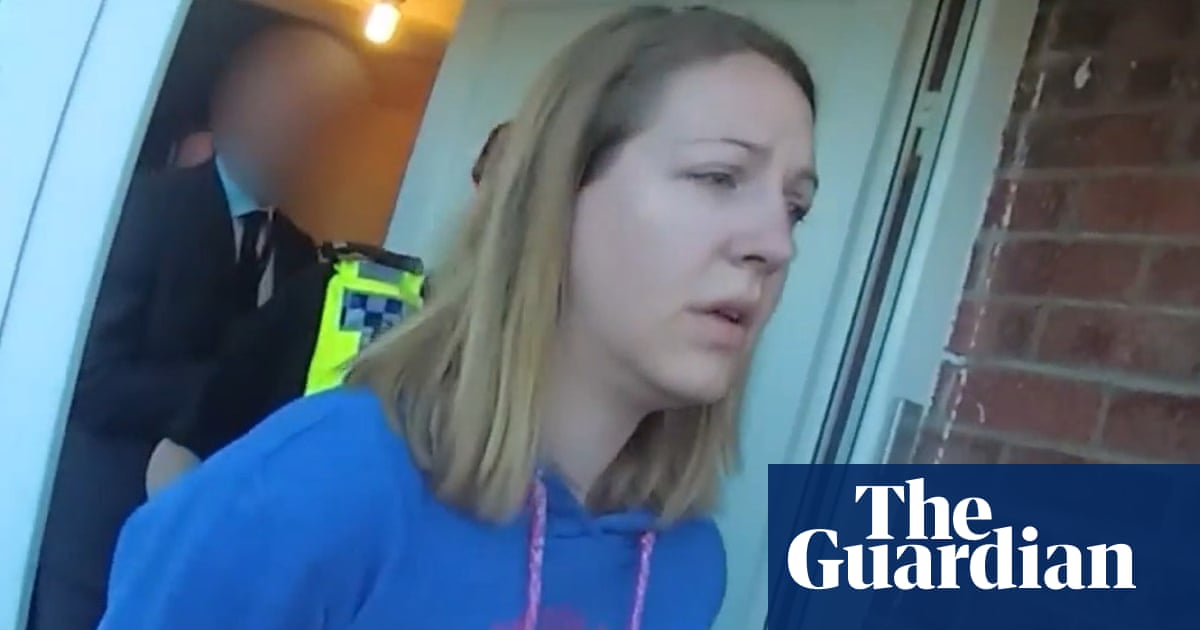
Around 2.30pm: Yvette Cooper, the health secretary, gives a statement on the report from the Thirlwall inquiry into how Lucy Letby was able to kill babies at the Countess of Chester hospital. Yohannes Lowe is covering this story on a separate live blog that is already running.
Lib Dems call for cap on political donations, saying 'whack-a-mole' approach to party funding problems not working
The Liberal Democrats have said that they will try to introduce a cap on the amount people donate to political parties by amending the representation of the people bill as it goes through the Lords.
Lisa Smart, the Lib Dem Cabinet Office spokesperson, said:
We can’t keep playing whack-a-mole with each new attempt by Farage to sell out our democracy.
Labour’s residency requirements aren’t good enough and the Conservatives simply sat on their hands whilst in power. For decades governments of both colours have stood by and done nothing.
We must urgently go further and introduce a universal donation cap to stop Trump’s America becoming Farage’s Britain. We’ll be laying amendments in the Lords to institute this donation cap, and tougher rules on what political parties are able to actually spend.
While some Labour peers might vote for an amendment of this kind, the Lib Dems have no chance of winning a vote like this in the Lords without government support. And Andy Burnham is not at this point proposing caps on donations – even though some Labour MPs are in favour, and he personally backed the idea before he became PM.
However, the government has said that it favours further limits on what political parties can spend – which could limit the incentive for parties to seek ever-larger donations.
TUC warns of dangers of 'out of control political spending' - but stops short of backing caps on donations
The TUC has issued the statement from its general council on the funding of political parties. It is not calling for caps on donations, but it does warn of the danger of “out of control” political spending and urges the government “to protect our democracy from being captured by the super-rich”.
Here is the statement.
The scale of donations made to Reform in recent days is unprecedented in British politics and should deeply concern anyone who cares about the health and integrity of our democracy.
We cannot afford to see the Americanisation of our politics, with out of control political spending, funded by stratospheric sums of crypto and corporate cash. These donations show clearly whose side Reform are on, with crypto billionaires, foreign and powerful corporate interests lining up to pour in eye-watering sums of money to advance their agendas.
Trade union funding is the cleanest money in politics.
Union donations are made up of the collective subscriptions of care workers, teaching assistants, shop workers and millions of trade union members, democratically controlled and heavily regulated.
Working people deserve – and need – a meaningful stake in how Britain is run.
Trade unions exist to rebalance power in the workplace and society, and ensure that the voices of millions of workers can be heard collectively in our democracy and are not drowned out by those with the deepest pockets.
We will continue to work with policymakers to clean up our politics and strengthen public trust in our democratic system.
We expect our government to protect our democracy from being captured by the super-rich. Unions are committed to ensuring that working people have a strong, collective voice in the decisions that affect their jobs, their communities and their futures.
Most trade unions are not affiliated to the Labour party, but the biggest ones are and they have always been wary of supporting caps on political donations because they worry this could affect their relationship with Labour. There was speculation their position might shift in response to Reform UK getting £72m from two billionaires. While this statement implies some further action is needed, it does not go much beyond what unions have said before.
Reynolds defends asylum seekers being housed in small Oxfordshire village as residents hold symbolic vote
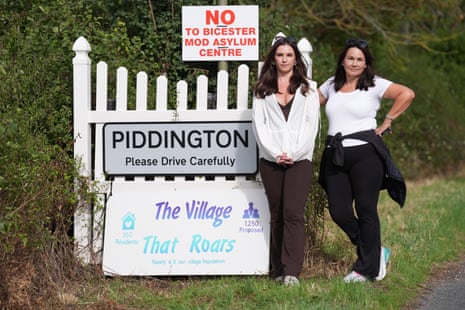
Every part of the country must be prepared to take in asylum seekers, a cabinet minister said as a village held a symbolic independence referendum in protest at plans to house more than 1,000 migrants at a former military base. As the Press Association reports, the proposal, which would mean 1,256 male asylum seekers moving into the base near Piddington in Oxfordshire has sparked anger and fear among many village residents. PA says:
Business secretary Jonathan Reynolds acknowledged “none of this is pleasant” but the disused military site was more suitable than housing asylum seekers in hotels.
There was “no imaginary place these people can go”, he said.
He told ITV’s Good Morning Britain: “Where in the UK would want more of this? We’ve got to share this throughout the entire nation.”
Reynolds said “I think a former military site is a far more suitable location” than a hotel in a town or city centre.
While the asylum seekers are not detained “you can more easily see who’s coming and going from a site like that”.
On July 4, marking the 250th anniversary of American independence, 96% of Piddington voters backed holding the unofficial referendum. It is happening today and will invite residents to express whether their village should become independent from the UK.
How Rayner mocked Streeting's failed bid for Labour leadership in speech at TUC dinner
Wes Streeting enjoys attention, likes a good joke and does not mind ruffling feathers. At the Spectator awards ceremony two years ago, Angela Rayner was the target as he gave a speech. He said:
The deputy prime minister is here. Good to see you Pat.
It was a damning jibe about how, although Rayner was officially deputy PM, Pat McFadden was seen as the person with the real authority as Keir Starmer’s right-hand man.
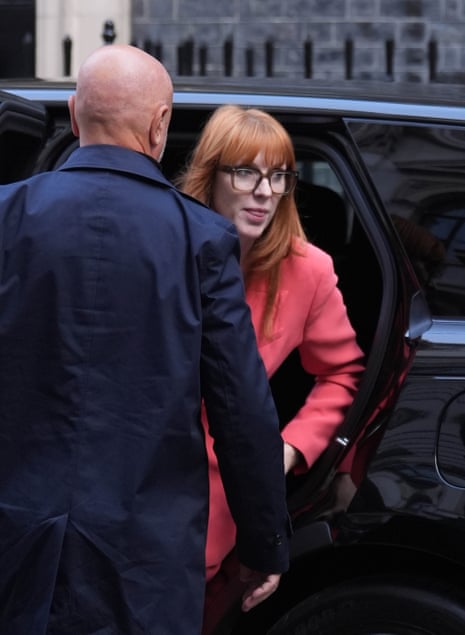
It has taken her a while to get her revenge, but Rayner – no longer deputy PM but back in cabinet as the housing secretary – used her speech at a TUC dinner to flay Streeting. She focused on how his decision to resign as health secretary earlier this summer, so that he could challenge Starmer for the Labour leadership, came to nothing. Andrew McDonald and Megan McElroy have the details in their London Playbook briefing for Politico.
Jab at Wes I: “Last time [Streeting] gave an after-dinner speech he had a few jokes about us both,” Rayner said, referring to herself and Louise Haigh. “I remember it well. I’d just come back from meeting the pope. I was also introduced to a young ambitious cardinal tipped for the top — or the Vatican’s Wes Streeting as they called him. He didn’t get the votes either.”
Jab at Wes II: “Anyway, Louise and I were delighted Wes joined us back in Cabinet. I think Louise advised the prime minister to make him defense secretary because he’s the one Cabinet member we know can’t organize a coup.”
Jab at Wes III: “He wanted education of course. But unfortunately he can’t count to 81.”
That is a reference to the number of Labour MPs needed to get on the ballot for a leadership challenge. Streeting repeatedly claimed he had the numbers but, after Andy Burnham was back in parliament after the Makerfield byelection, it became clear that Labour MPs wanted Burnham to replace Starmer, not Streeting, and Streeting abandoned his leadership bid.
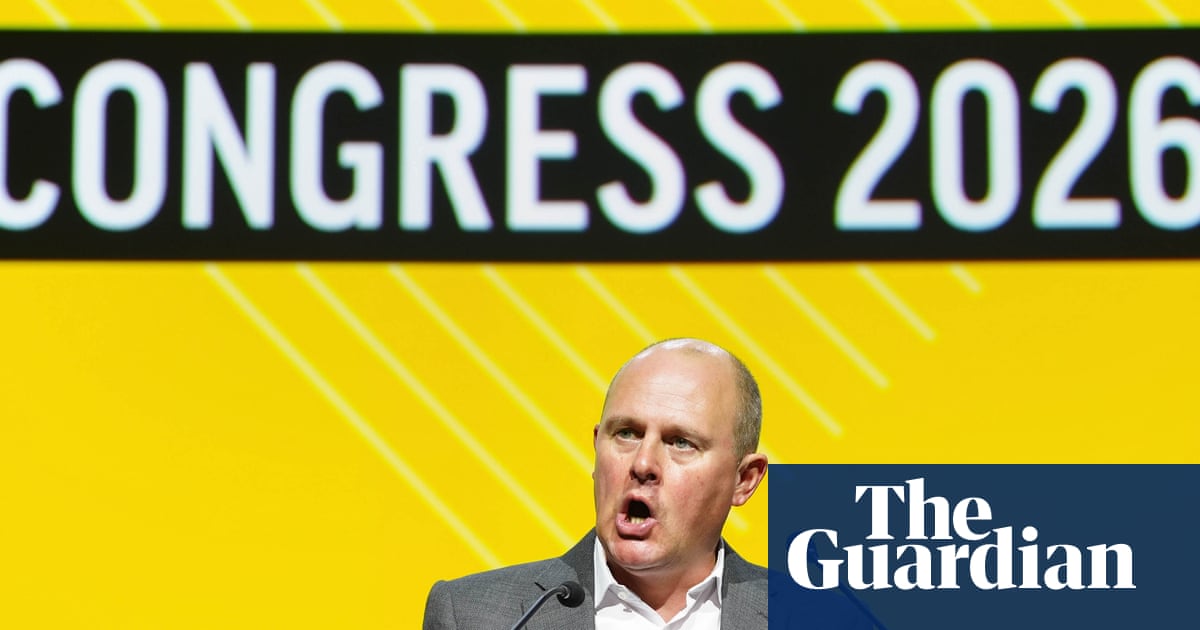
According to Sky News, Paul Nowak, the TUC general secretary, is going to make a statement to the conference at about 10.30am explaining the TUC’s revised position on how party funding laws should be reformed.
Reynolds says people should not get 'hyperbolic' about risks posed by AI
Jonathan Reynolds has said that people should not get “hyperbolic” about the risks posed by AI. Speaking ahead of Louise Haigh’s speech to the TUC later, which will address the topic (see 9.31am), and in the light of the ongoing concerns expressed by AI experts about the risk of AI models posing a threat to humanity, Reynolds told the Today programme:
This is extremely powerful technology, and I think we should never be complacent or naive about the impact it might have.
People will be worried by some of the things they’ve heard in the last few weeks, and I think we’ve got to be careful not to get hyperbolic about this either.
Of course, there are risks, but let’s be frank: there are some tremendous upsides for people as well. Whether it’s public services, healthcare, the contribution to the economy.
If you regulate it in a way where you’re no longer having access to those frontier developments, that would obviously make us less safe. So I think you’ve got to be proportionate and understanding about this in how we seek to regulate going forward.
Reynolds also stressed that the UK is a world-leader in internet safety because of the reputation of the AI Safety Institute, set up when Rishi Sunak was PM.
When Justin Webb, the presenter, put it to Reynolds that people would not be impressed by ministers talking about the “upsides” of the AI given that the potential downsides, the elimination of humanity, are so much more serious, Reynolds replied:
Because of the power of this technology, I wouldn’t say I wasn’t worried.
What I would say is I’m clear-eyed about the best ways to keep the country safe, and that has to be using British innovation, British expertise, British specialisms in such a way that actually improves the position of the UK in terms of the safety.
Asked about the proposal from Jack Clark, one of the founders of Anthropic, for AI companies to have to install a “kill switch” held by a third party, Reynolds said:
I’ve got to be honest, I don’t think that it’s a particularly helpful way to think about how we manage the risks. I’m not really sure what that would actually mean in practice.
To state the obvious, these frontier models are in the main being developed in the US and in China. So exactly what would that mean? I’m not sure what the proposition is.
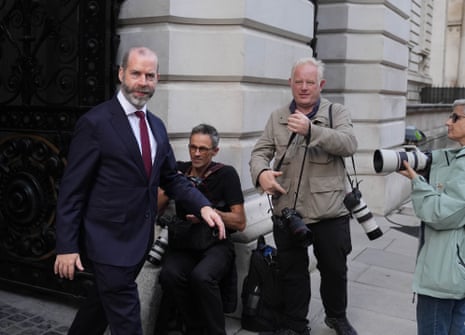
Jonathan Reynolds says it's wrong to view union donations to Labour as equivalent to billionaire donations to Reform UK
Jonathan Reynolds, the business secretary, was doing a media round on behalf of the government this morning. Asked about claims that trade unions donations to Labour are similar to single, multi-million pound donations to Reform UK from cryptocurrency billionaires (see 9.09am), Reynolds claimed it was wrong to view them as equivalent. He told Times Radio:
When we talk, or people talk about union donations, that is not one entity. That is tens of thousands of ordinary people choosing to make that donation, and it’s bundled up and given from the union. But it’s very easy to opt out of that. There are rules governing political funds, political ballots.
I honestly think to take these mega, ultra crypto Reform donors and compare them to voluntary associations of working people choosing to give some money to the political system, I don’t think the two things are comparable.
Louise Haigh says UK must heed warnings from AI experts
Ministers must “heed the warnings” from industry leaders about the threat posed by AI as it looks to capitalise on the technology, the first secretary, Louise Haigh, will say in a speech to the TUC later. Jessica Elgot has the story.
Here is video of Pippa Crerar and Kiran Stacey talking about the £72m donations to Reform UK on our Politics Weekly UK podcast.
Farage says a Reform UK government would stop unions funding Labour if they block £72m donations
Good morning. Ministers already think that the new laws on political donations, as set out in the version of the representation of the people bill which left the Commons earlier this month, will be enough to block some or all of the donations worth £72m to Reform UK announced at the weekend. But they are still planning further amendments to the legislation, when peers debate their own amendments to the bill, to make the restrictions even tighter. Pippa Crerar, Jessica Elgot and Kiran Stacey have the details here in our overnight splash.

Kiran and Henry Dyer also have written a good explainer about the rules.
Nigel Farage, the Reform UK leader, has hit back. In an article for the Daily Telegraph, he claims that the proposed new laws – which are retrospective in the sense that they will apply from March 2026, when ministers first announced their intention to legislate, not from the moment when the bill gets royal assent, later this year or early next year – are unfair. If the crackdown goes ahead, Reform UK will stop Labour getting money from the trade unions if it wins the next election, he says.
The Unite union alone has given the Labour party over £50m over the course of the last few years. They’ve got the Employment Rights Act, not to mention big pay rises for bus drivers. If anybody is giving money to do political bidding, it’s the trade unions.
So I would just warn the Labour party here and now: If you try and ban our donors, we in government would certainly ban funding from the trade unions. I don’t want to go down that route. But it’s something we would be prepared to do.
Once again, let me be clear. Neither Ben Delo nor Christopher Harborne will be getting membership of the House of Lords. They won’t be getting favours, they won’t be influencing policy. It isn’t happening.
Because unlike the uniparty we are not for sale.
Until recently the trade unions were opposed to caps on the amount individuals can donate to political parties because they feared that would lead to a rightwing government limiting what unions can donate to Labour. The £72m donations to Reform UK have prompted a bit of a rethink, and union leaders are expected to issue a statement later.
Here is the agenda for the day.
Morning: Louise Haigh, the first secretary of state, chairs a political cabinet. Andy Burnham has cancelled engagements today following the death of his father.
9.30am: The Department for Work and Pensions publishes figures relating to personal independence payment claims and universal credit health claims.
11.30am: Alex Norris, the justice secretary, takes questions in the Commons.
Noon: Downing Street holds a lobby briefing.
After 12.30pm: Yvette Cooper, the health secretary, is expected to make a Commons statement following the publication of the inquiry report into how the nurse Lucy Letby was able to repeatedly kill babies at the Countess of Chester hospital.
2.45pm: Shabana Mahmood, the home secretary, takes questions from the Commons home affairs committee.
3.45pm: Haigh addresses the TUC conference, standing in for Burnham.
Also today, in Piddlington, a small Oxfordshire village, residents are holding a symbolic independence referendum, as a protest against plans to house more than 1,000 asylum seekers in a former military base nearby.
I’m afraid we are no longer able to have comments open below the line every day on this blog. If you want to contact me, please email [email protected]. You can use this email to flag up corrections, comments for publication, questions or complaints.