.png) 1 month ago
45
1 month ago
45
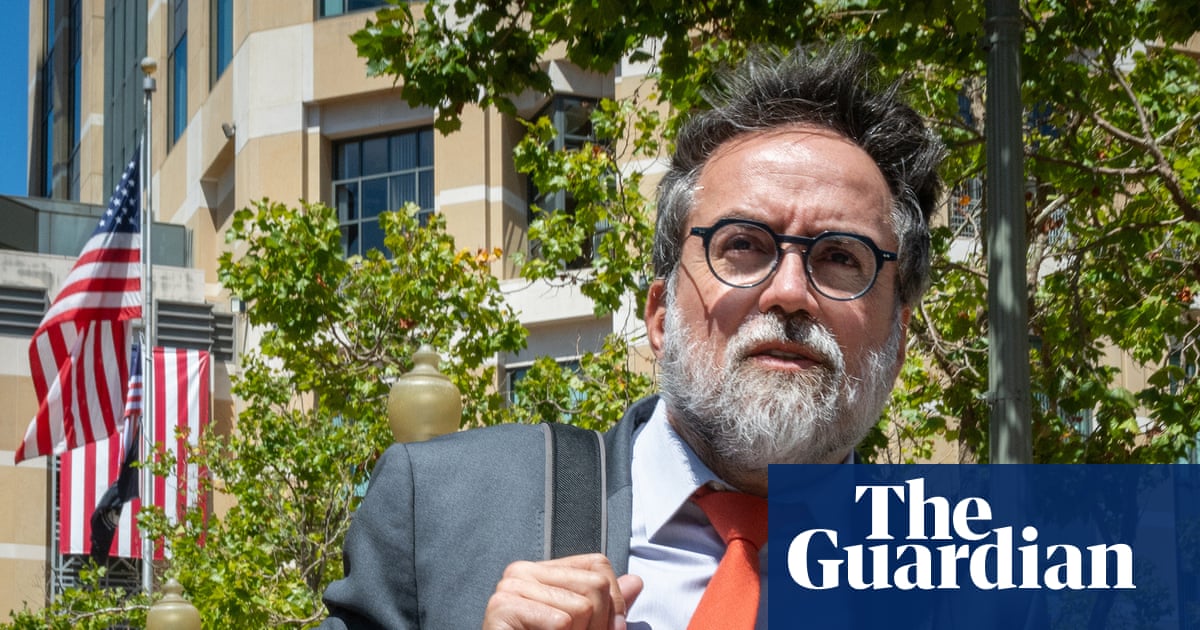
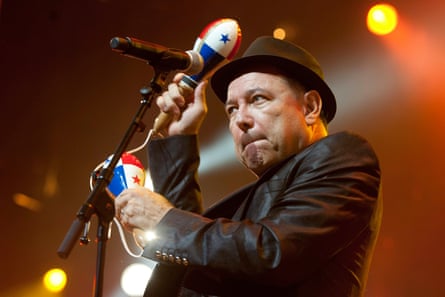
“Well, I’ve been around,” says Rubén Blades, accurately. One of the most influential Latin musicians of the past half-century, the Panamanian singer-songwriter, 77, has been a defining force in salsa, collecting 25 Grammy awards – 13 Latin, 12 mainstream – and getting shout-outs from a new generation including Rosalía and Bad Bunny.
Blades has moved between music, law, politics and film as if they were all part of the same conversation. He has a Harvard law degree, made a presidential bid in Panama – he was also the country’s minister of tourism from 2004 to 2009 – and has had film roles alongside Jack Nicholson, Brad Pitt and Denzel Washington, all of which he sorted out on his own. “A manager would go crazy,” he laughs, his grey eyes crinkling on a video call from his home in New York City, ahead of a gig he’s playing in London.
Even early on, he wasn’t following the usual script. In the 1970s, when salsa leaned heavily on love songs, Blades was writing about crime, violence, the street. He traces this back to his childhood in San Felipe, the then-neglected heart of Panama City, where he was the son of a Colombian-born detective and a Cuban-born actress and singer. Hearing Mack the Knife from The Threepenny Opera was particularly influential. “It was about a tough guy,” he says, “someone who could have been from one of our gangs: Diente de Oro, Zapatas Negras. I kept these ideas in my head.”
After Panama’s military leader Manuel Noriega falsely accused Blades’s father of spying for the CIA, the family moved to the US, and Blades found work in the mailroom at Fania Records in New York, the label that powered salsa’s golden era. There he met Willie Colón, and together they reshaped the genre, mixing social commentary with infectious rhythms built for dancing.
New York in the 70s fed into his writing. “42nd Street was rough,” he says, filled with thieves, pimps and sex workers – the same archetypes he’d seen growing up in Panama City: “A port city, admitting people, things, ideas, in and out. There was cement, dirt and fear.” Out of all that came Pedro Navaja, a vignette of an urban crime, now one of the most famous songs in Latin music.
Blades credits the literary streak in his music to his grandmother Emma, a teacher, who taught him to read when he was four. “She pushed me to educate myself,” says Blades, whose 1987 album Agua de Luna honours the stories of his friend, Gabriel García Márquez. “She would tell me, ‘We’re not poor. We just don’t have money. You can have money but still be poor if you don’t know anything.’”
Such scepticism runs through his politics, which don’t line up neatly with any ideology. “I’ve been hit by the left, the right ... both sides,” he shrugs. When Blades ran for president of Panama in 1994 (coming third), some dismissed him as a singer out of his depth. He points to his legal training, including his Harvard degree – the hardest thing he’s ever done. “Many times, I wanted to leave,” he says, “but I am not a quitter. I also wanted my mother to see me graduate.”
He is wary of celebrity politics but recognises its reach. He mentions Bad Bunny, who attended Blades’s shows with his parents growing up, and for whom Blades made a special guest appearance at a concert in Puerto Rico in 2025. Influence isn’t enough: “I have more credibility than 85% of the politicians in my country; right now, Bad Bunny could pull more young people to vote than all the political parties in Puerto Rico. But not every artist is qualified to enter politics – you need education. You need to participate. You need serious people around you.”
His own seriousness is evident as he speaks with lawyerly precision on immigration and state power. Countries have the right to set immigration laws, he says. “When we come to London to play, we’ll have visas.” But deporting someone who arrived as a child and has built a life in the US is, to him, indefensible, and he views the killings of protestors Renee Good and Alex Pretti by ICE agents in Minneapolis as “murder. Immigration gets used as an excuse to justify the unjustifiable.” Donald Trump, meanwhile, is seen by Blades as a “narcissistic charlatan who wants to destroy democracy and become an emperor like on Mongo” – the rogue planet in Flash Gordon. “But I don’t think the United States is going to descend into total fascism. The judiciary is still strong. The US army is maintaining its independence, which is keeping things tight.” A pause. “As a Latin American, I’ve seen the military dictatorships rise.”
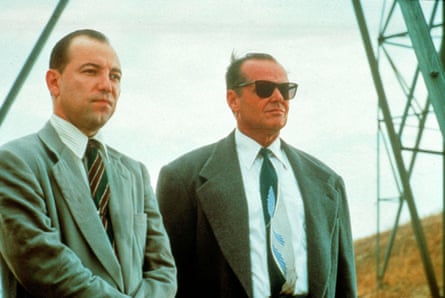
Acting is his other skill: Blades has appeared in more than 40 films but never had formal training. “Reading helps,” he says. “It lets you imagine situations.” His first role was as a singer turned boxer in the 1982 Fania-produced B-movie The Last Fight, alongside Colón. He moved on to films such as The Two Jakes, starring and directed by Jack Nicholson – “I loved it, critics didn’t” – and a long run in TV drama Fear the Walking Dead. He’s glad, he says, that the series concluded; he had begun to feel like he was phoning in his character, a Salvadorean secret agent turned barber turned zombie killer. His next movie is Jonás Cuarón’s Campeón Gabacho, a story about a Mexican immigrant, which won the audience award at the 2026 SXSW festival. He mentions, in passing, that he’d love to work with Mark Rylance.
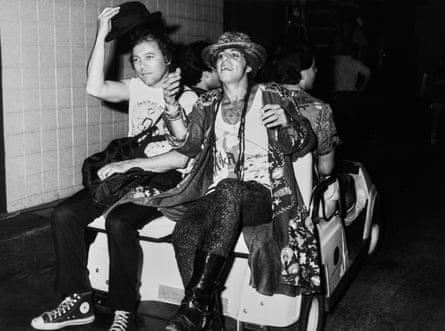
He then grins as he tells me Denzel Washington once got him dancing on a TV chat show – a challenge for a salsa legend who insists many Latin musicians don’t actually dance well. “But when I’ve had a few drinks ...” He shimmies his shoulders.
For him, salsa’s appeal is something basic. “In this alienating world, salsa has an advantage over other musical forms: contact. You must touch another person. You have to work together.” He smiles. “Imagine that.”