.png) 3 months ago
63
3 months ago
63
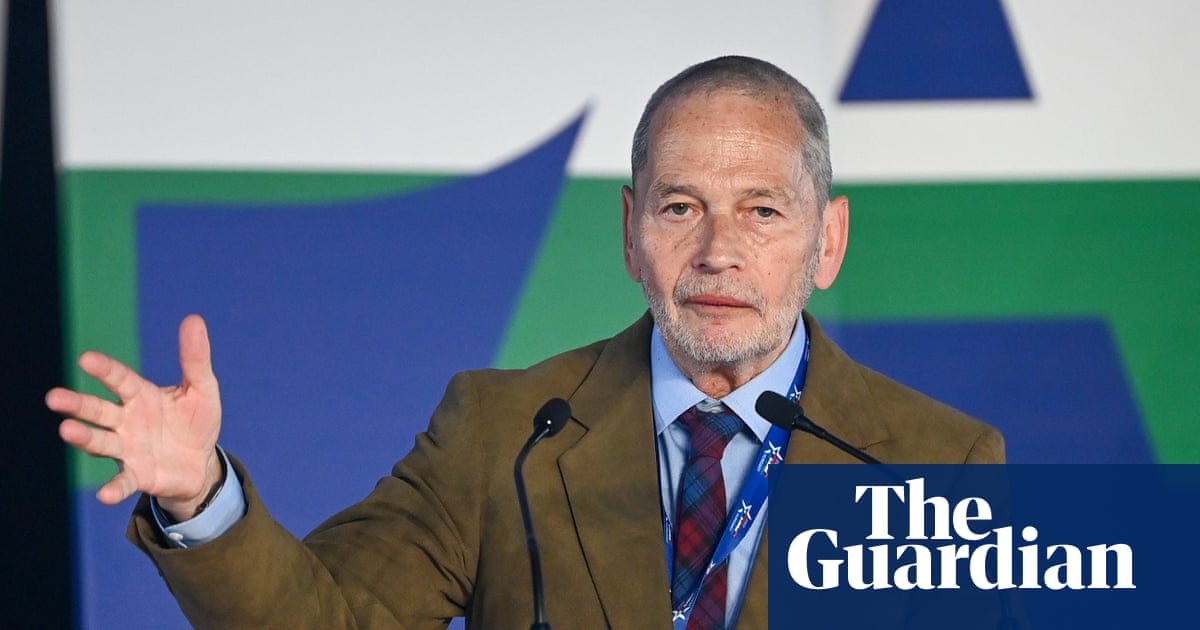
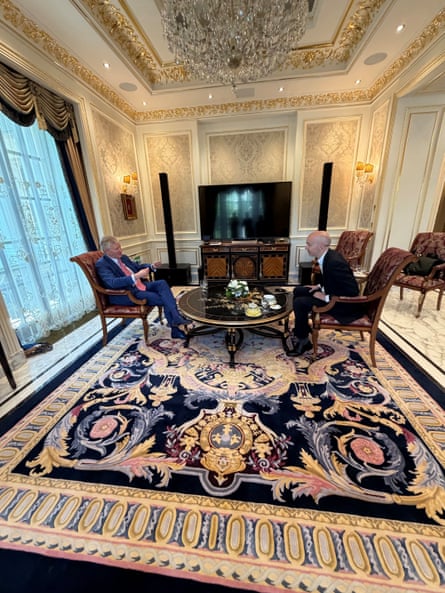
It is the morning after Russia’s heaviest aerial raid on Kyiv in several months. At least 25 people have been killed and, as always, those emerging from a sleepless night are the lucky ones. Rinat Akhmetov meets the Guardian at the end of a paved driveway half an hour from the city centre. Shakhtar Donetsk’s owner rarely gives interviews and his whereabouts have been a subject of conjecture during the war.
But he is here in Ukraine, speaking to mark the 90th birthday of a club whose tribulations over the past dozen years have been unmatched. It is also 30 years since Akhmetov, the richest person in Ukraine and arguably eastern Europe’s most influential businessman, became president of Shakhtar. The club has been a labour of love, the straightforward face of a career whose complexities beyond football have been widely documented. Akhmetov’s influence spreads across the country and beyond, most visibly in the form of places such as Azovstal, the iron and steelworks that became symbolic of a nation’s resilience in 2022.
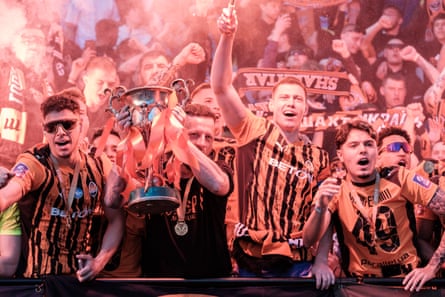
His businesses in Donbas have taken a severe hit since Russia entered the region in 2014. Shakhtar were forced to leave but have become a symbol of their country, returning to the Champions League and this season reaching the Conference League’s last four. Russia’s invasion has complicated their path back to the glory days; it is a road that, for Akhmetov, can finish only at the doors of a full Donbas Arena in Donetsk.
Shakhtar have become a powerful ambassador for Ukraine since losing their home after Russia’s invasion. The Conference League semi-final helped keep the situation in people’s minds. How important is that? Shakhtar was always pro-Ukrainian, always patriotic. Many people may not have noticed that. In 2007, when the situation was very different in Donbas, we designed a new emblem reading “Shakhtar” in Ukrainian style rather than the Russian “Shakhtyor”. It was in response to a survey of our supporters. Only now, since the full-scale invasion, does everyone realise what a strong Ukrainian position Shakhtar has. We are an ambassador to the world that Shakhtar is a Ukrainian club and that we are fighting for independence, freedom and sovereignty. But virtually every Ukrainian is a proud ambassador for their country.
You own the most powerful club in eastern Europe. How did that journey begin for a child growing up in 1970s Donbas? As children we were playing all day, skipping classes or arriving late. We grew up in Donetsk, just beyond the airport. Since 2014 there have been many battles nearby. It was a dream to visit the stadium and support Shakhtar but we had no money for tickets. Sometimes we climbed a pile of rocks outside to watch games. At home we had a very old-fashioned television with poor picture quality, so it was difficult.
I dreamed of being a footballer. Once I was ill and my mother brought me to hospital. She had a very large purse but there was never any money inside. I promised her: “Mum, when I grow up I’ll become a football player and earn a lot of money; don’t lose that purse.” I earned the money but we never found the purse. I couldn’t be a footballer but became involved in a different way. If you take football away from me, you rip my heart out without anaesthesia.
What did you inherit when you became president of Shakhtar in 1996? It was a sensitive situation given your predecessor and former business partner, Akhat Bragin, died in an explosion at the stadium the previous year. The club were trailing behind Valeriy Lobanovskyi’s Dynamo Kyiv. It was tragic, he was a close friend. We were travelling to a game and, because we were five minutes late, he jumped out and ran. I followed him and was five seconds behind the explosion, five seconds from death. He would have done beautiful things for Shakhtar if he was alive.
After his death Shakhtar was abandoned. The team had no stadium, training facility or even a coach to travel in. The players were earning peanuts, $200 or $300 a month; the club were continually generating losses. Many from the authorities, and even Mr Bragin’s widow, would ask me to take the club on. I was 30, I wasn’t sure if my ambitions in business would succeed and didn’t know if I could be successful with Shakhtar. I became president in October 1996 and declared our goal was to win the championship. Everyone called me insane. Dynamo, with [Andriy] Shevchenko and [Serhiy] Rebrov, were on top and it was difficult to compete. People were mocking me, but they don’t need to mock any more.
Donbas was a tough place in the 1990s and much of the history is obscure. A football club was a risky financial commitment. How did you hone the self-belief to build your businesses and take Shakhtar on? When the Soviet Union collapsed, industrial and commercial links were destroyed. Ukraine lived through a tough time: unemployment, poverty, annual inflation of 10,000% – it was horrific. People were just working out how to survive. First of all we decided to trade in coke and coal, earning fairly small money. It started piling up and we began buying minority stakes in industrial companies. Stakes in metallurgy plants were very cheap as there was no competition from western businesspeople to invest in Ukraine, and many locals wanted to take their money to the west.
I bought stakes in the Yenakiieve plant, where workers were making $45 a month and there was a 10-month delay in payment. When you see this low-profile enterprise you need to buy it, invest, then find and motivate people to create a product that can trade globally and become profitable. It’s the same in football. Shakhtar is my passion from childhood and, in tough questions, I always consult my heart.
You broke the mould at Shakhtar by signing foreign players and coaches to break Dynamo’s stranglehold. Was that a conscious decision? The first time I brought a foreign manager here, Nevio Scala, people asked: “Why aren’t you patriotic?” For me a patriot does not have to be born or raised in Ukraine, but someone who works for Ukraine’s benefit. Scala helped us win our first title in 2002, he didn’t fear Lobanovskyi like many Ukrainian managers did. Seven years later, with Mircea Lucescu, we won the Uefa Cup and I was incredibly proud.
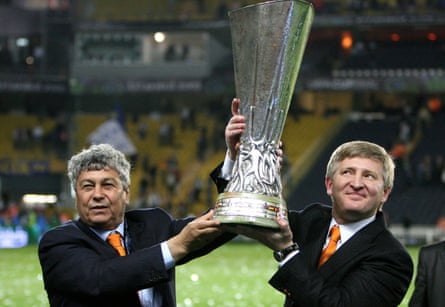
Can you describe your relationship with Lucescu? We shared pain and pleasure. When we won, we cried tears of excitement. If we lost, we were crying through sadness. We won 22 trophies with him over 12 years. Our mindsets and tastes coincided in many aspects. We wanted the team to play a vivid and attacking style of football. I really appreciated the job he’d done in Turkey. I consulted my heart again, we met, had confidence in each other and ultimately yielded great results. He was a very smart person; may he rest in peace.
In 2014 you vowed not to attend another game until Shakhtar returned to your beloved Donbas Arena. Last month, after Lucescu’s death, you came back for the Conference League quarter-final with AZ. How hard was that decision? Until 2014 I hadn’t missed a home game for 18 years. We had a beautiful Donbas Arena, always packed with 40,000 or 50,000, but when the occupation started we were forced to flee. It was a kind of moral imperative for me: I couldn’t attend any other stadium.
Now it appears I have broken my promise. It was a spontaneous decision, nothing strategic. When I came into the stand during the warm-up, the guys applauded and it moved me to tears. I could have returned previously but was able to push the emotions down. On this occasion, though, I was 100% sure I would attend.
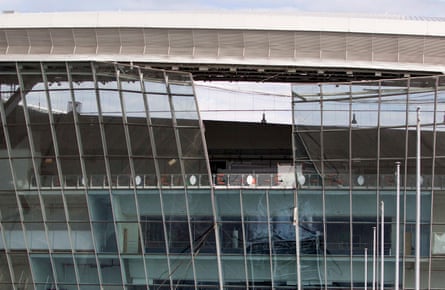
Do you receive any information about the condition of Donbas Arena under occupation? It appears the stadium is in bad condition. How can it be thriving when its home team is not playing there? The entire occupied Donbas region is in the same miserable state. In 2013 the average salary in Donetsk was only slightly lower than in Kyiv, and look what they’ve got today: misery, manufacturing on its knees, people jobless, no money. They don’t even have the water supply arranged properly, so some people wait a week to shower or wash.
When the occupation started in 2014, I spoke in Donbas Arena, telling the Kremlin marionettes: “You’re good for nothing, you’re terrorists. You need to be pushed out, you deceive the people. You bring Donbas to the grave.” We put banners around the region with the motto: “A happy Donetsk and happy Donbas can only be part a unified Ukraine.” People ask what I would say today to those in occupied regions, and it would be exactly the same.
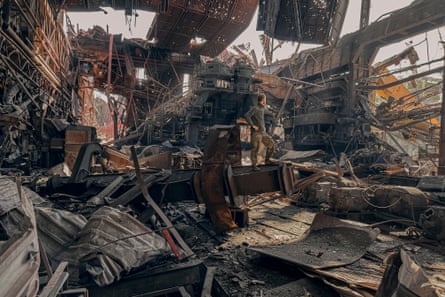
You visited Mariupol just before the full-scale invasion in February 2022. Then your factory, Azovstal, became the city’s last bastion of resistance … I met people from the Azovstal and Ilyich steelworks and repeated that Mariupol is part of Ukraine. When the Russians arrived, nobody was welcoming Putin’s soldiers with flowers. Even small children were taking whatever they could, stones and rocks, and were ready to fight.
After Mariupol was destroyed, the defenders in Azovstal stayed and resisted 73,000 Russian troops. There is a legendary commander, Denys Prokopenko, callsign “Redis”. I called him several times a day and was moved by his strength and courage. I never heard panic in his voice. They were all conscientious, dignified and ready to give their lives for every inch of land. But on 20 May 2022 they had an order from higher command to surrender. I spoke with him 15 minutes before they exited Azovstal. I said: “Denys, what can I do for you, what can I do for your guys?” He said: “You needn’t worry about me, please take care of my men.” He knew he would be subjected to captivity but didn’t ask for any personal privilege. This is how the “Heart of Azovstal” project, which supports Mariupol’s defenders and their families, came to life. I promised I’d help those guys, and I’ll do whatever is possible.
Regardless, you have been viewed in different ways within Ukraine – particularly before 2014. People questioned your loyalty and suggested you took time to pick a side. How would you answer them? I’ve always been very sincere with the people, the government and the international community. We have always tried to act as transparently as possible. Maybe people need time to see clearly that the things we do are aimed at very correct and usual purposes. But my most important wish was always that Ukraine stays unified, free, democratic and thriving, and becomes a member state of the EU. Shakhtar play there, in the European competitions. We play by the most civilised European rules. Similarly, I always wanted Ukrainian businesses to play by such rules. We got used to those rules a long time ago and we like them.
What was your response in those days before 24 February when full-scale war looked inevitable? I arrived in Kyiv on 23 February to attend a meeting organised for businessmen by President Zelenskyy. A journalist asked me what, if there would be a full-scale invasion tomorrow, my actions would be. I responded: “I will stay in Ukraine, I will not leave or travel anywhere, I will be helping our military and our army to stand strong, and I’ll be helping civilian people to survive.” And it seems to me that I stuck to the promise.
How is your relationship with President Zelenskyy? You have clashed previously, particularly regarding controls on oligarchs, but have also praised his efforts during the war. The last time I saw him was on 23 February 2022. We haven’t met since; he knows I’m in Ukraine permanently and haven’t been travelling away, and I think he is aware of the things I do to sustain Ukraine. So there have been no tough relations since then.
Ukraine has stood strong because of the courage and resilience of its people, its armed forces and the support of the civilised world. And because of the courage and resilience of our president. He is very much to be praised for the fact we are able to speak now, in Kyiv, in the house where I spent the first hours of the full-scale invasion. He didn’t escape, he stayed here with us and showed himself to be a courageous man of strong character. He does everything he can to defend our sovereignty, independence and freedom.
What role should people in your position be playing in rebuilding Ukraine after the war? Investment – for example into metallurgy, energy, the financial sector, and football at all levels. I see three points to any peace format. First a just peace, where Ukraine returns to the international borders of 1991. Of course Russia must pay reparations for the damage it did. The second is a durable peace, which must result in Ukraine being a free, thriving, democratic European country. The remaining option is a fake peace, which Russia tries to drag us to. Our warriors, defenders and international partners struggle so Ukraine gets a durable, sustainable peace.
Do you see any realistic prospect that such a peace is getting nearer? I think we are moving towards it, gradually. Putin’s troops got stuck. For me it’s like the cup is half full. Others would argue it’s half empty but I see the water is still there. Some people tell me Putin has no reasons to end this war. I think the opposite: he has no reason to continue it. They tell me there are lots of problems in Ukraine: sure, but in a free and democratic state nobody tries to conceal them. Are there problems in Russia? I think they have far more, but they are kept under cover. Russia’s economy only accounts for 2% of global GDP. And how much does Russia invest in technology? Zero. They are less prepared for tomorrow’s battle. They put a lot of money into this war against their neighbours, even though we have never posed any threat to Russia.
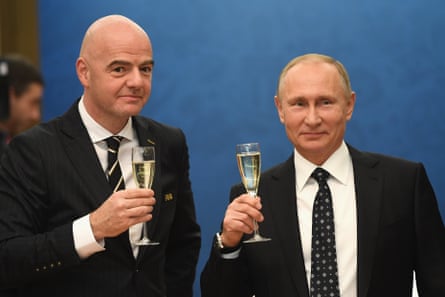
Could Uefa and Fifa be doing more to help Ukraine? Aleksander Ceferin played an important role assisting Shakhtar in February 2022 but neither he nor Gianni Infantino is known to have visited since the full-scale invasion. We have a good and productive partnership with Uefa. Ceferin is a strong leader and has done a great job supporting European football. With Fifa and Infantino, we have clashed time and again. They sometimes believe the truth is on their side but we believe they’re wrong. Let’s believe a common truth will prevail and that, one day, they will look at Ukraine and Ukrainian football from a different point of view.
Infantino needs to travel here and feel for himself how Ukraine and its people are suffering. If he had come with you yesterday and spent the evening under UAVs and missiles, I think he would have become our greatest friend.
Shakhtar are dominant domestically but do you feel the financial model of European football is stacked against clubs outside bigger leagues? Could you dream of matching Paris Saint-Germain? I want us to try and reach the standard PSG have set. I don’t want any regulation in place that would bring PSG’s level down. We must strive to play on a similar level to them. They’re one of the great examples. They signed a lot of young players, work as a collective and stand every chance of winning a second Champions League.
How would you like the club to look in a decade’s time, when Shakhtar turn 100? Playing with pride at our home stadium in a Ukrainian Donetsk, where we will again hear the Champions League music and the national anthem. I look ahead with great optimism. Ukraine will stand strong, become a member of the EU and its citizens will live in a free, European and thriving democratic country. Ukrainian football will reach a new level. Hopefully we will meet again and you will tell me: “Rinat, you were right in thinking that.”