.png) 2 months ago
56
2 months ago
56
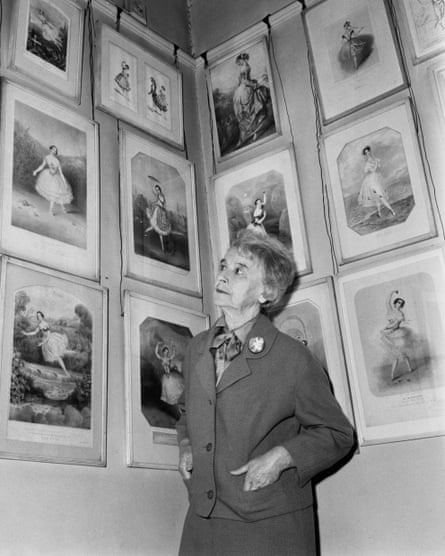
On 15 June 1926, the Lyric theatre in Hammersmith played host to “an engaging little ballet” called A Tragedy of Fashion, a “chic trifle” according to the press, that had been first concocted round a west London dinner table. Yet it turned out to be a momentous moment in the course of British dance. The show was produced by Marie Rambert, a Polish émigré who had performed with Diaghilev’s Ballets Russes, and it was the beginnings of a dance company that’s still going strong 100 years later.
Marie Rambert was a force of nature. She has been called “an inspired talent spotter and legendary bully”, with “wit, taste and a sharp instinct for trends”, and with her nascent company (first known as the Marie Rambert Dancers, then Ballet Club, then Ballet Rambert), she kindled the talents of Britain’s most influential choreographers of the age, including Frederick Ashton and Antony Tudor. “This woman was a pioneer,” says the company’s current artistic director, Benoit Swan Pouffer. “She was really ahead of her time.” Nonetheless, fast-forward 100 years and Marie Rambert wouldn’t recognise the company that still bears her name, written in capitals down the side of a sleek building just behind the National Theatre, on London’s South Bank.
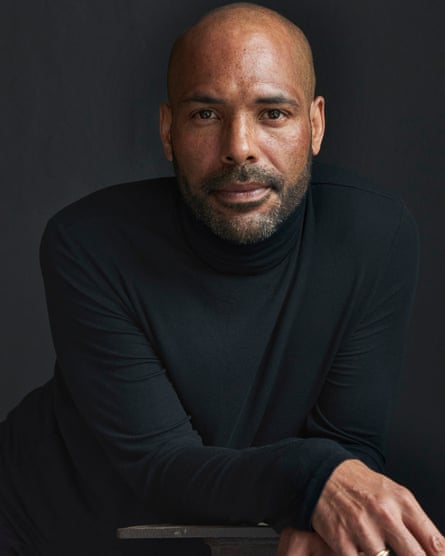
Britain’s oldest dance company, Rambert has been reinvented multiple times. In the 60s it shifted from ballet to contemporary dance and changed its name to Rambert Dance Company in 1987 (it now goes by the mononym Rambert). And to celebrate its centenary, rather than revisiting classic works from its extensive archive, Rambert is taking an edgy lineup of very current dance on the road. It’s in keeping with the company’s DNA, says Pouffer, “pushing boundaries, democratising dance, giving space to new voices to create new work, take risks – and not be scared to move forward”. There will be work from the French collective (La)Horde, inspired by lindy hop and rave culture, and from Bobbi Jene Smith and Or Schraiber who are remagining their piece Fugue in Crimson for the company. Plus, there is a piece by the up-and-coming Dutch choreographer Emma Evelein.
When Frenchman Pouffer arrived at Rambert in 2018, having run the brilliant Cedar Lake Contemporary Ballet in New York, he ruffled a few feathers by saying the British institution needed renovating, and implementing changes in staffing, dancers and culture. Pouffer is bullish about his approach and what it takes to keep a dance company alive for 100 years, and hopefully for the next 100 years too. It’s really important as a director, he says, not to be too attached to the things you loved as a dancer.
“You have to have spies all over the world, ears and eyes. I collect information,” he says, sitting in his office, dressed in designerish black, his French bulldog Brooklyn pawing at the office door. “The landscape has changed tremendously.” People who saw the company 15 or 20 years ago might be “appalled or excited about what’s to come”, but he refers back to Marie Rambert. “She was fearless and very adamant,” he says, and expected the audience to go with her.
“In the early 2000s when I was in America, there was the young Hofesh Shechter, the young Crystal Pite,” says Pouffer, referencing two of this century’s most impactful choreographers. “Now I feel like there is a new wave, and a new way of experiencing dance.” Rambert’s four-day takeover of London’s Southbank Centre last September was one of those. A collaboration with choreography group (La)Horde, We Should Never Have Walked on the Moon had 80 dancers all over the building and spilling outside, and audiences roaming the halls in their midst, filming and posting clips while it happened. It felt exciting, a real event, with gritty, experimental dance and a fashionable crowd.
Boundaries between different styles and mediums – classical and contemporary, theatrical and commercial, stage and screen – have collapsed. Dance is all over the internet. “For some good and some bad,” says Pouffer. “I don’t know if I should say it, but choreographing a two-minute sequence on TikTok – does it make you a choreographer? This is just a question. For me, choreography is a sense of time, space, the journey of the audience, raising questions, poetry. It’s not just steps.”
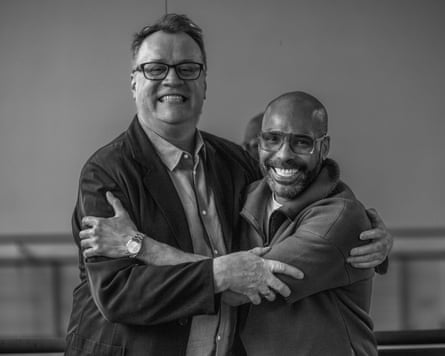
For all the talk of pushing artistic boundaries, one major change that Pouffer has overseen at Rambert is actually a shift towards more commercial productions. First, a dance version of the TV hit Peaky Blinders, which has just come back from touring in China (“We had superfans following us from city to city”) and next, a show based on Russell T Davies’s hugely successful drama It’s a Sin, about friends living through the Aids crisis in the 80s, with Pet Shop Boys as executive producers.
It’s a very savvy move, using existing IP and trading on TV’s populism to get people to come and see dance, but Pouffer insists it’s not a gimmick. There’s a direct link between the world of It’s a Sin, for example, and Rambert, some of whose dancers were lost to Aids. “In our sector, it was really an abomination,” says Pouffer. “We lost great, great talents. And always I’m wondering what they would have done and how the dance world would have changed.”
With these adaptations, though, is there a danger of suggesting that dance is just an adjunct to other art forms, that it’s not strong enough on its own? “I’m going to say something very honest with you,” says Pouffer. “After a couple of years of being at Rambert, changes had been made with the repertory and the dancers. And we had people in the theatre, but not that many. Not [enough for] how I wished Rambert could be celebrated.” He decided he needed to do something bold. Peaky Blinders has now been seen by 250,000 people, 65% of them new to Rambert and 21% new to dance. All arts organisations talk about attracting new audiences; it does seem that Rambert has actually been doing it. Pouffer is adamant that no prior knowledge of dance is necessary. “I truly believe that someone who has never seen dance has as valid an opinion as me.”
All dance companies also talk about how expensive it is to tour. Is it possible to tour in the UK without losing money? “No, it’s not. We’re losing money,” admits Pouffer. “But touring is part of our mission, it’s very important. The repertory company model, touring mixed bills of often abstract dance works, is on shaky ground, he says, especially outside the UK. “So what do we do? We talked about it one time and said: you know, classical ballet companies do The Nutcracker for three months.” A show like Peaky Blinders, he says, is “our Nutcracker”. It’s true, the big ballet companies rely on their annual Christmas Nutcracker to fund all the more experimental work they want to do. Why shouldn’t a contemporary dance company work the same way?
It is impossible to have this conversation about dance’s popularity and relevance, or otherwise, without Timothée Chalamet rearing his curly head, and his notorious quote about nobody caring about ballet. “I shake my head because he’s a young fellow,” says Pouffer, pointing out that he has dancers in his family, too. “I’m hoping that he didn’t mean it like it was perceived.” Chalamet’s guffawing tone certainly made the dance world bristle, but he wasn’t entirely wrong. A relatively small number of people care an enormous amount about dance, but for most of the general population, the likes of Rambert are not on their radar. “That’s correct. I agree with you,” says Pouffer. “It’s a small slice of the pie of the entertainment industry.”
His frustration is the level of talent here (and one of Pouffer’s strengths has been finding blindingly good performers) that people just don’t know about or will never see, because mass entertainment forms dominate screens and conversations. Pouffer’s going to keep pushing. “My ultimate goal is Rambert is a brand,” he says, and under that umbrella there might be all sorts of different work: stage, digital, commercial, populist, experimental. He’s committed to the company and staying in London (he’s married to a London firefighter), and says: “I like it here. I like the British – they’re funny.”
In terms of the next 100 years, there’s AI to think about, inevitably. “With AI, everything that I’m watching I’m always doubting. Is that real?” says Pouffer. “The only way to be sure is to see it with your own eyes, live. Maybe it’s going to be our moment. Maybe we’re going to be the entertainment that doesn’t lie.” He does think there might be different ways of experiencing dance: the Southbank event was a “test” he says, “where you don’t have to sit down and watch. You create a space where the audience is active.”
In the shorter term, he would like to bring back Rambert2, a graduate company they ran on a three-year pilot, with some incredible young dancers and an exciting repertoire. It’s just a matter of money, as always. You need a generous donor, I say. Maybe Timothée Chalamet can … “Help, right?” laughs Pouffer. “I think what he should do is perform a dance piece. Then he can shut this thing down!”
This Is Rambert is at Sadler’s Wells, London, 10 to 13 June; touring to 16 September.