.png) 1 month ago
48
1 month ago
48
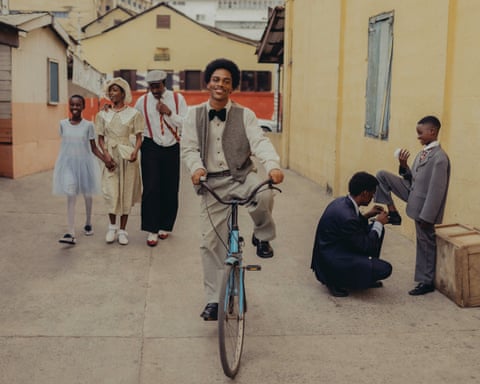
The iconic photography festival is back for the 57th time with images of dogs, diners, UFOs and more
On yer bike! … Many Reasons to Live Again, 2022. Photograph: Carlos Idun-TawiahTue 7 Jul 2026 08.00 CEST
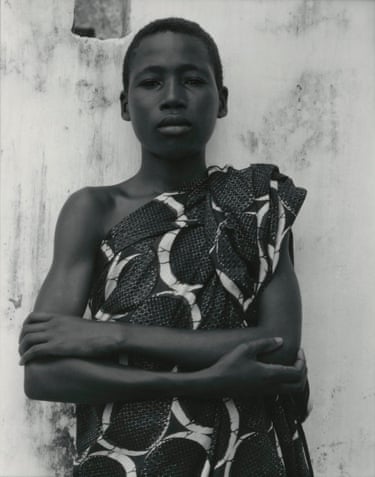
Samuel JK Essoun, Shama, Ghana, 1964
(Ghana!: Independence show)On 6 March, 1957, after more than a century under British rule, Ghana, formerly the Gold Coast, celebrated its independence. Photography played a crucial role in shaping the image of the young nation. The country’s image was thus documented across numerous photography books, including the now-iconic Ghana: An African Portrait (1976) by Paul Strand. The 57th edition of the Rencontres d’Arles runs until 4 October 2026. This year’s themes are: ‘independence’, ‘journeys’, ‘forms of life’, ‘revisits’ and ‘uncertain archive’ Photograph: Paul Strand/Paul Strand Archive and Aperture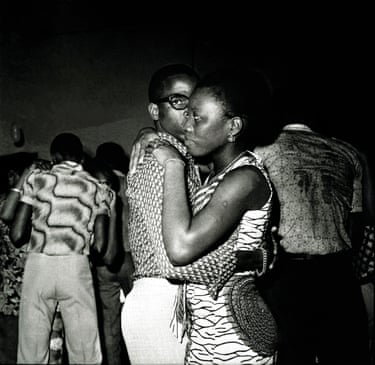
Abidjan, Les Soirées dansantes [Dance Parties], 1970s
(Photoromance: Independence show)Photoromance is the first major solo exhibition in France for the Ivorian photographer Paul Kodjo. A central figure in the development of a post-independence Ivorian visual culture, he was among the first African photographers to explore the photo novel. Shot in public spaces as well as domestic interiors, these photo novels reflect the country’s social and economic transformations during the ‘Ivorian miracle’, a period of prosperity and cultural dynamism in the 1960s and 1970sPhotograph: Paul Kodjo/Les Rencontres du Sud and in camera galerie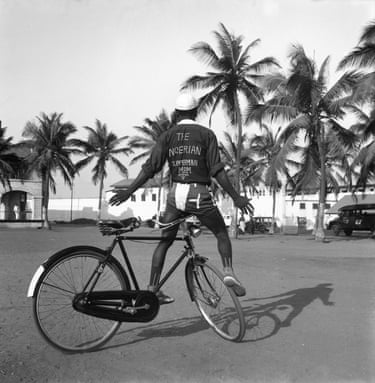
The Nigerian Superman, a renowned performer in Mantse Agbona, Jamestown, Accra, 1958
A pioneer of Ghanaian photography, James Barnor always wanted his work to be of service to a new generation of African photographers. Today, at 96 years old, he still inspires many contemporary artists, not least with the James Barnor prize which is awarded each year to artists from different regions of Africa. The third edition of the prize is dedicated to Southern Africa. Prize winner will be announced on 8 July Photograph: James Barnor/Galerie Clémentine de la Féronnière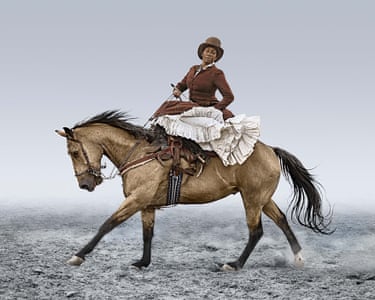
To Be Black and Female in the Spanish South-West, in the Style of Selika Lazevski, 2023
(The Good News is Delivered Not on Mountaintops but in Clearings: Independence show)Ayana V Jackson deconstructs 19th and 20th century portraiture to interrogate the colonial gaze and its role in shaping racial and gendered identities. Through performative embodiment, she restages archival images, reconfiguring narratives of the African DiasporaPhotograph: Ayana V. Jackson/Mariane Ibrahim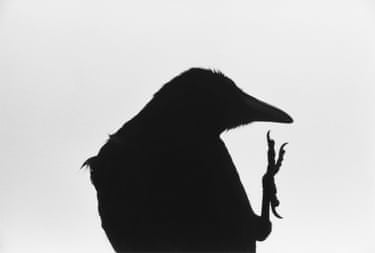
Erimo Cape, Ravens, 1976
(Animal Model: Forms of Life show)Companion, research subject, symbol, mirror or fantasy? Animals have never left the photographers’ frame since the invention of the medium. Animal Model takes us on a voyage through two centuries of images that reveal how photography has shaped our view of animals and profoundly influenced the ways we love, exploit or defend themPhotograph: Masahisa Fukase/Masahisa Fukase Archives and Michael Hoppen Gallery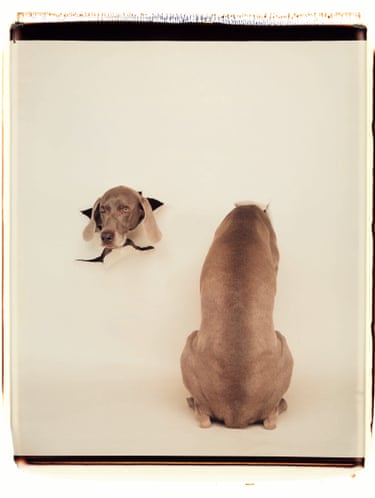
Break Out, 1995
(Animal Model: Forms of Life show)Bringing together works by renowned artists as well as anonymous photographs, the exhibition leads us on a thematic journey built around six perspectives: the anatomical gaze that observes and analyses; the performative gaze, capturing our fascination with animals; the emotional gaze, centred on our domestic companions; the fascinated gaze, celebrating the beauty of the animal world; the ethical gaze, exposing animal exploitation; the aesthetic gaze; and the viral gaze that subverts and spreads, blurring the lines between reality and fictionPhotograph: William Wegman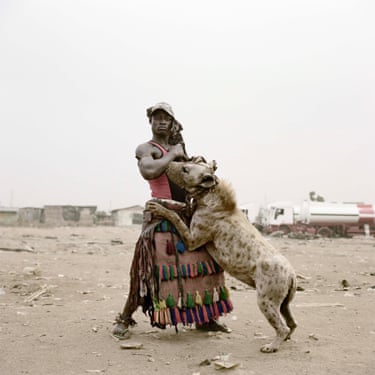
Abdullahi Mohammed with Mainasara, Ogere-Remo, Nigeria, 2007
(Animal Model: Forms of Life show)Together, these representations form a visual panorama of exceptional diversity, inviting us to rethink the boundaries between human and animal, gaze and image, as well as reality and its representationPhotograph: Pieter Hugo/Stevenson, Cape Town/Amsterdam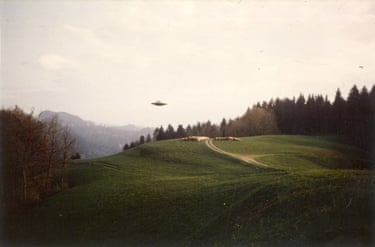
From series depicting a ‘Pleiadian spacecraft’, Ober‑Sädelegg, Switzerland, March 8, 1975
(We are not Alone: Uncertain Archive show)The poster for the famous TV series the X-Files conceals a whole other story – that of a photograph taken in 1975 by Eduard Albert ‘Billy’ Meier. Renowned for his numerous books, he claimed, with supporting images, to show evidence of contact with inhabitants of other planets Photograph: Eduard Albert “Billy” Meier/ FIGU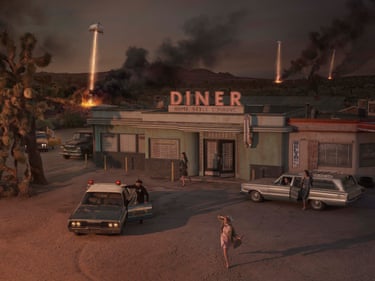
Invasion Day One. Dawn, 2018
(We are not Alone: Uncertain Archive show)Long before the era of fake news and AI-generated images, UFO photography shook our relationship with visual evidence. As early as the late 19th century, these blurry and often unsettling images instilled a ‘culture of visual doubt’ in our societies, foreshadowing contemporary questions about the liability of images. Faced with the vastness of the cosmos to which they allude, they also invite us to humble ourselves by embracing the unexplained and enigmatic facets of our worldPhotograph: Sacha Goldberger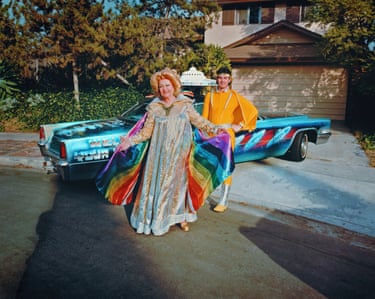
Ruth Norman also known as ‘Uriel’, Founder of the Unarius Academy of Sciences, El Cajon, California, 1981
(We are not Alone: Uncertain Archive show)Through a rich selection of archival documents and contemporary works, the exhibition aims to navigate the mysterious realm of ‘alien images’, where fiction and reality are intertwined at willPhotograph: Douglas Curran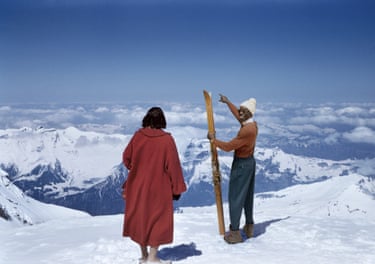
Being There, 2023
(The Anonymous Project: Uncertain Archive show)Being There assembles a gallery of familiar images – fragments of life once preserved in family albums, capturing fleeting celebrations and intimate moments. Originally taken in 1950s and 1960s North America, the photographs reflect an era of economic recovery and cold war tensions, but also one of racial segregation and civil rights struggles. Lee Shulman and Omar Victor Diop intervene in these seemingly carefree scenes, introducing a black presence where one would have been historically impossiblePhotograph: Lee Shulman and Omar Victor Diop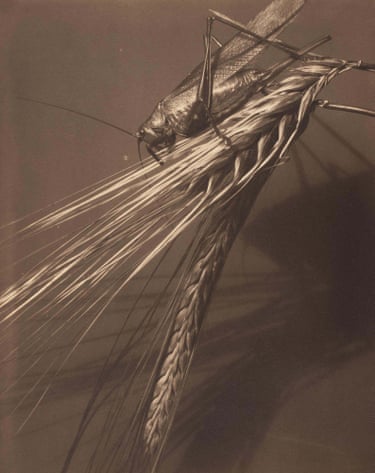
Grasshopper and Wheat Stalk, Voulangis, France, circa 1920
(Nature: Forms of Life show)Edward Steichen’s work reflects his deep fascination with nature, revealed through rarely exhibited works from Luxembourg-based collections and remarkable loans from the Estate of Edward Steichen. For more on Steichen see the image belowPhotograph: Edward Steichen/Collection du MNAHA Luxembourg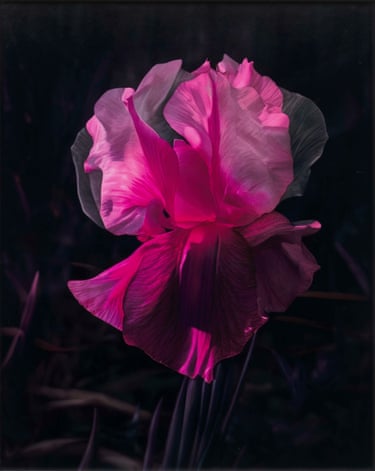
Steichen Study 59, 2025
(Monsieur Steichen: Forms of Life show)Working across photography, textiles and floral compositions, Lisa Oppenheim offers a subjective and abstract portrait of one of the most renowned figures of 20th-century photography: the Luxembourg-born American photographer and curator Edward Steichen (1879–1973). For Monsieur Steichen, Oppenheim explores the latent possibilities of photography, focusing on lesser-known aspects of Steichen’s practice: his lifelong passion for flowers, his textile designs and his experiments in colour photographyPhotograph: Lisa Oppenheim/Tanya Bonakdar Gallery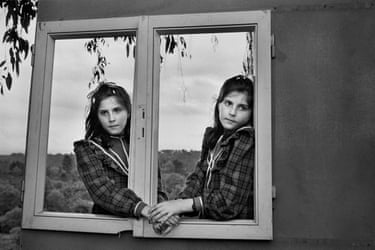
Twins, Amoeiro, Galicia, Spain, 1986
(Distant Dreams: Journey show)From the FNAC photographic collection. From its inception, FNAC was driven by its founders’ commitment to photography, assembling one of the most significant corporate photography collections in France in 1978. Spanning nearly a century in the history of the medium, the 1,800 prints that make up the collection are held at the Musée Nicéphore NiépcePhotograph: Cristina García Rodero/Magnum Photos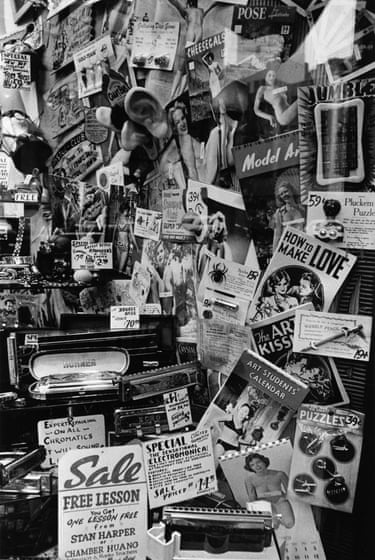
How to Make Love, New York, 1954
(This Way to Heaven: Revisits Show)To mark the centenary of his birth, this exhibition showcases William Klein’s photographs, paintings, films and drawings, and reveals many previously unseen documents. Klein portrays the visual spectacle provided by the mass media and the power systems they perpetuate. The artist methodically dismantles the well-oiled mechanics of the image as formatted by the press and then nascent television, rearranging them in a deliberately corrosive wayPhotograph: William Klein/William Klein Estate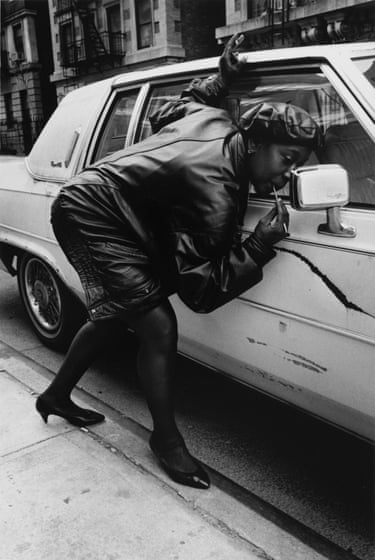
Love Before Going to the Rhythm Club, She Would Make Sure Her Makeup was Together, Harlem, 1996
(Soul of the City: Revists show)Martine Barrat was driven by her enduring curiosity about the street, its codes and its ways of life. Never moralising, she is an integral part of the neighbourhoods she photographs. She knows that, despite the harshness of their environment, the residents continue to live and love, and that it is her responsibility to photograph them with respect and commitment. The scenes, people and gestures captured on film thus form a celebration of life and human relationshipsPhotograph: Martine Barrat/ La Galerie Rouge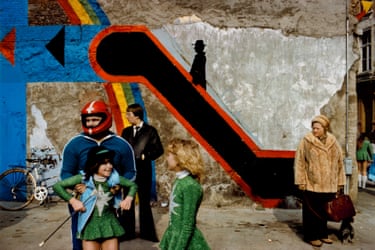
Carnival, Antwerp, Belgium, 1992
(A Sense of Place: Revisits show)Artist Harry Gruyaert invites us on a sweeping journey through the city, freed from the usual geographic markers that structure travel. His gaze moves freely through the streets of New York, Paris, Tokyo, Moscow, Antwerp, Mumbai and Zanzibar – ultimately, the destination matters little. What unites his photographs is not their subject but the way the world presents itself to him: the vibrant intensity of colour, the sharp cuts of shadow, urban geometries that punctuate space like a phrase of jazz. See more of his work herePhotograph: Harry Gruyaert/Magnum Photos/Gallery FIFTY ONE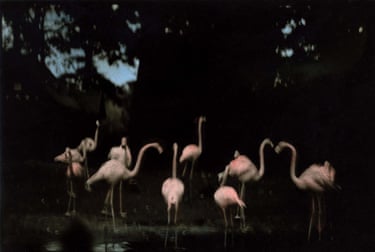
Flamingo Fandango, 1988
(Wandering Light: Revists show)Ming Smith’s photographs foreground softness and movement – blurred contours, spectral figures and cityscapes that feel remembered rather than recorded. These are not stylistic effects but deliberate modes of attention. Faces dissolve, bodies merge with their surroundings, and identity remains unresolved, shaped by time, light and lived sensationPhotograph: Ming Smith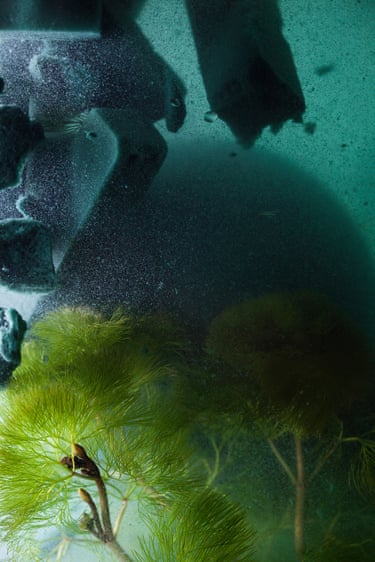
Oasis Foam Soaked with Water/Cabomba, 2019
(Flower Power: Forms of Life show)Contemporary photography offers a renewed interpretation of the floral theme. Far from being purely ornamental, flowers have become a means of exploring life and experimenting with the imagePhotograph: Alice Pallot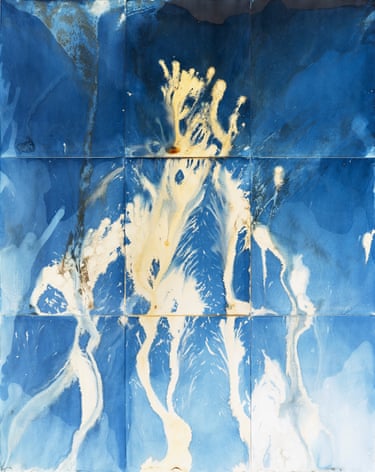
Adaptive Radiation #1, 2025
(Upwelling: Forms of Life show)Upwelling considers the complex nature of our relationships to the landscape. An upwelling is both an essential oceanic process that renews ecosystems, and a term used to describe a growing emotional or political momentumPhotograph: Meghann Riepenhoff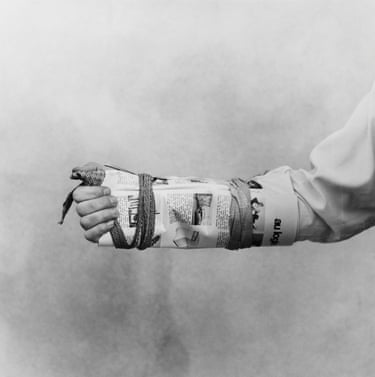
Splinting a Forearm Fracture Using a Paper Magazine, Vigilance, No. 21, April 1963
(Vigilance: Work Under Tension)Established after the war, the Société pour le Développement des Applications de l’Électricité (SODEL) was responsible for promoting the use of electricity. SODEL commissioned numerous photographers, initially to celebrate major engineering projects and their landscapes, presenting a monumental and modern vision of electricity. The photographs featured in this exhibition reflect the importance ascribed to the aesthetic and documentary representation of the electricity industryPhotograph: Pierre BérengerExplore more on these topics