.png) 3 months ago
82
3 months ago
82
OpenAI, the company behind ChatGPT, is on track to lose $14bn this year. Its market share is collapsing, and its own CEO, Sam Altman, has admitted it “screwed up” an element of the product. All it takes to accelerate that decline is 10 seconds of your time.
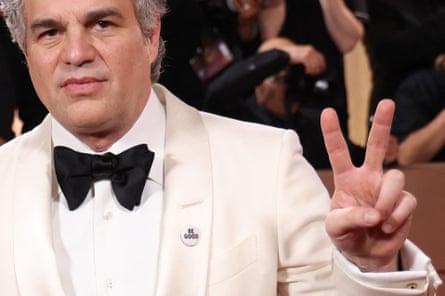
A grassroots boycott called QuitGPT has been spreading across the US and beyond, asking people to cancel their ChatGPT subscriptions. More than a million people have answered the call. Mark Ruffalo and Katy Perry have thrown their weight behind it. It is one of the most significant consumer boycotts in recent memory, and I believe it’s time for Europeans to join.
Here’s what triggered it. Early this year, the news broke that OpenAI’s president, Greg Brockman, donated $25m to Maga Inc, Donald Trump’s biggest Super Pac. This made him Trump’s largest donor of the last cycle. When Wired asked him to explain, Brockman said his donations were in service of OpenAI’s mission to benefit “humanity.”
Let me tell you what that mission looks like in practice. Employees of ICE – the agency whose agents killed two people in Minneapolis in January – have used a screening tool powered by ChatGPT. The same company behind your friendly chatbot is helping the government decide who to hire for deportation raids.
And it’s not stopping there. OpenAI helped launch a $125m lobbying initiative, a Super Pac, to make sure no state can regulate AI. It’s attacking any politician who tries to pass safety laws. It wants Trump, and only Trump, to write the rules for the most powerful technology on earth. Every month, subscription money from users around the world flows to a company that is embedding itself in the repressive infrastructure of the Trump administration. That is not a conspiracy theory. It is a business strategy.
Things got even worse last week. When the Trump administration demanded that AI companies give the Pentagon unrestricted access to their technology – including for mass surveillance and autonomous weapons – Anthropic, the company behind ChatGPT’s main competitor, Claude, refused.
The retaliation was swift and extraordinary. Trump ordered every federal agency to stop using Anthropic’s technology. Secretary of war Pete Hegseth declared the company a “supply-chain risk to national security”, a designation normally reserved for Chinese firms such as Huawei. He announced that anyone who does business with the US military is barred from working with Anthropic. This is essentially a corporate death sentence, for the crime of refusing to help build killer robots.
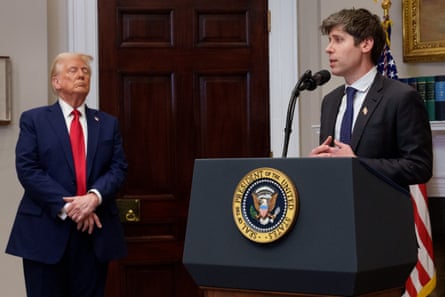
And what did OpenAI do? That same Friday night, while his competitor was taking a principled stance, Sam Altman quietly signed a deal with the Pentagon to take Anthropic’s place.
I want to be clear: I am not anti-AI. I use AI tools in my work every day. This is not about rejecting technology. It is about rejecting the idea that we have no choice but to fund a company that’s bankrolling authoritarianism.
Now, as a historian, here’s what excites me about this moment. The most effective consumer boycotts in history share two qualities: they are narrow and they are easy. QuitGPT fits this pattern perfectly.
First, let’s talk about the importance of targeting our efforts. In 1955, Black residents of Montgomery, Alabama did not try to dismantle the entire apparatus of segregation in one stroke. They picked one target – the city bus system – and for 381 days, they walked and drove to work. This broke the bus company financially and it broke the back of segregated transit across the American south.
OpenAI is our bus company. It is the perfect target because it’s incredibly vulnerable. It is burning through money at one of the fastest rates in corporate history. Its market share has plummeted from 69% to 45% in a single year. It’s so desperate for revenue, it has started running ads, something Altman once called “a last resort”. Investors are watching its subscriber numbers like hawks. Every cancellation registers.
And there’s another thing that makes QuitGPT different from #DeleteFacebook or the periodic calls to boycott Amazon – campaigns that failed because the ask was too big. Quitting Facebook meant losing your social graph, your family photos, your community groups. And for many Americans, quitting Amazon is like quitting oxygen. The friction defeated the principle.
In contrast, cancelling ChatGPT is a piece of cake. You can do it in 10 seconds, and the alternatives are just as good or even better. History shows why #QuitGPT has so much potential: effective campaigns such as the 1977 Nestlé boycott and the 2023 Bud Light boycott were successful because they were narrow and easy. They had a clear target and people had lots of good alternatives.
The great boycotts of history did not succeed because millions of people suddenly became heroic activists. They succeeded because buying a different brand of coffee, or choosing a different beer, was something anyone could do on a Tuesday afternoon. The small act, repeated at scale, becomes a political earthquake.
Go to quitgpt.org. Cancel your subscription. Using the free version? Delete the app, because your conversations still feed the machine. Then try an alternative, and tell at least one person why.
OpenAI’s president bet $25m that you would not notice where your money was going, and that, even if you did, you would not care enough to spend 10 seconds switching to something else. Time to prove him wrong.
-
Rutger Bregman is the author of Moral Ambition, Humankind and Utopia for Realists. He was last year’s BBC Reith lecturer and is the co-founder of The School for Moral Ambition